
MEXICO FILES FORMAL COMPLAINT AGAINST US OVER DEA TIP LINE AS SHEINBAUM ACCUSES WASHINGTON OF INTERFERING IN INTERNAL AFFAIRS
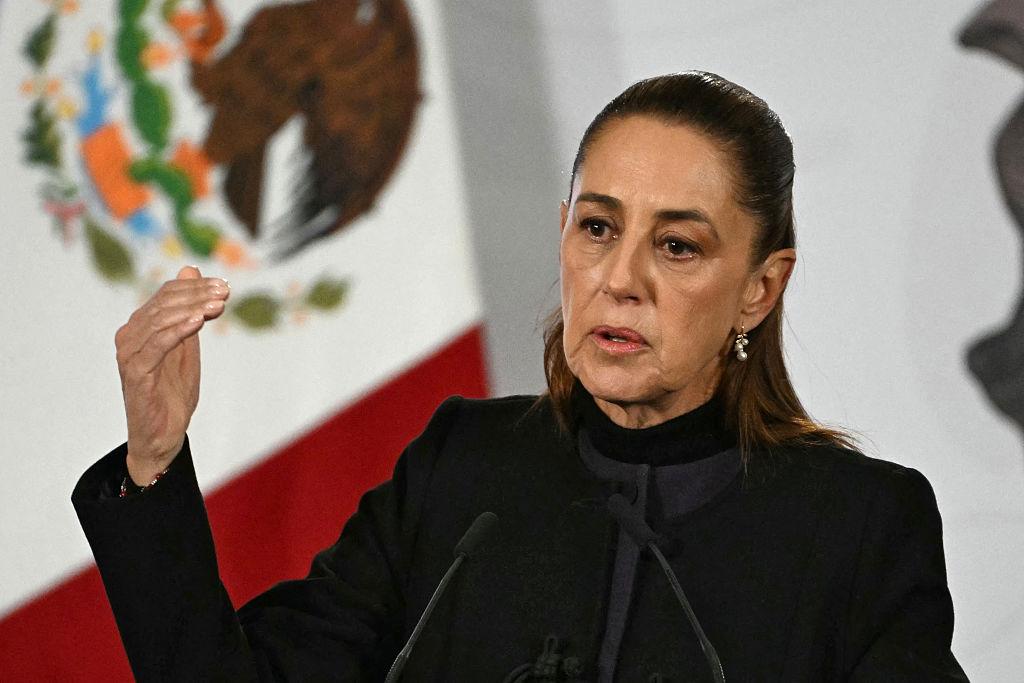
Mexico has filed a formal diplomatic complaint with the United States over a Drug Enforcement Administration initiative encouraging Mexican citizens to anonymously report suspected drug traffickers, corrupt government officials and individuals associated with organized crime. President Claudia Sheinbaum announced the protest on November 27, 2026, accusing the DEA of interfering in Mexico's internal affairs and insisting that bilateral security cooperation must respect national sovereignty. The reporting initiative initially targets Sinaloa, with plans to establish a similar channel in Jalisco. Sheinbaum also urged the Trump administration to address domestic drug consumption and criminal networks operating within the United States. The dispute has intensified diplomatic tensions despite continuing cooperation between the neighboring countries against transnational drug trafficking organizations.
Mexico has filed a formal diplomatic complaint with the United States over a new Drug Enforcement Administration (DEA) initiative encouraging Mexican citizens to anonymously report suspected drug traffickers, corrupt government officials and individuals associated with organized criminal networks, escalating tensions between the neighboring countries over the limits of bilateral security cooperation. Mexican President Claudia Sheinbaum announced the diplomatic protest on Friday, November 27, 2026, describing the initiative as interference in Mexico's internal affairs and insisting that cooperation with Washington must not compromise her country's sovereignty or constitutional authority.
The complaint was communicated to United States Ambassador to Mexico Ronald Johnson through the Mexican Ministry of Foreign Affairs following the DEA's announcement of an anonymous reporting channel targeting criminal activity in Sinaloa, a northwestern Mexican state that has experienced prolonged violence associated with competing drug trafficking organizations. Sheinbaum said the American ambassador had indicated that the concerns raised by her government would be reviewed, although Washington had not publicly announced whether it intended to suspend or modify the controversial initiative.
The diplomatic confrontation comes at a particularly sensitive moment in relations between Mexico and the administration of US President Donald Trump, which has intensified pressure on Mexican authorities to dismantle criminal organizations involved in the production and transportation of fentanyl and other illicit substances. While both governments have expanded cooperation in several areas of law enforcement, Sheinbaum has consistently rejected proposals that would allow American security institutions to undertake unilateral operations inside Mexican territory.
Speaking during her regular morning press conference at the National Palace in Mexico City, Sheinbaum reaffirmed that her administration remained willing to exchange intelligence and coordinate investigations with American authorities, provided such arrangements respected Mexico's independence. She argued that the relationship between the neighboring countries must be founded on cooperation rather than the exercise of authority by one government over the other.
“We have made it very clear in our relationship with the United States that the relationship is one of coordination, not subordination,” Sheinbaum declared.
The controversy began earlier in the week when DEA Administrator Terry Cole announced a confidential reporting initiative designed to obtain information about criminal organizations operating in Sinaloa. The initiative seeks reports concerning suspected members and associates of organizations designated as terrorist groups by Washington, public officials allegedly collaborating with criminal networks and individuals involved in laundering money to finance organized crime.
Cole indicated that members of the public could provide information through designated electronic communication channels and that the agency intended to protect the identities of individuals submitting reports. The DEA also announced plans to establish a similar initiative targeting criminal activity in Jalisco, another Mexican state associated with powerful drug trafficking organizations.
The announcement generated an immediate backlash from Mexican officials, who questioned why an American law enforcement agency was independently soliciting information from Mexican residents concerning activities that fall within the jurisdiction of Mexican investigative institutions. The government maintained that information concerning suspected criminal offenses should ordinarily be submitted through its established domestic mechanisms before being shared with foreign authorities where appropriate.
Sheinbaum emphasized that Mexico possesses its own institutions responsible for investigating organized crime, corruption and money laundering. These include federal and state prosecutors, national security agencies and police institutions operating under Mexican law. Her administration argues that foreign agencies should work through established arrangements involving those institutions rather than independently establishing mechanisms that could undermine their authority.
The Mexican government's objection does not amount to a rejection of international cooperation against organized crime. Sheinbaum has repeatedly acknowledged that criminal organizations operate across national borders and that effective investigations frequently require information sharing between governments. Her objection concerns the manner in which such cooperation is conducted and whether foreign security institutions are acting consistently with arrangements established between the two countries.
The DEA initiative has nevertheless received a more favorable response from some Mexican residents, particularly individuals who believe that domestic authorities have failed to adequately address allegations of corruption and organized criminal activity. In Sinaloa, where years of violence have undermined public confidence in several institutions, some residents regard an independent reporting channel as another opportunity to disclose information that might otherwise receive insufficient attention.
Associated Press reporting identified Juan Manuel Partida Valdez, president of the Sinaloa Journalists Association, among those who welcomed the initiative and submitted information concerning alleged connections between politicians and criminal organizations. His response illustrates how the dispute has produced contrasting reactions within Mexico, with the federal government emphasizing national sovereignty while some residents focus on the availability of credible mechanisms for reporting suspected corruption.
Those responses reflect a longstanding challenge confronting Mexican authorities. Criminal organizations operating within the country have developed extensive networks that may involve individuals working in legitimate businesses, public administration, law enforcement and political institutions. Allegations concerning those relationships can be particularly difficult to investigate when potential witnesses believe that reporting suspected misconduct could expose them to retaliation.
The existence of allegations concerning public officials does not establish that the individuals identified have committed criminal offenses. Reports submitted anonymously require independent corroboration, and criminal investigations must respect evidentiary standards and procedural safeguards. Nevertheless, the willingness of some residents to provide information directly to a foreign agency demonstrates the extent of distrust that can develop when communities believe established reporting mechanisms are ineffective.
For Sheinbaum's administration, the diplomatic challenge involves defending Mexico's authority over domestic criminal investigations while demonstrating that its own institutions possess the capacity and willingness to investigate credible allegations. A government's assertion of sovereignty does not necessarily resolve public concerns about corruption, just as the existence of institutional shortcomings does not automatically authorize foreign agencies to assume investigative authority within another country's territory.
The dispute has acquired additional significance because relations between Mexican political figures and organized criminal groups have become an increasingly contentious subject in discussions between Mexico City and Washington. American authorities have expressed concerns about corruption facilitating the movement of illicit substances, while Mexican officials have objected to statements they consider insufficiently supported or politically motivated.
Reuters previously reported that the Trump administration had pressed Mexico to investigate politicians suspected of maintaining connections with criminal organizations and consider extradition where appropriate. Such demands have generated concern within Mexico because allegations involving elected officials can have significant political consequences, particularly when they originate from foreign investigative institutions.
The distinction between investigating individual allegations and broadly accusing political institutions of criminal involvement remains important. Corruption investigations require specific evidence establishing the conduct of particular individuals, while political affiliations alone cannot provide a sufficient basis for determining criminal responsibility. Any information collected through the DEA's new reporting mechanism would therefore require verification before supporting formal charges or other legal action.
The Trump administration has made combating Mexican drug trafficking organizations a central component of its security agenda. Washington has repeatedly argued that criminal networks operating across the border contribute to the availability of fentanyl and other dangerous substances in the United States, creating substantial public health, economic and security consequences for American communities.
Trump has also raised the possibility of deploying American military personnel to assist in operations against Mexican cartels, an approach Sheinbaum has consistently rejected. The Mexican president maintains that her country's armed forces and civilian security institutions are responsible for conducting operations within national territory, even when foreign intelligence contributes to the identification of suspects or criminal activities.
Those disagreements have become more consequential following Washington's decision to designate several Mexican criminal organizations as foreign terrorist organizations. The designations expanded the range of American legal authorities applicable to individuals and entities accused of supporting the groups, introducing additional financial, criminal and immigration consequences.
Among the organizations designated by the United States are the Sinaloa Cartel and the Jalisco New Generation Cartel, two groups that have occupied prominent positions within Mexico's organized crime landscape. Both organizations have been associated with extensive criminal networks involved in drug trafficking and other illicit activities, although the composition, leadership and operational relationships of such groups frequently change.
Mexico has expressed concerns that applying terrorism-related legal frameworks to criminal organizations could create opportunities for unilateral intervention by foreign governments. Sheinbaum has maintained that the designations must not be interpreted as permission for American military or law enforcement institutions to operate independently inside Mexico.
The latest DEA initiative has reinforced those concerns because it seeks information not only about individuals suspected of drug trafficking but also about officials allegedly supporting criminal networks. The involvement of government corruption allegations introduces a particularly sensitive dimension to bilateral security relations, creating the possibility that intelligence collection could intersect with domestic political disputes.
Foreign intelligence concerning organized crime can be valuable when it contributes to lawful investigations and strengthens the ability of prosecutors to establish criminal responsibility. However, disputes can arise when the governments involved disagree over who should collect the information, how it should be shared and which authorities should determine whether legal proceedings are appropriate.
The controversy is unfolding despite an expansion of security cooperation between Mexico and the United States during Sheinbaum's presidency. Both governments have acknowledged the importance of coordinated action against transnational criminal networks, with joint discussions addressing drug trafficking, financial crime, weapons smuggling and border security.
On September 3, 2025, the two governments issued a joint statement establishing principles intended to guide their security relationship. The agreement emphasized mutual trust, reciprocal cooperation, respect for national sovereignty and recognition that each country bears distinct responsibilities in addressing shared security challenges.
The Mexican government presented that framework as a mechanism for strengthening cooperation without creating a relationship in which American authorities could exercise unrestricted powers within Mexico. Its emphasis on territorial integrity remains directly relevant to the current disagreement concerning the DEA reporting initiative.
The diplomatic complaint consequently represents a dispute over the interpretation and practical application of those established principles. Mexican authorities maintain that independently soliciting reports from residents concerning domestic criminal activity is inconsistent with the understanding governing bilateral security cooperation. Whether American officials accept that interpretation remains uncertain.
The disagreement also comes only days after an operation involving cooperation between Mexican and American authorities resulted in the capture of Fausto Isidro Meza Flores, known as El Chapo Isidro. The alleged drug trafficking leader had been wanted by American authorities and was included on the Federal Bureau of Investigation's list of most wanted fugitives.
His arrest demonstrated that cooperation between the neighboring countries can produce significant results when their security institutions coordinate their activities. Both governments welcomed the capture, although questions subsequently emerged concerning where the suspect should face criminal proceedings.
The United States requested his extradition, while Mexican Attorney General Ernestina Godoy indicated that he would initially face prosecution in Mexico. That position reflects another recurring disagreement in bilateral security relations, concerning whether individuals suspected of operating transnational criminal organizations should be prosecuted in the country where they were apprehended or transferred to another jurisdiction.
Extradition arrangements allow governments to request the transfer of individuals accused or convicted of criminal offenses, subject to applicable treaties and domestic legal requirements. Such arrangements can be particularly important when alleged criminal activities involve victims, financial transactions or illicit markets across several countries.
However, the existence of an extradition request does not automatically determine the jurisdiction in which a suspect will first face prosecution. Domestic charges, ongoing investigations, judicial requirements and decisions by executive authorities may all influence the eventual outcome.
The contrast between the recent arrest and the current diplomatic confrontation demonstrates the complicated nature of the US-Mexico security relationship. The countries can cooperate successfully against individual suspects while maintaining significant disagreements concerning investigative authority, extradition priorities and the broader approach to combating organized crime.
Sinaloa occupies a particularly important position within those discussions because of the longstanding presence of criminal organizations whose activities have had consequences extending well beyond the state. Communities throughout the region have experienced serious insecurity associated with disputes among criminal groups, placing pressure on local law enforcement institutions and disrupting economic and social activities.
The consequences of that violence extend beyond individuals directly involved in organized crime. Residents may experience restrictions on ordinary movement, interruptions to educational activities and uncertainty concerning the operation of businesses. Journalists reporting on criminal activity can also face substantial risks, particularly when their investigations examine alleged relationships between organized crime and public institutions.
Those conditions help explain why some residents have responded positively to the DEA initiative despite opposition from the Mexican government. Individuals who believe that local institutions are unable to provide adequate protection may seek alternative channels through which to disclose information about criminal activity.
However, establishing an anonymous reporting mechanism does not eliminate every risk confronting potential informants. The confidentiality of submitted information depends on how it is collected, stored, investigated and shared. Public assurances of confidentiality must be supported by appropriate safeguards if individuals are to have confidence that their identities will not be improperly disclosed.
The evidentiary value of anonymous reports also depends on their reliability. Investigators must distinguish credible information from false accusations, politically motivated submissions and attempts by criminal groups to manipulate law enforcement operations against rivals. Effective verification remains essential regardless of whether information is submitted to Mexican or American authorities.
Sheinbaum has emphasized that Mexico's federal security institutions are already responsible for collecting and examining information concerning organized crime. She has argued that relevant findings can be communicated to American authorities through existing cooperation mechanisms, reducing the need for a separate reporting infrastructure operating outside those arrangements.
The president has also renewed criticism of what she considers Washington's disproportionate emphasis on Mexico's responsibilities in addressing drug trafficking. She has urged American officials to devote greater attention to domestic drug consumption and criminal organizations operating inside the United States rather than presenting the supply of illicit substances as a problem originating exclusively south of the border.
That argument reflects a broader understanding of transnational drug markets in which criminal activities involve production, transportation, distribution, financial transactions and consumer demand across multiple jurisdictions. Efforts to dismantle trafficking organizations in Mexico may disrupt important components of those markets, but the economic incentives sustaining illicit commerce are not confined to Mexican territory.
American public health institutions have spent years addressing the consequences of opioid addiction and overdose deaths. Federal and state authorities have introduced initiatives involving criminal enforcement, addiction treatment, overdose prevention and public education, although disagreements continue over the relative effectiveness of different approaches.
Mexico has maintained that reducing demand for illicit substances in the United States should form a central component of the bilateral response. Its government has also emphasized the importance of investigating criminal organizations involved in distributing drugs within American communities and identifying financial networks that enable proceeds from those activities to enter legitimate economic systems.
Weapons trafficking represents another area in which Mexican authorities have repeatedly called for stronger American enforcement. The movement of firearms into Mexico has been identified as an important security concern because criminal organizations can acquire weapons that contribute to violence against civilians and security personnel.
Washington and Mexico City have previously acknowledged the importance of addressing cross-border weapons trafficking within their security cooperation arrangements. The inclusion of that issue reflects the principle that the responsibilities associated with organized crime extend in both directions across the border.
Sheinbaum's position is that international cooperation should recognize those interconnected responsibilities rather than placing the entire burden of addressing the illicit drug market on Mexico. Her administration continues to argue that American authorities must confront the domestic activities that help sustain criminal organizations while respecting Mexico's authority over operations conducted within its borders.
The Trump administration, meanwhile, has maintained that stronger enforcement against cartels is necessary to protect American citizens and reduce the availability of dangerous illicit substances. Its designation of criminal groups as terrorist organizations and increased demands for cooperation reflect a security strategy that treats certain trafficking networks as threats extending beyond conventional organized crime.
Those differing approaches have produced recurring disagreements over the appropriate balance between national sovereignty and the need to confront criminal organizations operating internationally. Both governments recognize the cross-border nature of the problem, but they have not consistently agreed on how investigative responsibilities should be distributed.
For Mexico, the principle of nonintervention occupies an important position within its foreign policy traditions. The country's historical experiences with foreign intervention have influenced its emphasis on territorial integrity and the right of national institutions to exercise authority within their own jurisdiction. Political leaders across different administrations have invoked those principles when responding to external pressure concerning domestic affairs.
Sheinbaum's objections to the DEA initiative are consistent with her broader position that international agreements must not create arrangements that place Mexican security institutions under foreign direction. She has argued that constitutional responsibilities concerning national sovereignty cannot be disregarded merely because the governments involved share common security objectives.
At the same time, international law enforcement agencies routinely receive information concerning criminal activity outside their home jurisdictions, particularly when offenses have consequences within their own countries. Soliciting information from foreign residents is not necessarily equivalent to conducting arrests, searches or military operations within another sovereign state.
Whether a particular intelligence-gathering initiative conflicts with domestic law or bilateral agreements depends on its design, implementation and the legal arrangements governing the activities of the institutions involved. Mexico's diplomatic complaint establishes that its government objects to the initiative, but it does not independently constitute a judicial determination that the DEA has violated international law.
The distinction will be important if discussions between the two governments lead to negotiations concerning changes to the reporting mechanism. Potential questions include whether information should be collected jointly, whether Mexican institutions should participate directly in its administration and what safeguards should govern the handling of allegations involving public officials.
The relationship between the DEA and Mexican authorities has experienced periods of cooperation and disagreement over several decades. Drug trafficking investigations have frequently depended on intelligence exchanges, coordination between prosecutors and arrangements allowing foreign agents to assist domestic institutions. Nevertheless, concerns surrounding operational independence and accountability have periodically strained those relationships.
Mexico has previously strengthened regulations governing the activities of foreign security agents, reflecting concerns about the oversight of their operations. Such regulations are intended to establish procedures through which foreign agencies can communicate with Mexican officials, exchange information and undertake authorized activities without assuming powers reserved for domestic institutions.
The effectiveness of those arrangements depends on mutual confidence that each government will comply with the established procedures. When one government believes that another has introduced an initiative without adequate consultation, disagreements can undermine the institutional trust necessary for subsequent cooperation.
The latest diplomatic protest could therefore have implications beyond the immediate operation of the anonymous reporting channel. Security agencies on both sides of the border depend on established relationships for accessing information, coordinating investigations and pursuing individuals whose alleged activities involve multiple jurisdictions.
A deterioration in those relationships could complicate investigations even where officials continue to share the same broad objectives. Conversely, resolving the current disagreement through clearer communication could provide an opportunity to establish more transparent procedures governing the collection and exchange of information concerning organized crime and corruption.
The wider relationship between Mexico and the United States also encompasses extensive economic and diplomatic interests. The neighboring countries maintain closely integrated manufacturing industries, substantial agricultural trade and numerous commercial relationships supported by cross-border transportation infrastructure.
Security disagreements occur within a bilateral relationship in which millions of people depend on continuing economic cooperation. Manufacturers, agricultural producers, transportation companies and other businesses operate across national borders, making diplomatic stability important to economic planning and investment.
Sheinbaum has indicated that the latest disagreement has not ended communication between the two governments. Her administration continues to engage with Washington on security, migration and commercial matters, although it maintains that cooperation in those areas must be conducted in accordance with Mexico's national interests.
That position suggests that the diplomatic complaint should not automatically be interpreted as a breakdown of the broader relationship. Formal protests provide governments with a mechanism for communicating objections while preserving channels through which disagreements can be addressed.
Nevertheless, the complaint represents a notable escalation from public criticism because it requires American diplomatic representatives to consider an objection formally raised by the Mexican government. The response from Washington could provide greater clarity concerning whether the DEA initiative was coordinated with Mexican authorities and whether changes are being considered.
For Mexican residents affected by organized crime, the broader diplomatic debate intersects with immediate concerns about personal safety and access to justice. Many communities are less concerned with institutional disagreements than with whether authorities can effectively investigate violent crimes, protect witnesses and prevent public officials from abusing their positions.
The differing reactions to the DEA reporting channel consequently highlight an important domestic challenge for Sheinbaum's administration. Defending national sovereignty may resonate with longstanding political principles, but maintaining public confidence also requires credible investigations into suspected criminal activity and allegations of corruption.
The existence of residents willing to report information directly to foreign authorities indicates that some individuals believe additional investigative mechanisms are necessary. Their concerns cannot be resolved solely through diplomatic objections unless domestic institutions demonstrate that they are capable of receiving and acting upon credible information safely and effectively.
At the same time, the use of foreign reporting mechanisms raises legitimate questions about the treatment of unverified allegations and the protection of national judicial processes. Investigations must not become instruments for political pressure, and criminal accusations should be examined according to evidence rather than the institutional identity or nationality of the agency receiving them.
For Washington, the controversy presents a challenge in balancing its determination to disrupt transnational drug trafficking organizations against the need to maintain cooperative relationships with Mexican authorities. American security agencies possess investigative interests in criminal activities that affect the United States, but operations involving Mexican territory or institutions can become more effective when conducted through mutually accepted arrangements.
The response from the United States will consequently be important in determining whether the disagreement develops into a broader diplomatic confrontation. As of Saturday, November 28, the DEA had not publicly provided a comprehensive response to Mexico's complaint, and no decision to suspend the Sinaloa reporting initiative had been confirmed.
The planned expansion of the initiative into Jalisco remains another unresolved issue. If American authorities proceed without reaching an understanding with Mexico City, the Mexican government could raise further objections concerning the operation of reporting channels directed at criminal activity within its territory.
Neither government has announced the termination of its broader security cooperation arrangements. The recent operation resulting in the capture of a prominent suspected drug trafficking leader provides evidence that intelligence sharing and coordinated enforcement remain possible despite significant policy disagreements.
For Sheinbaum, the immediate diplomatic objective is to establish that Mexico will continue confronting organized crime without accepting arrangements that her government believes compromise national sovereignty. For the Trump administration, the DEA initiative forms part of a broader effort to obtain information about criminal organizations and individuals suspected of facilitating their activities.
The unresolved question is whether the two governments can establish a mutually acceptable framework that preserves the investigative benefits of confidential reporting while respecting the institutional responsibilities of Mexican authorities. Such an arrangement would require agreement concerning the collection, verification, protection and exchange of sensitive information, particularly when allegations involve individuals holding public office.
The dispute has exposed the continuing tension between the shared security interests of Mexico and the United States and their differing interpretations of how those interests should be pursued. Although both governments remain committed to confronting organized crime, their cooperation will continue to depend on whether they can reconcile Washington's demands for stronger enforcement with Mexico's insistence that operations affecting its territory remain subject to national authority. Until the United States formally responds to the complaint, the DEA's anonymous reporting initiative will remain a contentious element of a bilateral relationship in which effective security cooperation and respect for sovereignty are increasingly difficult to separate.