U.S. ARMY TO DETONATE MORE THAN FOUR TONS OF UNSTABLE EXPLOSIVES IN IOWA AMID TOXIC LEAD CONTAMINATION FEARS
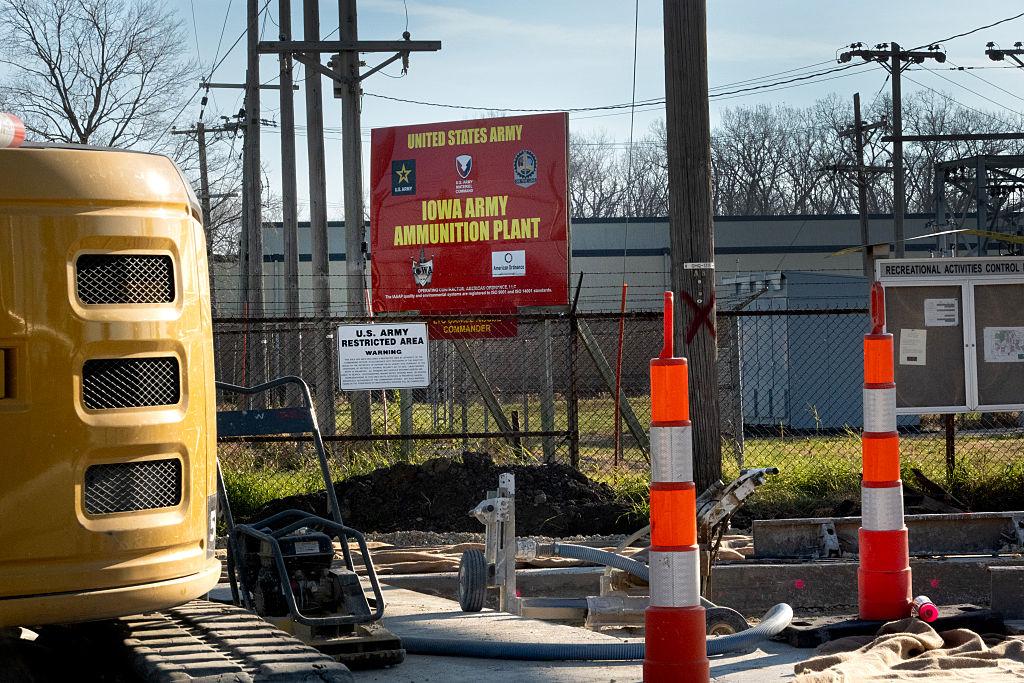
The United States Army is preparing to destroy approximately 4.4 metric tons of deteriorating lead azide at the Iowa Army Ammunition Plant in Middletown on Wednesday, November 25, 2026, despite widespread concerns about potential toxic lead contamination. The operation follows repeated postponements and a legal challenge by environmental organizations, with a federal appeals court subsequently lifting restrictions that had temporarily prevented it from proceeding. Military authorities maintain that controlled destruction presents fewer risks than an accidental explosion, while environmental and public health specialists have called for stronger safeguards, transparent testing and long-term monitoring. Federal agencies have collected more than 1,000 environmental samples ahead of the operation and announced relocation assistance for potentially affected residents.
The United States Army is preparing to carry out a controversial operation to destroy more than four metric tons of deteriorating lead-based explosives at a military ammunition facility in southeastern Iowa, despite mounting concerns that toxic particles could contaminate surrounding communities, agricultural land and residential properties. The controlled detonations, scheduled for approximately 9 a.m. local time on Wednesday, November 25, 2026, at the Iowa Army Ammunition Plant in Middletown, follow several postponements, a federal court challenge and growing demands from environmental organizations for stronger public health protections. Military authorities insist that the deteriorating material presents an increasingly serious danger and that controlled destruction represents the safest available option for preventing a potentially catastrophic accidental explosion. However, environmental advocates and public health specialists have questioned whether the government has adequately assessed the long-term consequences of releasing lead particles into the environment, particularly in areas where families live, children attend school and farmers depend on the safety of their soil and water supplies.
The operation involves approximately 4.4 metric tons of lead azide, an explosive compound used in military ammunition that has been stored at the Iowa facility for years. According to the Army, a routine inspection conducted in March 2026 identified substantial deterioration in the stored material, prompting concerns that it could no longer be safely handled or transported using conventional procedures. Military officials subsequently consulted specialists from several federal agencies before concluding that destroying the material at its existing location was preferable to attempting to move it elsewhere. The assessment has placed authorities in the difficult position of choosing between the risks associated with a planned disposal operation and the possibility of an uncontrolled explosion that could occur without adequate opportunities to protect surrounding communities.
The Army formally confirmed its revised schedule during a multi-agency briefing on Tuesday, November 24, attended by representatives of the Environmental Protection Agency, the Federal Emergency Management Agency, the Department of Health and Human Services and other federal institutions. Acting Secretary of the Army Adam Telle said protecting residents remained the government's primary responsibility and maintained that experts involved in assessing the deteriorating material had concluded that controlled destruction presented fewer risks than allowing the dangerous stockpile to remain in storage. Federal officials emphasized that extensive preparations had been undertaken to reduce the potential release of hazardous particles and protect communities surrounding the installation. Nevertheless, the operation's approval does not mean that every environmental risk has been eliminated, and authorities acknowledge that some lead-containing particles could escape into the atmosphere.
The announcement comes after a legal confrontation involving the Iowa Environmental Council, the Sierra Club's Iowa chapter and the environmental law organization Earthjustice. The organizations filed a challenge on November 19 seeking to prevent the Army from proceeding under an emergency permit issued by the Environmental Protection Agency. They argued that the potential consequences of the operation had not been adequately examined and questioned whether sufficient consideration had been given to alternative disposal methods that might reduce the danger of environmental contamination. The plaintiffs also expressed concerns about the limited time available to residents to prepare for the operation and the difficulty of assessing potential health consequences without more comprehensive information about anticipated lead exposure.
The United States Court of Appeals for the Eighth Circuit initially issued an administrative stay that temporarily suspended the emergency permit while judges considered the objections raised by environmental organizations. However, the court subsequently lifted that restriction on Monday, November 23, allowing the Army to proceed with its revised operation. According to reporting by Reuters and Iowa Public Radio, the judges concluded that the Environmental Protection Agency had taken measures intended to minimize the spread of lead particles and address potential exposure risks. The ruling removed the immediate legal obstacle preventing the operation, but it did not establish that environmental contamination would be impossible or bring every aspect of the organizations' legal challenge to an end.
Environmental groups have indicated that they will continue seeking stronger safeguards and greater accountability despite the court's decision to permit the disposal operation. Their concerns extend beyond preventing the immediate release of hazardous particles to ensuring that the government accepts responsibility for monitoring, investigating and addressing any contamination discovered afterward. Earthjustice has questioned why the stockpile was allowed to deteriorate to such an extent that military authorities now consider conventional disposal alternatives too dangerous. The organization argues that surrounding communities should not bear the consequences of inadequate planning or historical failures in the management of hazardous military materials.
President Donald Trump also intervened in the controversy on Monday, ordering a temporary delay while the legal and political circumstances surrounding the operation were clarified. Trump defended the military's assessment of the dangers presented by the deteriorating explosives and warned that an uncontrolled explosion could have severe consequences. He also sought to assign responsibility for the condition of the material to previous administrations, particularly in relation to storage decisions made in 2009. Those accusations represent the President's political assessment of responsibility, while determining how the stockpile deteriorated and whether earlier intervention could have prevented the current emergency would require a detailed examination of its maintenance history and the decisions made by successive military authorities.
Iowa Governor Kim Reynolds subsequently expressed support for the Army's revised plan, acknowledging the seriousness of warnings concerning the possibility of an accidental explosion. Her position reflected the difficult choices confronting state officials responsible for protecting residents while relying on federal military specialists to manage a hazardous stockpile. Other political representatives have continued pressing for comprehensive environmental monitoring, clearer communication and assurances that affected residents will receive appropriate assistance if their homes or businesses are contaminated. The disagreement is therefore not limited to whether the explosives should eventually be destroyed, but also concerns the circumstances under which destruction should occur and the safeguards that should accompany it.
The possibility of airborne lead contamination remains the most significant public health concern associated with the operation. Lead is a toxic metal that can cause serious neurological, developmental and other health problems when absorbed into the human body. Infants, young children and pregnant women are particularly vulnerable because exposure can interfere with developing nervous systems and affect fetal development. Children may also encounter contaminated particles through contact with soil, outdoor equipment and household surfaces, making environmental contamination a concern even after an airborne dust plume has dispersed.
Unlike some hazardous substances that break down relatively quickly in the environment, lead can remain in soil and household dust for extended periods. Its persistence means that the consequences of an environmental release cannot necessarily be assessed solely by examining air quality immediately afterward. Particles deposited on residential properties, agricultural land and other outdoor surfaces may remain accessible to people and animals unless they are properly removed or otherwise managed. The potential movement of contaminated dust through ordinary human activities, agricultural operations and environmental processes further emphasizes the importance of determining where particles have settled and whether the concentrations present a meaningful risk.
Public health experts interviewed by Al Jazeera have questioned whether the available safety guidance sufficiently addresses those longer-term concerns. David Cwiertny, a University of Iowa professor specializing in environmental contamination, emphasized the importance of collecting physical samples after the operation rather than relying exclusively on predictions about where particles might travel. Agricultural fields, gardens and other areas containing exposed soil cannot be cleaned as easily as outdoor furniture or residential surfaces, creating additional difficulties if significant contamination occurs. His concerns highlight the distinction between preventing immediate exposure during an industrial emergency and managing environmental consequences that could persist after the original hazard has been removed.
The potential effects on agriculture are particularly important in Iowa, where farming represents a major component of the state's economy and cultural identity. Agricultural producers depend on the quality of their land, water and livestock environments, making the possibility of contamination a source of understandable concern. If testing identifies elevated lead concentrations in agricultural areas, authorities may need to determine whether additional environmental assessment, restrictions or remediation measures are appropriate. There is currently no verified evidence establishing that the planned operation has contaminated crops, livestock or agricultural products, and such consequences should not be presented as inevitable before environmental monitoring has been completed.
The Environmental Protection Agency has announced that it is undertaking an extensive monitoring program involving air, soil and water samples collected before and after the disposal operation. In its November 24 public update, the agency said more than 1,000 environmental samples had already been collected across communities surrounding the Middletown installation. More than 100 EPA personnel and contractors had been deployed to support the response, alongside mobile laboratory resources intended to accelerate environmental testing. The agency says the results will be used in coordination with federal health officials to determine whether additional protective measures or cleanup activities are required.
Collecting samples before the operation is especially important because lead can already be present in some environments as a result of historical industrial activity, older building materials and other sources. Establishing baseline concentrations allows investigators to compare environmental conditions before and after the disposal and assess whether any measurable changes can reasonably be attributed to the military operation. Without that information, determining responsibility for contamination could become considerably more difficult, particularly if residents subsequently report concerns about their properties. The credibility of the monitoring process will depend on the quality of the samples, the transparency of the testing procedures and the accessibility of the findings to independent specialists and affected communities.
Federal authorities have also announced preparations to assist residents who choose to temporarily relocate from areas identified as potentially affected. FEMA has made arrangements for short-term accommodation, transportation, food and other forms of emergency assistance, with officials indicating that additional support may be available where necessary. Residents outside the recommended relocation area but within broader advisory zones have been encouraged to follow official sheltering guidance. Federal health representatives have emphasized that individuals should obtain updated instructions directly from emergency management authorities because environmental conditions and operational decisions can change.
The timing of the operation, one day before the Thanksgiving holiday, has created additional complications for families in the region. Residents who had planned to travel, host relatives or participate in community celebrations may now need to reconsider those arrangements while awaiting official safety instructions. For individuals with limited financial resources, elderly relatives, mobility difficulties or livestock requiring regular attention, temporary relocation can present practical challenges even when accommodation and transportation assistance are offered. The government's emergency response must consequently address the different circumstances of affected households rather than assuming that every resident can respond to an advisory in the same manner.
The Missouri Department of Natural Resources has also acknowledged that lead-containing particles could potentially travel beyond the military installation and affect parts of northeastern Missouri. Authorities in Illinois have established public information resources addressing the operation, reflecting concerns that any environmental consequences may extend beyond Iowa's administrative boundaries. The actual distribution of airborne particles will depend on conditions during the disposal operation and the effectiveness of measures intended to limit their release. Environmental projections are useful for preparing emergency responses, but they do not constitute measurements of contamination that has already occurred.
That distinction has become particularly important because earlier projections generated widespread public concern about the potential geographic reach of a lead-containing dust cloud. Some residents interpreted those projections as evidence that extensive areas would necessarily become contaminated, while federal officials emphasized that the concentration and distribution of particles would depend on the circumstances of the operation. Both the potential distance traveled by particles and the amount deposited at different locations are relevant to public health assessments. A projection showing that particles could reach a particular community does not independently establish that residents there would experience dangerous exposure levels.
The Army maintains that substantial preparations have been undertaken to minimize the release of hazardous material and protect nearby residents from the immediate effects of the detonations. Officials say alternative approaches were considered but ultimately rejected because of the condition of the deteriorating explosives and concerns about the safety of personnel responsible for handling them. Environmental organizations have challenged the adequacy of that assessment, arguing that the government should provide stronger evidence demonstrating why alternatives could not be used. The disagreement reflects a broader question about how authorities should make emergency decisions when every available option presents some degree of risk.
One of the most contentious aspects of the dispute concerns whether the present emergency could have been prevented through earlier intervention. Military officials have indicated that the stockpile was transferred to the Iowa facility in 2009 and remained in storage until deterioration created the current safety concerns. Critics argue that a more proactive management strategy might have allowed the material to be disposed of before its condition became so dangerous. The publicly available information does not yet provide a comprehensive account of every inspection, maintenance decision or disposal proposal considered throughout the intervening years. Establishing whether institutional failures occurred will therefore require more extensive documentation than the immediate emergency response has provided.
The controversy has consequently raised broader questions about the management of aging military materials across the United States. Ammunition manufacturing and storage facilities operate under specialized safety and environmental requirements because some materials can deteriorate over time, creating risks that differ substantially from those present when they were initially manufactured. Effective management requires regular inspection, accurate records, appropriate storage arrangements and timely decisions about disposal. The Iowa incident illustrates the potentially serious consequences when a hazardous material reaches a condition in which authorities believe that the remaining options for managing it are severely limited.
The financial implications of any environmental contamination could also be substantial. Investigating affected properties, conducting laboratory analyses, removing contaminated soil and restoring residential or commercial sites can require significant public expenditure. The Army has indicated that government-funded remediation will be undertaken where testing identifies contamination requiring intervention under the applicable standards. It has also announced arrangements for processing claims involving physical property damage associated with the operation. Those commitments will be closely monitored by residents and environmental organizations, particularly if concerns arise about the eligibility of individual properties for assistance or the interpretation of environmental testing results.
An important issue for public health advocates is the distinction between regulatory action thresholds and the broader medical understanding of lead exposure. Environmental authorities use established thresholds to determine when particular intervention or cleanup measures are required, but those thresholds do not necessarily imply that lower levels of exposure are entirely harmless. Public health specialists emphasize that unnecessary exposure should be minimized, especially among children and pregnant women. This distinction may become central to discussions about the government's response if environmental testing identifies increases in lead concentrations that do not automatically trigger mandatory remediation under existing regulations.
For residents, the transparency of the testing process will therefore be as important as the government's assurances concerning the safety of the operation. Publishing environmental measurements in an accessible format, explaining how sampling locations were selected and making clear how results will influence cleanup decisions could help communities understand the actual consequences of the disposal. Independent scientific review may also help resolve disagreements about whether monitoring adequately captures the distribution of hazardous particles. Without transparent reporting, uncertainty could persist even if authorities conclude that the immediate danger has been successfully eliminated.
The situation also presents communication challenges for federal, state and local agencies responsible for informing residents. Earlier postponements created uncertainty about when the operation would take place, while changing environmental projections complicated preparations in potentially affected communities. Authorities must ensure that residents receive consistent information about protective measures, relocation assistance and subsequent environmental assessments. Conflicting announcements or outdated advisory information could undermine public confidence and make it more difficult for families to determine which instructions remain applicable.
The Army's decision to proceed nevertheless reflects its assessment that delaying the disposal indefinitely would create a greater overall danger. Federal specialists maintain that an accidental explosion could occur without the extensive safeguards and emergency preparations surrounding the controlled operation. Environmental advocates counter that the existence of an emergency does not remove the government's obligation to demonstrate that its response minimizes harm and provides adequate protection for affected communities. The competing arguments illustrate the difficult balance between addressing an immediate industrial hazard and preventing potentially persistent environmental damage.
As authorities prepare for the operation, the most important unanswered questions concern its actual environmental consequences rather than its predicted effects alone. The scheduled detonations have not yet been independently confirmed as completed, and no post-operation environmental testing results were available at the time of publication. There is therefore no established evidence that the anticipated release has caused injuries, widespread contamination or damage to agricultural production. Those outcomes must be assessed through verified reports and scientific measurements once the operation has taken place.
For the people living near the Iowa Army Ammunition Plant, Wednesday's operation represents the immediate culmination of weeks of uncertainty surrounding a hazardous stockpile that has become the subject of national political attention and legal scrutiny. Federal officials have promised continued environmental monitoring and assistance beyond the disposal itself, while environmental organizations remain determined to hold the government accountable for any consequences affecting surrounding communities. Whether the Army's preparations succeed in preventing significant contamination will ultimately be determined by measurable environmental outcomes, rather than assurances issued before the operation. Destroying the deteriorating explosives may eliminate one immediate threat, but protecting public health, restoring confidence and addressing any lasting environmental consequences will remain essential responsibilities long after the detonations have ended.