
UK, FRANCE AND CANADA MOVE TO BAN ISRAELI SETTLEMENT GOODS AS 12 NATIONS INCREASE PRESSURE OVER WEST BANK
Britain, France and Canada are moving to ban imports from Israeli settlements in the occupied West Bank as part of coordinated action involving 12 countries. The governments cited expanding settlements and increasing settler violence as threats to a two state solution. Israel responded by ordering the closure of Britain's consulate in East Jerusalem and announcing restrictions against British nationals.
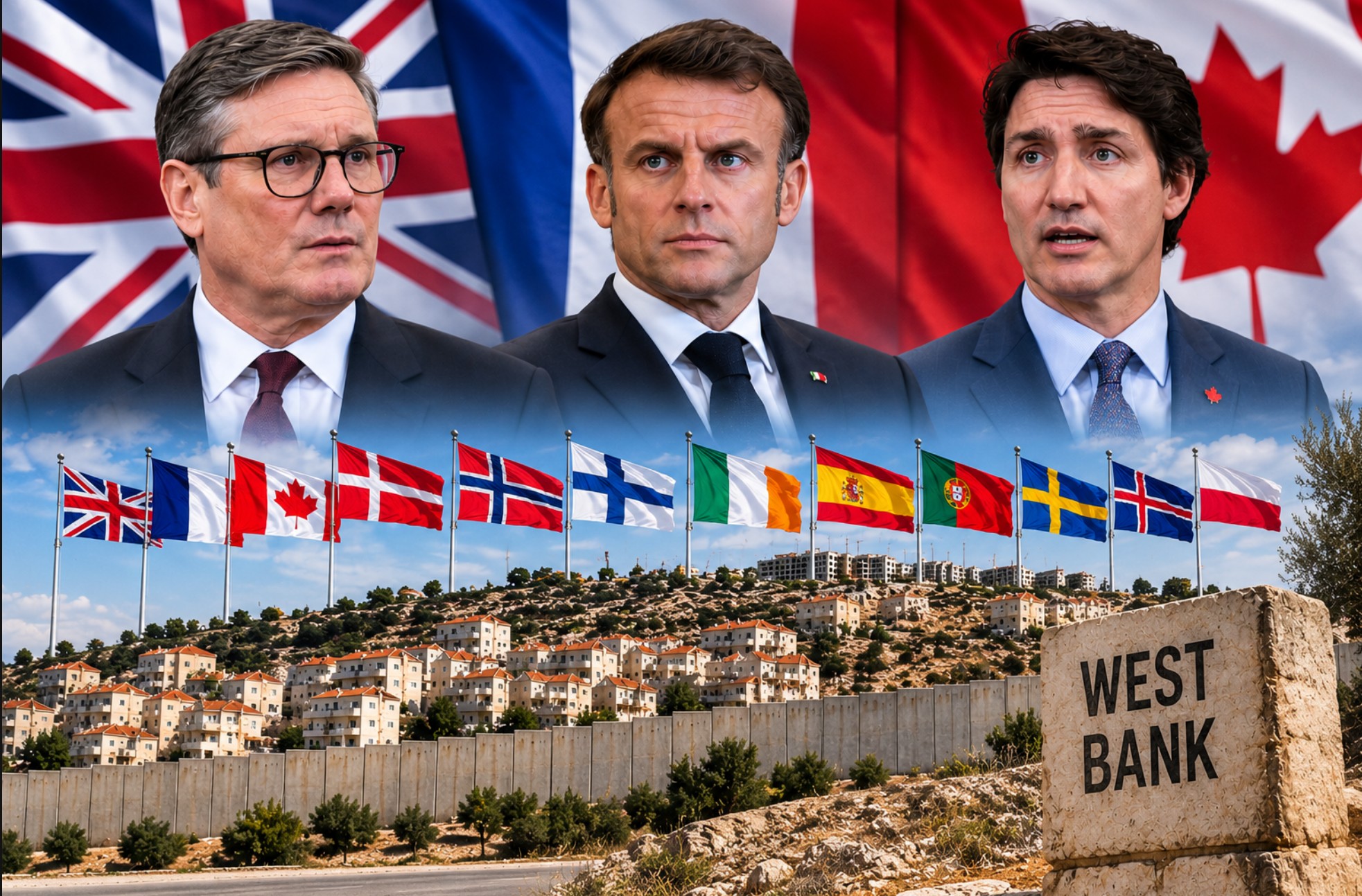
LONDON — Britain, France and Canada have announced plans to ban imports from Israeli settlements in the occupied West Bank, leading a coordinated push by 12 countries to increase pressure on Israel over settlement expansion and rising violence against Palestinians.
The measures, announced on Tuesday, represent one of the most significant coordinated actions by Western governments against Israeli settlements and have triggered an immediate diplomatic confrontation between Britain and Israel.
Foreign ministers from Canada, Denmark, Finland, France, Iceland, Ireland, Norway, Poland, Portugal, Spain, Sweden and the United Kingdom said the situation in the West Bank was deteriorating and warned that Israeli government policies were threatening the possibility of establishing an independent Palestinian state alongside Israel.
The 12 countries said they intended to introduce national restrictions, support European measures restricting trade in settlement goods, or were actively considering further action in accordance with their domestic procedures.
Britain, France and Canada went further, committing to national measures banning imports from settlements.
“The Government of Israel's actions in the West Bank are undermining the possibility of a two State solution,” the foreign ministers said in a joint statement.
They cited what they described as unprecedented levels of settler violence and settlement expansion, including Israel's decision to advance tenders for the E1 settlement project.
The governments called on Israel to halt settlement expansion, ensure accountability for violence committed by settlers and investigate allegations involving Israeli forces.
The announcement follows growing international concern over Israeli settlement activity in the West Bank, territory captured by Israel in the 1967 Middle East war and which Palestinians seek as a central part of a future independent state.
Most of the international community considers Israeli settlements in the occupied territory illegal under international law. Israel disputes that characterisation and maintains historical and security claims to the territory.
Britain announces wider measures
British Foreign Secretary Ed Miliband told Parliament that the government would introduce legislation banning imports of goods originating from Israeli settlements.
The measures are expected to take several months to implement.
Britain also plans sanctions targeting individuals and companies that finance or facilitate settlement expansion, as well as restrictions on advertising settlement property in the UK.
Miliband said the measures were directed specifically at settlements rather than Israel itself and stressed that Britain intended to maintain trade with Israel within its internationally recognised pre 1967 boundaries.
He also announced that Britain would refuse licence applications for arms and other exports that materially contribute to Israel's occupation of Palestinian territory.
The foreign secretary accused the Israeli government of failing to prevent the forced displacement of Palestinians in parts of the West Bank.
Miliband told Parliament that the British government believed Palestinians were facing what he described as “ethnic cleansing” in some areas by violent settlers.
He accused Prime Minister Benjamin Netanyahu's government of turning a blind eye to settler violence and said some Israeli government figures had supported policies contributing to Palestinian displacement.
Israel strongly rejected the accusations.
Israel retaliates against Britain
Within hours of the British announcement, Israeli Foreign Minister Gideon Saar unveiled a series of retaliatory measures against London.
Israel ordered the closure of the British Consulate in East Jerusalem, which has long played a central role in Britain's diplomatic engagement with Palestinians.
Israel also announced entry bans against 12 British nationals, including political figures, and said Britain would no longer participate in a United States led coordination mission dealing with Gaza.
British involvement in training Palestinian Authority security forces in the West Bank will also be halted.
Saar accused the British government of interfering in Israeli affairs and strongly rejected Miliband's allegations.
Israeli President Isaac Herzog also criticised the measures, arguing that they would damage relations and come at a politically sensitive moment for Israel.
Settlement expansion at centre of dispute
The coordinated action has been driven partly by concerns surrounding Israel's E1 settlement project.
The proposed development would involve thousands of housing units in an area between East Jerusalem and the Israeli settlement of Maale Adumim.
Critics say construction in the area would further fragment Palestinian territory and make the establishment of a geographically viable Palestinian state more difficult.
Israeli officials supporting the project argue that settlement construction should continue and reject international attempts to dictate where Israelis can live.
The issue has become increasingly important to European and Canadian governments seeking to preserve the possibility of a negotiated two state settlement.
British Prime Minister Andy Burnham, French President Emmanuel Macron and Canadian Prime Minister Mark Carney said systematic settlement expansion and the rise in violence posed a direct threat to that objective.
“Settlements are illegal under international law,” the three leaders said in a separate joint statement announcing their planned import restrictions.
They stressed that their measures were aimed at settlements rather than Israel as a country and reiterated their support for Israel's security alongside the establishment of a Palestinian state.
United States declines to join
The United States has indicated that it will not follow the three governments in imposing similar restrictions.
US Secretary of State Marco Rubio said Washington would not adopt the British approach while also saying the United States did not want to see further instability in the West Bank.
The differing positions highlight a growing divide between Washington and several of its Western allies over how to respond to Israeli settlement expansion.
The measures announced by Britain, France and Canada are expected to have a relatively limited direct economic impact because goods produced in West Bank settlements account for only a small share of Israel's overall exports.
Their diplomatic significance, however, could be considerably greater.
The decision distinguishes commercially between Israel within its pre 1967 boundaries and settlements established in occupied Palestinian territory, while opening the possibility of further sanctions against individuals and companies involved in settlement expansion.
For Israel, Britain's measures in particular have produced one of the sharpest diplomatic confrontations between the two countries in recent years.
For the 12 governments behind Tuesday's declaration, the measures are intended to signal that continued settlement expansion will carry increasing international consequences.
Whether the pressure alters Israeli policy remains uncertain. Netanyahu and members of his government have repeatedly defended settlement construction, while Israeli officials have rejected international attempts to restrict development in the West Bank.
The 12 countries, meanwhile, said further action remained possible as they seek to prevent additional settlement expansion and preserve the prospect of an eventual two state solution.