
Erratic rainfall threatens Ofada rice production in Ekiti as farmers abandon fields
Unpredictable rainfall, prolonged dry spells and recurring floods are forcing Ofada and Igbemo rice farmers in Ekiti State to reduce production, switch crops or leave rice farming altogether. Farmers say yields have fallen while cultivation costs have risen sharply, exposing them to severe losses when the rains fail or floods destroy crops. The Ekiti government says it is expanding agricultural insurance, climate resilient farming programmes and rice processing infrastructure to support producers. The underlying field reporting was published by PREMIUM TIMES on September 9, 2026.
EKITI — Unpredictable rainfall, prolonged dry spells and recurring floods are forcing rice farmers in Ekiti State to reduce production or abandon the crop altogether, threatening the future of one of south western Nigeria's best known locally produced rice varieties.
Farmers in several rice producing communities say weather patterns that once guided their planting seasons have become increasingly unreliable, resulting in repeated crop failures, shrinking harvests and rising production costs.
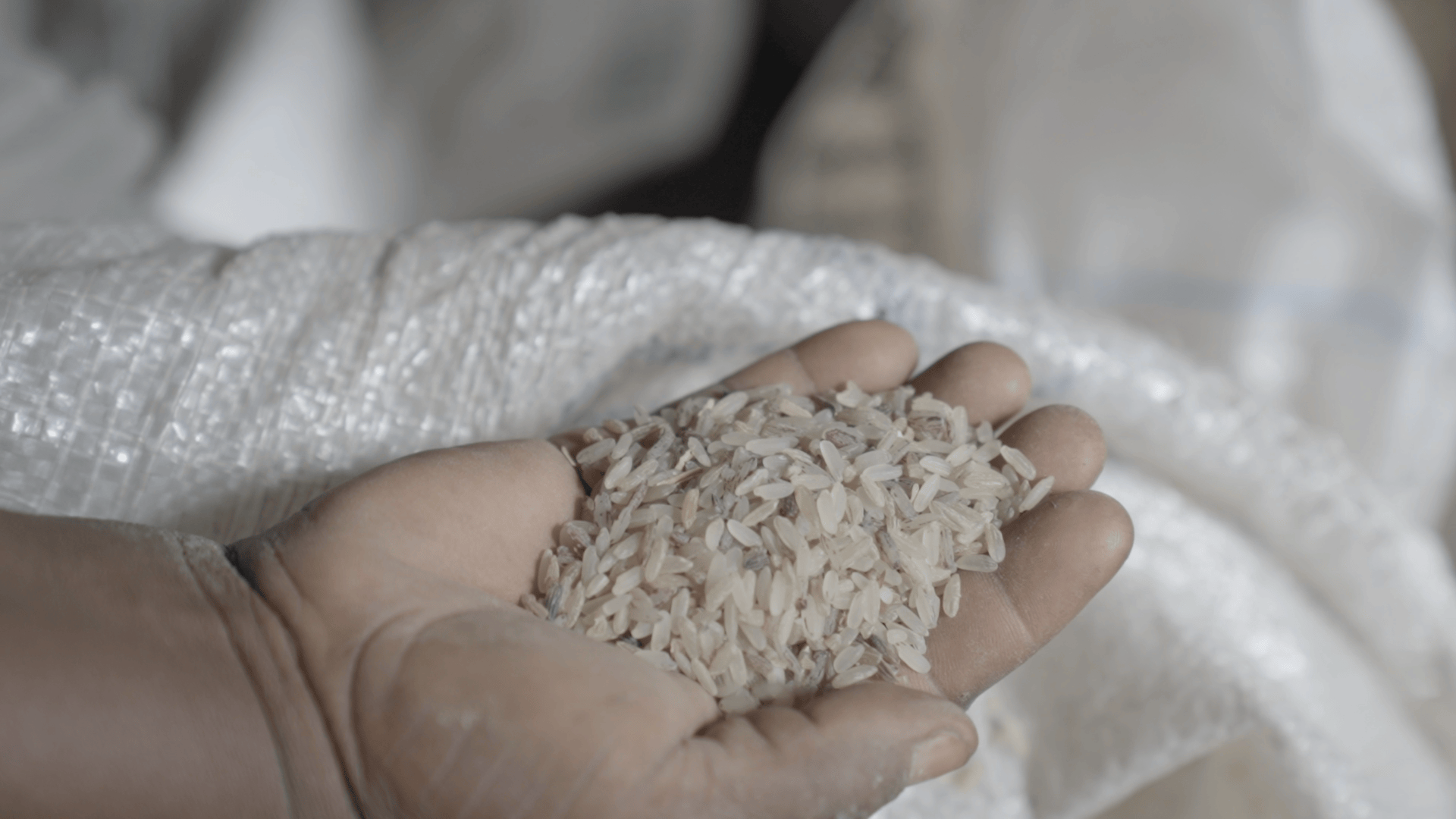
The disruption is particularly affecting Ofada rice, locally known in parts of Ekiti as Igbemo rice, an upland variety traditionally cultivated in areas including Orun and Igbemo.
Unlike irrigated rice production, many upland farmers depend almost entirely on rainfall.
But farmers say rains that previously arrived early enough for predictable planting have become increasingly delayed.
For some, planting before the rains now carries the risk that seeds will remain underground for weeks, deteriorate or be eaten by birds.
Waiting for the rains creates another problem. By the time planting begins, farmers may face unusually heavy rainfall later in the season, making harvesting more difficult.
A N1 million investment with nothing to harvest
Abu Ibrahim, a 28 year old farmer in Orun Igbemo, invested about N1 million in rice cultivation in 2024.
He planted approximately two hectares expecting the rains to begin in April.
Instead, rainfall arrived in May, stopped after an initial downpour and was followed by a dry period lasting more than two weeks.
The crop failed.
Ibrahim said he eventually had nothing to harvest from the investment.
His experience is increasingly common among rice farmers in communities across Ekiti.
Farmers in Igbemo, Aisegba, Ijan and Orun have reported similar losses during the 2023, 2024 and 2025 farming seasons.
Some have responded by significantly reducing the size of their rice farms.
Others have switched to maize, cassava and crops they believe may offer a better chance of surviving unpredictable weather.
Traditional farming calendar under pressure
Rice farmer Isiaka Tajudeen said farmers once followed a relatively established agricultural calendar.
Land clearing normally took place between December and March, followed by preparation and planting around the end of March or April.
That system depended on rainfall arriving at roughly predictable periods.
Farmers now increasingly wait until May or June before planting.
The delay has created uncertainty throughout the production cycle.
Tajudeen said some farmers who planted early this year lost seeds because the expected rains did not arrive.
The experience of previous seasons has also discouraged many farmers from planting rice at all.
The consequences can be seen in declining yields.
Farmers recalled that more than a decade ago, one hectare could produce between 11 and 13 bags, while two hectares could yield between 20 and 25 bags.
Tajudeen said he cultivated two hectares last year but harvested only eight bags.
Despite the losses, he returned to rice farming this year because agriculture remains his main source of income for supporting his wife and four children.
Production costs surge
Weather is not the only problem.
Farmers are also facing steep increases in the cost of cultivating rice.
Tunde Adeyemi, chairperson of the Rice Farmers Association of Nigeria in Ekiti State, said he previously cultivated between 60 and 70 hectares.
He has now reduced his rice operation to about seven or eight hectares.
According to Adeyemi, cultivating one hectare once cost around N150,000. The same area can now require between N600,000 and N700,000.
At current yields and market prices, he said the economics of rice farming have become increasingly difficult.
A hectare may produce approximately 2.5 to three tonnes, while a tonne can sell for around N120,000 to N130,000, according to figures provided by the farmer.
For producers facing those margins, a failed season can be financially devastating.
Adeyemi said he has diversified into other crops to protect his household income.
Ibrahim has made a similar adjustment, planting more than two hectares of maize while limiting rice cultivation to about one hectare.
Flooding creates a second threat
While upland farmers struggle with insufficient rainfall, growers cultivating rice in low lying and swamp areas face the opposite problem.
When heavy rains eventually arrive, rivers can overflow and submerge farms.
Swamp rice is cultivated in naturally wet areas including floodplains, wetlands and river basins.
Farmers traditionally wait for sufficient rainfall before planting.
But changes in the rainy season have made the timing increasingly difficult.
Adeyemi Obafemi, a farmer in Ijan Ekiti, said the Ogbese and Isesi rivers previously provided relatively manageable conditions for agriculture.
He said rainfall once moderated by around September, allowing farmers to harvest.
More recently, heavy rains have continued into October and sometimes later, raising river levels and destroying mature crops shortly before harvest.
Farmers say some flood incidents have caused losses running into tens of millions of naira.
Farmer's death highlights financial pressure
Farmers interviewed for the investigation also described the case of a 47 year old rice producer identified as Idowu, whose farm was badly damaged by flooding last year.
According to Adeyemi, Idowu was one of the larger rice farmers in the state and had borrowed about N16 million from a bank to finance his operation.
His farm was reportedly submerged for around three weeks at a period when the rice was close to being harvested.
Fellow farmers raised several million naira to assist him, while an insurance payment covered only a fraction of his reported losses.
He later became ill and died.
The account illustrates the financial risks increasingly facing farmers who borrow heavily to finance agricultural production without sufficient protection against climate related losses.
Farmers question access to insurance programme
The Ekiti State Government has introduced agricultural insurance intended to provide some protection against weather related losses.
In 2025, officials announced an Area Yield Insurance Cover programme involving thousands of farmers.
The scheme operates with Leadway Insurance and PULA Advisors and forms part of broader efforts to improve farmers' resilience to climate related risks.
However, several rice farmers interviewed in the affected communities said they were unaware of the programme.
Adeyemi, despite his leadership position in the state's rice farmers association, also said he had not previously heard about it.
Ekiti Commissioner for Agriculture and Food Security Ebenezer Boluwade disputed suggestions that the programme had failed to reach farmers.
He said about 7,000 farmers had been insured, with priority given to producers who had previously participated in government backed agricultural programmes.
Those initiatives included subsidised mechanisation, seeds, fertiliser, agrochemicals and land clearing.
Boluwade said the insurance covered rice and cassava farmers and had been publicised through extension services, radio and social media.
According to him, 33 farmers were randomly selected for verification and assessment under the programme.
The state plans to expand coverage to 10,000 farmers in 2026.
Yet none of more than a dozen rice farmers interviewed for the original investigation said they had benefited directly from the scheme.
The contrast has raised questions over how effectively government agricultural interventions are reaching farmers most exposed to changing weather conditions.
Local rice struggles for market share
Even when farmers produce successfully, selling Ofada and Igbemo rice presents another challenge.
Rice trader Kehinde Ajilosun said demand remains strongest among indigenous consumers familiar with the product.
Imported and other commercial rice brands continue to dominate many markets in Ekiti.
Only a relatively small number of traders were observed selling Igbemo rice in major markets in Ado Ekiti during the investigation.
Price is one factor.
Locally produced rice can be more expensive than competing brands, making it difficult to attract consumers already dealing with rising food costs.
The production challenges come at a time when rice remains one of Nigeria's most important staple foods.
Domestic consumption has continued to grow as the country's population expands, while local producers face challenges ranging from insecurity and financing difficulties to expensive inputs and changing weather patterns.
Recent USDA assessments have also pointed to pressure on Nigeria's rice sector from high production costs and reduced planted area, alongside continued demand for imported rice.
Irrigation remains too expensive for many farmers
Irrigation could reduce farmers' dependence on rainfall, but producers say the cost is beyond the reach of many small and medium scale growers.
Adeyemi said Ekiti has dams that could potentially support irrigation, but pumping water to farms requires fuel and equipment that many farmers cannot afford.
The cost of irrigation, he said, can exceed the financial return expected from the crop.
Weather forecasting has helped farmers make some decisions, but growers say rainfall does not always follow predicted patterns closely enough for them to rely entirely on forecasts.
For farmers working without irrigation or substantial insurance, a few weeks without rain can therefore determine whether an entire season succeeds or fails.
Government says production remains strong
Despite the difficulties described by farmers, the Ekiti State Government maintains that the state remains a major rice producer.
Boluwade said annual rice output in Ekiti was approaching 200,000 metric tonnes.
He said the government was working with Nigerian and international organisations to develop climate resilient agricultural practices and improve the rice value chain.
The state has also been working with the International Institute of Tropical Agriculture and other partners on Agricultural Transformation Centres and improved seed systems.
A commercial rice processing company, JMK Rice, is also expected to begin operations with an initial milling capacity of five tonnes per hour.
The government believes additional processing capacity could stimulate demand, create jobs and strengthen other parts of the rice production chain.
Boluwade also said Ekiti had been selected as the first pilot state for a Nigeria Brazil agricultural technology initiative intended to help farmers adapt to climate change.
A crop facing an uncertain future
For farmers in Orun, Igbemo, Ijan and other rice producing communities, however, the immediate challenge remains much simpler.
They need rain to arrive at the right time and in manageable quantities.
Too little rain at planting can destroy seeds before crops become established. Too much rain later in the season can submerge entire farms just before harvest.
Meanwhile, higher costs mean farmers are risking considerably more money each season.
Those pressures are already changing agricultural decisions.
Some farmers are reducing the amount of land devoted to rice. Others are moving towards maize, cassava and other crops, while some have stopped producing rice altogether.
If the trend continues, unpredictable weather could affect not only the livelihoods of farmers but also the future availability of Igbemo and Ofada rice, crops closely associated with the agricultural identity of communities in Ekiti State.
The challenge for government will be ensuring that climate adaptation programmes, insurance, irrigation, improved seeds and financing reach the farmers who need them before repeated losses force more producers out of the sector.