
2027: Atiku, Obi, Makinde hold ground as G 100 pushes for consensus candidate
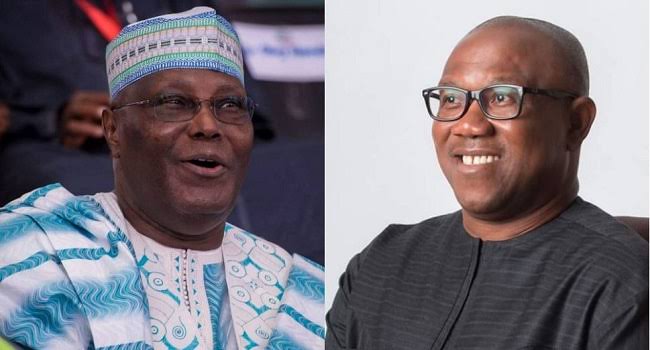
The G 100's attempt to produce a single opposition presidential candidate ahead of Nigeria's 2027 election is facing resistance as Atiku Abubakar, Peter Obi and Seyi Makinde maintain their presidential ambitions. The coalition hopes to reach an agreement by September 30, but several smaller opposition parties have also said their candidates will not step down.
Efforts to forge a united opposition front ahead of Nigeria's 2027 presidential election are facing a major test as Atiku Abubakar, Peter Obi and Seyi Makinde remain committed to their individual presidential ambitions despite moves to produce a consensus candidate.
The G 100, a coalition of political groups and stakeholders advocating greater cooperation among opposition parties, has set September 30 as its target for reaching an agreement on a single candidate capable of challenging President Bola Tinubu and the ruling All Progressives Congress.
But positions emerging from the camps of the leading opposition candidates suggest that reaching such an agreement may prove difficult.
Atiku, the presidential candidate of the African Democratic Congress, Obi, who is flying the flag of the Nigeria Democratic Congress, and Makinde, the Allied Peoples Movement candidate, have not indicated that they are prepared to withdraw for one another.
Several other opposition parties have also rejected the idea of abandoning their candidates simply to produce a single challenger to the APC.
The disagreement comes after opposition leaders and representatives of six political parties gathered at the Shehu Musa Yar'Adua Centre in Abuja for the G 100 Alliance Summit, where discussions focused on possible areas of cooperation ahead of the election.
Ambassador Umanu Elijah, a member of the G 100, said consultations were continuing and expressed confidence that the coalition would reach an agreement before the end of September.
“We had our first summit recently in Abuja with the opposition political parties and their presidential candidates. It is important to note that this is a gradual process. We have not adopted a single candidate yet, but that is the goal,” Elijah said.
He pointed to recent meetings between opposition figures, including Obi's visit to Makinde, as evidence that conversations were progressing.
“Meetings are going on behind the scenes, and I am sure that before the end of this month, we would have settled on a consensus candidate that we will ask other candidates and parties to support,” he added.
Atiku camp insists he will contest
Atiku's camp has maintained that the former Vice President remains open to discussions about opposition cooperation but has no intention of abandoning his presidential ambition.
His media aide, Paul Ibe, declined to comment on the G 100 initiative, but an ally of the former Vice President said Atiku would contest the 2027 election.
The ally argued that Atiku had long recognised the need for opposition cooperation and played a significant role in the political consultations that ultimately brought several opposition figures together under the ADC.
“Those who are now talking about coalition and alliance are only beginning to realise that Atiku is ahead of them,” the source said.
“Atiku Abubakar is now the candidate, while others are still talking about coalition, alliance and the G 100.
“Of course, as a statesman, he is open to discussions. Atiku has been engaging with any leaders who meet with him, so he remains open to dialogue. But Alhaji Atiku Abubakar is going to contest the 2027 election.”
That position presents an immediate challenge to the G 100 initiative, particularly if other leading candidates adopt a similar stance.
Makinde says he is running to win
Makinde's party has been equally emphatic about the Oyo State governor's intentions.
APM National Publicity Secretary Abubakar Yusuf said Makinde remained firmly in the presidential contest and had not entered the race merely to negotiate his way into another political arrangement.
“The Governor of Oyo State, who is the flag bearer of our party, is not in the race to take Nigerians for a ride, or for a joke, comedy or fun. He is in the race to win. He is contesting to win the 2027 election,” Yusuf said.
While acknowledging that the APM was participating in G 100 discussions, Yusuf argued that Makinde could himself emerge as the consensus candidate.
“What makes you think Makinde will not be adopted as the consensus candidate?” he asked.
“For now, all I can tell you is that His Excellency, the Oyo State Governor and candidate of our party, is in the contest to win. He has not stepped down for anybody.”
Obi's NDC open to negotiations
Obi's NDC has taken a slightly different approach, saying it supports discussions about opposition unity while maintaining that its candidate has a strong case to become the eventual consensus choice.
NDC National Publicity Secretary Osa Director said the party was already participating in talks and remained willing to engage other political groups.
“As a party, it is part of our principle that there is a need for us to come together. However, coming together does not mean that we do not have what it takes to win the election,” he said.
“Our presidential candidate is a popular and credible candidate.”
Director said the party believed Obi remained one of the strongest contenders among the opposition candidates and could ultimately emerge as the candidate around whom others unite.
The former Anambra State governor has continued to meet politicians across party lines.
His recent appearance at Makinde's presidential campaign office in Abuja attracted attention because both men are seeking the presidency on different platforms.
Obi described Makinde as qualified to become president, while maintaining that political opponents should be able to engage one another despite their differences.
Neither politician announced any agreement to withdraw from the race.
Sowore rejects opposition arrangement
While Atiku, Obi and Makinde remain involved in discussions, African Action Congress presidential candidate Omoyele Sowore has rejected the idea that opposition unity should simply mean producing one candidate.
Sowore argued that bringing politicians together without a shared ideology or programme would do little to address Nigeria's underlying problems.
“I do not subscribe to the idea that Nigeria's problem can be solved simply by gathering opposition politicians together and producing a so called single candidate. The real question is, united around what?” he said.
According to Sowore, any meaningful political alliance should be built around policies addressing economic justice, wages, education, healthcare, electricity, housing, security and accountable government.
“A single candidate without a common ideology, a clear programme and a commitment to fundamentally change Nigeria is merely another elite arrangement designed to change the occupants of power while preserving the system that has failed our people,” he said.
Asked whether he would withdraw if opposition leaders eventually settled on another candidate, Sowore ruled out doing so merely for the sake of political unity.
“I would not surrender the aspirations of millions of Nigerians for an elite political arrangement,” he said.
Smaller parties push back
Resistance is also coming from other opposition parties.
The Democratic Leadership Alliance said its candidate would not withdraw, while the Action Democratic Party has insisted that it intends to retain its presidential candidate.
ADP National Chairman Yabagi Sani said differences in interests, manifestos and programmes would make it difficult to merge the ambitions of several parties within a short period.
“The ADP has its own presidential candidate. Elections are about interests, so how do you align the interests of multiple individuals and political parties within the shortest possible time?” Sani said.
“Our candidate is not stepping down for anybody. Rather, we will appreciate and welcome those who are ready to step down and work for our candidate.”
Young Progressives Party presidential candidate Peter Agada has left the door open to cooperation, but said any arrangement would have to be based on ideology and a clear development framework.
September deadline tests opposition unity
The competing positions leave the G 100 with a difficult task as its September 30 target approaches.
Although several opposition parties agree that cooperation could strengthen their challenge to the APC, there is no agreement over who should surrender their presidential ambition or who should ultimately lead a united ticket.
For the G 100, the challenge will therefore extend beyond persuading opposition politicians that cooperation is necessary. It will have to convince presidential candidates who each believe they can win that one of them should step aside for another.
For now, Atiku, Obi and Makinde remain candidates, while several smaller parties have made clear that their own presidential ambitions remain intact.
Unless those positions change during the coming weeks, the opposition could enter the next phase of the 2027 campaign with multiple candidates despite continuing efforts to produce a united challenger to Tinubu.