Gumi Says Bandits Fear Being Killed If They Stop, Renews Call for Dialogue Amid Nigeria’s Security Crisis
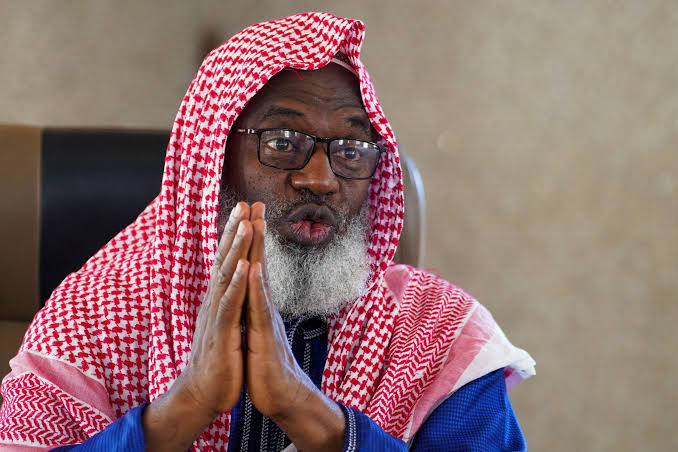
Sheikh Ahmad Gumi says some bandits told him they fear being killed if they abandon their violent activities. The cleric is calling for dialogue and assurances for those willing to surrender, while also alleging that ransom payments help armed groups acquire weapons and that foreign intelligence interests are involved in weapons supplies. His claims about coercion and foreign involvement have not been independently substantiated. His comments have renewed debate over negotiations, accountability and the protection of communities affected by banditry in Nigeria.
The cleric says some armed men told him they felt compelled to continue killing because they feared retaliation if they abandoned their activities, while his claims about foreign intelligence involvement in weapons supplies remain unsupported by publicly presented evidence.
Islamic cleric Sheikh Ahmad Gumi has renewed his call for dialogue with armed groups operating across northern Nigeria, saying some bandits he had encountered told him they feared they would be killed if they stopped their violent activities. His remarks have reopened a contentious national debate over whether negotiations can help end the country’s prolonged kidnapping and banditry crisis, or whether offering assurances to armed groups risks weakening accountability for killings, abductions and other serious crimes. Gumi made the comments during an interview with PAPShow published on October 29, 2026, and excerpts circulated widely on social media before Nigerian newspapers reported on them on November 3. The cleric presented the reported fear of retaliation as one reason some armed men might refuse to surrender, arguing that efforts to persuade them to abandon violence would require confidence that they would not be killed after laying down their weapons.
The disclosure came during a discussion about why civilians continue to suffer attacks by armed groups and why ordinary Nigerians appear to bear the greatest burden of kidnappings, killings and ransom demands. The interviewer challenged Gumi over the apparent disparity between the vulnerability of ordinary residents and the relative distance of political leaders and senior security figures from the direct consequences of bandit attacks. In response, the cleric described conversations he said he had held with armed men, claiming they had questioned the conduct of military personnel and local vigilantes during operations against suspected bandit groups. He said the men complained that women and children in their communities had been killed and that some vigilantes had arrested and killed suspected members of their groups. These allegations were relayed by Gumi as the grievances expressed by the armed men; they were not independently substantiated in the interview, and the cleric did not identify specific incidents, locations, dates or victims that would allow the claims to be assessed individually.
Gumi quoted the men as asking why military operations against cattle rustling and banditry had resulted in the deaths of women and children, and why vigilantes were allegedly arresting and killing people suspected of belonging to armed groups. He used those reported complaints to explain what he described as a cycle of revenge, in which attacks and counterattacks reinforce hostility and make it harder to persuade combatants to disengage. The cleric’s account placed the grievances of armed groups at the center of his argument for dialogue, but it did not establish that all bandits share the same motivations, that their claims are accurate, or that retaliation is the principal reason for the continuing violence. Nigeria’s banditry crisis involves multiple armed factions and criminal networks, with varying structures, methods and objectives, and the circumstances surrounding attacks can differ significantly from one community and state to another.
“So they feel it’s a field of blood, revenge, attack and counterattack,” Gumi said, describing the way he believed the armed men viewed the conflict. He argued that religious leaders had a responsibility to intervene by encouraging an end to the bloodshed and creating opportunities for reconciliation. “So we, as clergy, our own duty is to say, let’s stop the bloodshed. Let’s come to terms. It’s too much,” he said. His appeal reflects a position he has maintained for years: that direct engagement with armed groups, including conversations in their forest hideouts, can create openings for negotiations and potentially persuade some fighters to abandon violence. The approach has repeatedly divided public opinion, particularly among Nigerians whose families and communities have suffered kidnappings, killings, sexual violence, displacement and the destruction of livelihoods.
The most consequential part of the interview was Gumi’s account of what he said the armed men told him about their willingness to stop killing. According to the cleric, some claimed they were unhappy with the bloodshed but believed they would be killed if they abandoned their activities. He argued that the fear needed to be addressed if they were to be persuaded to surrender, saying authorities and other actors would have to provide credible reassurance that those who stopped fighting would not face revenge attacks. “They too are not happy. And they told me, ‘We are forced to do it.’ And they say because if they stop, they will be killed. So we need to reaffirm to them, to put confidence in them that they will not be killed,” he said.
That statement raises a difficult question at the heart of Nigeria’s security debate: how can the state create a route out of armed violence without allowing criminal groups to use the prospect of negotiation as protection from prosecution? The fear of retaliation described by Gumi may be relevant to understanding why some fighters resist surrender, but it cannot be treated as proof that they are unwilling participants in kidnapping, murder or other crimes. Nor does the claim that armed men fear being killed establish that they are entitled to immunity from prosecution or that victims should accept reconciliation without justice. A credible disarmament process would have to distinguish between individuals who genuinely wish to leave armed groups, those who have been coerced into participation, and commanders or perpetrators responsible for serious offenses. It would also need to protect communities from renewed attacks and ensure that victims are not excluded from decisions about accountability, compensation and their own security.
Gumi also addressed allegations that bandit groups receive financial backing from sponsors or other powerful interests. He said such sponsorship was possible and pointed to the large sums paid by families and communities to secure the release of kidnapped relatives. His argument was that ransom payments could provide armed groups with the money needed to acquire additional weapons, sustain their operations and expand their capacity to carry out further attacks. “It’s possible now, you know, it’s possible now because all those millions of naira being given to them as ransom, where do they go to? They buy weapons, more,” he said.
The connection between ransom payments and the continued availability of weapons is an important part of Nigeria’s security challenge, but Gumi’s comments did not provide financial records, named sponsors or independently verified evidence tracing particular ransom payments to weapons purchases. Kidnapping for ransom has become a major source of income for criminal groups in parts of the country, placing enormous pressure on families who often have to raise money through relatives, community contributions, borrowing or the sale of property. In many cases, families face an agonizing choice between paying money to secure the release of a loved one and refusing to finance the groups responsible for the abduction. Even where payments secure a victim’s release, the wider effect can be to reinforce a criminal economy in which kidnapping becomes financially attractive and communities remain exposed to repeated attacks.
The scale of that problem has made ransom financing a recurring concern for security agencies, policymakers and civil society organizations. Payments can be difficult to track because negotiations are frequently conducted privately, victims’ families may fear retaliation if they disclose details, and transactions can involve intermediaries. The lack of transparent information makes it difficult to establish how much money is collected by individual networks, how it is distributed among commanders and fighters, or how much is spent on weapons, logistics, recruitment and other activities. Gumi’s suggestion that ransom proceeds are used to buy more weapons is therefore a claim that requires further evidence, even though the broader concern that kidnapping generates revenue for armed groups is well established in Nigeria’s security debate.
The cleric went further by describing the weapons trade as a black market that allows buyers with sufficient money to obtain firearms and ammunition. He compared the trade to the illegal drug market and alleged that foreign intelligence interests were involved in supplying weapons to armed groups. “It’s a black market, like drugs. It’s a black market. If you just have the money, you get them. And their suppliers are foreign intelligence, they definitely have a hand in it,” he said. The allegation is serious, but Gumi did not identify the intelligence agencies, countries, suppliers, routes or transactions he was referring to, and he did not present evidence during the interview to substantiate the claim. It should therefore be treated as an allegation made by the cleric, not as an established explanation for the proliferation of weapons in Nigeria.
The circulation of illegal firearms across the Sahel and the wider West African region has long complicated security operations. Porous borders, trafficking networks, political instability in neighboring countries and the movement of weapons from conflict zones have contributed to the availability of firearms to criminal groups and armed factions. The collapse of state authority in parts of the Sahel following years of conflict has also created opportunities for weapons to move through informal routes across national boundaries. These regional dynamics provide important context for Nigeria’s arms-trafficking problem, but they do not independently confirm Gumi’s specific allegation that foreign intelligence agencies are supplying weapons to bandits. Establishing responsibility would require credible intelligence, documented supply chains, financial investigations and evidence that can be independently examined.
Nigeria’s banditry crisis has evolved beyond isolated cattle-rustling incidents into a complex security emergency involving mass kidnappings, attacks on villages, killings, extortion, displacement and the disruption of farming and local commerce. Armed groups operating across parts of the northwest and north-central regions have developed different patterns of activity, with some relying heavily on ransom kidnapping while others combine cattle rustling, attacks on settlements, illegal taxation and control of rural territory. Their operations have affected communities in states including Zamfara, Katsina, Kaduna, Sokoto, Niger and Kebbi, although the intensity and nature of attacks vary by location and period. The insecurity has forced some residents to abandon their homes and farms, weakened local economies and made travel along certain roads increasingly dangerous.
For rural communities, the consequences extend well beyond the immediate victims of an attack. Farmers who cannot safely reach their fields lose income and may be unable to plant or harvest crops, while traders face higher transport costs and the risk of abduction. Schools and health facilities can be disrupted when communities become unsafe, and families displaced by repeated attacks may struggle to access food, shelter, education and medical care. In areas where armed groups impose illegal levies or threaten residents who refuse to comply, the distinction between kidnapping, extortion and territorial control can become increasingly blurred. The result is a climate of insecurity in which residents may face pressure from criminal groups while also depending on security forces whose operations are intended to restore order.
The Nigerian government has pursued military operations, intelligence-led interventions, arrests and other security measures against armed groups, while state governments and local authorities have at different times explored dialogue, amnesty arrangements or community-level agreements. These approaches have produced mixed results. Some negotiations have reportedly secured the release of abducted people or reduced violence temporarily in particular areas, but agreements have also been criticized when armed groups have returned to attacks or used periods of reduced pressure to reorganize. The central difficulty is that bandit groups are not a single organization with one leadership structure capable of binding every faction to a nationwide agreement. A deal with one commander may have little influence over rival groups, splinter factions or criminal networks operating independently.
Gumi has been a prominent advocate of engagement with armed groups, and his involvement in discussions with bandits has attracted sustained criticism from Nigerians who believe negotiations risk legitimizing violent criminal organizations. Supporters of dialogue argue that military force alone has not ended the crisis and that communication may be necessary to secure the release of captives, encourage defections and reduce attacks on vulnerable communities. Critics counter that repeated negotiations can reward kidnapping, create incentives for further abductions and leave victims feeling that the suffering inflicted on them has been subordinated to agreements with their attackers. They also question whether assurances offered to armed men can be enforced when groups have repeatedly violated ceasefires or agreements in the past.
The disagreement reflects a broader policy dilemma confronting Nigeria: military pressure may weaken armed groups, but it does not automatically dismantle the economic and social networks that sustain them. Criminal groups can recruit new members where poverty, unemployment, weak local governance and limited access to education create conditions for exploitation. In some communities, the absence of effective policing and justice systems has allowed armed actors to impose their own rules, collect payments and exploit disputes over land, livestock and local authority. These conditions do not excuse violence or remove individual responsibility, but they help explain why security operations must be accompanied by measures that restore public confidence, protect communities and address the conditions that allow criminal networks to survive.
Any proposal to offer guarantees to fighters who surrender would therefore require careful safeguards. Authorities would need a transparent process for identifying individuals who are eligible for reintegration, determining whether they have committed serious crimes and deciding how victims can seek justice. Those responsible for murder, mass abductions, sexual violence and other grave offenses cannot simply be treated as ordinary participants in a disarmament program without consideration of the law and the rights of those harmed. At the same time, individuals who were recruited under threat or who wish to leave armed groups may require protection from retaliation and a realistic route back into civilian life. Without a credible distinction between these categories, a surrender program could become difficult to enforce and could undermine public confidence.
The protection of victims must remain central to any negotiations. Families who have lost relatives, survivors of kidnapping and sexual violence, and communities forced from their homes have legitimate claims to security, accountability and compensation. They should not be expected to accept an agreement simply because a cleric, politician or security official believes it could reduce violence. A durable settlement would require consultation with affected communities, clear commitments from armed groups, independent monitoring and consequences for violations. It would also require the state to demonstrate that communities will not be abandoned after weapons are surrendered and that criminal groups cannot return to extortion or intimidation under a different name.
Gumi’s comments also place renewed focus on allegations of misconduct during security operations. Claims that military personnel or vigilantes have killed civilians must be investigated through credible and independent processes, with evidence gathered from witnesses, survivors, medical records and other relevant sources. Security forces operating in areas affected by banditry face dangerous conditions, but the need to combat armed groups does not remove their obligation to protect civilians and comply with the law. Equally, allegations made by suspected criminals should not be accepted without scrutiny, particularly when they may be used to justify attacks on communities or to shift responsibility away from those who planned and carried out kidnappings and killings. Accountability for abuses by any party is essential if residents are to trust the institutions expected to protect them.
The role of local vigilante groups is another sensitive dimension of the crisis. Community-based security networks have emerged in some areas because residents believe formal security forces cannot provide adequate protection against armed attacks. Such groups may possess local knowledge that helps identify suspicious movements and support security operations, but their activities can also raise concerns about training, oversight, due process and the risk of reprisals against people wrongly accused of collaborating with bandits. Where vigilantes operate without effective accountability, they can deepen community tensions and create further grievances. The appropriate response is not to abandon local protection arrangements where they are necessary, but to ensure that all security actors operate within clear legal limits and that allegations of unlawful killings are properly investigated.
The cleric’s remarks have not, on their own, produced a new peace agreement, a formal surrender arrangement or an announced government policy change. They are an account of conversations he says he had with some armed men and an argument for creating conditions under which they might be persuaded to stop fighting. The distinction matters because the interview does not establish how many individuals expressed the fear he described, whether they belonged to a particular group, whether they had the authority to influence their commanders or whether they would actually surrender if given assurances. It also does not establish that the men’s stated fear was their only reason for continuing to participate in violence. Their claims require independent examination, just as allegations of abuses by security personnel and vigilantes require investigation.
The claims about foreign intelligence involvement in weapons supplies also remain unresolved. Gumi’s comments raise questions about the sources of firearms used by criminal groups, the routes through which weapons enter the country and the possible role of intermediaries who profit from trafficking. However, without identifiable suppliers, documented transactions or corroborating intelligence, the allegation cannot be used to assign responsibility to foreign governments or agencies. Nigerian authorities would need to investigate the financing and logistics of arms trafficking, strengthen border intelligence and pursue the networks that make weapons available to criminal groups. Public confidence will depend on evidence-based findings rather than speculation about unnamed foreign actors.
For now, Gumi’s intervention has returned the debate to the difficult balance between negotiation and accountability. His argument is that some armed men may be unwilling to surrender because they fear they will be killed if they do, and that credible guarantees could create an opening for them to leave the violence. The counterargument is that assurances without enforcement, justice and protection for victims could encourage further criminality and weaken confidence in the state. Nigeria’s security challenge will not be resolved by dialogue alone, just as military operations cannot guarantee lasting peace without effective policing, functioning justice systems and the restoration of livelihoods in affected communities. Whether Gumi’s proposed approach can contribute to a meaningful reduction in violence will depend on evidence, the willingness of armed groups to make verifiable commitments, the government’s capacity to enforce any agreement and, above all, whether the communities that have endured years of attacks can finally live without fear.