TRUMP ADMINISTRATION BACKS DOWN ON FBI AND ICE POLL MONITORS AHEAD OF MIDTERMS
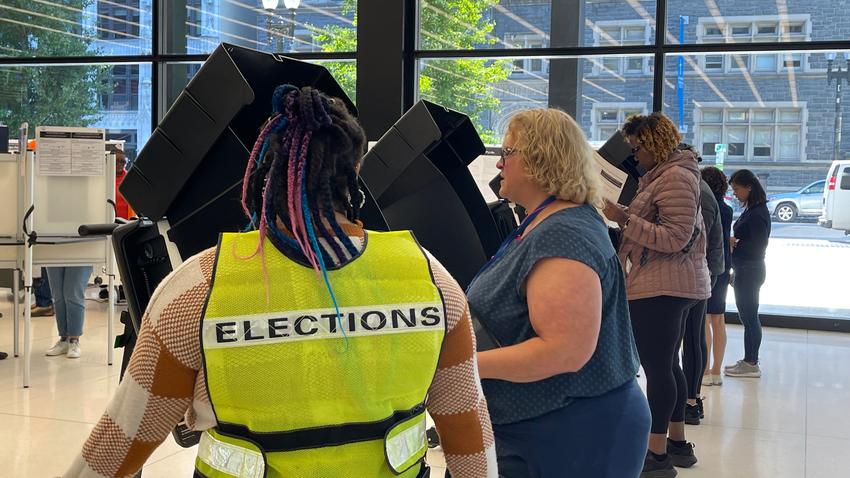
The U.S. Department of Justice has confirmed that FBI and Immigration and Customs Enforcement personnel will not serve as polling-place monitors during the November 3 midterm elections. The clarification came in a federal court filing after the NAACP challenged the administration’s plans over concerns about voter intimidation. Employees from the Bureau of Prisons, DEA and ATF may still participate, but the Justice Department says monitors will be unarmed, will act only as observers, must follow state and local election rules and cannot interfere with voting.
The Trump administration has confirmed that FBI agents and Immigration and Customs Enforcement personnel will not be deployed as election monitors at polling places during the November 3 midterm elections, offering a significant clarification just days before Americans vote in an election that will determine control of Congress and after civil-rights groups raised concerns that the presence of federal law-enforcement officers could intimidate voters.
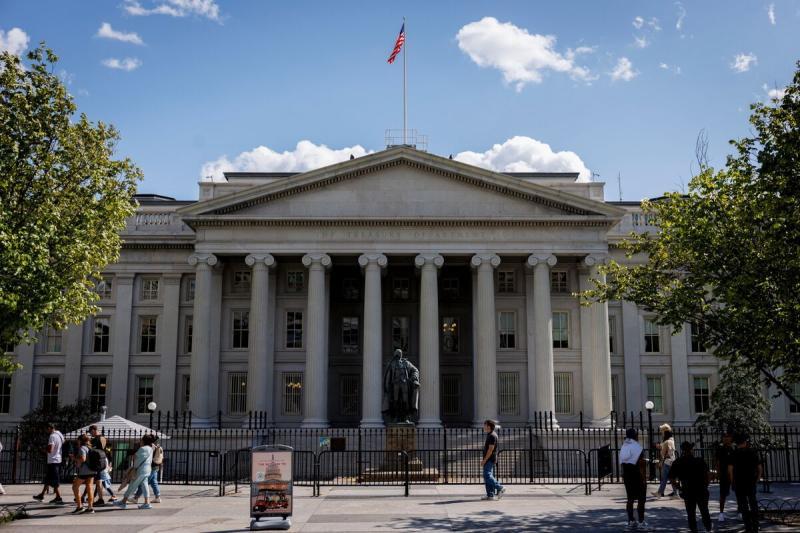
The U.S. Department of Justice disclosed the decision in a federal court filing submitted in litigation brought by the NAACP, which has challenged the administration’s plans for a significantly expanded federal election-monitoring operation. According to the filing, no FBI or ICE employees will serve as monitors during the midterm elections, although personnel drawn from several other federal agencies will still participate in the Justice Department’s nationwide monitoring effort.
Those agencies include the Federal Bureau of Prisons, the Drug Enforcement Administration and the Bureau of Alcohol, Tobacco, Firearms and Explosives. Their participation has also attracted scrutiny because each organization is normally associated with federal law enforcement rather than civilian election administration, but the Justice Department said employees assigned to monitor polling places will not operate in their normal enforcement capacities.
The filing states that federal monitors will primarily observe activities at polling locations and take notes. They will not be permitted to carry firearms while serving as monitors, have been instructed not to interfere with voters or election workers and are required to comply with state and local laws regulating who can enter polling locations and what activities are permitted inside them.
The Justice Department said monitors have been trained to follow those restrictions in accordance with established election-monitoring practices. Federal monitoring of elections is not itself new. The department’s Civil Rights Division has for decades deployed attorneys and other personnel to observe elections and assess compliance with federal voting-rights laws, particularly in jurisdictions where allegations of racial discrimination, disability-access problems or other violations have raised concerns.
What has generated controversy in 2026 is the scale of the planned monitoring operation and the government agencies from which the administration has considered drawing personnel. The Justice Department has said it intends to send approximately 1,000 federal employees to monitor elections around the country, a deployment significantly larger than monitoring efforts used in previous midterm elections.
The department has said the monitors are intended to observe compliance with federal election law and help protect public confidence in the integrity of the vote. Administration officials have also argued that federal authorities have a legitimate interest in ensuring election laws are followed and that voters are protected from unlawful activity.
Civil-rights organizations, several Democratic officials and some state election administrators have expressed concern that sending large numbers of federal employees, particularly personnel associated with immigration or criminal law enforcement, could have the opposite effect by discouraging some eligible citizens from entering polling places.
Those concerns became especially intense around the possibility that ICE agents could appear at voting locations. The Trump administration has pursued an aggressive immigration-enforcement agenda, and civil-rights organizations argued that the sight of immigration officers near polling stations could discourage naturalized citizens, members of immigrant families and other eligible voters from participating even if those agents were technically present only as monitors.
The Department of Homeland Security had previously said that ICE was not planning enforcement operations targeted at polling places during the midterms. The new Justice Department filing goes further by expressly stating that ICE employees will not be assigned to the federal election-monitoring program.
The FBI has also been excluded from the monitoring operation. The bureau traditionally plays a role in investigating federal election crimes when credible evidence of criminal activity emerges, but its investigators generally do not perform routine observation inside polling places. The Justice Department’s latest filing confirms that distinction will remain in place during the November 3 vote.
The decision follows legal action by the NAACP and other voting-rights organizations challenging the administration’s broader approach to federal presence around elections. In one of its lawsuits, the NAACP argued that plans to use prosecutors and federal law-enforcement personnel as election monitors risked creating a chilling effect on voters and could amount to unlawful intimidation.
The NAACP has said communities of color and immigrant communities are especially vulnerable to such intimidation because of the administration’s immigration enforcement policies and public statements concerning alleged voter fraud. The organization has sought judicial restrictions intended to prevent federal personnel from using election monitoring as a pretext for law enforcement or activities unrelated to protecting voting rights.
The Justice Department disputes the suggestion that its monitors are intended to intimidate voters. Its position is that monitors will be neutral observers, will not interfere with voting and will be trained to follow federal, state and local election laws. The department has repeatedly emphasized that personnel assigned to polling places are expected to observe and document rather than question voters, handle ballots or direct election officials.
The court filing appears designed in part to address some of the specific fears raised in the litigation by setting limits on who will participate and what those monitors can do. The explicit exclusion of the FBI and ICE removes two agencies that had attracted some of the strongest opposition from civil-rights groups.
The continued participation of personnel from the Bureau of Prisons, DEA and ATF means the dispute may not completely disappear. All three organizations are federal law-enforcement agencies, and the NAACP’s challenge has raised broader questions about whether employees from agencies associated with criminal enforcement should be used in polling-place observation at all.
The Justice Department’s answer is that the individual employees serving as monitors will not exercise law-enforcement powers while performing that role. They will be unarmed and limited to observing election procedures, taking notes and reporting what they witness through the department’s monitoring structure.
Federal law places important restrictions on government activity at polling places. Election administration in the United States is primarily conducted by state and local authorities, while the federal government has responsibility for enforcing national voting-rights protections and investigating certain election-related crimes.
The Justice Department’s Civil Rights Division has long sent attorneys and staff into polling locations to assess compliance with laws including the Voting Rights Act and the Help America Vote Act. Historically, those monitoring teams have focused heavily on whether eligible voters are being discriminated against, whether language-assistance requirements are being followed and whether polling places are accessible to voters with disabilities.
Federal observers can also be appointed under specific provisions of the Voting Rights Act in jurisdictions subject to court orders, although that program is legally distinct from the broader Justice Department monitoring effort that has become controversial this year.
The administration’s 2026 plan represents a significant expansion in scale. Justice Department officials have said approximately 1,000 personnel could be sent across all 50 states, compared with a much smaller deployment during previous midterm cycles.
Officials have said monitoring will focus on areas with large populations, jurisdictions where election concerns have previously been raised and districts where closely contested races could generate complaints or legal disputes.
The scale of the operation has prompted some state governments to prepare their own responses. Election officials in several states have discussed assigning state personnel to accompany or observe federal monitors, both to ensure the monitors comply with local rules and to reduce the risk of confusion inside polling locations.
Some election administrators have also sought detailed information from the Justice Department about who will arrive, what legal authority they will rely on and whether they intend to speak with voters or election workers.
Those questions followed incidents during primary elections earlier in the year in which federal monitors appeared at polling locations and local officials raised concerns about the way some personnel attempted to conduct their work. The Justice Department has rejected claims that its monitors behaved improperly and says all personnel are being instructed to comply with applicable laws during the general election.
The November 3 elections will decide all 435 seats in the House of Representatives, a significant portion of the Senate and numerous state and local offices. Control of Congress could determine how effectively President Donald Trump can advance his legislative agenda during the final two years of his current term, making the election politically consequential for both major parties.
That high-stakes environment has produced an unusually intense focus on election administration. Political parties, voting-rights organizations, state governments and federal officials are preparing large networks of observers, attorneys and election-protection volunteers to monitor polling places and respond quickly to disputes.
Independent voting-rights groups and partisan organizations are also preparing tens of thousands of observers and volunteers nationwide, creating the possibility that some polling locations will have multiple groups watching election procedures simultaneously.
Election officials have warned that the presence of observers must not become disruptive. Poll workers need enough space to process voters, handle ballots and address routine problems without interference from people who are present primarily to observe.
The Justice Department’s filing attempts to draw that boundary clearly. Federal monitors are expected to observe, take notes and report possible legal concerns but are not supposed to interrupt the voting process, question voters about eligibility or use normal law-enforcement powers while inside polling facilities.
The prohibition on firearms is another significant part of the government’s position. Federal law generally restricts armed federal personnel from being stationed at polling places, a safeguard rooted in longstanding concerns about the possibility of government intimidation in elections.
Employees who normally carry weapons as part of their jobs with agencies such as the DEA or ATF will therefore not be permitted to carry firearms when participating in the monitoring operation.
The department has also said personnel must comply with local rules concerning access to polling locations. Election laws vary considerably from state to state, with some jurisdictions allowing accredited observers inside polling rooms while others place tighter restrictions on where monitors can stand and how they can interact with election workers.
The department’s acknowledgment of those state and local rules is significant because elections in the United States are not directly administered by the federal executive branch. State and local authorities establish polling sites, employ election workers, handle ballots and conduct vote counting under a combination of state law and federal constitutional requirements.
The federal government’s role is primarily supervisory and enforcement-based in areas covered by federal law. That division of authority has become a major source of tension between the Trump administration and state officials during the current election cycle.
The administration has sought voter-registration information from states and has argued that stronger federal scrutiny is necessary to maintain confidence in election integrity. Some state officials have resisted those demands, citing privacy concerns and arguing that Washington is attempting to exercise powers traditionally reserved for states.
Trump has repeatedly raised concerns about voter fraud and election security, although documented cases of illegal voting have historically represented a very small fraction of ballots cast in federal elections. The administration argues that stronger enforcement and monitoring are necessary as preventive measures rather than responses only after fraud has occurred.
Civil-rights groups counter that unsupported claims of widespread fraud can be used to justify policies that make voting more difficult or create fear among lawful voters. The NAACP’s litigation fits within that broader dispute over how election integrity should be protected without intimidating eligible voters or undermining public confidence.
The organization began scrutinizing the Justice Department’s 2026 monitoring plans months before Election Day and sought records concerning the legal authority, training materials and deployment plans for federal monitors. When it concluded that the administration’s plans could involve law-enforcement personnel at polling places, it pursued additional legal action.
The October court filing now provides some of the clearest information yet about the final structure of the government’s plan. FBI and ICE personnel will not be election monitors, but staff drawn from other parts of the federal government, including several law-enforcement agencies, can participate under strict limitations.
Whether those assurances satisfy the NAACP and other challengers remains to be seen. The litigation could continue over the remaining federal monitors and the broader question of whether the government’s deployment is lawful and appropriately limited.
The practical test will come on November 3. Election workers across the country will have to manage not only voters and routine administrative challenges but also federal observers, state monitors, partisan representatives and nonpartisan election-protection groups operating under different rules and legal authorities.
The Justice Department says its personnel will not interfere. Civil-rights groups will be watching closely to determine whether that promise is followed in practice.
Any incident involving federal monitors attempting to question voters, direct election workers or exercise law-enforcement powers could quickly lead to emergency legal challenges. Conversely, a monitoring operation in which personnel simply observe and document election procedures may reduce some of the fears that prompted the lawsuits.
For the Trump administration, the court filing provides a clearer boundary only days before Election Day. FBI agents will not serve as poll monitors, ICE personnel will not serve as poll monitors, and those federal employees who are deployed must remain unarmed and operate solely as observers.
The distinction will be closely watched because the dispute is ultimately about more than which agencies appear at individual polling stations. It concerns the balance between federal election oversight, state authority and the right of eligible Americans to vote without intimidation.
With the midterms now days away, the Justice Department has attempted to reassure the court and the public that its expanded election-monitoring operation will remain within those limits. The next question is whether the deployment on November 3 proceeds as described and whether voters, state officials and civil-rights groups accept the government’s assurances once the monitors arrive at polling locations across the country.