U.S. TREASURY PROPOSES TOUGHER RULES ON AMERICAN INVESTMENT IN CHINESE AI, SUPERCOMPUTING AND OTHER STRATEGIC TECHNOLOGIES
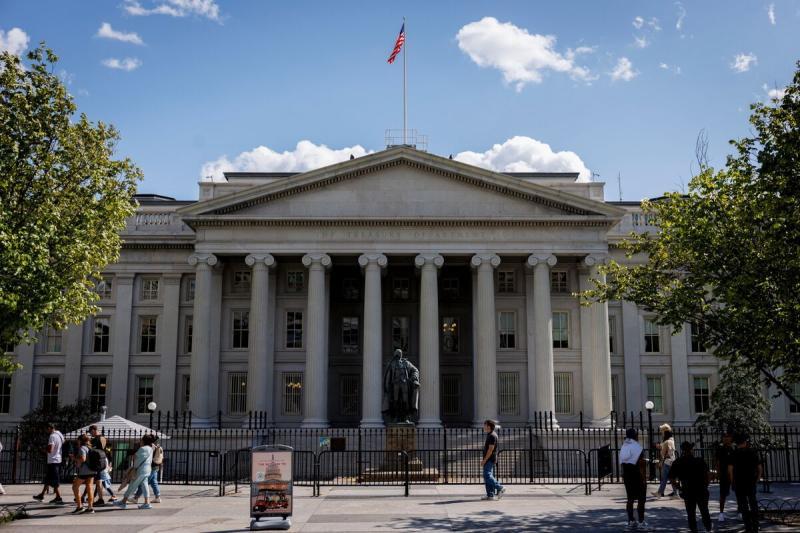
The U.S. Treasury Department has proposed expanded restrictions on American outbound investment in China, Russia and other designated countries of concern, targeting six sensitive technology sectors including artificial intelligence, advanced semiconductors, quantum computing, high-performance computing and supercomputing, hypersonic systems and biotechnology. Certain AI investments would be prohibited outright, while other covered transactions would require notification to Treasury. The proposal implements the COINS Act and expands an existing outbound-investment system that first took effect in 2025. Public comments will remain open until December 7, 2026.
The United States Treasury Department has proposed a sweeping expansion of restrictions on American investment in advanced technology sectors tied to China, Russia and other designated strategic competitors, with artificial intelligence, supercomputing, semiconductors, quantum technologies and biotechnology among the areas facing heightened scrutiny. The proposed rules are designed to prevent U.S. capital, expertise and business networks from helping foreign entities develop technologies that Washington believes could strengthen military capabilities, surveillance systems, intelligence operations or other national-security functions. The new framework would broaden an outbound-investment regime that initially focused primarily on China and would establish stricter requirements for American investors seeking exposure to sensitive technology companies in several countries identified by U.S. law as national-security concerns.
The Treasury announced the proposal on October 22 under the Comprehensive Outbound Investment National Security Act, commonly known as the COINS Act, which Congress enacted as part of the 2026 National Defense Authorization Act. The legislation transformed what had previously been an executive-branch policy into a broader statutory framework, giving Treasury authority to require notification for certain transactions and prohibit others altogether where U.S. officials believe the investment could contribute to technologies with military, intelligence, surveillance or cyber applications. Treasury Secretary Scott Bessent said the goal is to prevent strategic competitors from using American capital and commercial expertise to accelerate the development of technologies that could ultimately be used against U.S. national-security interests.
The proposed rules cover six major technology sectors. Five were specifically identified by Congress: semiconductor technologies and microelectronics, artificial intelligence systems, quantum information technologies, high-performance computing and supercomputing, and hypersonic systems. Treasury added biotechnology as a sixth category, arguing that advances in areas such as biological engineering, brain-computer interfaces and other cutting-edge life-science technologies could create national-security risks if they are developed or controlled by foreign entities linked to military programs or hostile governments.
Artificial intelligence is among the most heavily restricted areas in the proposal. According to Reuters and Treasury documents, some covered investments involving AI in designated countries would be prohibited outright rather than merely subject to notification. Treasury officials said the decision reflects the speed of recent developments in artificial intelligence and the difficulty of drawing a reliable regulatory line between advanced models with commercial uses and systems that could provide military, intelligence, surveillance or cyber advantages. The proposal reflects growing concern in Washington that American venture capital, private-equity investment and technical expertise could indirectly help foreign competitors build next-generation AI systems even when no physical technology is exported.
The restrictions are also intended to address high-performance computing and supercomputing, technologies that have become increasingly important to the global competition over artificial intelligence. Powerful computing systems are essential for training advanced AI models, conducting large-scale scientific simulations, developing military technologies and processing enormous volumes of data. Washington has already imposed export controls on advanced chips and semiconductor-manufacturing equipment, but Treasury officials argue that restricting hardware exports alone does not address the separate problem of U.S. investors providing capital, managerial experience, supply-chain connections and access to business networks that can help foreign technology companies expand.
Treasury Assistant Secretary Christopher Pilkerton said the new approach is based on the idea that the security risk does not come only from money. Investment relationships can also provide companies with access to strategic networks, professional expertise, commercial partnerships and supply-chain relationships that may be difficult to regulate through traditional export controls. In that sense, the proposed rules are intended to complement existing restrictions on the sale of advanced technology rather than replace them.
The outbound-investment system began under former President Joe Biden in 2023, when an executive order established restrictions on certain U.S. investments connected to China, Hong Kong and Macau in the semiconductor, quantum-computing and artificial-intelligence sectors. Treasury finalized the original implementing rules in October 2024, and the program took effect in January 2025. Under that earlier framework, some transactions were prohibited while others required notification to the Treasury Department.
The new COINS Act framework significantly expands that structure. Instead of focusing only on China and its special administrative regions, Congress broadened the definition of countries of concern to include China, Cuba, Iran, North Korea, Russia and, under the original statutory language, Venezuela under the government of Nicolás Maduro. Treasury removed Venezuela from the current list because Maduro’s government no longer exists following his removal from power earlier this year, although the department said certain investments involving Venezuelan entities could still potentially fall within the rules depending on their ownership or connections.
That leaves five countries directly identified in the proposed regulations: China, Cuba, Iran, North Korea and Russia. China remains the central focus because of the scale of its technology sector and the depth of U.S. financial exposure to Chinese companies, but the expanded framework reflects Washington’s broader concern that sensitive technologies could be developed through investment relationships involving multiple strategic competitors rather than China alone.
The proposed system does not amount to a blanket prohibition on American investment in those countries. Treasury says it is targeting transactions involving entities engaged in specific dual-use technologies that could support military modernization, surveillance, intelligence operations or other capabilities viewed as harmful to U.S. national security. Ordinary commercial activity outside those sensitive areas would not automatically be banned, and the proposal includes several exceptions intended to avoid shutting down legitimate investment unnecessarily.
Among the proposed exceptions are investments in publicly traded securities and transactions valued below $50,000. Treasury would also allow investors to seek exemptions where a transaction is considered to be in the national interest of the United States. The rules would additionally exclude certain pharmaceutical licensing arrangements with China, responding to concerns raised by major drugmakers that an overly broad investment regime could disrupt legitimate research partnerships, medicine development and commercial licensing.
The pharmaceutical exemption reflects one of the central challenges facing the Treasury Department as it tries to restrict strategic investment without disrupting commercial activity that U.S. companies consider economically important. Biotechnology, in particular, sits at the intersection of national security, healthcare, scientific research and private investment. Advanced biological tools can be used for legitimate medical innovation but may also have military or surveillance applications, forcing regulators to draw distinctions between technologies with similar scientific foundations but very different uses.
Treasury’s addition of biotechnology demonstrates how quickly the outbound-investment regime is evolving. The COINS Act specifically allows the department to add new technologies after consulting Congress and conducting a public rulemaking process. Officials argue that such flexibility is necessary because national-security risks can change much faster than legislation can be rewritten, particularly in fields such as artificial intelligence, quantum computing and biotechnology where technological capabilities can advance significantly within a few years.
The new proposal also places substantial responsibility on American investors to investigate the companies and transactions they are considering. Treasury says U.S. persons, including certain controlled foreign entities, would be expected to conduct a reasonable and diligent inquiry before entering a transaction. Investors would need to determine whether the foreign company or fund they are backing falls within the definition of a covered foreign person and whether the technology involved is classified as prohibited or merely notifiable.
That due-diligence requirement could have significant implications for private-equity firms, venture-capital funds, multinational corporations and U.S. investors whose foreign subsidiaries participate in technology deals. The rules would apply not only when an American investor directly finances a covered foreign company, but also in certain circumstances where an overseas entity controlled by a U.S. person carries out a transaction that would have been restricted if conducted directly from the United States.
Treasury has already demonstrated that it intends to enforce the outbound-investment system. Earlier this month, the department announced its first civil penalty under the existing regime, fining Amidi LLC $200,000 after a controlled foreign entity failed to file a required notification concerning an investment in a Chinese embodied-artificial-intelligence company. Treasury said the case demonstrated that U.S. companies are responsible for understanding and complying with the rules even when an investment is carried out through an overseas subsidiary.
That enforcement action gives the new proposal more immediate weight because it shows the regime is not merely theoretical. American companies operating in global technology markets are increasingly being required to consider national-security regulations alongside conventional investment risks such as profitability, market access and competition law. The outbound-investment rules effectively make some foreign investment decisions subject to a national-security review before capital is committed.
The U.S. approach marks a significant change in economic-security policy. For decades, Washington’s investment screening system focused primarily on foreign investment coming into the United States, particularly through the Committee on Foreign Investment in the United States, or CFIUS. That process allows the government to review foreign acquisitions and other transactions involving American companies where national-security concerns arise. The outbound-investment system reverses that direction by scrutinizing where U.S. investors send their own money and expertise overseas.
The policy reflects a growing belief across both major U.S. political parties that unrestricted capital flows can create strategic vulnerabilities when private investment accelerates the technological capabilities of military competitors. Although the current proposal is being implemented under President Donald Trump, the framework began under the Biden administration and was later codified by Congress. Reuters noted that the broader restrictions grew from a bipartisan effort, highlighting the degree to which competition with China has created continuity across administrations even when broader trade and diplomatic policies differ.
Washington’s technology competition with China has intensified steadily over the past several years. The United States has restricted exports of advanced semiconductor chips, chipmaking tools and other critical technologies to Chinese companies, while China has responded with its own controls on strategic materials and has increased government support for domestic semiconductor, AI and high-performance-computing industries. The Treasury proposal adds another layer by targeting the financial relationships that may help Chinese companies develop or commercialize restricted technologies.
The artificial-intelligence sector is particularly sensitive because Chinese companies continue investing heavily in domestic AI infrastructure despite restrictions on access to the most advanced U.S.-designed chips. Chinese firms have developed alternative computing architectures, domestic processors and large data-center systems as part of an effort to reduce dependence on American technology. U.S. policymakers worry that American financing could unintentionally strengthen that effort by helping companies scale more rapidly even when export controls block direct access to certain hardware.
The same concern applies to supercomputing. Advanced computing systems can be used for weather modeling, scientific discovery, medicine and industrial design, but they can also support nuclear simulations, weapons development, cryptography and military planning. Treasury’s inclusion of high-performance computing reflects the broader shift in U.S. national-security strategy toward treating computing capacity itself as a strategic asset rather than a purely commercial technology.
Quantum technology presents similar dual-use challenges. Quantum computing and quantum sensing are still developing, but U.S. officials have warned that future breakthroughs could affect encryption, communications, intelligence collection and military applications. Existing outbound-investment rules already restrict certain quantum-related transactions connected to China, and the new framework would place those restrictions on a broader statutory foundation.
Hypersonic systems represent a more explicitly military category. Hypersonic weapons travel at extremely high speeds and can maneuver in ways that make them difficult to detect and intercept. The United States, China and Russia have all invested heavily in hypersonic technology, and Congress included the sector in the COINS Act because of its direct strategic significance.
Semiconductors remain central to virtually all of the other categories. Advanced chips power AI models, supercomputers, weapons systems, communications networks and surveillance technologies. For that reason, Washington has spent years trying to limit China’s access to the most advanced semiconductor manufacturing capabilities while simultaneously providing incentives for domestic chip production in the United States and allied countries.
The Treasury proposal therefore sits within a much larger policy architecture that includes export controls, domestic semiconductor subsidies, sanctions, procurement restrictions, research-security rules and investment screening. Each instrument addresses a different part of the technology ecosystem, but together they are intended to slow the transfer of strategic capabilities to governments Washington regards as competitors or adversaries.
China has consistently criticized these measures, arguing that the United States is politicizing trade, technology and scientific cooperation. Beijing says restrictions on Chinese universities, research institutions and technology companies undermine legitimate commercial and scientific activity and amount to discriminatory containment. On October 23, China’s Commerce Ministry separately called on Washington to end what it described as discriminatory restrictions on Chinese research institutions and warned that excessive controls could ultimately damage American scientific progress as well as Chinese interests.
U.S. officials reject the characterization that the policy is intended to block China’s broader economic development. Treasury says the proposed system is targeted specifically at technologies and transactions linked to national-security risks rather than ordinary commercial investment. Officials have repeatedly emphasized that the United States remains open to international investment but does not want American financial resources or business expertise supporting foreign military modernization or surveillance capabilities.
The distinction will be closely watched by investors because the definitions contained in the final rule will determine how broadly the system reaches. Venture-capital firms and technology companies are likely to scrutinize how Treasury defines covered AI systems, advanced computing, biotechnology and foreign ownership, particularly in cases where companies operate across multiple jurisdictions or serve both civilian and government customers.
The proposal also creates potential compliance challenges for investment funds that may not have direct operational control over every company in which they hold an interest. American investors may need to conduct deeper investigations into ownership structures, technology portfolios, customer relationships and links to foreign governments before completing transactions that previously would have been evaluated mainly on commercial grounds.
Treasury says investors will be able to request nonbinding guidance and submit confidential information where they are uncertain about whether a proposed transaction falls within the rules. That process is intended to provide greater predictability, but it could also create additional time and legal costs for companies operating in fast-moving technology markets where investment decisions are often made quickly.
The proposed rules are not yet final. Treasury is accepting public comments through December 7, 2026, after which the department will review feedback from investors, technology companies, lawyers, trade groups and other stakeholders before issuing final implementing regulations. The final rule will establish the effective date and could differ from the current proposal if Treasury changes technical definitions, exemptions or compliance requirements in response to comments.
That means American investors are not yet operating under the expanded COINS Act framework, although the existing outbound-investment rules that took effect in January 2025 remain in force. Those existing rules already regulate certain investments involving China, Hong Kong and Macau in semiconductors, quantum technology and artificial intelligence, and Treasury has begun enforcing them.
The final regulations could significantly reshape how American capital enters strategically sensitive technology markets. They may make some investments legally impossible, force others through notification procedures and discourage additional transactions because companies decide the compliance burden or regulatory uncertainty is too high. In that sense, the impact of the rules could extend beyond transactions that are formally prohibited because investors often avoid sectors where legal risk is difficult to predict.
For China, the measure represents another constraint on access to American capital and business networks at a time when its technology sector is attempting to become more self-reliant. Chinese companies may increasingly turn to domestic investors, Middle Eastern funds or other sources of capital outside the United States if American participation becomes more restricted.
For U.S. policymakers, that possibility is part of the intended strategy. Treasury officials argue that reducing American financial support for strategically sensitive foreign technologies can slow the development of capabilities that may ultimately threaten U.S. national security. Critics of the approach may counter that capital is global and that foreign companies can often find alternative funding, potentially limiting the effectiveness of unilateral restrictions.
The wider strategic question is whether outbound-investment controls can meaningfully constrain adversaries without fragmenting global technology markets and reducing opportunities for U.S. companies. American firms benefit from access to international markets, research talent and investment opportunities, while the government increasingly sees some of those same cross-border relationships as security risks.
The Treasury proposal attempts to manage that tension by targeting selected technologies and countries rather than imposing a comprehensive ban on overseas investment. The success of that approach will depend heavily on how precisely the final rules define prohibited activities and whether regulators can prevent circumvention through offshore investment vehicles, intermediaries or complex ownership structures.
What is already clear is that U.S. economic-security policy is moving beyond traditional export controls. Washington is increasingly regulating not only where American technology can be sold but also where American capital, expertise and strategic business relationships can flow. Artificial intelligence and supercomputing are at the center of that shift because both technologies are now viewed as critical to future economic power and military capability.
The October 22 Treasury proposal therefore represents one of the clearest signs yet that investment itself has become part of the U.S.-China technology competition. The rules remain subject to public comment and could change before becoming final, but if implemented substantially as proposed, they would give Washington a broader legal framework for blocking or monitoring American investments in some of the most strategically sensitive technologies being developed by China, Russia and other designated countries of concern.