TAIWAN ACCUSES CHINA OF ‘COGNITIVE WARFARE’ AFTER BEIJING RELEASES HIGH-RESOLUTION SATELLITE IMAGES OF TAIPEI
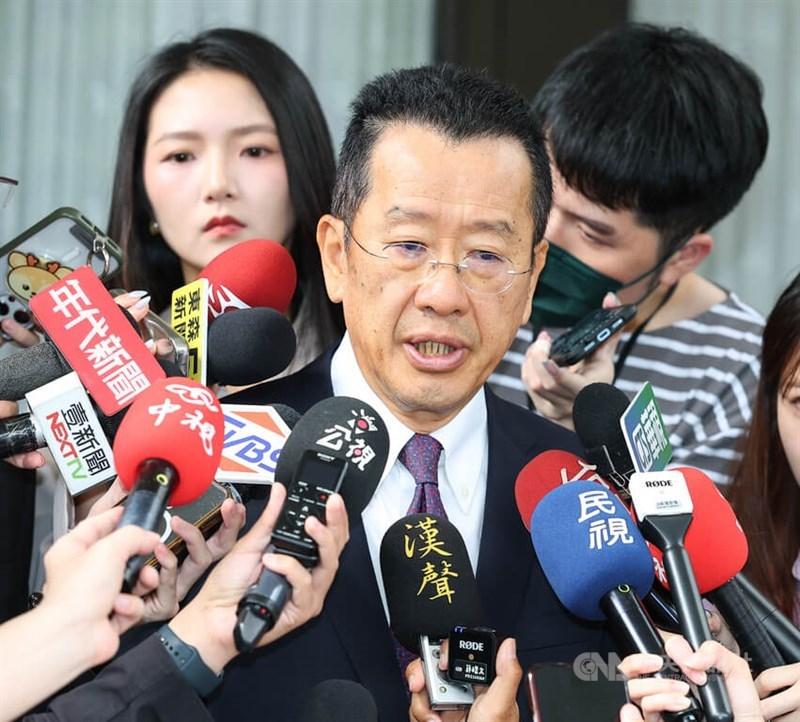
Taiwan Defence Minister Wellington Koo has accused Beijing of conducting cognitive warfare after China released high-resolution satellite imagery of Taipei and other Taiwanese locations during commemorations marking 81 years since Japan’s 1945 surrender and transfer of administrative control of Taiwan to the Republic of China. China’s Eastern Theatre Command also released military propaganda linking the anniversary to Beijing’s sovereignty claim. Koo rejected that interpretation, arguing that the People’s Republic of China was not established until 1949 and had no direct role in the events being commemorated. Taiwan’s military instead highlighted the October 1949 Battle of Guningtou in Kinmen, where Communist forces failed to seize islands controlled by the Republic of China.
Taiwan has accused China of conducting a new round of psychological and information warfare after Beijing released high-resolution satellite imagery showing prominent locations across Taipei and other parts of the island as part of commemorations marking the 81st anniversary of Japan’s 1945 surrender and the transfer of administrative control of Taiwan to the Republic of China government. Taiwan’s Defence Minister Wellington Koo said Tuesday that the campaign was designed to reshape public understanding of history, reinforce Beijing’s sovereignty claims and place additional psychological pressure on Taiwan at a time when China continues military, political and information operations aimed at the self-governed island.
The Chinese campaign combined detailed satellite imagery, state-media messaging and military propaganda. Chinese state television released footage captured by the Jilin-1 commercial satellite constellation showing a series of prominent Taiwanese locations from orbit, including sites in Taipei and other parts of the island. The material included highly detailed views of major landmarks and infrastructure, with Chinese media emphasising the satellites’ ability to observe Taiwan at high resolution and presenting the imagery as both a technological achievement and a demonstration of Beijing’s continuing focus on the island.
Among the locations shown in Chinese imagery were prominent sites associated with Taiwan’s capital and national identity, including the National Palace Museum, Chiang Kai-shek Memorial Hall, Taipei Dome and other major urban locations. Other imagery circulated by Chinese media also showed areas such as Sun Moon Lake, Hsinchu Science Park and Taipei Port, reinforcing the sense that the campaign was intended to demonstrate the ability of Chinese satellites to observe strategically, economically and symbolically important locations across Taiwan.
The People’s Liberation Army’s Eastern Theatre Command, the military command responsible for operations around Taiwan, reinforced the message by releasing a propaganda poster linking the anniversary to Beijing’s claim over the island. The poster depicted Taiwan alongside Chinese fighter aircraft and warships and carried language calling on viewers to remember what Beijing describes as the history of Taiwan’s “restoration” to China. The accompanying political message framed the 1945 transfer as evidence supporting the People’s Republic of China’s current sovereignty claim, despite the fact that the Communist government in Beijing did not exist at the time.
Koo rejected that historical interpretation, arguing that the People’s Republic of China, which was established in 1949 after the Communist victory in the Chinese civil war, had no direct role in the wartime events being commemorated. He said Beijing was attempting to merge the history of the Republic of China’s war against Japan with the later establishment of the People’s Republic in order to create a narrative suggesting continuous political and legal authority over Taiwan.
Taiwan’s government considers that interpretation misleading because the government that accepted Japan’s surrender and took control of Taiwan in 1945 was the Republic of China, then led by the Nationalist government under Chiang Kai-shek. The People’s Republic of China was proclaimed by Mao Zedong in Beijing on October 1, 1949, four years after the transfer of administrative control of Taiwan and only after Communist forces defeated the Nationalists on the Chinese mainland.
The distinction is central to the competing historical narratives used by Beijing and Taipei. China argues that Taiwan’s return to Chinese administration in 1945 reversed Japan’s annexation of the island following the 1895 Treaty of Shimonoseki and forms part of a continuous chain supporting Beijing’s sovereignty claim. Taiwan’s current government rejects Beijing’s right to use those events as evidence that the People’s Republic has ever exercised sovereignty over Taiwan, pointing out that the Communist government has never governed the island.
Those competing interpretations of history are not simply academic disagreements. They form part of a wider political and security struggle in which Beijing seeks to persuade domestic and international audiences that Taiwan is an unresolved internal matter rather than a separate political entity. Taipei, by contrast, maintains its own elected government, armed forces, legal system, currency and institutions and rejects the authority of the People’s Republic of China over the island.
Koo described China’s latest messaging as part of what Taiwan calls cognitive warfare, a broad strategy that uses propaganda, disinformation, selective historical narratives, military intimidation and political messaging to influence how Taiwanese citizens and international audiences understand the cross-strait dispute. Taiwan’s Defence Ministry has repeatedly warned that Beijing is combining conventional military pressure with non-military coercion designed to weaken public confidence, divide Taiwanese society and normalise the idea that Beijing possesses legal jurisdiction over the island.
Taiwan’s Defence Ministry has previously stated that China uses political, economic, cultural, military and legal methods as part of this strategy. According to Taipei, the objective is not necessarily to persuade every Taiwanese citizen to support unification but to create uncertainty, weaken trust in Taiwan’s government and military, increase pessimism about the island’s ability to defend itself and convince international audiences that Beijing’s claim is historically and legally inevitable.
The release of satellite images fits directly into that broader approach because the imagery carries several messages simultaneously. At one level, it showcases the technological capabilities of China’s commercial and state-supported satellite sector. At another, it demonstrates that Beijing can monitor highly visible locations across Taiwan from space. When paired with military imagery showing warships and fighter aircraft surrounding the island, the material can also be interpreted as a deliberate attempt to create a sense of surveillance, vulnerability and inevitability.
Chinese media promoted the Jilin-1 imagery with language suggesting that virtually every part of Taiwan could be clearly observed. Jilin-1 is a large commercial Earth-observation constellation developed by Chang Guang Satellite Technology and is capable of providing frequent high-resolution imagery for civilian and commercial purposes. Although commercial satellite systems around the world routinely photograph cities, ports and infrastructure, the political context in which Beijing released these particular images gave the material a distinctly strategic character.
The timing was especially important because the images were released during official commemorations of October 25, the date Beijing now marks as the anniversary of what it calls Taiwan’s “restoration.” China formally strengthened the political significance of the anniversary in recent years, presenting it as a historical foundation for its claim that the island must ultimately be brought under Beijing’s control.
Taiwan’s government rejects the use of the anniversary in that way. Koo said Beijing was attempting to manipulate events that occurred before the founding of the People’s Republic and incorporate them into a modern sovereignty argument. He argued that doing so ignores the political reality that the Republic of China government, not the Chinese Communist Party, fought Japan during the relevant period and received the Japanese surrender in Taiwan in 1945.
The Republic of China government later retreated to Taiwan in 1949 after losing the Chinese civil war to Mao’s Communist forces. Since then, the governments in Beijing and Taipei have evolved into entirely different political systems, with the People’s Republic ruling mainland China and Taiwan developing into a multi-party democracy under the Republic of China constitutional framework.
The historical and legal status of Taiwan after World War Two remains politically sensitive and is interpreted differently by Beijing, Taipei and various international scholars. Beijing presents the 1945 transfer as an uncomplicated restoration of Chinese sovereignty. Taiwan’s current authorities generally emphasise that the People’s Republic has never governed Taiwan and cannot derive political authority over the island from events involving the Republic of China before the Communist government existed.
Instead of focusing on Beijing’s 1945 narrative, Taiwan’s military used the same period to commemorate a very different historical event: the Battle of Guningtou in Kinmen in October 1949. In that battle, Communist forces crossed from the mainland and attempted to seize Kinmen, a group of islands located only a few kilometres from China’s Fujian coast but controlled by Taiwan.
The invasion began in late October 1949, shortly after the establishment of the People’s Republic. Communist forces landed on Kinmen but were defeated by Republic of China troops after several days of intense fighting. The battle prevented the immediate capture of Kinmen and became one of the most important military events in the early history of the cross-strait confrontation.
Taiwanese historical accounts frequently describe the Battle of Guningtou as a decisive moment because Communist forces had been advancing rapidly during the civil war and had expected to continue taking territory from the Nationalists. Their defeat at Kinmen demonstrated that amphibious operations against heavily defended islands could be far more difficult than the campaigns fought across mainland China.
The significance of Kinmen remains particularly powerful in Taiwan because the islands sit directly opposite the Chinese mainland and have repeatedly been at the centre of military confrontation. After the 1949 battle, China subjected Kinmen to major artillery bombardment in 1958 and continued periodic shelling for years afterwards. The islands therefore became a physical symbol of Taiwan’s ability to resist military pressure from Beijing.
By highlighting the Kinmen anniversary while China commemorated the events of 1945, Taiwan’s Defence Ministry presented an alternative historical narrative. Rather than portraying cross-strait history as an inevitable process of reunification, Taipei emphasised that the newly established People’s Republic attempted to seize territory controlled by the Republic of China in 1949 and failed.
That historical contrast is particularly relevant today because China has never renounced the use of force to bring Taiwan under its control. Beijing says it prefers peaceful unification but maintains that military action remains an option, particularly if Taiwan moves toward what Chinese authorities consider formal independence or if external powers intervene in ways Beijing considers unacceptable.
Taiwan’s government says the island is already self-governing and that its future should be determined by its people. President Lai Ching-te’s administration has repeatedly argued that Taiwan and the People’s Republic of China are not subordinate to one another, a position Beijing strongly rejects and regularly describes as separatist.
China has responded to Taiwan’s political position with a combination of military exercises, aircraft patrols, naval deployments, coast-guard operations, economic measures and information campaigns. Chinese fighter aircraft and warships operate regularly around Taiwan, while Beijing has staged increasingly large military exercises simulating blockade operations, precision strikes and encirclement of the island.
The PLA Eastern Theatre Command has repeatedly used highly stylised propaganda posters as part of those exercises. Previous posters have shown Taiwan surrounded by warships, bombers, missiles and fighter aircraft, often accompanied by slogans warning that efforts toward independence would result in military punishment. The imagery released around the October 25 anniversary follows that established pattern, although this time the campaign was framed primarily around history rather than a formally announced military exercise.
Taiwanese authorities believe that this type of messaging is designed to make military pressure appear routine. By repeatedly showing Taiwan surrounded by Chinese forces, Beijing can attempt to normalise the idea that the island is already within China’s strategic control and that resistance would be futile.
The satellite imagery adds another dimension because it communicates that China is capable of observing locations throughout the island in considerable detail. Modern commercial satellite systems can provide imagery relevant to urban planning, mapping, disaster response and environmental monitoring, but similar technology can also have intelligence value when used to monitor ports, infrastructure and other sensitive areas.
Taiwanese defence analysts have therefore expressed concern about the growing sophistication of China’s commercial satellite industry, particularly because military and civilian technology can overlap. Commercial imagery may not provide the same intelligence capabilities as specialised military reconnaissance satellites, but frequent high-resolution coverage can still offer useful information about infrastructure development, transport activity and changes at fixed locations.
Taiwan is responding by developing its own space and surveillance capabilities while strengthening cooperation with international partners. Taipei has invested in domestic satellite programmes and has increasingly treated space-based intelligence, communications resilience and satellite connectivity as important elements of national defence.
The latest dispute comes at a time when Taiwan is also warning of a broader increase in Chinese information operations. Taiwan’s National Security Bureau said earlier in October that disputed or false online content originating from China increased significantly during the first nine months of 2026 compared with the same period a year earlier. The agency accused Beijing of using state media, content farms, fake accounts, artificial intelligence and coordinated social-media activity to influence public discussion ahead of Taiwan’s local elections.
Beijing has repeatedly denied accusations that it interferes in Taiwan’s democratic processes or deliberately spreads disinformation. Chinese authorities argue that their communications regarding Taiwan reflect historical facts and legitimate sovereignty claims rather than information warfare.
The disagreement therefore reflects a fundamental divide in how both governments understand the same material. Beijing considers the October 25 commemoration a legitimate celebration of the end of Japanese colonial rule and the restoration of Chinese control. Taipei sees Beijing’s use of that history as an attempt by a government founded in 1949 to appropriate events in which it did not participate and use them to justify a sovereignty claim it has never exercised over Taiwan.
The political importance of Japan’s rule over Taiwan further complicates the debate. Japan acquired Taiwan from the Qing Dynasty in 1895 following the First Sino-Japanese War and governed the island for approximately five decades. Japanese colonial rule transformed Taiwan’s infrastructure and institutions but also involved political repression, assimilation policies and resistance movements.
After Japan’s defeat in World War Two, Japanese forces in Taiwan surrendered to representatives of the Republic of China government in October 1945. That event has traditionally been commemorated by Nationalist political circles as Taiwan Retrocession Day, although its contemporary political meaning has become increasingly contested as Taiwanese identity has evolved.
Beijing has placed renewed emphasis on the anniversary because it supports the Chinese Communist Party’s broader argument that Taiwan’s political separation resulted from an unfinished civil war rather than from the existence of a separate sovereign state. Under Beijing’s interpretation, reunification would therefore complete a historical process that began with the defeat of Japan and was interrupted by the Communist-Nationalist conflict.
Taiwan’s current leadership rejects that logic, arguing that history cannot erase the democratic political reality that has developed on the island over the past eight decades. Taiwan’s citizens elect their president and legislature, maintain their own armed forces and live under laws created by institutions based in Taipei rather than Beijing.
This is why Koo framed the satellite imagery and military propaganda as cognitive warfare rather than simply commemorative material. From Taiwan’s perspective, Beijing is attempting to use historical symbolism, military power and technological demonstrations together to persuade people that its political claim is predetermined.
The dispute is also likely to attract attention outside the Taiwan Strait because stability around Taiwan remains a major concern for the United States, Japan and other regional powers. Washington maintains unofficial relations with Taipei and provides Taiwan with defensive weapons while formally recognising the People’s Republic of China as the government of China. The United States opposes unilateral changes to the cross-strait status quo and has repeatedly urged Beijing to avoid coercive military action.
Japan also watches developments closely because Taiwan lies near Japanese territory and because any conflict around the island could affect sea lanes, regional military bases and the wider U.S.-Japan alliance. The historical dimension is particularly sensitive for Tokyo because the latest Chinese campaign is explicitly linked to Japan’s colonial rule and wartime defeat.
The National Palace Museum’s inclusion in the satellite imagery carries additional symbolic weight. The museum holds one of the world’s most important collections of Chinese imperial art and artefacts, much of which was evacuated from mainland China by the Nationalist government during the civil war. Beijing often presents Chinese cultural heritage as evidence of a common national identity, while many Taiwanese view the museum as part of the island’s own complex historical development.
Similarly, imagery of Taipei’s major transport and urban infrastructure can function simultaneously as ordinary satellite photography and strategic messaging. Railway stations, ports, airports and government districts are familiar civilian landmarks, but in the context of military propaganda their visibility from space can be intended to reinforce awareness of China’s surveillance capabilities.
There is currently no indication that the release of the imagery represents evidence of an imminent Chinese military operation. Taiwan did not report an unusual major surge in Chinese military aircraft around the island during the anniversary itself, although Chinese naval and government vessels continued operating in nearby waters.
That distinction matters because psychological pressure does not necessarily accompany immediate preparations for war. Beijing routinely uses military and non-military activity below the threshold of open conflict to place pressure on Taiwan, test responses and shape public perceptions without triggering a direct military confrontation.
Taiwan refers to many of these activities as grey-zone operations. They include frequent military patrols, coast-guard missions, cyberattacks, economic pressure, legal claims and influence campaigns that collectively challenge Taiwan without requiring Beijing to launch a conventional invasion.
Koo has repeatedly argued that Taiwan must prepare for both conventional military threats and these less visible forms of pressure. His ministry has incorporated cognitive warfare, cyber operations and grey-zone scenarios into military exercises and training, reflecting Taipei’s view that a future crisis could involve information manipulation and psychological operations alongside missiles, aircraft and warships.
The wider concern for Taiwan is that information warfare can weaken a society before a military conflict begins. False rumours about government collapse, military surrender, infrastructure failure or foreign abandonment could potentially create panic during a crisis. Taipei is therefore investing increasingly in public resilience, rapid fact-checking, secure communications and military morale.
China, meanwhile, continues to argue that its military and political pressure is directed at what it calls separatist activity rather than ordinary Taiwanese citizens. Chinese officials regularly say peaceful reunification remains their preferred objective but warn that they will not tolerate permanent separation.
Those statements have done little to reassure Taiwan because Beijing has steadily expanded its military capabilities around the island. The PLA Navy has grown dramatically, China has developed large inventories of missiles capable of striking targets across Taiwan, and Chinese aircraft operate frequently near the island’s airspace.
Taiwan has responded by increasing defence spending, purchasing weapons from the United States and placing greater emphasis on mobile missiles, drones, air defence, coastal defence and other asymmetric capabilities intended to make a potential invasion costly and difficult.
The latest satellite and propaganda campaign therefore takes place within a much larger strategic competition. On its own, the release of photographs does not alter the military balance. Combined with warships, fighter aircraft, cyber operations, historical messaging and political pressure, however, it becomes part of a broader effort to influence how Taiwan and the international community understand that balance.
For Beijing, the October 25 anniversary provides an opportunity to reinforce its argument that Taiwan’s political future was settled by history. For Taipei, the same anniversary provides an opportunity to challenge Beijing’s narrative by emphasising that the People’s Republic did not exist in 1945 and has never exercised control over Taiwan.
The decision by Taiwan’s military to commemorate the Battle of Guningtou reinforces that counterargument. The battle occurred only weeks after the founding of the People’s Republic and involved an actual military attempt by Communist forces to take territory controlled by the Republic of China. Their defeat provides Taipei with a historical example of Beijing’s use of force being resisted successfully.
That message is particularly relevant to Taiwan’s current defence strategy, which is built around convincing Beijing that an invasion would be extremely difficult and costly. Kinmen’s history allows Taiwan’s military to present resistance to Communist forces not as a theoretical future scenario but as something already embedded in the island’s modern history.
The competing commemorations therefore reveal how deeply history has become integrated into present-day security policy across the Taiwan Strait. Beijing uses the events of 1945 to argue that reunification is historically inevitable, while Taipei uses the battles of 1949 to demonstrate that political control has never been uncontested.
Neither narrative by itself resolves Taiwan’s contemporary status, but both have become powerful tools in the political struggle surrounding it. The satellite photographs, military posters and historical statements released over the past several days are therefore best understood not as isolated pieces of propaganda but as elements of a sustained contest over legitimacy, identity and public perception.
For Taiwan’s Defence Ministry, the immediate concern is that Beijing is becoming more sophisticated in combining technology with historical messaging. Detailed satellite imagery can attract attention because it appears objective and technologically impressive, while propaganda surrounding the images provides the political interpretation Beijing wants viewers to adopt.
Koo’s response was intended to challenge that interpretation by separating the Republic of China’s wartime history from the later establishment of the People’s Republic. His argument is that Beijing cannot simply inherit the political legitimacy of events conducted by a government it later defeated and expelled from the mainland.
China rejects that distinction and considers both governments part of a single broader Chinese historical narrative. That fundamental disagreement has persisted for decades and remains one of the reasons the Taiwan question has proven so difficult to resolve diplomatically.
For now, the satellite imagery and propaganda campaign do not represent a confirmed shift toward immediate military action, but they do demonstrate how Beijing continues to combine military capability, technological visibility and political messaging in its pressure campaign against Taiwan. Taipei’s response shows that it increasingly considers historical narratives themselves to be part of the security battlefield.
The dispute surrounding the October anniversary therefore goes far beyond old photographs, wartime history or commemorative posters. It reflects an active struggle over who has the right to define Taiwan’s past and, by extension, who should determine its future. As China intensifies political, military and information pressure and Taiwan strengthens both its physical defences and psychological resilience, that struggle is likely to remain one of the central features of cross-strait relations.