BRITAIN’S NEW FINANCE MINISTER FACES MAJOR BUDGET TEST AS BORROWING COSTS RISE
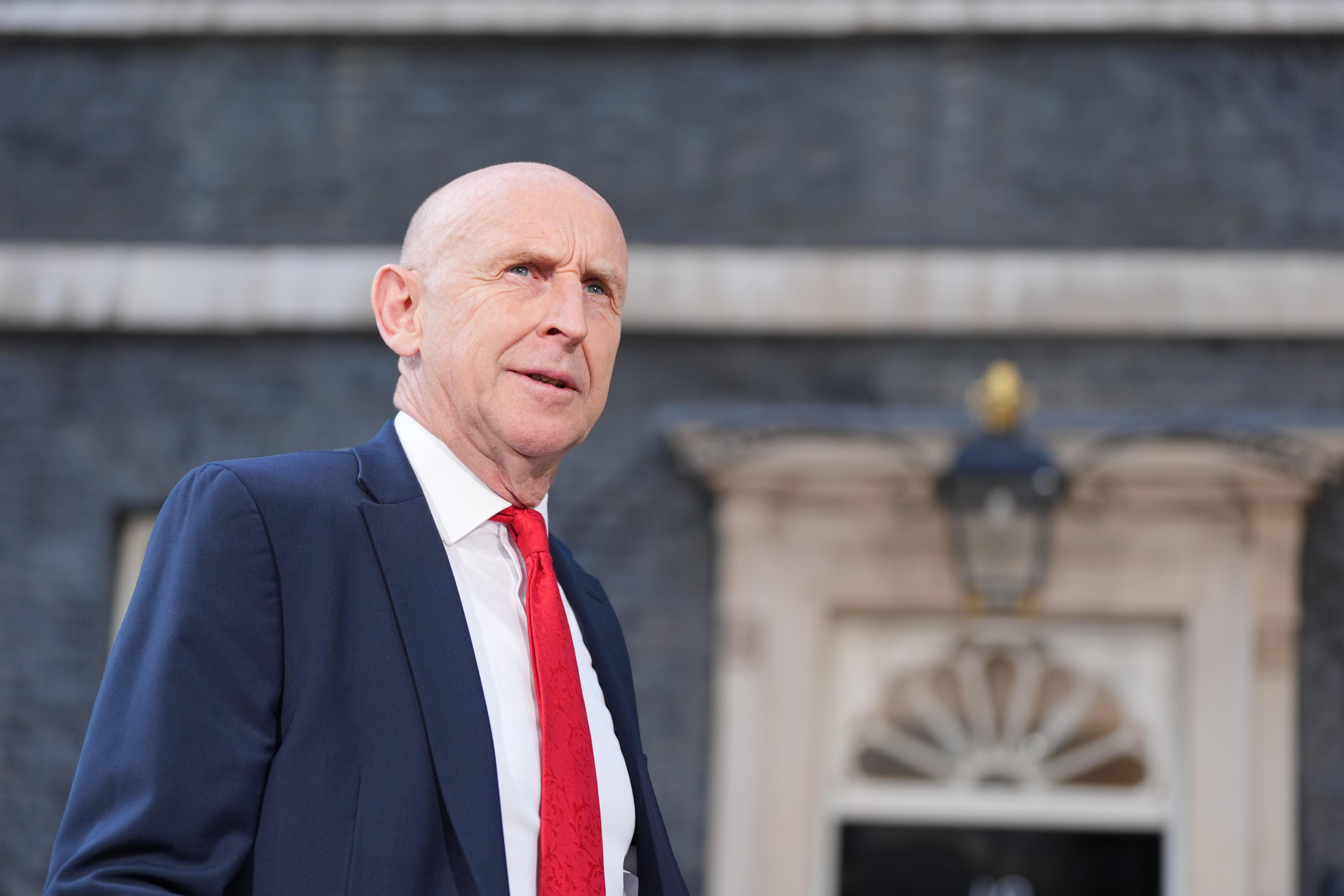
Britain’s Chancellor John Healey will deliver his first national Budget on October 28 as rising government borrowing costs and high energy prices reduce the Treasury’s financial flexibility. Reuters estimates that the government’s fiscal buffer, which stood near £24 billion in March, may have fallen to between £8.5 billion and £20 billion. Ten-year gilt yields are around 5.33%, while long-term borrowing costs rose above 6% earlier in October. Investors are also watching for a possible increase in taxes on banks, although no such measure is confirmed until the Budget is formally presented.
Britain’s new Chancellor of the Exchequer, John Healey, will deliver his first national Budget on Wednesday, October 28, facing one of the most difficult fiscal tests for a new finance minister in recent years as rising government borrowing costs, elevated energy prices and mounting pressure on the public finances restrict the amount of money available for new spending or tax cuts. Investors will be watching closely for evidence that Healey can maintain confidence in Britain’s debt market while also delivering the economic support promised by Prime Minister Andy Burnham’s government, particularly as households and businesses confront renewed cost pressures and the Treasury’s financial margin for error appears to have narrowed considerably since the last official fiscal forecast.
Healey, who was appointed Chancellor in July after previously serving as Defence Secretary, has repeatedly said that fiscal discipline will sit at the centre of his first Budget. His challenge is to convince financial markets that the government can honour its borrowing rules without abandoning commitments to support living standards, increase defence spending, invest in economic growth and devolve more financial power to regions outside Westminster. The Budget therefore arrives at a sensitive moment in which decisions on taxation, spending and borrowing will be judged not only by Parliament and voters but by bond investors whose willingness to finance government debt directly affects the cost of servicing Britain’s already large public liabilities.
The Treasury confirmed earlier this year that Healey would present the Budget on October 28 and said the government intended to meet its existing fiscal rules, including a commitment to balance day-to-day spending with tax revenues and place debt on a declining path relative to the size of the economy. Those rules were inherited from Healey’s predecessor, Rachel Reeves, and have become increasingly difficult to meet as global borrowing costs have risen. The Office for Budget Responsibility estimated in March that the government had around £24 billion of headroom against its fiscal rules, but Reuters reported that private-sector estimates now put the remaining buffer somewhere between approximately £8.5 billion and £20 billion, depending on assumptions about interest rates, growth, inflation and government revenue.
That reduction in headroom is significant because the fiscal buffer represents the amount of space the government has before it breaches its own borrowing limits. A larger margin allows ministers to absorb weaker economic growth, unexpected spending or higher interest payments without immediately needing new taxes or spending cuts. A smaller margin leaves the government more vulnerable to shocks and increases the pressure on the Chancellor to make decisions that reassure investors the Treasury will not allow borrowing to drift out of control.
Britain’s borrowing costs have risen sharply during October as part of a broader international sell-off in government bonds. Reuters reported that the yield on the benchmark 10-year gilt was around 5.33 percent ahead of the Budget, while 30-year gilt yields briefly moved above 6 percent earlier in the month, levels not seen for decades. Higher yields mean the government must pay more interest when issuing new debt or refinancing existing obligations, increasing the share of public revenue devoted to debt service rather than healthcare, education, infrastructure or other government programmes.
The pressure has been intensified by elevated energy prices associated with the conflict involving the United States, Israel and Iran. Higher oil and gas prices can affect British public finances through several channels, including increased inflation, weaker household consumption and higher costs for businesses. Inflation also matters directly to government borrowing because a portion of British debt is linked to inflation, meaning rising prices can increase the cost of servicing those bonds. The Treasury therefore enters the Budget facing an external shock that has simultaneously raised household costs and reduced its ability to respond generously.
Healey has acknowledged the importance of the bond market and has repeatedly emphasised that his government will not attempt to fund large new programmes through unchecked borrowing. Reuters reported that Treasury officials are preparing a relatively cautious Budget designed to reassure investors rather than introduce the kind of expansive spending package that could trigger another surge in gilt yields. That approach reflects memories of the severe market instability that can occur when investors believe British fiscal policy is becoming unsustainable.
The government’s immediate concern is that even a relatively small loss of investor confidence could have wider economic consequences. Rising gilt yields tend to feed into mortgage rates, corporate borrowing costs and the financing costs faced by local authorities and infrastructure projects. A Budget that appears insufficiently disciplined could therefore create higher borrowing costs not only for the government but for households and businesses across the country.
Healey’s position is complicated by the government’s political commitments. Prime Minister Andy Burnham has promised greater public investment, stronger defence funding, more housebuilding and additional economic support for regions outside London. The administration also wants to provide relief to households affected by rising energy costs and broader cost-of-living pressures. Meeting all of those objectives while keeping borrowing under control requires either higher tax revenue, spending reductions elsewhere or an improvement in economic growth sufficient to strengthen the government’s finances.
The Budget is therefore expected to rely heavily on targeted measures rather than broad and expensive spending increases. Reuters reported that the government is considering a temporary package of support for households facing higher energy bills, potentially including more than £1 billion of assistance aimed mainly at lower-income households. Healey has also promised what he describes as “breathing space” for businesses, with measures intended to reduce regulatory costs and support investment without creating a large new burden on the Treasury.
One of the most closely watched areas will be taxation of the banking sector. British banks have benefited from several years of higher interest rates, which have supported profitability by widening the difference between the rates lenders charge borrowers and the interest they pay depositors. Those profits have increased political pressure on the government to raise additional revenue from the industry at a time when public finances are strained.
Reuters reported that one option under consideration is an increase in the surcharge that banks currently pay on profits in addition to ordinary corporation tax. The surcharge is presently 3 percent, and analysts say even a relatively modest increase could raise billions of pounds over the coming years. Healey has declined to confirm whether a bank-tax increase will appear in the Budget, saying instead that the banking sector remains central to Britain’s economic future and that the government understands its importance in supporting investment and growth.
The uncertainty has already affected financial markets. British banking shares have fallen during October as investors weigh the possibility that stronger bank profits could make the sector an attractive source of additional tax revenue. Reuters reported earlier this month that shares in major lenders declined after media reports suggested Healey was preparing to raise taxes on banks, while broader weakness in government bonds added further pressure to the sector.
The sell-off became particularly pronounced at the beginning of October, when British bank stocks fell sharply as long-term gilt yields reached their highest levels since the late 1990s. Banks are sensitive to bond-market turbulence because they hold large portfolios of government debt and because higher borrowing costs can eventually affect lending activity, mortgage demand and credit quality. Investors are therefore assessing the Budget both for its direct tax impact on lenders and for its broader implications for financial stability.
Recent earnings have strengthened the political case for additional bank taxation in the eyes of some government supporters. HSBC reported a substantial increase in quarterly profit on Tuesday, while Barclays has also remained profitable despite announcing significant job cuts as it expands the use of artificial intelligence and automation. Strong earnings across parts of the sector have prompted calls for banks to make a larger contribution toward cost-of-living assistance and public services.
The banking industry, however, argues that repeated tax increases could undermine investment and reduce Britain’s competitiveness as a financial centre. Lenders already pay corporation tax, the additional bank surcharge and other sector-specific levies. Industry groups have warned that further increases could make London less attractive compared with financial centres in the United States, continental Europe and Asia, particularly as the government is simultaneously trying to encourage investment and economic growth.
Healey will therefore need to decide whether the immediate revenue benefits of a higher bank tax outweigh the risk that investors perceive the measure as hostile to one of Britain’s most important industries. That calculation will be especially difficult because the government needs financial institutions to support business investment, housing and infrastructure at the same time it is considering asking them to contribute more tax.
The Chancellor is also expected to set out significant new financial support for state-backed investment institutions. The Treasury has already announced plans to provide approximately £20.4 billion in additional capital to the National Wealth Fund and British Business Bank over several years. The government says the additional resources will support infrastructure, industry, technology and smaller businesses, with the aim of using public financing to attract larger volumes of private investment.
That programme reflects Healey’s attempt to reconcile fiscal restraint with the government’s growth agenda. Rather than relying exclusively on direct Treasury spending, state-backed lenders can use government capital to finance commercial projects and potentially attract private-sector participation. The Treasury argues that this approach can support economic expansion without requiring the government to permanently fund every project from annual departmental budgets.
Artificial intelligence is another major component of the Chancellor’s economic strategy. The Treasury has announced measures aimed at expanding Britain’s AI industry, increasing infrastructure investment and protecting the country from emerging technological threats. Healey has presented technology and defence as central elements of what he describes as a new phase of British industrialisation, arguing that stronger investment in high-growth industries can improve productivity and ultimately strengthen the public finances.
The difficulty is that such benefits take time to materialise while higher borrowing costs affect the Treasury immediately. Economic growth that might increase tax revenue several years from now cannot fully compensate for debt-service costs that must be paid today. Investors will therefore be looking for a Budget that combines long-term investment plans with credible short-term funding.
Defence spending will add another major pressure. Burnham has said the Budget will outline how Britain intends to fully fund existing defence commitments and provide a pathway toward NATO’s longer-term spending goals. The United Kingdom currently spends approximately 2.6 percent of gross domestic product on defence and has committed to move toward 3 percent before eventually reaching the broader NATO objective of 3.5 percent of GDP on core defence by 2035.
Those commitments involve tens of billions of pounds in additional expenditure over time. Healey’s previous experience as Defence Secretary gives him a detailed understanding of the military spending pressures involved, but his new Treasury role requires him to determine how those commitments can be financed without destabilising the public finances. The Budget is expected to provide some direction while leaving larger spending decisions for a future review.
The government is also planning a major devolution package intended to move more financial authority away from Westminster. English mayors are expected to receive additional funding and new borrowing powers for local economic projects, including housing, transport and urban regeneration. Reuters reported that a new “Good Growth” programme will initially provide approximately £285 million next year, while the government will explore a £1.5 billion borrowing facility for regional authorities.
Healey has argued that local leaders should have greater control over investment decisions rather than repeatedly seeking approval from central government. The policy is politically important to Burnham, who built much of his national profile around regional devolution before becoming prime minister. However, devolving borrowing powers will also require careful oversight because additional local debt ultimately contributes to the wider public-sector financial position.
Britain’s underlying borrowing figures illustrate why the Chancellor has limited room to manoeuvre. The Office for National Statistics reported that public-sector net borrowing reached £24.5 billion in September, approximately £1.9 billion above the level forecast by the Office for Budget Responsibility. Central government spending exceeded expectations, offsetting stronger-than-forecast tax receipts and reinforcing concerns about the difficulty of bringing the deficit under control.
Public debt has also reached around £3 trillion, leaving Britain exposed to changes in global interest rates. Even relatively small increases in average borrowing costs can eventually produce billions of pounds in additional annual interest payments when applied to such a large debt stock. This is one reason Healey has repeatedly described debt-service costs as money that could otherwise be directed toward public services.
Britain’s borrowing costs are currently among the highest in the Group of Seven major economies, increasing the pressure on the Treasury to demonstrate credibility. Investors are particularly sensitive to fiscal announcements because the UK relies heavily on international buyers to absorb government debt, and foreign investors can demand higher yields if they become concerned about inflation, political instability or fiscal discipline.
Market conditions are not entirely negative, however. Sterling has remained relatively resilient, and British economic data have shown enough strength to prevent investors from assuming the country is heading directly into recession. Reuters reported that the pound recently traded near a 17-month high against the euro before slipping slightly as traders reduced risk ahead of the Budget.
Some analysts believe investors are currently more concerned about public-finance risks in France, Italy and the United States than about Britain. That relative improvement has helped the UK avoid the kind of intense market pressure experienced during earlier fiscal crises. Nevertheless, analysts have warned that positive sentiment could create complacency and that a Budget containing unexpected borrowing or poorly explained tax changes could quickly reverse the improvement.
The Treasury is therefore likely to place substantial emphasis on the Office for Budget Responsibility’s updated forecasts, which will be published alongside the Budget. The OBR’s projections for economic growth, inflation, government borrowing and debt will determine how much fiscal headroom Healey actually has and whether the government remains on course to meet its rules.
If the OBR’s forecasts are more favourable than private estimates, the Chancellor may have greater flexibility than markets currently expect. If they are weaker, Healey could be forced to announce additional tax increases or spending restraint to avoid breaching the government’s commitments. The Budget’s political tone may therefore depend heavily on numbers that will only become official when the statement is delivered.
The government has already ruled out some options or indicated that they are unlikely. Healey is reported to have rejected an increase in capital gains tax, while the administration remains constrained by previous promises not to increase the main rates of income tax, VAT or employees’ National Insurance. Those political commitments narrow the list of available revenue sources and increase the likelihood that the Chancellor will focus on sector-specific taxes, enforcement measures and smaller changes to the tax system.
Other possibilities reported ahead of the Budget include changes to taxation of family-business transfers, stronger enforcement against online marketplaces that facilitate unpaid tax and higher duties on gambling. The government is also expected to consider whether to extend fuel-duty relief to protect motorists from higher costs, particularly as energy prices remain politically sensitive.
Not all of those proposals will necessarily appear in Wednesday’s statement, and much of the current market discussion remains speculative. The final Budget will determine which measures the government has actually adopted. Until then, potential tax changes should be treated as options under consideration rather than confirmed policy.
The banking sector will remain the most closely watched because the financial consequences could be immediate. A larger surcharge on profits would directly reduce expected earnings at British lenders, while any wider windfall levy could affect dividends, share buybacks and investor valuations. Conversely, a decision not to increase bank taxes could produce a relief rally after weeks of uncertainty.
The same dynamic applies to housebuilders. Government support for first-time buyers or additional housing investment could benefit the sector, but high gilt yields have already pushed mortgage costs higher and weakened demand. A Budget that successfully reduces bond yields could therefore help housing companies even without a large direct subsidy.
Pubs and hospitality businesses are watching for measures affecting alcohol duties, business rates and energy costs, while gambling companies are preparing for the possibility of higher machine-gaming taxation. The breadth of sectors awaiting decisions demonstrates how a national Budget can affect financial markets far beyond the Treasury’s headline borrowing figures.
For households, however, the central issue will be whether Healey can provide meaningful relief without storing up future financial problems. Higher energy bills, elevated mortgage rates and persistent living-cost pressures have reduced disposable incomes, and the government has promised measures designed to provide some immediate support. The political danger is that a Budget focused too heavily on reassuring bond investors could appear disconnected from families still experiencing financial pressure.
The opposite danger is equally serious. If Healey announces expensive support without clearly explaining how it will be funded, borrowing costs could rise further and eventually make mortgages, loans and public services more expensive. The Chancellor must therefore persuade voters that fiscal discipline and household support are not competing objectives but parts of the same strategy.
This balancing act will define Healey’s first Budget. The government needs to demonstrate that it can finance current commitments, protect the economy from external shocks and create conditions for growth while maintaining investor confidence in Britain’s ability to manage its debt.
The pressure is heightened by the fact that Healey took office only in July following a change of prime minister. Burnham’s government is still establishing its economic identity and will use the Budget to show how its priorities differ from those of the previous administration while remaining within the fiscal framework already recognised by markets.
A dramatic break with that framework appears unlikely. Reuters reporting suggests Healey will opt for caution, postponing some of the most expensive long-term promises until a broader spending review in 2027. That approach may disappoint supporters expecting immediate expansion of housing, social-care and public-service programmes, but it would reduce the risk of a confrontation with bond markets.
Financial credibility has become especially important because Britain’s experience shows that market confidence can change quickly. Investors may initially accept a Budget and reassess it later once they examine the underlying assumptions, borrowing path and implementation costs. Healey therefore needs a plan that remains credible beyond the first day’s market reaction.
The most important numbers will be the revised fiscal headroom, projected borrowing, debt interest and the scale of any tax increases. If the government maintains a substantial buffer against its fiscal rules, investors may interpret that as evidence of discipline. If the margin is extremely small, markets could worry that even a modest economic shock would force another round of emergency measures.
Analysts currently expect the government to maintain some headroom rather than use every available pound. Estimates around £10 billion to £15 billion have been widely discussed, although the exact figure will not be known until the OBR releases its forecasts. Maintaining a buffer is particularly important when oil prices, geopolitical risks and global bond yields remain unusually volatile.
Wednesday’s Budget will therefore be far more than an accounting exercise. It will be the first major economic statement of Healey’s tenure and the clearest test yet of whether Burnham’s government can combine its political ambitions with the constraints imposed by high debt and expensive borrowing.
For markets, the central question is whether the Chancellor can deliver measures that support households and investment without increasing the government’s dependence on debt. For banks, the focus is whether strong profits will result in a higher tax bill. For businesses, the concern is whether the government can reduce costs and improve confidence. For households, the priority is whether the Budget offers tangible relief from energy and living expenses.
The outcome will also shape expectations for future interest rates and sterling. A Budget viewed as fiscally responsible could reduce pressure on gilt yields and support the pound, while an unexpectedly expansionary package could raise borrowing costs and complicate the Bank of England’s efforts to manage inflation.
Healey has spent the weeks before the statement repeatedly promising discipline, stability and what he describes as economic breathing space. Wednesday will reveal how he intends to translate those promises into actual policy. The Chancellor’s room for manoeuvre is narrower than the government would prefer, but the decisions he makes on taxation, spending and borrowing will determine whether investors believe Britain’s public finances remain under control.
The most accurate assessment before the Budget is therefore that the government faces a genuine fiscal constraint rather than an immediate financial crisis. Britain can still borrow, investors continue to purchase gilts and sterling remains relatively stable, but the cost of maintaining that stability has increased. Healey’s task is to prevent those pressures from becoming more severe while still demonstrating that the government has an economic programme capable of delivering growth.
Whether he succeeds will become clearer once the Office for Budget Responsibility publishes its updated forecasts and the Chancellor sets out the full package in Parliament. Until then, estimates of fiscal headroom and reports of possible bank taxes remain important indicators of the direction of policy but not final decisions.
For Britain’s new finance minister, Wednesday will therefore represent a defining moment. His first Budget must satisfy voters seeking relief, ministers demanding investment and markets insisting on restraint. The ability to keep those competing expectations aligned may determine not only the immediate reaction to the Budget but the economic credibility of the government for the remainder of the parliamentary term.