QATAR SAYS TRUMP, VANCE TALKS MADE ‘GOOD PROGRESS’ ON IRAN AS DIPLOMACY INTENSIFIES
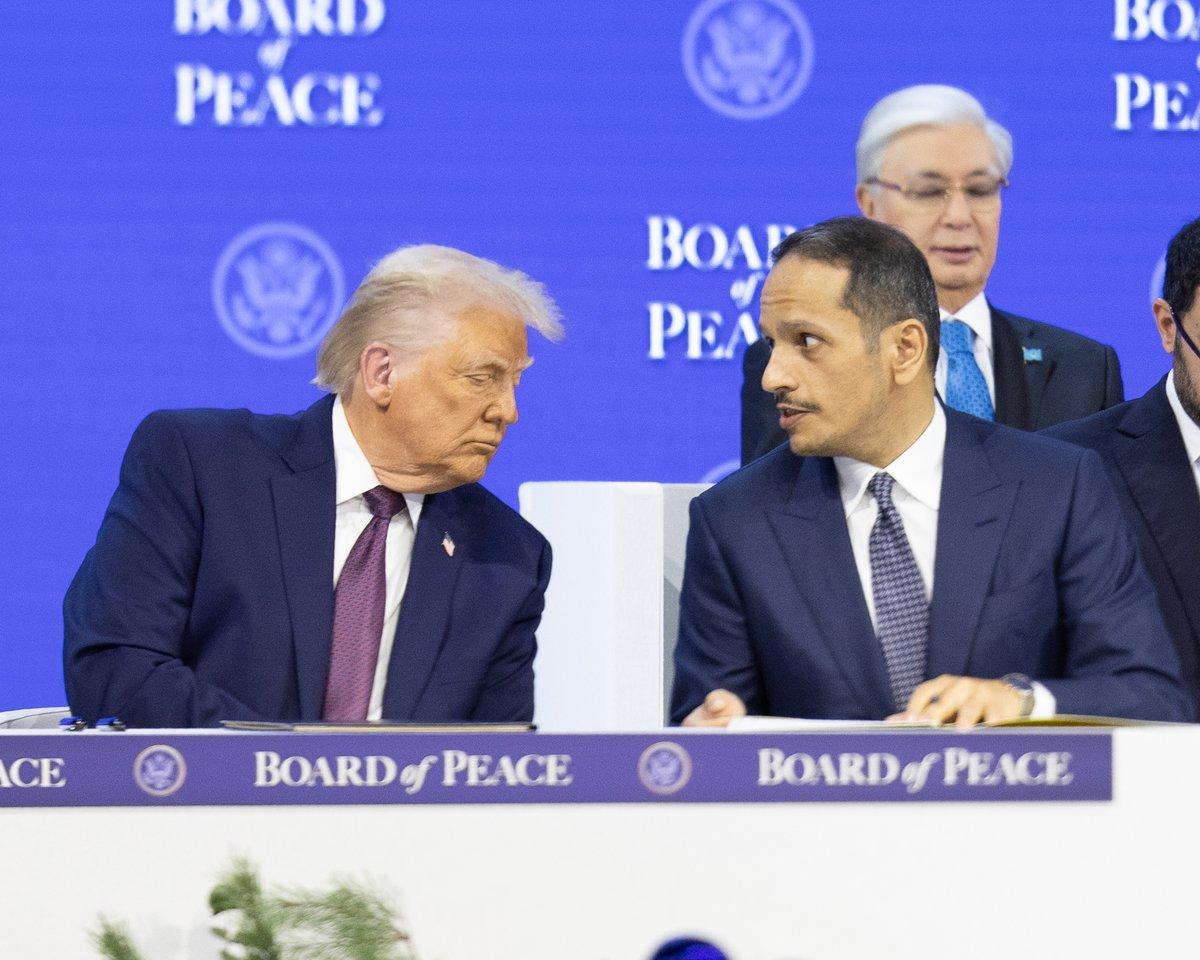
A diplomatic source cited by Al Jazeera says separate talks between President Donald Trump, Vice President JD Vance and Qatar’s Prime Minister Sheikh Mohammed bin Abdulrahman Al Thani made “good progress” on efforts to advance negotiations with Iran. The meetings focused on ways to move the diplomatic process forward, but no concrete agreement or breakthrough was announced. Qatar remains a key intermediary between Washington and Tehran, which are still divided over Iran’s nuclear program, sanctions, the Strait of Hormuz and the terms for ending the conflict.
High-level talks between President Donald Trump, Vice President JD Vance and Qatar’s Prime Minister and Foreign Minister Sheikh Mohammed bin Abdulrahman bin Jassim Al Thani made “good progress” on efforts to move negotiations with Iran forward, according to a diplomatic source cited by Al Jazeera, as Doha intensified its mediation between Washington and Tehran in an effort to prevent another major escalation in the Middle East. The Qatari leader held separate meetings with Trump and Vance in Washington on Monday, with discussions focusing on Iran’s nuclear program, the terms required to end the wider conflict, sanctions, regional security and the future of shipping through the Strait of Hormuz. No formal agreement was announced after the meetings, and neither the White House nor Qatar immediately released details showing that the core differences between the United States and Iran had been resolved.
The source familiar with the talks told Al Jazeera that the meetings had been positive and that there had been progress in discussions over how negotiations with Tehran could proceed. That assessment represents a more optimistic tone than some of the public statements made by senior U.S. officials before the meetings. Secretary of State Marco Rubio had said Washington and Tehran remained far apart and that there was no indication of an imminent breakthrough, while describing several Iranian demands as unrealistic and unacceptable.
The contrast between those public comments and the diplomatic source’s account illustrates the delicate stage the negotiations have reached. Qatar has spent months attempting to bridge the gap between the two governments, transferring proposals, clarifications and conditions while the military situation in and around the Persian Gulf remains unstable. Doha has repeatedly said its role is not to impose a settlement but to keep communication open long enough for both sides to identify terms they can accept.
Sheikh Mohammed has become one of the central figures in that mediation effort because Qatar maintains working relations with both Washington and Tehran and has previously helped negotiate difficult regional agreements. He serves simultaneously as Qatar’s prime minister and foreign minister, giving him authority to speak directly with senior political leaders while coordinating the technical and diplomatic teams carrying proposals between governments.
Before Monday’s meetings, Qatar’s Foreign Ministry said mediators were exchanging ideas between the United States and Iran almost continuously. Ministry spokesman Majed Al Ansari said both sides had shown a willingness to remain engaged despite military escalation and described their continued review of proposals as a “glimmer of hope” for an eventual agreement. He cautioned, however, that Qatar could not yet point to a specific breakthrough.
Monday’s talks appear to have built on that effort. According to the diplomatic source cited by Al Jazeera, discussions centered on ways to move negotiations forward rather than merely reviewing the history of the conflict. That distinction is significant because it suggests Doha was seeking agreement on a process for the next stage, even if the substantive differences over sanctions, nuclear activities and regional security remained unresolved.
Iran has already presented Washington with a new proposal through Qatari mediators. The plan is based on conditions Tehran says must be addressed before a wider settlement can be reached. Those conditions reportedly include lifting U.S. sanctions imposed after earlier negotiations collapsed, reducing the American military presence in the region, restoring certain oil waivers, releasing frozen Iranian funds and recognizing arrangements governing navigation through the Strait of Hormuz.
Iran has also demanded an end to the war across multiple fronts and has linked any future nuclear agreement to wider security issues. Tehran argues that negotiations cannot be separated from U.S. military operations, sanctions and Israeli actions elsewhere in the region.
Washington has resisted several of those demands. Rubio said before the Qatar meetings that some Iranian conditions were “outrageous” and unrealistic, while emphasizing that the administration would not accept an agreement that allowed Tehran to move closer to a nuclear weapon or threaten regional shipping.
Trump has nevertheless continued to say he prefers a diplomatic solution. On Sunday, he said it was highly unlikely he would order another major round of strikes if negotiations produced what he considered a strong agreement. At the same time, he made clear that the United States had identified additional targets inside Iran and retained the ability to resume military operations if talks failed.
That dual message has defined Washington’s approach: intense military pressure combined with a willingness to negotiate if Iran accepts conditions the White House considers sufficient. Qatar’s role has been to narrow the distance between those positions before military escalation overwhelms the diplomatic process.
The stakes are particularly high because the conflict has already spread beyond direct U.S.-Iran military exchanges and affected global shipping. The Strait of Hormuz, one of the world’s most important energy chokepoints, has seen repeated attacks on commercial vessels and prolonged disruption to maritime traffic. Any agreement that restores secure navigation would have immediate economic consequences far beyond the region.
Iran has insisted that navigation arrangements form part of any settlement. Tehran has previously worked with Oman on proposals involving a temporary joint shipping corridor and mine-clearing arrangements through the strait. Qatar has supported efforts intended to guarantee freedom of navigation while also addressing Iranian security concerns.
The shipping issue is therefore not separate from the nuclear talks. It is part of the broader bargaining structure surrounding sanctions relief, security guarantees and the end of military operations. That complexity helps explain why Rubio has warned that negotiations cannot be treated as a simple nuclear deal.
Qatar’s mediation has also been coordinated with other Gulf states. Doha has said there is broad regional agreement that another major escalation would be damaging to everyone, including states that may have sharp disagreements with Iran. Gulf governments have strong economic reasons to avoid prolonged disruption of shipping, energy infrastructure and commercial aviation.
For Qatar specifically, instability in Iran carries direct strategic consequences. The two countries share the enormous South Pars/North Field gas reservoir, and Qatar’s leadership has repeatedly said that Iranian stability is not merely desirable but essential to its own economic and national security.
Sheikh Mohammed has previously argued that regional disputes with Iran should be addressed through a broader security framework rather than permanent military confrontation. He has supported the principle that Iran should be allowed a peaceful nuclear program under international law while insisting that the region should not enter a nuclear arms race.
The United States has historically demanded stronger guarantees that Iran cannot use its nuclear program to develop weapons. Tehran insists that its nuclear activities are peaceful, although the International Atomic Energy Agency has reported that Iran holds significant stocks of uranium enriched to levels far above those normally required for civilian power generation.
Those technical disputes remain one of the hardest obstacles to an agreement. Iran’s nuclear program has expanded substantially since Trump withdrew the United States from the 2015 nuclear agreement during his first administration. Tehran subsequently increased enrichment levels, while Washington reimposed sanctions.
The current negotiations are therefore attempting to resolve not only the immediate war but problems left unresolved for years. Any settlement would likely require some combination of nuclear limits, inspections, sanctions relief, shipping arrangements, security guarantees and mechanisms for preventing future escalation.
That is why Monday’s description of “good progress” should be interpreted cautiously. The diplomatic source did not identify a signed document, ceasefire agreement or finalized nuclear framework. Progress in negotiations can simply mean that parties agreed on the next set of issues to discuss or narrowed disagreements enough to keep talks alive.
That distinction is especially important because diplomatic negotiations involving Iran have repeatedly produced moments of optimism that later collapsed. Earlier ceasefires and memoranda reached during the conflict failed to produce a permanent settlement, leading to renewed military confrontation.
The United States and Israel began major military operations against Iran on February 28, and an initial ceasefire was reached in April. A separate U.S.-Iran memorandum of understanding followed in June, but the framework later broke down and fighting resumed in July.
Since then, Qatar, Oman, Pakistan and other regional actors have attempted to restore negotiations. Qatar has emerged as one of the most active mediators because it has channels of communication with both Tehran and Washington and can move proposals quickly between them.
In recent weeks, those efforts have accelerated. Qatari officials traveled to Tehran for extended consultations, while Iranian Foreign Minister Abbas Araghchi has spoken with numerous regional governments in an attempt to build support for Tehran’s negotiating position.
Araghchi has warned that Iran would respond forcefully if the United States resumed large-scale attacks, while simultaneously maintaining that Tehran remains willing to negotiate under appropriate conditions. Those parallel messages mirror Washington’s own combination of military warnings and diplomatic outreach.
The result is an increasingly dangerous form of coercive diplomacy in which both sides are negotiating while preparing for the possibility that negotiations fail. U.S. forces remain heavily deployed in the region, while Iranian military leaders continue issuing warnings about retaliation.
Trump has said American forces have identified additional Iranian infrastructure that could be targeted if hostilities resume. U.S. Central Command has also maintained a substantial military presence in and around the Gulf.
Iran, for its part, says its missile and drone forces remain prepared for further attacks and has warned that renewed U.S. operations would trigger a severe response. That background makes every diplomatic meeting more consequential because failure carries immediate military risks.
The Qatar meetings therefore served two purposes. The first was to test whether Washington could accept any part of Iran’s latest proposals. The second was to determine whether a structured negotiation could be created before another round of military escalation.
According to the diplomatic source cited by Al Jazeera, the answer to the second question appears more encouraging than it did before Monday’s talks. The source said discussions were positive and focused specifically on how to move negotiations forward.
No public indication has emerged that Washington accepted Iran’s seven conditions or that Tehran abandoned any of them. An Iranian official separately denied reports that Tehran had agreed to reopen the Strait of Hormuz in exchange for the release of $8 billion in frozen assets, underscoring how much uncertainty remains around the proposals being circulated.
Iran says it will only proceed within the framework of conditions already transmitted to Washington. Those demands include lifting the naval blockade, removing sanctions, guaranteeing safe maritime passage, releasing frozen assets and ending the war.
The United States is still reviewing those proposals. Reuters reported before Monday’s meetings that no imminent deal was expected, and Rubio’s public remarks reflected skepticism about several Iranian demands.
The fact that Qatar’s source described the later talks as productive may therefore indicate that the mediation succeeded in narrowing procedural differences rather than achieving agreement on the substance.
That would still matter. In prolonged conflicts, agreement on how to negotiate can be a major step because it establishes channels, sequencing and expectations. Negotiations often fail because parties cannot even agree on what should be discussed first.
Iran wants sanctions and security measures addressed before or alongside nuclear restrictions. Washington wants credible nuclear guarantees and limits on regional threats before providing major relief. Qatar’s challenge is to design a process in which both sides can move simultaneously without appearing to surrender their core positions.
The Strait of Hormuz could become one of the first areas where limited progress is possible because both sides have an interest in preventing uncontrolled disruption to maritime trade. Iran relies on the Gulf for its own exports, while the United States and its allies want global energy markets stabilized.
A temporary shipping arrangement could therefore serve as an early confidence-building measure even before a larger nuclear settlement is reached. Qatar and Oman have already been involved in discussions over maritime corridors and security arrangements.
Another potential area involves frozen Iranian funds. Tehran has demanded access to billions of dollars held abroad, while Washington could potentially use limited financial releases as leverage in exchange for concrete Iranian commitments.
Such arrangements remain politically sensitive in the United States, where critics argue that releasing money provides Tehran with resources that could support military or regional activities. Iranian officials, meanwhile, insist the funds belong to Iran and should not be treated as a concession.
The political risks are therefore significant on both sides. Trump would face criticism if he agreed to sanctions relief without strong nuclear restrictions, while Iranian leaders would face domestic criticism if they accepted U.S. demands after months of military confrontation.
Qatar’s role is to find sequencing that allows both governments to claim that their core interests were protected.
Monday’s meetings also underline the importance Trump has placed on direct engagement with Gulf mediators. Rather than relying solely on formal State Department channels, the president has repeatedly involved regional leaders personally in negotiations involving Iran, Gaza and wider Middle East security.
Vice President Vance has also become increasingly involved in diplomatic contacts with Qatar. His separate meeting with Sheikh Mohammed suggests the administration is coordinating negotiations across multiple levels rather than treating the prime minister’s Washington visit as a ceremonial engagement.
That involvement may help explain why the diplomatic source described the talks as positive. Qatar was able to present Iran’s position directly to both the president and vice president rather than relying solely on written proposals.
Still, optimism should remain limited until one of the governments announces concrete steps. The White House has not announced a ceasefire agreement, nuclear framework or timetable for direct U.S.-Iran negotiations following Monday’s meetings.
Qatar has also avoided claiming that a breakthrough has occurred. Its public position before the meeting was that negotiations were continuing and that there was hope, but not yet a definitive development.
The next indication of progress may come from whether Qatar returns to Tehran with a modified American response or whether U.S. and Iranian officials agree to direct or indirect talks under a new framework.
If that happens, Monday’s meetings could prove to have been an important turning point. If not, the “good progress” described by the diplomatic source may ultimately prove temporary.
For the wider region, the urgency remains considerable. Continued military confrontation threatens commercial shipping, energy markets and civilian populations across the Gulf and neighboring states. Qatar and other mediators have repeatedly warned that a renewed major war would impose costs far beyond the United States and Iran.
The strategic question is therefore whether both sides now believe the costs of continued fighting outweigh the concessions required for a deal.
Trump’s comments suggest he remains prepared to choose either path. He has said he would prefer an agreement but is willing to resume military operations if negotiations fail.
Iran is sending a similar message. Its officials say they want diplomacy but will not negotiate under what they describe as coercion or surrender their core conditions.
That tension makes Qatar’s mediation unusually important. Doha is effectively attempting to create enough trust and structure for two governments that remain deeply suspicious of one another to negotiate before military calculations take over.
Monday’s meetings did not resolve that conflict, but they appear to have kept the diplomatic route open. The source cited by Al Jazeera described the talks as positive and said there was progress on how to move negotiations with Iran forward.
For now, that is the most that can be said with confidence. No agreement has been announced, no ceasefire terms have been finalized and major differences remain over sanctions, Iran’s nuclear program, the Strait of Hormuz and regional military arrangements.
What Monday produced was momentum rather than a deal. Whether that momentum becomes a formal negotiation or collapses under renewed military pressure will likely determine the next phase of the U.S.-Iran conflict.