
NO FREEDOM YET FOR NURSE IN VIRAL “GHANA JOLLOF” CASE AS HIGH COURT DENIES BAIL
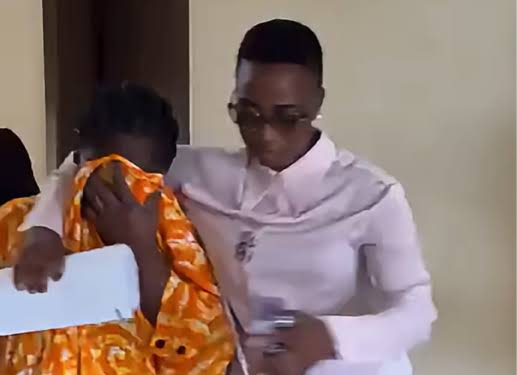
The Accra High Court has refused bail to senior nursing officer Salomey Awiti Baffoe, who is accused of abetting the publication of false news in the controversial “Ghana Jollof” TikTok case. Her lawyers say they will challenge the ruling at the Court of Appeal.
The Accra High Court has refused bail to senior nursing officer Salomey Awiti Baffoe, keeping the 40 year old health professional in custody as investigators continue their probe into the widely discussed “Ghana Jollof” TikTok case.
Justice Kizita Naa Koowa Quarshie rejected Baffoe's application for bail on Thursday, September 24, following arguments from prosecutors that her release at this stage could interfere with an ongoing cyber investigation.
Baffoe is facing a charge of abetment of publication of false news in connection with a viral social media video that has generated intense public debate in Ghana.
She has not been convicted of the offence, and the allegations against her remain subject to determination by the courts.
Prosecutors opposed the bail application, telling the court that investigators still required Baffoe as part of their inquiries.
They also argued that granting her bail could create a risk of interference with potential witnesses connected to the investigation.
The defence rejected those arguments and sought Baffoe's release while the criminal proceedings continue.
Her lawyer, Martin Kpebu, argued that the circumstances did not justify keeping his client in custody and maintained that she should be permitted to defend the case while on bail.
Following the High Court's decision, Kpebu announced that the defence would appeal.
He said Baffoe's legal team also intends to petition Chief Justice Paul Baffoe Bonnie to seek an expedited hearing before the Court of Appeal.
The case has attracted widespread attention because of its connection to a viral TikTok controversy commonly referred to online as the “Ghana Jollof” case.
Authorities allege that Baffoe played a role in facilitating or encouraging the publication of material investigators consider false.
The precise criminal responsibility of Baffoe, however, has not been established.
Under Ghanaian law, an accused person is presumed innocent unless and until proven guilty by a competent court.
The case has also become part of a wider national debate over the use of criminal law to address allegedly false or harmful material published on social media.
Ghanaian authorities have increasingly confronted cases involving online publications, threats, misinformation and other digital content, prompting debate among lawyers, journalists, civil society organisations and government officials about how existing laws should be enforced.
Critics of criminal false news provisions have argued that overly broad enforcement could have implications for freedom of expression and legitimate criticism.
Authorities, however, maintain that freedom of expression does not prevent law enforcement agencies from investigating conduct they believe may constitute an offence under Ghanaian law.
The government has recently called for broader national discussions involving media organisations, civil society, law enforcement agencies, digital creators and other stakeholders over how the country should address harmful online content while protecting legitimate expression.
Baffoe's case will now proceed against that broader backdrop.
The High Court's refusal of bail does not determine whether she is guilty of the charge against her.
Instead, it determines her custody status while investigators and prosecutors continue with the case, subject to any intervention by a higher court.
Her legal team is now expected to turn to the Court of Appeal in an attempt to overturn Thursday's decision.
If the appeal is accepted and expedited, another court could soon be asked to determine whether Baffoe should remain in custody while the substantive criminal proceedings continue.
Until then, she remains detained as the investigation into the viral “Ghana Jollof” case continues.