
NINE MURDERED WOMEN SPARK RENEWED PROTESTS AGAINST FEMICIDE IN SOUTH AFRICA
South Africans are holding memorial runs and protests following the discovery of nine murdered women in Ekurhuleni near Johannesburg. Most victims were in their 20s and 30s, and some showed signs of sexual assault. Police are investigating possible links between the killings but have not established that all nine cases are connected.
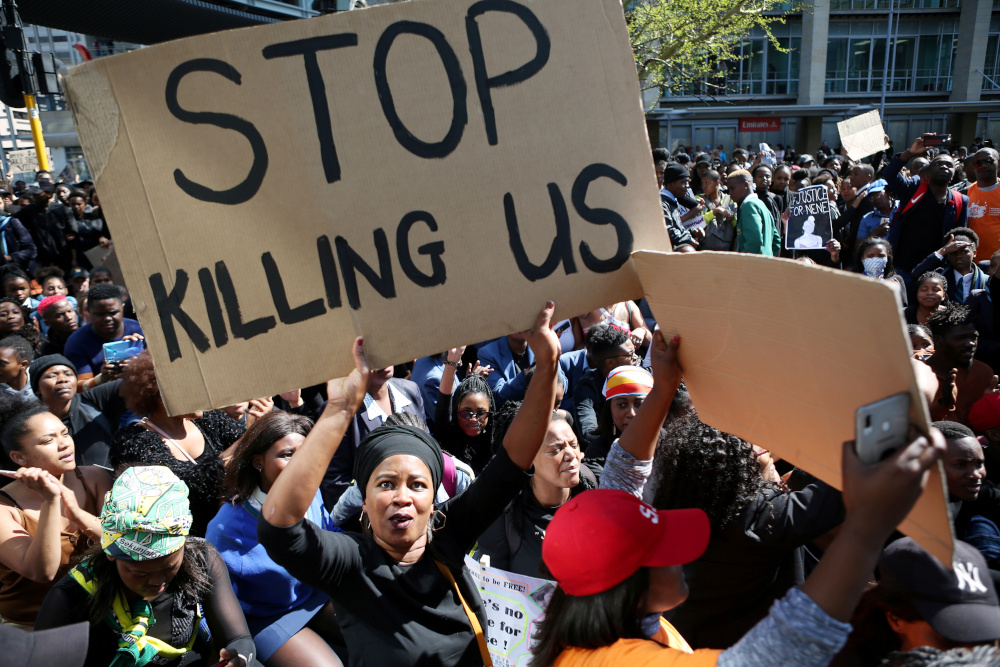
South Africans have gathered for memorial runs, demonstrations and other events demanding stronger action against gender based violence following the discovery of nine murdered women in Ekurhuleni, east of Johannesburg.
The bodies were discovered at different locations across the municipality over the past two months, triggering fear among residents and renewed national outrage over violence against women.
Most of the victims were in their 20s and 30s. Some were found without clothing or partially clothed and showed signs of sexual assault.
Police are investigating whether the killings are connected but have not established that a single person or group is responsible for all nine deaths.
SOUTH AFRICANS TAKE TO THE STREETS
Memorial events and demonstrations have been held across the country as communities demand answers and stronger protection for women.
In Johannesburg on Saturday morning, runners dressed in black gathered to honour Elizabeth Moselakgomo, one of the victims.
Moselakgomo disappeared after leaving her home for a run on September 9.
Her body was discovered days later behind a hotel in Rhodesfield.
Her killing has resonated strongly with South Africa's running community, with participants arguing that women should be able to exercise, walk and move through public spaces without fearing for their lives.
Some demonstrators carried messages demanding an end to femicide as the events developed into wider protests against gender based violence.
NINE WOMEN FOUND DEAD
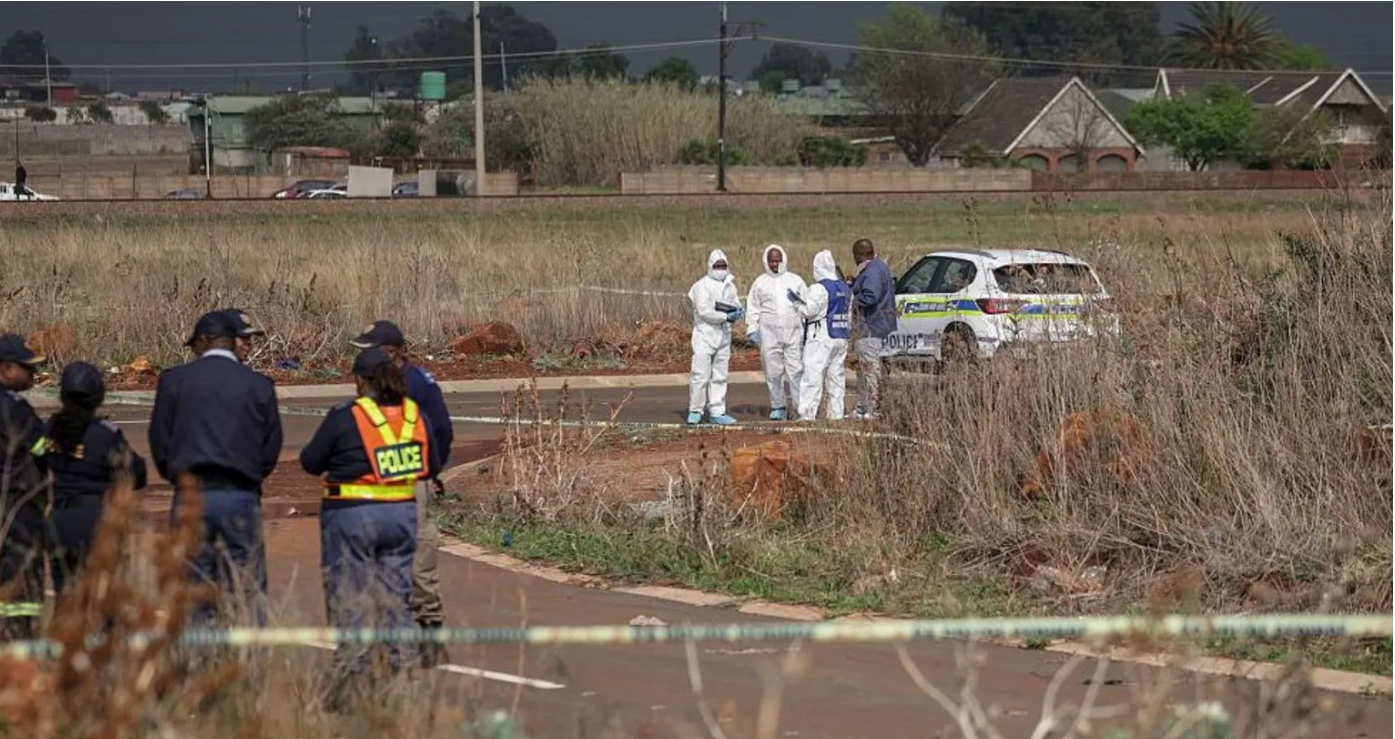
Police have recovered the bodies of nine women across Ekurhuleni since July.
The cases involve different locations and circumstances, although investigators have identified similarities that have prompted examination of whether some or all of the killings could be connected.
Authorities have assembled specialist investigators to review the cases, including victim profiles, crime scenes and potential behavioral patterns.
Police have cautioned against prematurely concluding that a serial killer is responsible.
Investigators have yet to establish whether the women were killed by one perpetrator, multiple perpetrators or in unrelated attacks.
One person has been arrested in connection with one of the earlier killings, but authorities have not linked that suspect to all nine deaths.
SIGNS OF SEXUAL VIOLENCE
The condition in which some of the victims were discovered has intensified public concern.
Several women were found without clothing or partially clothed, while investigators reported signs of sexual assault in some cases.
The circumstances have added to fears that women may have been specifically targeted.
Authorities are continuing forensic examinations and investigations to establish what happened to each victim.
Some of the women have also not yet been publicly identified.
GOVERNMENT PROMISES INVESTIGATION
President Cyril Ramaphosa has directed police authorities to priorities the investigation.
The President said the killings were creating fear and uncertainty in communities, particularly among women, and pledged that authorities would pursue those responsible.
The government has also joined families and communities in memorial events honoring the victims.
Officials have promised stronger enforcement of existing laws addressing gender based violence and femicide.
Police have increased visibility in affected areas while investigators continue examining the deaths.
ACTIVISTS REJECT BURDEN ON WOMEN
The killings have also renewed debate over advice telling women to change their behavior to remain safe.
Police have advised women in affected communities to avoid isolated areas, exercise in groups and take additional precautions.
Women's rights organizations and some protesters argue that such advice risks placing responsibility on potential victims rather than addressing perpetrators and weaknesses in policing and public safety.
Campaigners are demanding improved investigations, safer public spaces, greater police accountability and stronger implementation of laws protecting women.
The Commission for Gender Equality has also called for safety assessments in affected communities, including examination of lighting, surveillance, public transport routes and police visibility.
SOUTH AFRICA FACES WIDER GBV CRISIS
The nine killings have become the latest focus of South Africa's longstanding struggle with gender based violence and femicide.
Gender based violence and femicide was declared a national disaster in South Africa in 2025, reflecting the scale of violence affecting women and girls.
Despite years of government programmed and public campaigns, activists say women continue to face unacceptable levels of violence.
The latest deaths have intensified demands for government action to move beyond public condemnation towards sustained improvements in policing, prevention and prosecution.
For the families of the nine women, however, the immediate demand remains accountability.
As memorial events continue, police face growing pressure to determine whether the killings are connected and identify those responsible.