LA PLEASURE BEACH MANAGEMENT SUES SSNIT, TWO HOTEL COMPANIES OVER DEMOLITION
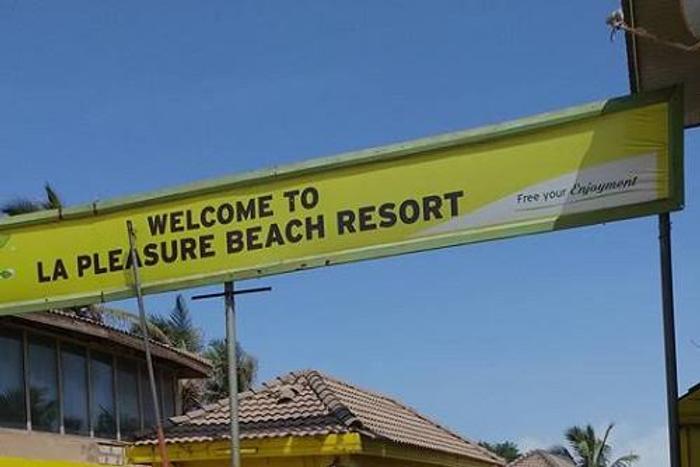
La Pleasure Beach’s management committee has sued SSNIT, Hotel Investments Ghana Limited and La Palm Beach Hotel Limited over the October 2 demolition of structures at the beachfront. Chairman Stanley Anyetei Nunoo is asking the Accra High Court to recognise the committee’s authority to manage the beach and determine whether the demolition had a lawful basis. The plaintiff alleges the operation occurred without a court order or prior notice, while SSNIT has defended the intervention as necessary to address alleged encroachment, security and environmental concerns affecting its hotel investments. The court has not yet ruled on either side’s claims.
The management committee of La Pleasure Beach has taken legal action against the Social Security and National Insurance Trust and two hotel companies over the October demolition of structures at the beachfront, escalating a long-running dispute over who has the legal authority to manage one of Accra’s most prominent coastal recreational areas. The suit, filed at the High Court in Accra on October 23 by Stanley Anyetei Nunoo, who describes himself as chairman of the La Pleasure Beach Management Committee, seeks declarations recognising the committee’s authority to regulate activities, issue licences and generate revenue from operations at the beachfront.
The defendants named in the action are Hotel Investments Ghana Limited, La Palm Beach Hotel Limited and SSNIT. The two hotel companies operate Labadi Beach Hotel and La Palm Beach Hotel respectively, while SSNIT has publicly described the hotel properties as part of its investment portfolio. The lawsuit asks the court to determine the extent of the defendants’ legal interests in the beachfront and whether they had authority to participate in or facilitate the demolition carried out in the early hours of October 2.
According to the statement of claim, security personnel from the Ghana Police Service and Ghana Armed Forces entered the La Beach area at dawn and demolished the committee’s management office and other structures. Nunoo alleges that equipment, furniture, files, records and other property belonging to the management committee and licensed operators were either destroyed or removed during the operation, while workers and operators were forced to leave the area.
The plaintiff maintains that the demolition was carried out without a court order, warrant, prior notice or an opportunity for the committee to be heard. Those claims remain allegations before the court and have not yet been judicially determined. The High Court will ultimately have to assess the parties’ respective legal rights, the circumstances under which the demolition was authorised and whether the defendants acted within the law.
At the centre of the case is a deeper dispute over control of La Pleasure Beach. Nunoo’s court filings state that the current management committee derives its authority from a Court of Appeal order dated July 21, 2022. According to his account, that order dissolved an interim management committee that had previously been established by the High Court in April 2013, after which the present committee assumed responsibility for managing the beachfront.
The plaintiff says the committee has since regulated activities at La Pleasure Beach, licensed operators and collected revenue from commercial activities. It argues that Hotel Investments Ghana Limited and La Palm Beach Hotel Limited have no proprietary or possessory rights over the beach itself beyond an access arrangement granted by the management committee.
That position is strongly contested by the defendants’ broader public account of the beachfront. SSNIT said after the demolition that it had sought the intervention of the National Security Council Secretariat because of what it described as persistent unlawful occupation, encroachment and unauthorised activities on the beachfront adjoining Labadi Beach Hotel and La Palm Royal Beach Hotel.
SSNIT argued that the beachfront activity posed security, environmental, sanitation and commercial risks to the hotels and their guests. The Trust said the two hotel properties form part of its investment portfolio and that it has a fiduciary duty to protect those investments on behalf of contributors and pensioners under Ghana’s national social security scheme.
In its October 2 statement, SSNIT cited concerns including unauthorised access to areas close to hotel operations, fire and sanitation risks, environmental degradation, privacy concerns and what it regarded as activities that could affect the reputation and financial performance of the two hotels. The Trust said it requested security intervention because it believed the growing number of structures and operators along the beachfront posed a threat to the value and safety of the assets.
SSNIT also insisted that its objective was not to prevent the public from accessing the beach. It said the cleared areas would eventually be cleaned and restored and that the beachfront would remain open to the public. The Trust presented the exercise as an attempt to remove unauthorised occupants and protect hotel investments rather than permanently privatise the shoreline.
The October 2 operation involved personnel from the Ghana Armed Forces’ 48 Engineer Regiment and the Ghana Police Service. Several permanent and temporary structures were demolished or partially removed, including facilities associated with La Pleasure Beach and Polo Beach Club, while traders, workers and operators scrambled to recover property from the affected sites.
The exercise immediately triggered controversy because of the scale of the demolition and the limited public notice preceding it. La Dadekotopon Member of Parliament Rita Naa Odoley Sowah confronted security personnel at the scene and questioned the legal and administrative basis for the operation. Some affected business owners similarly complained that they had not been given adequate opportunity to remove their property before structures were pulled down.
Deputy Chief of Staff in charge of Operations Stan Dogbe later clarified that the La Beach exercise was not part of the government’s separate flood-mitigation demolition programme. He said National Security supervised the beachfront operation following a request associated with the Labadi Beach Hotel and concerns over structures in front of the property.
The controversy quickly drew in the La Traditional Council, which accused the authorities of failing to consult the community adequately before the exercise. On October 7, the Council announced that plans by SSNIT to redevelop the demolished area had been suspended pending further discussions involving traditional leaders, SSNIT, National Security and government officials.
The La Shikitele, Nii Adjei Koofeh IV, said both SSNIT and National Security had apologised to the Traditional Council for not engaging traditional leaders before the demolition. According to him, the parties subsequently agreed that any future action concerning the site should follow proper consultation and due process.
The suspension of redevelopment plans did not resolve the underlying ownership and management dispute. Instead, it created space for negotiations while the different parties continued to assert competing interests in the beachfront.
La Pleasure Beach management had initially indicated that it expected the facility to reopen within weeks of the demolition. Communications Director Abdul Rahman Ashittey said temporary booths and toilet facilities could be reinstalled once debris was cleared, and management held discussions with several government and traditional authorities over how operations might resume.
Those discussions, however, did not prevent the dispute from moving into the courts. The latest lawsuit suggests that the management committee now wants a formal judicial determination of its authority rather than relying only on negotiations with SSNIT and the hotel operators.
The plaintiff’s case is therefore broader than a claim for compensation over destroyed property. Nunoo is asking the High Court to determine who has the legal right to manage the beach, regulate operators, issue licences and collect revenue. A ruling on those questions could significantly affect how the beachfront is governed in the future.
It could also determine the extent to which the two hotel companies can claim operational or protective rights over the adjoining beach. The plaintiff maintains that their interests are limited, while SSNIT’s public position is that activities on the beachfront directly affect hotel safety, value and commercial performance.
The court will need to examine documentary evidence supporting those competing positions, including previous court orders, land or access arrangements, management agreements and any other records showing who holds legal authority over the relevant portions of the beachfront.
The legal status of the beach is particularly important because Ghana’s coastline often involves overlapping customary, public, commercial and state interests. Traditional authorities may claim land ownership or historical stewardship, while public institutions, investors and operators may hold leases, licences or other contractual rights over adjoining properties and facilities.
Disputes can therefore arise even where multiple parties believe they have legitimate interests. A hotel may have lawful rights over its property and access routes without necessarily controlling an entire public beach, while a management committee may regulate commercial activity without necessarily owning the underlying land.
The High Court will have to distinguish among those different rights rather than simply deciding which party has the strongest commercial interest in the area.
The demolition also raises questions about procedural fairness. Even if a party ultimately proves it has stronger legal rights over the beachfront, the court may still need to consider whether the method used to remove structures complied with the law and whether affected occupants were entitled to notice, a hearing or a court order before demolition.
The plaintiff’s argument is that those safeguards were absent. SSNIT, by contrast, has justified the intervention on the basis of persistent unauthorised occupation and risks to its hotel investments.
The difference between those positions is central to the case. The High Court has not yet determined that the structures were lawfully authorised, nor has it ruled that the demolition was unlawful. Both questions remain open.
The lawsuit may also expose the precise relationship between SSNIT and the two hotel companies. SSNIT has repeatedly said the hotels form part of its investment portfolio, which explains why it believes it has a duty to protect them. The plaintiff, however, is challenging the extent to which that investment interest translates into authority over the neighbouring beach.
For SSNIT, the dispute has financial as well as legal significance. The Trust manages assets on behalf of millions of contributors and pensioners and has publicly said it must protect the value of investments capable of generating long-term returns. Labadi Beach Hotel in particular is one of Ghana’s best-known hospitality properties and occupies a strategically important section of the Accra coastline.
For the La community, the case has a different economic dimension. La Pleasure Beach supports traders, food vendors, entertainers, security workers and other small businesses, while management has previously said revenue from the facility contributes to community development activities.
The Traditional Council has therefore argued that any redevelopment or management arrangement must take the livelihoods and interests of La indigenes into account. It has called for future decisions about the site to involve community leaders rather than being determined solely by SSNIT or hotel management.
That concern became more pronounced after businesses were destroyed during the October operation. Tourism and hospitality groups subsequently called for compensation for affected operators, while some local leaders argued that the demolition had disrupted employment and income for families dependent on beachfront commerce.
SSNIT’s position remains that unregulated activity cannot be allowed to undermine safety, sanitation and the viability of the hotels. The Trust has cited fire risks, environmental degradation and uncontrolled construction as concerns that needed urgent attention.
Those arguments mean the dispute cannot be reduced simply to a conflict between a hotel and beach vendors. It involves competing claims over tourism development, public beach access, community livelihoods, investment protection, environmental management and property rights.
The lawsuit now gives the judiciary an opportunity to clarify some of those competing interests. A ruling recognising the management committee’s authority could significantly strengthen its position in future negotiations with SSNIT and the hotels. A ruling favouring the defendants could instead reshape how the beachfront is managed and potentially support a different redevelopment model.
The case could also influence other disputes along the Accra coastline, where commercial development increasingly intersects with traditional land claims and public use of beaches. High-value coastal property has become more contested as hotels, private developers, restaurants and entertainment venues expand into areas historically used by local communities.
Whatever the outcome, the High Court’s determination is likely to be closely watched by investors, traditional authorities, tourism businesses and beachfront operators.
For now, the legal position remains unresolved. The court has not accepted or rejected Nunoo’s claim that the management committee has exclusive authority over La Pleasure Beach, and it has not ruled on whether SSNIT or the hotel companies acted unlawfully.
The most accurate description is that the management committee has challenged the October demolition and the defendants’ authority in court and is seeking judicial recognition of its own management rights.
The action also means the dispute has moved beyond political statements and negotiations into a formal legal process where each party will have to prove its claims through evidence.
Until the High Court determines those claims, both the plaintiff’s allegations of unlawful demolition and the defendants’ assertions of unauthorised occupation should be treated as contested positions rather than established legal conclusions.
The next major development will come when the defendants file their responses and the court begins determining the preliminary and substantive issues raised by the writ. That process is expected to clarify not only what happened during the October 2 demolition but who ultimately has the legal authority to control, regulate and benefit from La Pleasure Beach.