AGRI-IMPACT, PWC GHANA PARTNER TO SUPPORT 60,000 JOB OPPORTUNITIES FOR YOUNG WOMEN IN AQUACULTURE
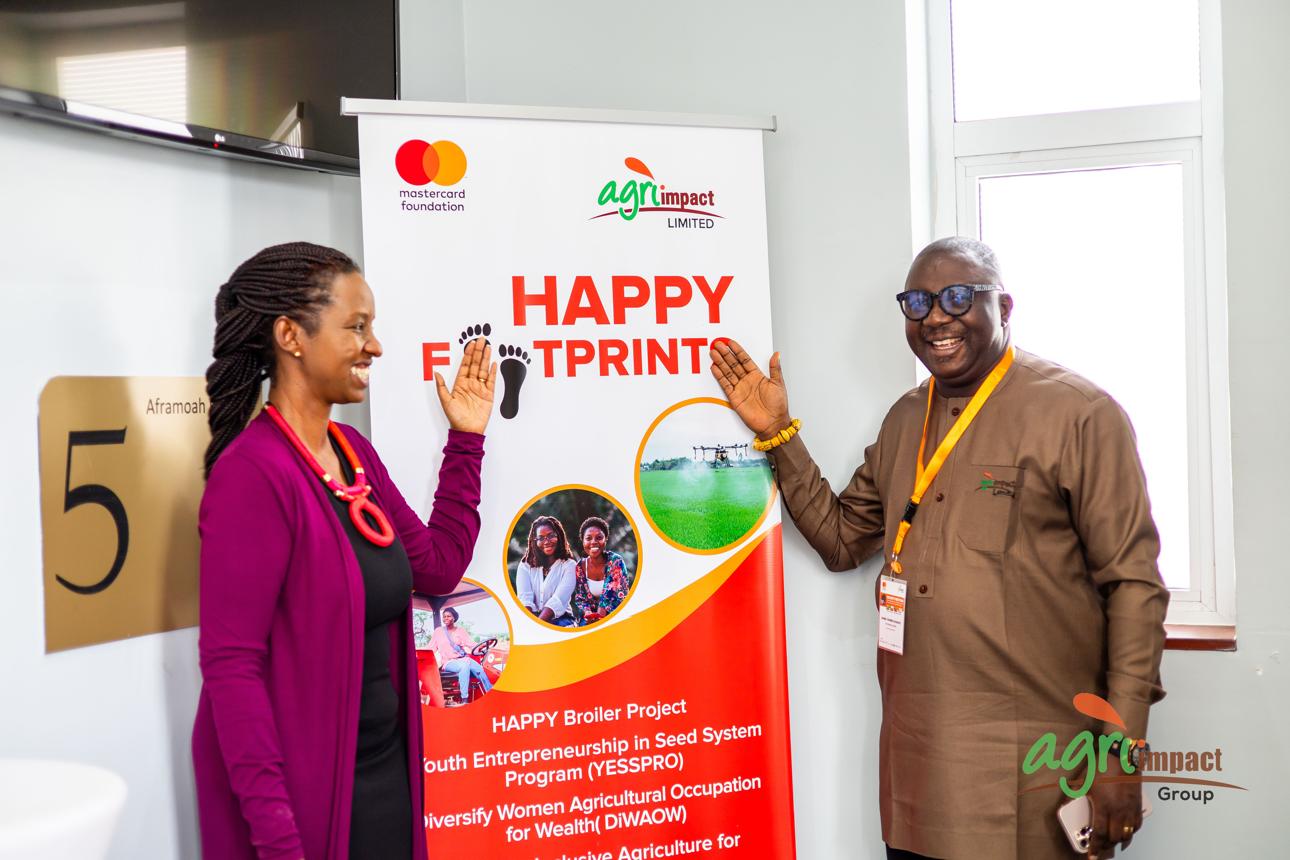
Agri-Impact Limited and PwC Ghana have signed a four-year agreement to strengthen companies participating in the Sustainable Aquaculture for Women Advancement programme. The October 26 agreement focuses on improving business systems, operational performance, resilience and capacity to scale. The wider Mastercard Foundation-supported SAWA initiative runs from 2026 to 2030 and aims to create 60,000 dignified work opportunities for women aged 18 to 35, including 3,000 women with disabilities, while adding 50,000 metric tonnes to Ghana’s aquaculture production. The 60,000 figure is a programme target and should not be interpreted as jobs already created.
Agri-Impact Limited and PwC Ghana have signed a four-year agreement aimed at strengthening businesses participating in Ghana’s Sustainable Aquaculture for Women Advancement programme, an ambitious initiative seeking to create 60,000 dignified and fulfilling work opportunities for young women across the country’s aquaculture value chain. The agreement, signed on October 26 at Agri-Impact’s office, will focus on improving the institutional strength, management systems, operational performance and growth capacity of participating agribusiness companies so they can expand sustainably and create more economic opportunities for women between the ages of 18 and 35.
The partnership makes PwC Ghana the institutional-strengthening partner under the SAWA programme, which is being implemented by Agri-Impact Limited in partnership with the Mastercard Foundation and a consortium of public and private-sector organisations. Rather than directly employing 60,000 women itself, the programme is designed to strengthen businesses, expand production, provide training, improve access to markets and support entrepreneurship across the aquaculture sector so that employment and livelihood opportunities can be generated over the four-year implementation period.
The distinction between the programme target and jobs already created is important. SAWA is seeking to create 60,000 work opportunities by the end of the programme, including opportunities for 3,000 young women with disabilities, but the newly signed agreement should not be interpreted as evidence that all those jobs have already been delivered. The October 26 partnership represents one component of the wider institutional structure intended to help participating companies become stronger enough to employ, train, contract with and support more women as the programme expands.
Agri-Impact said the decision to bring PwC Ghana into the programme builds on an existing relationship between the two organisations under the Harnessing Agricultural Productivity and Prosperity for Youth programme. Over the previous three years, PwC provided institutional-development support to Agri-Impact under that initiative, helping the company strengthen its systems and improve its ability to manage large agricultural and agribusiness projects.
Agri-Impact Chief Executive Officer Dr. Daniel Fahene Acquaye said the organisation had experienced firsthand the benefits that stronger internal systems can bring to local companies operating in agriculture. According to him, the support provided through the previous collaboration helped Agri-Impact improve its organisational capacity, strengthen its visibility and take on larger-scale assignments in Ghana and the Caribbean, while also creating more opportunities for young people.
That experience became part of the rationale for extending similar support to other companies participating in SAWA. Agri-Impact believes that if indigenous agribusiness firms are able to strengthen governance, financial management, operating systems, market structures and strategic planning, they will be better positioned to grow and create more employment opportunities throughout the aquaculture value chain.
The arrangement with PwC is therefore not being presented primarily as an audit engagement. Agri-Impact says the professional-services firm will work collaboratively with participating businesses to identify weaknesses, improve systems, strengthen management practices and prepare companies for expansion. The aim is to help local agribusinesses grow into larger and more resilient enterprises capable of competing effectively while supporting employment creation.
PwC Ghana Partner Hayfron Aboagye said the partnership aligns with the firm’s broader objective of helping organisations build trust, solve complex problems and improve institutional performance. PwC expects the four-year engagement to support the emergence of stronger Ghanaian agribusiness brands with better internal systems, higher operational standards and greater capacity to scale.
The wider SAWA programme officially began in July 2026 and is expected to run until June 2030. It is focused specifically on expanding opportunities for young women within Ghana’s aquaculture industry, with particular attention to the tilapia and catfish value chains. The programme combines employment creation, skills development, entrepreneurship, business growth, market development and production expansion within a single intervention.
Agri-Impact’s official programme announcement states that SAWA is expected to create 60,000 dignified and fulfilling jobs for young women aged 18 to 35 over the four-year period. Of that number, 3,000 opportunities are intended specifically for young women with disabilities, reflecting an emphasis on gender inclusion and the participation of groups that often face additional barriers to employment and entrepreneurship.
The programme also seeks to contribute approximately 50,000 metric tonnes of fish to Ghana’s aquaculture production over its implementation period. That target links the employment component directly to Ghana’s broader food-security and import-substitution agenda, because increased domestic fish production could reduce pressure on imports while creating income opportunities for producers, processors, traders and service providers.
Ghana continues to rely heavily on fish as an important source of dietary protein, but domestic production has not always kept pace with demand. Aquaculture has therefore become increasingly important as policymakers and private companies search for ways to expand local production while reducing pressure on marine fisheries and limiting dependence on imported fish products.
The growth of aquaculture creates opportunities far beyond fish farming itself. The value chain includes hatcheries, feed production, fingerling supply, pond and tank construction, water-management services, veterinary and technical support, transport, processing, cold storage, packaging, distribution, marketing and retail. SAWA is designed to create opportunities across those different segments rather than concentrating solely on women who directly operate fish farms.
That broader value-chain approach is particularly important because employment creation in agriculture increasingly depends on more than primary production. A successful aquaculture enterprise can generate demand for logistics, input suppliers, processors, traders, equipment manufacturers and digital services, allowing a single production business to support multiple forms of employment and entrepreneurship.
Under the SAWA model, participating companies are expected to serve as engines of that wider growth. Strengthening those businesses can increase the number of farmers they work with, expand processing capacity, increase purchases from suppliers and create more downstream market opportunities. This is why the PwC agreement focuses heavily on institutional performance rather than simply providing financial support.
Poor internal systems can prevent promising agribusinesses from growing even when market demand exists. Weak financial controls, inadequate governance, limited strategic planning, poor record-keeping and inefficient operations can make it difficult for companies to attract investment, secure credit, manage rapid growth or enter larger commercial markets. Institutional-strengthening support is intended to address those barriers so companies can expand without becoming operationally unstable.
Agri-Impact has argued that strengthening local private-sector companies is essential to creating sustainable employment because businesses that become more competitive can continue generating opportunities after donor-funded programmes eventually end. That approach differs from short-term employment schemes in which jobs depend entirely on continued project funding.
The SAWA programme is being implemented through a consortium that includes Newage Agric Solutions Limited, AgroKings Limited, the Fisheries Commission, CEL and TechnoServe, while additional anchor partners include Aglow, Afrigem Global and Naple Betta. The Council for Scientific and Industrial Research is also providing research and technical support, giving the programme a combination of private-sector, government, technical and development expertise.
Different partners are expected to contribute to different stages of the aquaculture value chain. Some organisations will focus on production, others on market development, training, technical assistance, business expansion or ecosystem support. The Fisheries Commission’s involvement also links the initiative to national aquaculture regulation and development priorities.
The programme is organised around four broad strategic pillars covering gender and disability inclusion, production expansion, value addition and market development, and broader strengthening of Ghana’s aquaculture ecosystem. The objective is to create a system in which increased fish production is accompanied by stronger businesses, better market access and opportunities for young women to participate as employees and entrepreneurs.
Gender inclusion is central to the programme because women have historically participated in fisheries and fish trading in Ghana but have often faced barriers when attempting to move into production, commercial aquaculture, larger processing operations and other higher-value areas of the sector. Those barriers can include limited access to finance, land, equipment, training and formal business networks.
SAWA is attempting to address some of those constraints by intentionally targeting women rather than relying on employment growth to reach them automatically. This includes specific efforts to make programme activities accessible to women with disabilities and to build safeguarding and inclusion mechanisms into implementation.
One example of that approach is already visible through Newage Agric Solutions’ Urban Blue initiative, which operates under SAWA. The programme has been training young women in practical catfish production while also providing business guidance and starter support intended to help participants establish home-based aquaculture enterprises. More than 1,000 applications were reportedly received during the first recruitment process, suggesting significant interest among young women seeking opportunities in the sector.
Participants in the first Urban Blue cohort received practical training at Newage’s Saletso Industrial Hub in Okwenya in the Eastern Region, where they were introduced to catfish production, enterprise management and related agribusiness opportunities. The training was designed not merely to teach technical production but to help participants understand how aquaculture can be developed into a viable commercial activity.
That approach demonstrates how SAWA intends to combine skills with practical pathways into income generation. Training alone does not guarantee employment, so the programme is attempting to connect technical knowledge with starter inputs, market opportunities and business-development support.
The PwC partnership adds another layer by strengthening the companies expected to absorb or support those participants. If training programmes produce thousands of skilled young women but participating companies remain too weak to expand, employment growth will be limited. Improving business performance is therefore intended to make the programme’s employment target more achievable.
PwC’s involvement may also help participating companies become more attractive to banks, investors and commercial partners. Businesses with stronger accounts, governance structures and management systems are generally better positioned to demonstrate credibility when seeking external finance, particularly in agriculture where lenders often consider businesses relatively high risk.
Access to finance remains one of the largest barriers facing Ghanaian agribusinesses. Aquaculture can require substantial upfront investment in ponds, tanks, feed, fingerlings, water systems and processing facilities before revenue is generated. Firms that want to scale therefore need strong financial planning and access to working capital.
By improving internal systems, the programme could help companies prepare for that growth while reducing the risk of expansion creating financial stress. This becomes increasingly important as SAWA attempts to increase both production and employment simultaneously.
The partnership also comes at a time when Ghana is placing greater attention on agriculture as a source of youth employment. High levels of unemployment and underemployment among young people have increased pressure on government, private-sector organisations and development partners to create sustainable opportunities outside traditional public-sector employment.
Agriculture remains one of Ghana’s largest economic sectors, but younger workers have often viewed parts of it as low-paying or unattractive. Programmes such as SAWA are therefore attempting to reposition agribusiness as a commercially viable sector with opportunities in technology, processing, logistics and entrepreneurship as well as primary production.
Aquaculture may be particularly suitable for that approach because production can take place in controlled environments and increasingly involves modern systems such as tank farming, improved feeds, water-quality monitoring and digital management tools. These technologies can make the sector more attractive to younger entrepreneurs while improving productivity.
The programme’s women-focused design also reflects wider concerns about gender inequality in employment. Young women can face additional disadvantages in accessing capital, training and formal work opportunities, particularly in rural areas and sectors traditionally dominated by men at the ownership and management levels.
Creating employment for women in aquaculture can therefore have wider social effects beyond individual incomes. Greater earnings can strengthen household financial security, increase investment in education and healthcare and expand women’s influence within businesses and communities.
However, the programme’s success will ultimately depend on measurable outcomes rather than targets alone. The 60,000 figure is ambitious, and implementation partners will need to demonstrate how many women move into sustained employment, entrepreneurship or viable livelihood activities rather than counting short-term training participation as completed job creation.
That distinction is particularly important in development programmes because training numbers can sometimes be much easier to achieve than long-term income outcomes. A participant attending an aquaculture course does not necessarily have a job unless the training results in actual employment, enterprise activity or another sustained source of earnings.
The Mastercard Foundation and Agri-Impact have described the intended opportunities as dignified and fulfilling work, suggesting that the quality of employment is meant to matter alongside the total number created. Monitoring earnings, business survival, job duration and progression will therefore be important in evaluating SAWA’s real economic impact.
The programme’s production target will also provide another measure of performance. Increasing Ghana’s aquaculture output by 50,000 metric tonnes would represent a substantial contribution to domestic fish supply if achieved, particularly if production growth is commercially sustainable after the programme ends.
Higher production alone would not guarantee business success, however, unless markets are able to absorb the additional fish at profitable prices. This is why value addition and market development form a major part of the programme design. Processing, cold-chain infrastructure, distribution and market access will need to grow alongside farming capacity.
Participating businesses will also face wider challenges affecting Ghana’s agriculture sector, including energy costs, feed prices, financing constraints, transport expenses and fluctuating input costs. Institutional strengthening can help companies manage those risks but cannot remove them completely.
Feed is particularly important in aquaculture because it can represent a large share of production costs. Any sustained increase in feed prices can reduce margins for fish farmers and make it difficult for smaller businesses to remain profitable. Stronger supply chains and management systems may therefore become central to the programme’s sustainability.
Environmental management will also matter as production expands. Aquaculture growth requires responsible water use, disease control and waste management to avoid ecological damage or losses from poor production practices. Technical support from the Fisheries Commission, CSIR and other partners could be important in maintaining standards as more participants enter the industry.
The four-year PwC agreement is therefore best understood as one piece of a much broader programme. Its purpose is to strengthen the organisations responsible for delivering opportunities rather than directly serving as the employment programme itself.
Agri-Impact expects other members of the SAWA consortium to sign their respective institutional-strengthening agreements in the coming days, expanding PwC’s support across the programme. As those agreements are concluded, PwC will work with individual partners to assess their organisational needs and develop interventions tailored to their operations.
The objective is that by the end of the four-year engagement, Ghana will have not only more young women participating in aquaculture but also stronger indigenous companies capable of continuing to grow and create opportunities beyond the life of the project.
That long-term institutional focus could prove decisive. Development programmes often struggle when activities decline after external financing ends, particularly when local companies and organisations remain dependent on donor support. Building stronger commercial businesses may create a better chance of sustaining employment after SAWA concludes in 2030.
Agri-Impact already has experience implementing large youth-employment programmes through its partnership with the Mastercard Foundation. Its earlier HAPPY programme targets hundreds of thousands of work opportunities across rice, soybean, poultry and tomato value chains and has been used as a model for some elements of SAWA.
The new aquaculture programme narrows the focus specifically to women while applying a similar market-driven approach. Rather than creating jobs through government payroll expansion, the programme seeks to build commercial value chains capable of supporting employment through increased production and demand.
This approach will require the private companies involved to become commercially competitive, which explains the emphasis on institutional strengthening. Businesses that remain inefficient or poorly managed cannot sustainably create large numbers of jobs regardless of how much training is provided to potential workers.
The partnership with PwC therefore represents an attempt to address a less visible but important part of employment creation. While training, production and financing often receive greater public attention, management systems and organisational capacity can determine whether a business survives expansion.
For PwC Ghana, the arrangement also extends the firm’s role beyond conventional professional services into development-focused institutional support. Its involvement will include helping companies improve structures and performance with the expectation that stronger enterprises will translate into wider economic opportunities.
The success of that relationship will become clearer as the programme moves from its early implementation stage into larger-scale delivery. The first months have focused heavily on establishing partnerships, recruiting participants and launching training initiatives, while the next phase will increasingly need to demonstrate measurable business expansion and employment outcomes.
For young women considering careers in aquaculture, SAWA is intended to create several possible entry points. Some participants may become fish farmers, while others could work in processing, feed production, distribution, hatcheries, marketing or services connected to the sector. Others may develop their own enterprises with support from programme partners.
The inclusion of women with disabilities also provides an opportunity to demonstrate whether agriculture programmes can be designed more intentionally around accessibility. Achieving the specific target of 3,000 women with disabilities will require adapted training, accessible infrastructure and deliberate efforts to remove barriers to participation.
Those implementation details will matter as much as the headline employment target. A programme can be statistically successful while still failing to address structural barriers if participants enter only the lowest-paid sections of the value chain. SAWA’s stated emphasis on leadership and entrepreneurship suggests it intends to move beyond that outcome.
For Ghana’s wider economy, stronger aquaculture could contribute simultaneously to employment, food security and import substitution. Increasing domestic fish supply would retain more economic value locally while providing opportunities for farmers, processors and traders.
The programme also aligns with the concept of Ghana’s blue economy, which seeks to expand sustainable economic activity connected to water resources. Aquaculture provides one potential avenue for growth without relying exclusively on wild-catch fisheries, which face pressure from overfishing and declining stocks.
The newly signed Agri-Impact and PwC agreement should therefore be understood as an institutional investment in that wider strategy. It does not itself create 60,000 jobs, but it is intended to strengthen the businesses expected to help generate those opportunities over the next four years.
The real measure of success will be whether those strengthened companies expand production, employ more young women, support viable entrepreneurs and remain commercially sustainable after the programme ends. If that happens at the scale envisioned, SAWA could become one of Ghana’s largest women-focused agribusiness employment initiatives.
For now, the verified development is that Agri-Impact and PwC Ghana have formalised a four-year partnership designed to improve the capacity of companies implementing the SAWA programme. The broader initiative is targeting 60,000 dignified work opportunities for women aged 18 to 35, including 3,000 women with disabilities, and aims to add 50,000 metric tonnes of fish to Ghana’s aquaculture output by 2030.
Those remain targets rather than completed outcomes, but the October 26 agreement establishes one of the institutional mechanisms through which the programme intends to pursue them. As implementation expands across the aquaculture value chain, attention will increasingly shift from agreements and training numbers toward the quality, sustainability and scale of the employment actually created.