
IRANIAN TWIN SISTERS SENTENCED TO DEATH AND 25 YEARS IN PRISON OVER ANTI-GOVERNMENT PROTESTS AMID TORTURE ALLEGATIONS
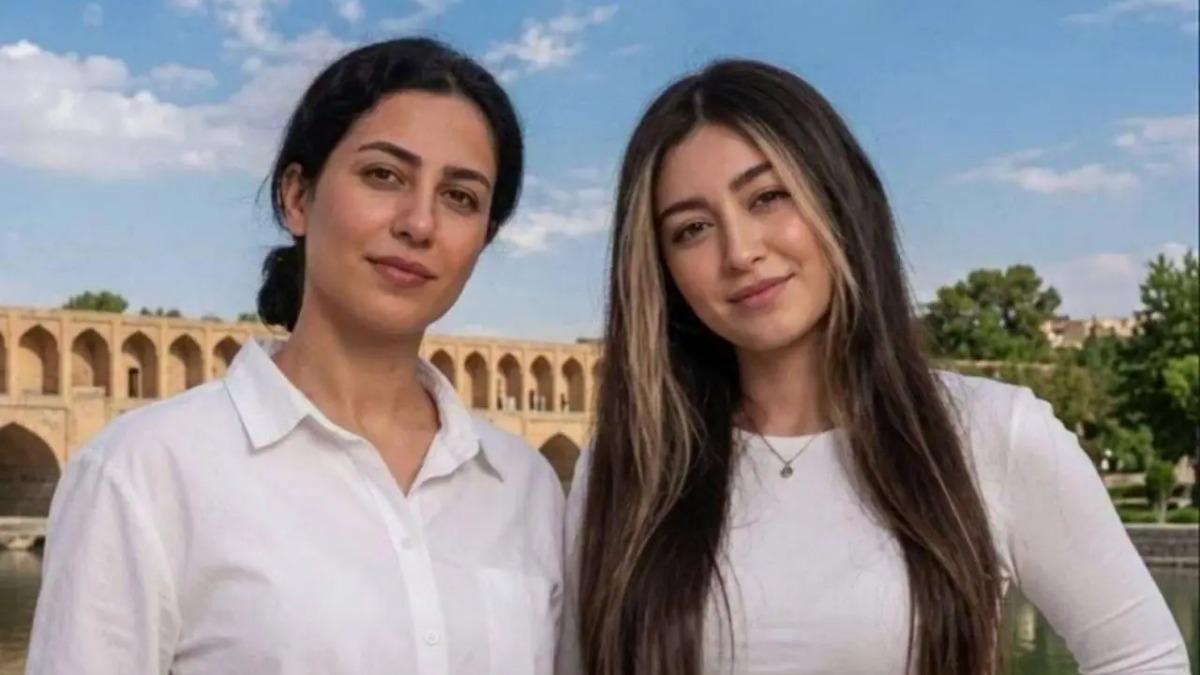
Iranian twin sisters Taraneh and Romina Rahimi have received a death sentence and a 25-year prison sentence, respectively, following their arrest in connection with anti-government protests in January 2026. Their cousin, Masoud Nourmohammadi, told BBC News Persian that the sisters were subjected to severe beatings, psychological intimidation and alleged torture while in detention, claiming that Taraneh was forced to sign a confession after interrogators threatened to rape her sister. Both women deny the charges against them, while their family continues appealing for international intervention. United Nations human rights expert Mai Sato has raised concerns about protest-related death sentences, and the European Parliament has called for appropriate medical care for the sisters. Iran's embassy in London has rejected allegations of torture and maintained that capital sentences were imposed for serious criminal offenses rather than peaceful demonstrations.
A 21-year-old Iranian woman, Taraneh Rahimi, has been sentenced to death, while her twin sister, Romina Rahimi, has received a 25-year prison sentence following their arrest in connection with nationwide anti-government demonstrations that swept across Iran in January 2026. The case has attracted renewed international attention following disturbing allegations from their family that the sisters were subjected to severe physical abuse, psychological intimidation and coerced confessions while in detention. Their cousin, Masoud Nourmohammadi, told BBC News Persian in an interview published on Thursday, November 26, that Taraneh continues to experience serious difficulties walking following alleged beatings during interrogation. The family has appealed for international intervention as concerns mount over Iran's use of capital punishment against individuals prosecuted in connection with demonstrations challenging the country's political and religious establishment.
Taraneh was convicted of moharebeh, an offense commonly translated as waging war against God or enmity against God, which carries the possibility of capital punishment under Iran's Islamic Penal Code. Part of a sentencing document reviewed by the BBC indicated that the conviction involved an allegation that she had drawn a bladed weapon with the intention of endangering members of the public. Her twin sister, Romina, received a 25-year sentence for aiding and abetting the same offense, according to information provided by Mai Sato, the United Nations Special Rapporteur on the situation of human rights in Iran. Both sisters have denied the accusations against them, while their family maintains that the authorities have failed to establish credible evidence supporting the charges.
The latest revelations provide a troubling account of the conditions the sisters allegedly experienced following their detention in late January. Nourmohammadi, who lives in the United States and has remained in contact with relatives in Iran, told the BBC that the family spent more than three months attempting to determine where the young women were being held. During that period, relatives reportedly received insufficient information concerning their whereabouts, physical condition or access to legal representation. The uncertainty intensified concerns about their welfare, particularly given reports from human rights organizations concerning the treatment of individuals detained during the government's response to the January demonstrations.
According to their cousin, the physical condition of the sisters had deteriorated so significantly by the time their mother was permitted to visit them that she struggled to recognize her own daughters. Nourmohammadi alleged that both women had sustained extensive bruising and swelling to their faces and that portions of their hair had been forcibly pulled out during detention. He said their mother was eventually able to identify them through their voices rather than their physical appearance. The account represents one of the most disturbing allegations to emerge from the case, although independent medical examinations and complete detention records have not been made publicly available to establish the full extent of their reported injuries.
Taraneh's physical condition has become a particular concern for the family as she remains under sentence of death. Her cousin alleged that repeated beatings inflicted injuries to her legs that have significantly affected her ability to walk. He also claimed that an inadequately treated head injury subsequently resulted in an ear infection, causing difficulties with balance and further restricting her mobility. The allegations raise serious questions concerning the treatment of detainees and their access to appropriate medical care, particularly in cases where prisoners are believed to have sustained injuries during questioning. Iranian authorities have rejected allegations of torture associated with protest-related prosecutions, although the family continues to insist that the sisters were mistreated.
One of the most serious accusations concerns the circumstances under which Taraneh reportedly signed a confession. Nourmohammadi alleged that interrogators threatened to rape Romina in Taraneh's presence if she refused to cooperate with their demands. According to the family, the threat was intended to exploit the close relationship between the sisters and compel Taraneh to accept responsibility for acts she maintains she did not commit. The accusation has intensified concerns surrounding the reliability of evidence obtained during detention, particularly because the consequences of the proceedings include a death sentence that could become irreversible if carried out.
The family's allegations also highlight the particular vulnerability of detainees whose relatives are simultaneously held by the authorities. International human rights standards recognize that coercion can involve threats against individuals other than the person being interrogated, particularly where those threats are used to obtain statements or admissions. A confession produced under such circumstances raises fundamental questions about whether the information was provided voluntarily and whether it can lawfully be relied upon in criminal proceedings. In the Rahimi sisters' case, establishing the circumstances surrounding their interrogation is especially significant because their reported confessions have been disputed and the complete evidential basis for their convictions has not been publicly disclosed.
The sisters' legal representatives have reportedly submitted a complaint alleging torture and sexual abuse during their interrogation. However, sources familiar with the proceedings told the BBC that responsibility for examining the complaint had been assigned to an official accused of involvement in mistreatment. If confirmed, that arrangement would raise serious concerns regarding the independence of the investigation and the ability of the complainants to obtain an impartial examination of their allegations. International standards generally require allegations of torture to be investigated promptly and independently, particularly where the officials implicated possess authority over the individuals responsible for reviewing the complaint.
Iran's embassy in London has rejected the allegations of torture and disputed suggestions that the country's judicial authorities have increased their use of capital punishment against individuals merely for participating in peaceful demonstrations. Responding to questions from the BBC, the embassy maintained that death sentences arising from the January unrest were imposed in cases involving intentional murder or conduct classified as moharebeh rather than peaceful political activity. It also stated that confessions obtained through coercion possess no legal validity under Iranian law. The embassy's response presents a sharply different account from that provided by the Rahimi family, whose representatives insist that the sisters were subjected to physical and psychological pressure before signing statements.
The case against the twins is connected to demonstrations in the central Iranian city of Isfahan, where a member of the Islamic Revolutionary Guard Corps was killed during the January unrest. Iranian authorities have pursued criminal proceedings against several individuals in connection with events surrounding the demonstrations, although the complete court documents establishing the specific allegations against each defendant have not been published. The family's position is that neither sister was responsible for killing anyone and that there is no credible evidence establishing that Taraneh possessed or used the weapon described in the sentencing material. The absence of publicly accessible trial records makes it difficult to independently evaluate the strength of the prosecution's case.
Mai Sato, the United Nations human rights expert monitoring developments in Iran, has expressed concern about the lack of clarity surrounding the individual responsibilities of defendants prosecuted in the Isfahan case. According to information she provided to the BBC, ten individuals were sentenced to death in connection with the proceedings without sufficient public explanation of the particular actions attributed to each person. The distinction between individual criminal responsibility and general participation in a demonstration is especially important where prosecutions involve capital punishment. International fair trial standards require courts to establish responsibility through reliable evidence rather than relying exclusively on a person's presence within a group associated with alleged criminal conduct.
Earlier reporting by The Guardian established that the Rahimi family had begun appealing for international assistance by September 2026, after learning of the severe sentences imposed on the sisters. Relatives sought the involvement of the United Nations and other international institutions capable of raising concerns directly with Iranian authorities. Their efforts have focused on preventing Taraneh's execution, challenging the convictions and obtaining protection for both women against further alleged mistreatment. The renewed attention generated by the BBC interview has brought the case back into international discussion, although no definitive announcement has established that Taraneh's death sentence has been overturned.
The demonstrations that led to the sisters' detention began in late December 2025, initially reflecting widespread frustration over deteriorating economic conditions, rising living costs and pressure on household incomes. The unrest subsequently expanded into a broader challenge to Iran's political leadership, attracting participants who expressed dissatisfaction with the country's system of governance and the authority exercised by its clerical establishment. The expansion of the protests reflected the convergence of economic grievances and political demands, creating one of the most significant challenges confronting the Islamic Republic in recent decades. Authorities responded through extensive security operations, arrests and criminal investigations, while the government accused foreign adversaries of contributing to the unrest.
The scale of the resulting casualties remains disputed. Iranian authorities have placed the death toll at 3,117, including members of the security forces, while the United States-based Human Rights Activists News Agency has reported identifying more than 7,000 people killed during the crackdown. The organization says most of those identified were protesters. Differences between the figures reflect competing accounts of the violence, difficulties obtaining reliable information and restrictions affecting independent monitoring inside the country. Neither the existence of violent incidents during the demonstrations nor the government's allegations of foreign involvement independently establishes the criminal responsibility of particular individuals arrested in connection with the unrest.
Iranian officials have maintained that the state possesses a responsibility to respond to violent activity, protect public safety and prosecute individuals accused of attacking security personnel or endangering civilians. The government has also accused the United States and Israel of encouraging instability within Iran, describing aspects of the demonstrations as part of a broader campaign against the Islamic Republic. Human rights organizations, however, have argued that the authorities' response extended beyond the prosecution of individuals accused of specific violent acts and included serious restrictions on peaceful political expression. The treatment of protesters has consequently become a major point of disagreement between Tehran and international human rights institutions.
The Rahimi sisters' case illustrates the legal significance of those competing positions because the charges against them cannot be accurately described simply as a conviction for attending a demonstration. Iranian judicial authorities have reportedly classified Taraneh's alleged conduct as a serious offense involving a weapon, while Romina was convicted of assisting conduct falling within the same criminal framework. Their family rejects those allegations and maintains that their participation in the protests has been used as the basis for unjustified criminal punishment. The central questions therefore concern whether the prosecution established the alleged acts through credible evidence and whether the sisters received proceedings consistent with fundamental fair trial protections.
The application of moharebeh in protest-related cases has attracted extensive criticism from international legal experts and human rights organizations. Although the offense forms part of Iran's domestic criminal legislation, its use in politically sensitive proceedings has raised questions about the circumstances under which conduct is considered sufficiently serious to justify capital punishment. International human rights standards place substantial restrictions on the application of the death penalty, particularly in countries that retain it for certain criminal offenses. Those standards require the most rigorous protections where an individual's life is at stake, including access to legal representation, an impartial tribunal and a meaningful opportunity to challenge the prosecution's evidence.
Iran is a party to the International Covenant on Civil and Political Rights, which establishes obligations concerning the protection of life, fair trial guarantees and freedom from torture or cruel, inhuman and degrading treatment. The covenant restricts the use of capital punishment in countries that have not abolished it to the most serious crimes. United Nations human rights bodies have interpreted that threshold as applying to offenses of extreme gravity involving intentional killing. The allegations concerning Taraneh's conviction consequently raise questions extending beyond the application of Iranian domestic law to the country's obligations under international human rights agreements.
The prohibition against torture remains applicable regardless of the seriousness of the charges brought against a defendant. Authorities cannot justify coercive interrogation solely on the grounds that an investigation concerns national security, public disorder or violence against government personnel. International fair trial standards also require effective safeguards against the use of statements obtained through prohibited treatment. Where credible allegations of coercion arise, independent investigation becomes essential to determining whether the evidence can be relied upon and whether the individuals responsible for the alleged abuse should face accountability.
The reported convictions have also renewed attention to the growing number of Iranian women facing capital punishment in politically sensitive cases. According to Mai Sato, six women have received death sentences during 2026 in connection with the January demonstrations, while three others have been sentenced to death on separate charges. Those additional cases involve accusations including blasphemy, espionage and corruption on earth, an offense frequently associated with serious national security proceedings under Iranian law. The figures have raised concerns among international observers about the increasing number of women facing execution in cases involving allegations with substantial political or national security dimensions.
The Human Rights Activists News Agency has documented a wider increase in executions across Iran, recording approximately 2,003 executions during the period from January through October 2026, including 47 women. Most of the recorded executions involved offenses such as murder and drug trafficking rather than participation in political demonstrations. That distinction is important because the overall execution figures cannot accurately be presented as the number of protesters executed by the authorities. Nevertheless, the scale of capital punishment has intensified scrutiny of Iran's judicial procedures and the protections available to individuals convicted of offenses carrying the death penalty.
Sato has also highlighted the uncertain circumstances confronting individuals whose initial death sentences are overturned but whose cases are subsequently referred for further judicial proceedings. Some protest-related death sentences imposed on women have reportedly been reversed, with certain cases sent back for retrial. However, the UN expert has expressed concern that capital punishment could subsequently be reimposed in some cases after public attention declines. Such developments demonstrate why the reversal of an initial death sentence does not necessarily eliminate the long-term threat of execution, particularly where the prosecution retains the ability to pursue the case before another judicial body.
The Rahimi family's appeals have also reached European political institutions. Parliamentary documents prepared in October 2026 specifically identified Taraneh and Romina's case while addressing concerns about the treatment of Iranian protesters and the country's use of capital punishment. The documents referred to their arrest, the severe sentences imposed on them and allegations that they were subjected to torture and forced confessions. Those interventions demonstrate the extent to which the sisters' situation has become part of wider international discussions concerning human rights in Iran, although expressions of concern by foreign lawmakers do not independently alter decisions issued by Iranian courts.
For relatives attempting to challenge the sentences, international attention represents one of the available means of encouraging scrutiny of proceedings taking place inside Iran. Families facing politically sensitive prosecutions may encounter substantial difficulties obtaining complete information, communicating with detainees and securing independent assessments of their treatment. Legal proceedings involving national security allegations can create additional obstacles where access to evidence is restricted or proceedings receive limited public scrutiny. The Rahimi family's decision to speak to international journalists reflects its stated determination to challenge the allegations against the sisters and prevent Taraneh's execution.
The situation also highlights the emotional consequences experienced by families whose relatives face severe punishment following participation in political demonstrations. The twins' mother has reportedly endured months of uncertainty concerning their whereabouts, followed by distress over their alleged injuries and the announcement of their sentences. Nourmohammadi has described the family as continuing to provide whatever support remains available while seeking assistance from individuals and organizations outside Iran. The circumstances of their detention mean that even ordinary family contact can become an important source of information about their welfare, particularly where independent access to the prisoners remains limited.
The international response to the case now centers on several unresolved questions, including whether the convictions will undergo further judicial review, whether the allegations of torture will receive an independent investigation and whether both sisters will obtain adequate medical treatment. The complete evidence supporting the prosecution has not been made publicly available, and the current status of any appeal has not been independently established. No execution date for Taraneh has been confirmed in the latest reporting, although the existence of an outstanding death sentence continues to generate serious concern among her relatives and human rights advocates.
For Taraneh Rahimi, the consequences of the proceedings extend beyond the reported deterioration of her health to the possibility that her life could be ended under a sentence her family maintains was obtained through coercion. For Romina, the 25-year prison term threatens to consume a substantial portion of her adult life. Both women deny the allegations against them, while Iranian authorities maintain that protest-related capital convictions concern serious criminal conduct rather than peaceful political expression. Their competing accounts underscore the importance of transparent judicial proceedings, reliable evidence and independent investigation of allegations involving torture and sexual intimidation.
Nearly ten months after the sisters were taken into custody, their case has become a prominent example of the human rights concerns surrounding Iran's response to the January demonstrations. The family continues to seek international assistance, while the United Nations and other institutions have raised questions concerning capital punishment, coerced confessions and the treatment of protesters in detention. The absence of complete public court records leaves significant questions unanswered about the evidence supporting the convictions and the circumstances under which the sisters' statements were obtained. With Taraneh still facing execution and Romina confronting decades of imprisonment, the immediate challenge remains ensuring that their allegations receive impartial examination and that any further judicial proceedings comply with the fundamental protections required under international human rights law.