GHANA TIGHTENS EBOLA SURVEILLANCE AT AIRPORTS AND BORDERS AS CASES EMERGE IN NIGERIA AND KENYA
Ghana has tightened Ebola surveillance at airports, seaports, land borders and health facilities following confirmed cases elsewhere in Africa, including Nigeria and Kenya. The Ministry of Health says Ghana has not recorded a confirmed case but has intensified screening, monitoring of high-risk travellers, laboratory preparedness, health-worker sensitisation and emergency response coordination. Travellers arriving from affected areas may be monitored for up to 21 days, while simulation exercises have already been conducted at Accra International Airport and the Ghana Infectious Disease Centre.
Ghana has intensified Ebola surveillance at airports, seaports, land borders and health facilities as cases continue to emerge elsewhere in Africa, including recent infections in Nigeria and Kenya alongside the continuing outbreak in the Democratic Republic of Congo. The Ministry of Health says Ghana has not recorded any confirmed Ebola case, but screening and emergency preparedness have been strengthened because the spread of the virus across different parts of the continent has increased the risk of imported infections arriving through international travel. The government is placing particular attention on travellers arriving from high-risk areas, with health officials instructed to identify possible symptoms quickly, review travel histories and ensure suspected cases are isolated and referred without delay.
The latest escalation follows the confirmation of Ebola in Nigeria’s Federal Capital Territory and additional cases in Kenya, developments that Ghanaian health officials say significantly change the regional risk picture. Ministry of Health spokesperson Tony Goodman said the country’s preparedness systems had already been activated earlier in the year, but the appearance of cases closer to Ghana’s travel networks has made intensified surveillance necessary. Kenya is considered particularly important because Ghana has direct air connections and significant passenger movement with East Africa, while Nigeria’s close economic and travel relationship with Ghana makes any confirmed case there especially important for West African preparedness.
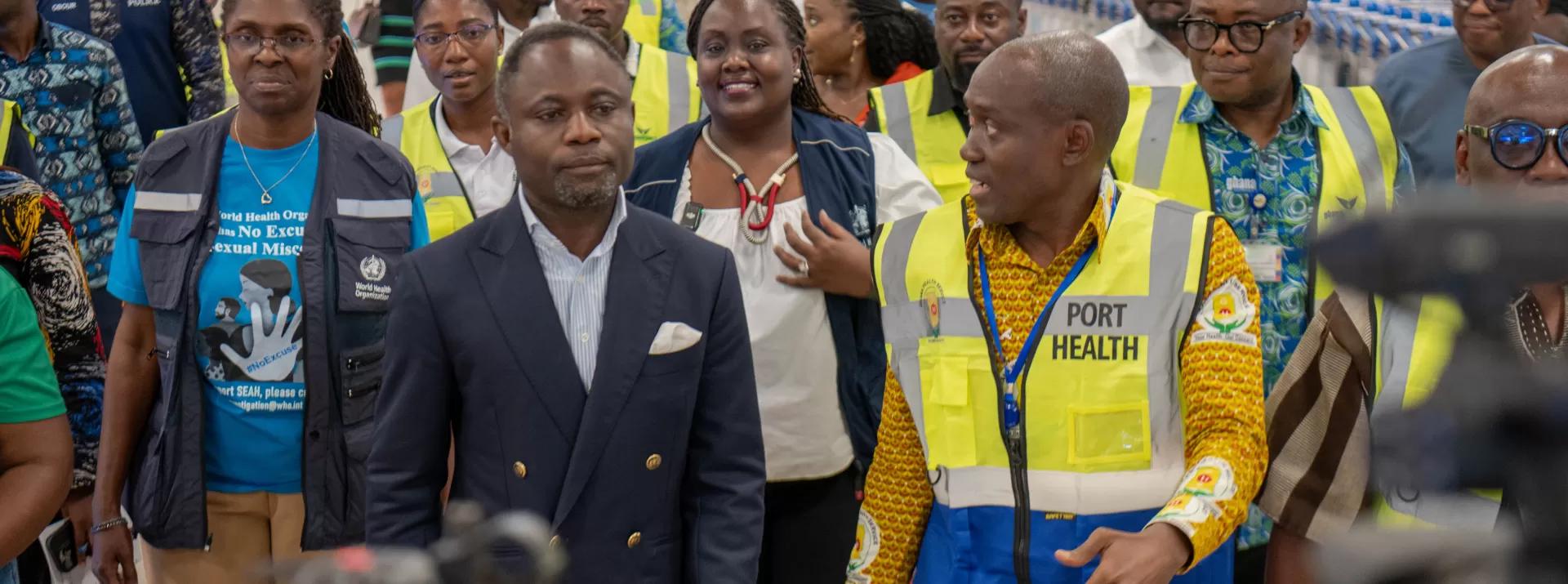
Ghana’s response includes stronger screening at Accra International Airport, closer monitoring of travellers arriving from affected areas and increased coordination between Port Health officials, the Ghana Airports Company Limited, the Ghana Civil Aviation Authority, Immigration, Customs and other border agencies. The Ministry says travellers from high-risk locations may be monitored for up to 21 days, reflecting the maximum recognised incubation period for Ebola. Health authorities are also reinforcing public-health messaging at the airport so arriving passengers understand the symptoms they should report and the importance of disclosing recent travel accurately.
The measures are not entirely new. Ghana activated nationwide Ebola precautionary protocols earlier in 2026 when outbreaks were reported in Uganda and the Democratic Republic of Congo. At that time, the Ministry announced enhanced screening at airports, seaports and land borders, increased surveillance of travellers from affected countries and emergency preparedness across health facilities. The current response therefore represents a strengthening of an existing national system rather than the creation of a new structure from scratch.
Health Minister Kwabena Mintah Akandoh personally inspected screening operations at Accra International Airport in May and directed officials to improve temperature screening, passenger flow and travel-history assessment. His inspection also covered the Noguchi Memorial Institute for Medical Research and the Ghana Infectious Disease Centre, two institutions central to Ghana’s ability to test and manage any suspected Ebola infection. Officials said advanced temperature scanners and stronger passenger-screening procedures were required to improve the chances of detecting a symptomatic traveller before that person moved further into the community.
The Ghana Health Service has also placed all national points of entry on high alert. Director-General Dr Samuel Kaba Akoriyea said earlier in the preparedness campaign that temperature screening would be intensified for travellers arriving from countries classified by the World Health Organization as high or medium risk. He also called for the return of more detailed travel-history assessments, recognising that temperature screening alone cannot identify someone who is infected but has not yet developed symptoms.
That limitation is especially important in the current outbreak because Ebola is not normally transmissible before symptoms develop, meaning an infected traveller can pass through an airport during the incubation period without fever or other visible signs. A person who later becomes ill could therefore already be inside Ghana before the disease is suspected. This is why health authorities are combining point-of-entry screening with post-arrival monitoring, contact information collection and instructions for travellers to report symptoms immediately if they become unwell after entering the country.
The Ministry says simulation exercises have already been carried out at Accra International Airport and the Ghana Infectious Disease Centre to test how officials would respond if a suspected case were identified. Those exercises are intended to expose weaknesses before an actual emergency occurs, including delays in isolating a passenger, communication gaps between airport personnel and health authorities, ambulance transfer procedures and readiness at the receiving treatment centre.
Laboratory preparedness is another major part of the response. Ghana is working with the Noguchi Memorial Institute for Medical Research and other laboratories to ensure that standard operating procedures, reagents and testing systems are available for rapid confirmation or exclusion of suspected Ebola cases. Earlier in the year, Akandoh said Ghana had already supported the procurement of equipment and laboratory materials needed to strengthen detection capacity.
The ability to test quickly is crucial because Ebola’s early symptoms can resemble several other illnesses commonly seen in West Africa, including malaria. Fever, weakness, headache, body pain, vomiting and diarrhoea can occur in many infections, meaning travel history and exposure information often determine whether clinicians suspect Ebola early enough to isolate a patient. Delays in recognising a case can place health workers, relatives and other patients at risk.
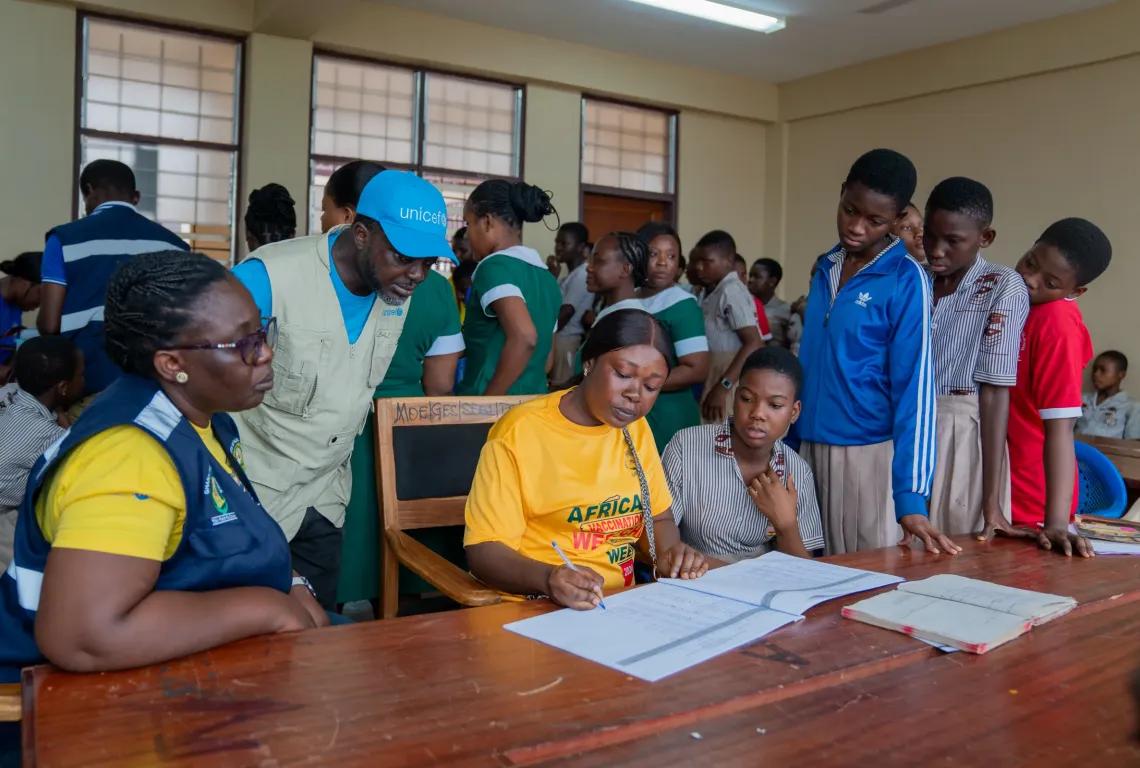
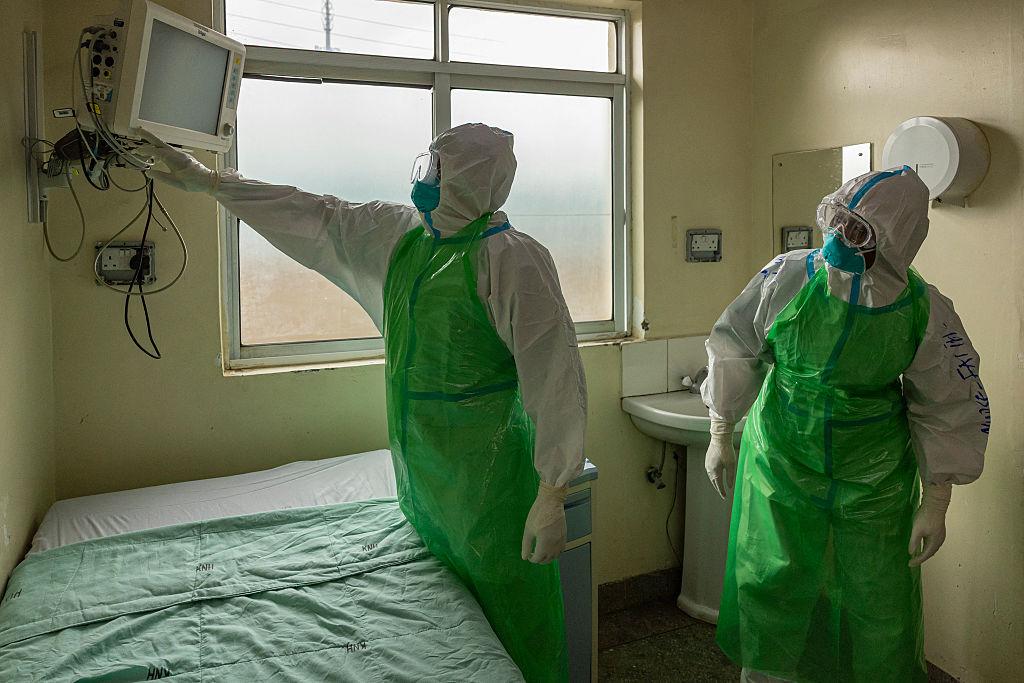
Health workers are therefore being sensitised across the country to recognise possible cases and apply the correct infection-prevention procedures. The Ministry says staff are being reminded of the case definition, referral protocols and protective measures required when dealing with a patient whose symptoms and travel history raise suspicion of Ebola. This preparation includes both public and private facilities because an infected traveller could seek care at any hospital or clinic before public-health authorities are aware of the situation.
Ghana’s infectious-disease centres have also been activated as part of the preparedness system. The Ghana Health Service says these facilities are expected to serve as referral points for suspected cases requiring isolation and specialist management. This is intended to prevent a potentially infected patient from being moved unnecessarily between ordinary hospitals, where each additional stop could expose more health workers and members of the public.
The government’s current message to Ghanaians is to remain alert without panicking. Tony Goodman said Ghana has the personnel and resources needed to manage an imported case if one is detected and urged members of the public to report suspicious symptoms promptly rather than spreading rumours or waiting until a patient becomes critically ill. He specifically highlighted fever, body pains, headache, vomiting and bleeding as symptoms that should receive urgent medical attention when combined with relevant travel or exposure history.
Health officials are also stressing that Ebola is not airborne. The virus spreads primarily through direct contact with the blood or other bodily fluids of an infected symptomatic person, or with materials contaminated by those fluids. This means casual proximity to a healthy traveller from an affected country is not by itself evidence of exposure, and officials are trying to prevent stigma against travellers from countries reporting cases.
The Ministry has advised people to practise regular hand hygiene and avoid direct contact with the bodily fluids of people experiencing unexplained fever, vomiting, diarrhoea or bleeding. It has also warned against handling the bodies of people who may have died from a suspected infectious illness without proper protective equipment, because Ebola can remain transmissible after death and unsafe funeral practices have contributed to past outbreaks.
The current situation has revived memories of the 2014 West African Ebola epidemic, which devastated Guinea, Liberia and Sierra Leone and caused widespread fear throughout the region. Ghana did not record a major domestic outbreak during that crisis, but the experience led the country to strengthen infectious-disease preparedness and develop systems that later became useful during COVID-19 and other health emergencies.
Officials are now trying to use those systems proactively rather than waiting for a first confirmed case. Ghana’s upgraded public-health emergency operations infrastructure, airport surveillance teams and infectious-disease treatment capacity give the country more tools than it had before earlier outbreaks, but authorities acknowledge that preparedness must be maintained continuously because a single imported case can create significant exposure if not detected quickly.
The World Health Organization has supported Ghana’s preparations with protective equipment and other supplies. Earlier this year, WHO donated examination gloves, surgical gloves, chlorine, hand disinfectant, masks, face shields, coveralls and temperature guns as part of efforts to protect frontline workers and improve readiness at points of entry and treatment facilities.
WHO officials also joined Ghanaian authorities during inspections of the airport, Noguchi and the infectious-disease centre, highlighting the degree of international coordination behind the country’s preparedness work. The collaboration allows Ghana to align its screening criteria and emergency response with the wider regional picture rather than relying solely on domestic information.
The spread of Ebola to different regions of Africa has made that coordination increasingly important. The Democratic Republic of Congo remains at the centre of the current outbreak, while Kenya and Nigeria have reported cases linked to regional transmission. Africa CDC has already called an emergency meeting of African health ministers to strengthen cross-border coordination as health authorities worry that infected travellers can move between countries before symptoms appear.
For Ghana, Nigeria is particularly important because of the volume of travel between the two West African countries. Business travellers, tourists, students and families move regularly between Accra and Nigerian cities, meaning a confirmed case in Abuja immediately carries more practical relevance for Ghana than an outbreak confined to a distant location with limited direct travel.
Kenya presents a different but still significant risk because Accra is connected to East Africa through commercial aviation and regional hubs. Ghana’s Ministry has specifically pointed to direct flights and passenger numbers as reasons for heightened attention to travellers arriving from Kenya or passing through regional airports connected to affected areas.
The government has not announced blanket travel bans, and the available public-health guidance remains focused on surveillance, screening and rapid response rather than closing Ghana’s borders. This follows the broader approach generally recommended by international health agencies, which argue that well-managed surveillance is often more effective than indiscriminate travel restrictions that can disrupt trade and discourage honest reporting of symptoms and travel history.
The effectiveness of Ghana’s strategy will depend heavily on the quality of implementation at every point of entry. Screening systems require functioning equipment, trained staff, reliable passenger information and clear procedures for isolating anyone who raises concern. Land borders can be especially challenging because travellers may enter through busy crossings or informal routes where monitoring is more difficult than at an international airport.
Seaports also remain part of the national surveillance network because crew members and passengers can arrive from several countries over relatively short periods. The Ministry’s earlier nationwide directive explicitly included airports, seaports and land borders rather than focusing only on Accra International Airport.
Regional health authorities are also strengthening preparedness away from Accra. The Upper East Regional Public Health Emergency Management Committee, for example, has been reviewing readiness for both yellow fever and Ebola, reflecting the government’s effort to make outbreak preparedness a national rather than capital-centred responsibility.
That regional approach matters because suspected cases may appear far from the airport where an infected traveller originally entered. Someone could arrive in Accra, travel by road to another region and develop symptoms days later. District hospitals and regional surveillance officers therefore need to recognise the signs and know how to escalate a suspected case even if they have had no direct connection with the original port of entry.
The Ministry is also strengthening risk communication because misinformation can complicate outbreak response. False claims about unconfirmed cases can create unnecessary fear, while dangerous rumours about treatment or transmission can discourage people from cooperating with health workers. Officials are asking Ghanaians to rely on information from the Ministry of Health, Ghana Health Service, WHO and other recognised public-health authorities rather than unverified social-media posts.
The current official position remains that Ghana has not recorded a confirmed Ebola case. The government’s enhanced screening should therefore be understood as preventive action rather than evidence of an outbreak inside the country. That distinction is important because heightened preparedness can easily be misinterpreted as confirmation that the virus has already entered Ghana.
Health authorities say the objective is precisely the opposite: to make it more difficult for an imported infection to go unnoticed and, if one does arrive, to identify it before widespread transmission can occur. Early detection allows a patient to be isolated, tested and treated while contact-tracing teams identify people who may have been exposed.
The Ministry’s message is also that the public has a role in that system. Travellers need to provide accurate travel histories, people who develop symptoms after visiting an affected area need to seek care quickly and households should avoid concealing illness because of fear or stigma.
Healthcare workers, meanwhile, need to maintain a high level of suspicion without treating every fever as Ebola. That balance is essential because Ghanaian hospitals continue to manage malaria, yellow fever and many other diseases that can initially resemble viral haemorrhagic fevers.
Ghana’s preparedness campaign will therefore continue to evolve with the regional situation. If more countries begin confirming imported cases, screening criteria may be broadened. If transmission declines, authorities may eventually reduce the intensity of some measures while maintaining basic surveillance.
For now, the government says the risk is serious enough to justify heightened vigilance. Screening at entry points has been strengthened, travellers from high-risk areas face closer monitoring, simulation exercises have been conducted, laboratories and treatment centres are being prepared and health workers are receiving renewed guidance.
The latest developments in Nigeria and Kenya have therefore turned an already active preparedness campaign into a more urgent national priority. Ghana remains without a confirmed Ebola case, but the Ministry of Health and Ghana Health Service are operating on the assumption that regional spread makes complacency dangerous.
The central message from health authorities is that Ghana’s best protection is early detection rather than panic. The country’s airports, seaports and land borders are on alert, laboratories and infectious-disease centres have been activated, and travellers from affected areas are receiving closer scrutiny. Whether those preparations are ever tested by an imported case remains uncertain, but officials say the systems are being strengthened now so Ghana is not forced to build its response after the virus has already entered the country.