GHANA SAFER THAN IN 2025 AS BAWKU RECORDS 150 DAYS WITHOUT GUNFIRE MUNTAKA SAYS
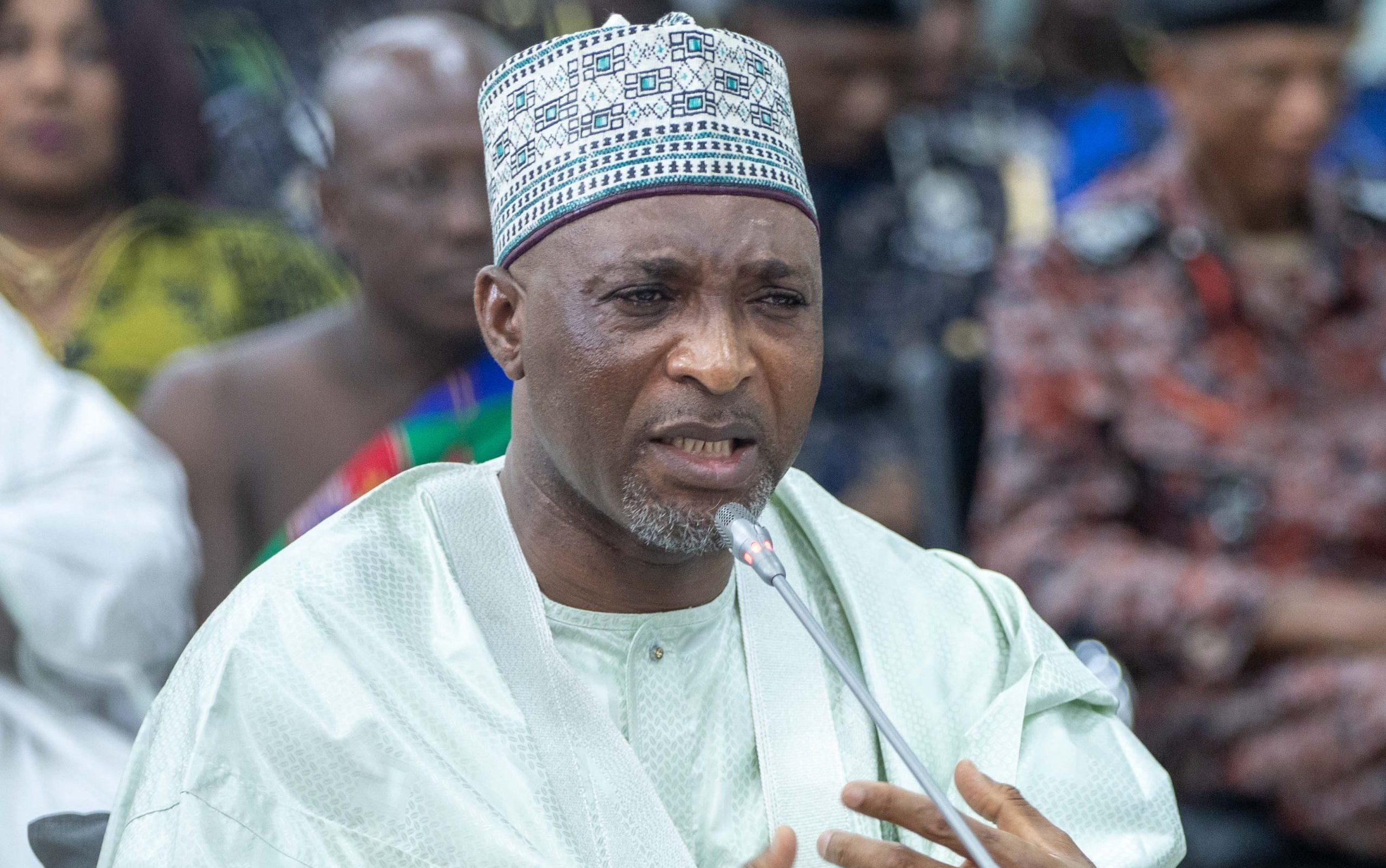
Interior Minister Muntaka Mohammed Mubarak says Ghana is safer than it was in 2025, citing a drop in nationwide curfews from about 11 at the beginning of last year to three today. He says Bawku has gone 150 days without gunfire and more than 90 percent of the over 40,000 people displaced by conflict in the Savannah Region have returned home. He also warned that Ghana has more than 300 unauthorized border crossings compared with only 48 official entry points and identified ethnic conflict, land disputes, illicit drugs and Sahel instability as continuing security threats.
Interior Minister Muntaka Mohammed Mubarak says Ghana is safer than it was in 2025, pointing to 150 consecutive days without gunfire in Bawku, a sharp reduction in the number of communities under curfew and the return of more than 90 percent of people displaced by conflict in parts of the Savannah Region as evidence that security conditions have improved, even as the government continues to confront communal violence, illicit drugs, land disputes and hundreds of unauthorized border crossings.
Speaking on Joy FM on Monday, October 12, the Interior Minister said the government inherited a difficult security environment marked by recurring communal conflicts, armed attacks and restrictions on movement in several communities, but maintained that sustained security operations, mediation and intelligence sharing had produced measurable improvements. He said Ghana began 2025 with about 11 curfews across different conflict affected areas and still had about nine by the end of that year, but the number had fallen to three by October 2026.
Bawku was central to the Minister's assessment because the Upper East town and surrounding communities had experienced years of deadly conflict, retaliatory attacks and restrictions on movement. Muntaka said the area had now gone 150 days without gunfire, a development he presented as one of the strongest signs that the security situation had changed significantly from the violence seen in 2025.
The reduction in violence has also allowed the government to ease restrictions that once dominated daily life in the area. The current curfew in Bawku runs from 10 at night until 5 in the morning, compared with earlier periods when residents faced restrictions lasting from 6 in the evening until 6 in the morning and, at one stage, from 4 in the afternoon until 6 the following morning. Residents are also permitted to ride motorbikes between 6 in the morning and 6 in the evening after years of restrictions on motorcycle use.
The Interior Ministry formally renewed the current Bawku curfew on September 28, maintaining the 10 at night to 5 in the morning restriction while allowing motorcycle movement during the daytime. The ban on carrying arms, ammunition and offensive weapons remains in place, and authorities have warned that anyone found possessing such items unlawfully will be arrested and prosecuted.
Muntaka said the government is continuing to assess conditions in Bawku and could eventually remove some of the remaining restrictions if the current period of relative calm is sustained. He said authorities are examining both the curfew and motorcycle arrangements before deciding whether further changes are appropriate.
The improvement is notable because violence connected to Bawku had previously spread beyond the immediate municipality. During 2025, retaliatory attacks affected communities including Binduri, Nalerigu and Walewale, while buses and travelers were attacked on highways associated with the conflict. The insecurity created additional pressure on police and military personnel and raised fears that localized ethnic tensions could expand into a broader regional security problem.
Muntaka said the government response combined direct security operations with dialogue and mediation. The National Peace Council and traditional authorities have been involved in efforts to reduce tensions and rebuild communication between opposing groups, while security agencies have maintained deployments intended to prevent renewed violence.
The Minister's claim that Ghana is safer also rests on developments outside Bawku. In the Savannah Region, communal conflict displaced more than 40,000 people, according to figures cited by Muntaka, with some residents crossing into neighboring Burkina Faso and Côte d'Ivoire while others sought safety elsewhere within Ghana.
He said government intervention included security deployments, curfews and the establishment of a committee to support mediation between the parties involved in the conflict. Within about three months, according to the Minister, more than 90 percent of those displaced had returned to their communities.
That return represents a major change from the height of the crisis, when thousands of residents abandoned their homes and livelihoods because of fear of renewed attacks. Restoring displaced populations has broader significance because prolonged displacement can disrupt farming, trade, education and access to health services while increasing humanitarian pressure on host communities.
The Minister did not argue that Ghana's security problems have been eliminated. He acknowledged that crime continues to affect communities and identified ethnic conflicts, land disputes and illicit drugs among the most serious threats facing the country.
Muntaka also expressed concern about instability across the Sahel and the possibility that insecurity in neighboring countries could spill across Ghana's borders. Armed extremist groups remain active across parts of Burkina Faso, Mali and Niger, making border surveillance and regional intelligence cooperation increasingly important for Ghana and other coastal West African states.
The challenge is complicated by the structure of Ghana's borders. Muntaka said the country has only 48 officially recognized entry points but more than 300 unapproved crossings, many of them along communities where families, farms and commercial relationships extend across national boundaries.
Those unofficial routes create difficulties for immigration and security agencies because people, goods and potentially weapons can move between countries without passing through formal checkpoints. Some border communities are divided by national boundaries drawn long before the development of modern states, meaning residents may live in one country while farming or trading in another.
The Minister said Ghana is responding by strengthening intelligence sharing with neighboring countries and maintaining direct communication among security officials across the subregion. He said he has working relationships with interior and national security ministers in neighboring states because threats such as violent extremism, trafficking and organized crime cannot be addressed effectively by one country acting alone.
The government has also begun implementing the Security and Intelligence Agencies Act 2026, which places greater emphasis on intelligence led prevention at the regional and district levels. Muntaka has urged Regional Security Councils and local government officials to move away from responding only after violence begins and instead identify warning signs early enough for preventive action.
That approach reflects lessons from conflicts where tensions were visible before they escalated. Local disagreements over land, chieftaincy, ethnicity or access to resources can become violent when early mediation fails or when weapons become readily available.
The Interior Minister has therefore called for closer cooperation among police, immigration officials, intelligence agencies, traditional authorities, religious leaders, businesses, youth groups and local government institutions. His position is that national security cannot be managed exclusively from Accra and must instead rely on information gathered at community level.
The government's claim of improving security will nevertheless be judged against conditions experienced by ordinary residents as well as official indicators. A reduction in curfews suggests fewer communities are facing restrictions severe enough to require emergency movement controls, but it does not by itself measure every category of crime.
Robbery, assault, cybercrime, drug trafficking, organized crime and land related violence may not result in curfews, meaning the broader assessment of national security requires more than one indicator. Muntaka acknowledged that limitation while arguing that conflict related indicators show substantial progress compared with the previous year.
The 150 day absence of gunfire in Bawku is also based on the government's operational assessment. Sustaining that period without a return to retaliatory violence will be important because the Bawku conflict has repeatedly gone through periods of reduced tension followed by renewed attacks.
The continued curfew and weapons restrictions indicate that authorities do not yet consider the risk completely removed. Security personnel remain deployed and the government continues to monitor the area while peacebuilding initiatives proceed.
That cautious approach is particularly important because previous violence disrupted education, commerce and transportation across the Upper East and neighboring regions. Traders avoided some routes, schools experienced interruptions and transport operators faced increased risk when attacks spread onto highways.
A longer period of peace could allow economic activity to recover and reduce the financial cost of sustained security deployments. It could also give traditional leaders and mediators more room to address the underlying disagreements rather than focusing primarily on stopping immediate violence.
The Savannah Region presents a similar challenge. The return of displaced residents is an important indicator of improved confidence, but successful reintegration depends on whether communities can remain secure after security deployments are reduced and whether disputes that triggered the displacement are resolved.
Government officials will also have to monitor whether families returning home have access to housing, farms, schools and basic services. Conflict can destroy property and disrupt livelihoods even after immediate violence ends, meaning return figures alone do not capture the full recovery process.
Border security remains perhaps the most difficult long term problem identified by the Interior Minister. More than 300 unofficial crossing points create a surveillance challenge that cannot realistically be solved through permanent physical deployment at every route.
Authorities are therefore increasingly dependent on intelligence, technology and cooperation with local communities. Residents near borders can provide information about unfamiliar movement or suspicious activity, while regional information sharing can allow governments to identify threats before individuals cross into another country.
Muntaka also highlighted illicit drugs as a continuing security concern, pointing to the use of the West African coast as a transit corridor for narcotics. Ghana's location, international airport, ports and road links make it attractive to criminal networks moving drugs between Latin America, West Africa, Europe and other markets.
Drug trafficking can also connect with money laundering, weapons trafficking and organized crime, creating security risks beyond the narcotics trade itself. The government has therefore identified stronger coordination among law enforcement agencies as part of its wider national security strategy.
Land disputes remain another persistent source of violence. Rapid urban development, competing ownership claims and unresolved traditional boundaries have contributed to clashes in several parts of the country. Such disputes can escalate quickly when armed groups become involved, making early intervention important.
Ethnic and chieftaincy conflicts pose an even more complicated challenge because they may involve grievances stretching across generations. Security deployments can prevent immediate violence, but lasting solutions often require mediation, traditional authority and negotiated settlements that communities themselves accept.
The government is attempting to combine those approaches in Bawku and other conflict affected areas. Police and military deployments provide immediate security while peace councils and local leaders work on longer term solutions.
Muntaka's assessment therefore presents Ghana's current security situation as an improvement rather than a declaration that threats have disappeared. The fall from about 11 curfews at the beginning of 2025 to three now, the 150 days without gunfire in Bawku and the return of most displaced residents in the Savannah Region are the specific indicators he is using to support that conclusion.
The next challenge will be whether those gains can survive without constant emergency restrictions. If Bawku continues to remain calm, the government may eventually lift the remaining curfew and expand motorcycle movement further. A return to violence, however, could force authorities to restore tighter restrictions quickly.
The same test applies to communities in the Savannah Region. Residents returning home after displacement will need confidence that the security situation is stable enough for them to rebuild livelihoods without facing another sudden evacuation.
At the national level, Ghana must also strengthen its ability to prevent external security threats from exploiting the country's porous borders. The existence of more than 300 unofficial routes means physical border control alone will remain insufficient, placing greater importance on intelligence sharing with Burkina Faso, Togo, Côte d'Ivoire and other regional partners.
Muntaka's argument that Ghana is safer than it was in 2025 is therefore supported by several conflict related indicators, but the government itself acknowledges that important vulnerabilities remain. Reduced curfews and quieter conflict zones show progress, while porous borders, drug trafficking, land disputes and instability across the Sahel continue to place significant demands on the country's security agencies.
The coming months will provide a clearer measure of whether the current calm in Bawku can become durable peace rather than another temporary reduction in violence. The government's ability to maintain the return of displaced communities, prevent renewed communal clashes and strengthen monitoring of unofficial border crossings will also determine whether the broader security improvements Muntaka described can be sustained.
For now, the strongest evidence behind the Interior Minister's claim lies in communities where restrictions are being eased and residents are returning home. Ghana has fewer areas under curfew than it did a year ago and Bawku has passed five months without reported gunfire, but the continued presence of security forces and remaining restrictions shows that authorities still regard the gains as something that must be protected rather than taken for granted.