GHANA PREPARES FOR 2027 BUDGET AS BUSINESSES PUSH FOR JOBS CHEAPER CREDIT AND COST OF LIVING RELIEF
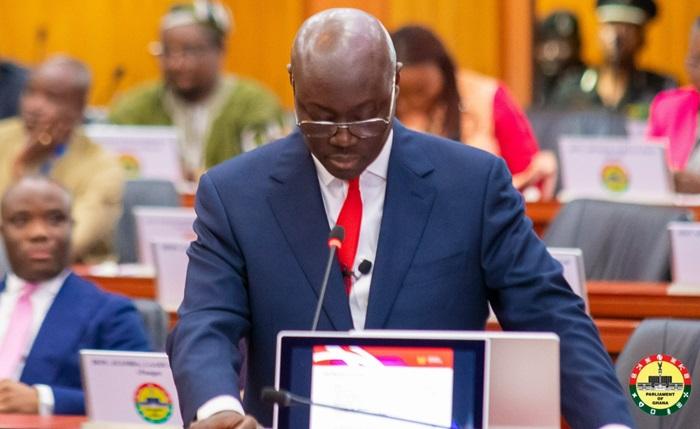
Finance Minister Dr Cassiel Ato Forson is expected to present Ghana’s 2027 Budget Statement and Economic Policy to Parliament at 6:00 p.m. on Thursday, November 12, with businesses, traders and households pushing for stronger measures on job creation, cheaper credit and the cost of living. GUTA is calling for lower borrowing costs, reduced port charges and stronger support for local production, while government says the budget will introduce no new taxes and will focus on economic transformation through its New Economy agenda.
Ghana is preparing for one of its most closely watched budget presentations in recent years as Finance Minister Dr Cassiel Ato Forson gets ready to present the 2027 Budget Statement and Economic Policy to Parliament. The presentation is scheduled for 6:00 p.m. on Thursday, November 12, 2026, after Parliament approved an evening sitting for the national fiscal statement. The budget is expected to outline the Mahama administration’s next phase of economic policy at a time when businesses, traders, manufacturers, economists and households are demanding that improvements in inflation, growth and exchange rate stability begin translating into more jobs, lower operating costs and visible relief in everyday living expenses.
The 2027 Budget will be closely examined because government has spent the past two years concentrating heavily on stabilising the economy after a period of severe fiscal distress, rising inflation, debt restructuring and pressure on the cedi. With headline economic indicators now showing significant improvement, the conversation has shifted from whether Ghana can stabilise its finances to whether that stability can produce stronger private investment, higher household incomes and meaningful employment opportunities. Government officials have repeatedly said the next phase of economic management will focus more aggressively on productivity, industry, local manufacturing, exports and employment, particularly for young people.
Deputy Finance Minister Thomas Nyarko Ampem has described the administration’s next economic phase as one that must move beyond simply restoring stability. He has argued that stability should serve as the foundation for economic recovery, while productivity and investment should drive the next stage of growth. The government’s central challenge in the 2027 Budget will therefore be to demonstrate that the gains recorded in inflation, fiscal management and economic growth can be converted into improvements that businesses and ordinary citizens can experience directly.
A major part of that strategy is expected to be the government’s New Economy agenda, a four year programme projected to require the cedi equivalent of approximately $10 billion between 2027 and 2030. The plan is expected to focus on local production, industrial expansion, value addition, exports, technology, infrastructure and job creation. Government officials say the objective is to reduce Ghana’s dependence on raw commodity exports and imported finished goods while creating stronger domestic industries capable of employing more people and generating foreign exchange.
The expectations surrounding the budget are already extremely high because many businesses say the benefits of improving macroeconomic indicators have not yet fully reached the private sector. Companies continue to complain about the cost of borrowing, electricity, transportation, imported inputs, port charges and other expenses that make it difficult to expand production or hire additional workers. For many business owners, the central question is whether the 2027 Budget will reduce the cost of operating in Ghana sufficiently to encourage new investment.
The Ghana Union of Traders Associations has become one of the most vocal organisations ahead of the budget presentation. GUTA Vice President Joseph Paddy has called on the government to introduce policies that make financing more affordable for local businesses, particularly traders, manufacturers and small companies seeking to expand. The association argues that private sector growth cannot accelerate when businesses must borrow at interest rates that make long term investment difficult or financially unattractive.
GUTA has specifically called for cheaper credit and longer repayment periods for businesses involved in manufacturing and productive investment. The association argues that companies establishing factories, purchasing industrial equipment or expanding production facilities require financing structures that reflect the long term nature of those investments. A manufacturer may need several years to recover the cost of machinery or a new production line, making short term loans with high monthly repayments unsuitable for genuine industrial development.
Access to affordable credit has therefore become closely connected to the national debate over job creation. Business groups argue that private companies cannot employ large numbers of young people unless they are able to grow, and growth often requires external financing. If firms are unable to borrow at reasonable rates, they may postpone expansion, reduce investment or operate below their full capacity, limiting their ability to create employment even when demand exists.
The Bank of Ghana has already lowered its policy rate as inflation has declined, increasing expectations that commercial lending rates should also continue falling. However, businesses say the improvement has not yet been sufficient. They want the 2027 Budget to contain measures that encourage banks to lend to productive sectors at rates that allow companies to invest without being overwhelmed by debt servicing costs.
Port charges are another major concern for traders. GUTA has argued that importers face a combination of duties, levies, administrative fees and other charges that can significantly increase the cost of bringing goods into the country. Those expenses are eventually passed on to consumers, meaning port related costs affect not only traders but also household prices across Ghana.
The association is therefore calling for a broader review of the cost of importing and clearing goods through Ghanaian ports. Traders argue that lowering unnecessary fees could reduce the final price of goods in shops, improve business competitiveness and support the government’s efforts to bring down the cost of living. They also want customs procedures simplified so businesses spend less time and money navigating complex clearance systems.
GUTA has also challenged the argument that all imports should automatically be viewed negatively. The association says policymakers should distinguish between imports that support production and imports that compete directly with goods that could reasonably be produced locally. Machinery, raw materials and industrial inputs can strengthen domestic production, while excessive dependence on imported finished products can weaken local manufacturing.
That position is broadly consistent with the government’s stated industrial policy. The administration says Ghana needs to import more productive equipment while gradually increasing the share of finished goods manufactured domestically. Achieving that transition will require lower financing costs, reliable electricity, improved transport infrastructure and a predictable tax environment.
Manufacturers are also expected to pay close attention to the budget because energy and financing remain among their biggest operating expenses. Industrial companies need stable electricity prices and reliable supply to compete effectively with imported goods. If electricity costs remain high, local manufacturers may struggle to produce at prices consumers can afford, even when government policies encourage people to buy Ghanaian products.
The energy sector is therefore likely to feature prominently in the budget. Government must continue reducing inefficiencies and financial losses within the power system while avoiding measures that dramatically increase electricity tariffs for households and businesses. Finding that balance will be essential because affordable and reliable energy is directly connected to industrial growth, investment and job creation.
Agriculture is another area expected to receive significant attention. Farmers and agricultural economists have called for stronger investment in irrigation, feeder roads, storage, processing facilities and mechanisation. They argue that Ghana cannot sustainably reduce food inflation without addressing the structural problems that make agricultural production and distribution expensive.
Poor roads remain a major problem in many farming communities because they increase the cost of transporting food to urban markets. Farmers can also lose significant quantities of produce because of inadequate storage, forcing them to sell quickly at low prices during harvest periods. Better infrastructure could reduce those losses, improve farmer incomes and help stabilise food prices for consumers.
The relationship between food production and inflation is particularly important because food accounts for a large share of household spending. Even when national inflation declines, sharp increases in the prices of basic foods can make families feel that the economy is still under severe pressure. Government therefore faces pressure to address food supply directly rather than relying only on broader monetary and fiscal policies.
This distinction is important because falling inflation does not mean prices have returned to earlier levels. Inflation measures the rate at which prices are increasing, not whether prices have fallen back to what consumers paid several years ago. A product that became significantly more expensive during the economic crisis may remain costly even when the rate of further price increases slows dramatically.
That helps explain why many households remain dissatisfied despite the improvement in national economic indicators. Government officials point to lower inflation and stronger economic growth, while households continue to complain about the prices of food, transport, rent, utilities and other necessities. The 2027 Budget will therefore be judged partly on whether it addresses that gap between macroeconomic recovery and everyday living conditions.
A recent survey by the Centre for Economic Research and Policy Analysis illustrates the scale of public concern. Nearly 40 percent of respondents identified job creation as their most important expectation from the 2027 Budget, while more than one third said reducing the cost of living should be the government’s main priority. Together, those two concerns accounted for almost three quarters of the responses, demonstrating that employment and household expenses dominate public expectations.
Youth unemployment is likely to become one of the most politically sensitive areas in the budget. Ghana has a young population and thousands of graduates enter the labour market each year, creating pressure on both government and the private sector to generate employment. The administration says its economic transformation strategy will support job creation through agriculture, manufacturing, infrastructure, digital services, entrepreneurship and the 24 Hour Economy programme.
Business groups say the private sector must remain at the centre of any serious employment strategy. Government cannot directly employ every young person looking for work, and sustainable job creation will depend heavily on companies expanding their operations. That makes policies on taxation, credit, electricity and infrastructure directly relevant to unemployment.
The 24 Hour Economy programme is expected to receive further attention in the budget. Government has promoted the policy as a way of encouraging businesses and public services to operate across extended shifts, potentially increasing employment and making better use of existing infrastructure. Supporters argue that companies able to operate multiple shifts could employ more workers without requiring entirely new facilities.
Critics, however, have argued that the policy will only work where businesses have genuine demand, reliable electricity, transport, security and access to finance. The budget will therefore need to show how the 24 Hour Economy fits within the broader New Economy agenda rather than existing as a separate slogan without the supporting infrastructure required for implementation.
Tax policy will also be closely examined. The government has said the 2027 Budget will introduce no new taxes, a position likely to be welcomed by businesses and households that have repeatedly complained about tax pressure. However, the absence of new taxes raises questions about how government intends to finance ambitious infrastructure and development programmes without increasing borrowing or weakening fiscal discipline.
Government says it will rely more heavily on expenditure rationalisation, improved tax compliance, reduced waste and stronger economic growth. Better revenue administration could allow the state to collect more from existing economic activity without increasing tax rates. Digital systems and improved enforcement are expected to remain central to that strategy.
Businesses generally support efforts to broaden the tax base but want enforcement to be fair. Formal companies often complain that they bear a disproportionate share of taxation while large parts of the informal economy remain outside the system. They argue that expanding compliance would reduce the need to repeatedly increase taxes on businesses that are already paying.
GUTA has also called for changes to Ghana’s VAT structure, arguing that the current system increases costs and creates unnecessary complexity. The association wants a simpler arrangement that reduces the administrative burden on traders and prevents tax costs from accumulating excessively through the supply chain.
Manufacturers are similarly seeking tax incentives that support local production. They want predictable policies that reward businesses willing to establish factories, create jobs, produce substitutes for imported goods and generate exports. Business leaders argue that industrial incentives should be structured around measurable investment and employment rather than distributed without clear economic targets.
Government must balance those demands against the need for sufficient revenue. Ghana still needs substantial funding for roads, healthcare, education, security, infrastructure and social programmes. Reducing taxes without broadening the revenue base could create fiscal pressures that threaten the economic stability achieved over the past two years.
Public sector expenditure is therefore expected to come under significant scrutiny. Government has promised to reduce waste, improve payroll management and eliminate financial leakages. Digital payroll reforms and efforts to remove ghost names could create savings that can be redirected toward productive investment.
Economists have generally welcomed attempts to reduce waste but have warned against excessive spending cuts. Professor Godfred Bokpin has cautioned that relying too heavily on expenditure reductions could delay the benefits of economic recovery if productive investment is also restricted. The challenge is to reduce unnecessary spending without weakening infrastructure, healthcare, education or other areas that support long term growth.
Infrastructure is likely to remain one of the government’s largest spending priorities. Businesses consistently argue that roads, ports, electricity, water and digital infrastructure reduce costs throughout the economy. Better infrastructure can make local companies more competitive even without direct subsidies because it lowers the expense of moving goods, connecting customers and operating factories.
The Accra Kumasi Expressway is among the major projects expected to attract attention in the budget. Government has indicated that petroleum revenues and other financing mechanisms could support large infrastructure projects, but Parliament and the public will want greater clarity about costs, timelines and funding sources.
Road infrastructure is directly connected to inflation because poor transport networks increase the cost of moving food and manufactured goods. Traders and transport operators in different parts of the country have complained that fuel prices, vehicle maintenance and poor roads continue to raise operating costs. Those expenses are eventually passed on to consumers.
Transport operators are therefore also looking for measures that could stabilise fuel prices and reduce operating costs. Global oil prices remain outside government’s control, but taxes, levies, exchange rate stability and domestic refinery performance can all influence the final price of fuel in Ghana.
Women owned businesses are another important constituency ahead of the budget. Female traders and entrepreneurs have called for stronger access to credit and more information about government financing programmes. The proposed Women’s Development Bank remains closely watched because women make up a substantial share of Ghana’s retail and informal economy.
If properly implemented, improved access to finance for women could have broader economic effects because female entrepreneurs often support households and employ workers within local communities. However, business owners want the programme to operate transparently and efficiently rather than becoming difficult to access because of bureaucracy or political influence.
Small and medium sized enterprises will remain central to the government’s job creation strategy. SMEs account for a large share of employment in Ghana, but many businesses remain undercapitalised and vulnerable to changes in inflation, exchange rates and interest rates. Government backed credit guarantees, development finance and partnerships with commercial banks could therefore become important tools in the 2027 Budget.
Business groups want any SME financing programmes to be practical rather than purely political. Entrepreneurs need clear eligibility criteria, predictable application processes and repayment terms that reflect the realities of their businesses. They also need market access, technical support and reliable infrastructure alongside financing.
Export development is expected to be another major priority. Ghana continues to depend heavily on gold, cocoa and oil for foreign exchange, leaving the economy exposed to fluctuations in global commodity markets. Government wants to increase exports of manufactured goods, processed agricultural products, services and other higher value products.
The African Continental Free Trade Area provides a major opportunity for that strategy because Ghana hosts the AfCFTA Secretariat and is positioned to become a regional trade hub. However, businesses will only benefit from the continental market if they can produce competitively and move goods efficiently across borders.
That again brings the debate back to credit, infrastructure and production costs. A Ghanaian company cannot compete successfully with firms from other countries if local borrowing, power and logistics costs are significantly higher. The budget will therefore need to show how government intends to make local businesses more competitive within Africa.
Value addition is expected to feature heavily in the New Economy agenda. Ghana has historically exported large quantities of raw cocoa, gold and other resources while importing many finished products. Government wants more processing to take place domestically so that Ghana captures a larger share of the final value.
In cocoa, that could mean expanding processing into chocolate and other finished products. In mining, it could involve refining and processing more minerals locally. In agriculture, it could mean converting crops into packaged food products rather than exporting or selling them primarily in raw form.
Such industrial transformation requires substantial private investment. Government does not have enough fiscal space to finance every factory or processing facility, meaning attracting domestic and foreign capital will remain essential. Investors, however, will demand stable policies, reliable infrastructure and confidence that economic conditions will not deteriorate suddenly.
Public private partnerships may therefore become increasingly important. Government can use concessions, guarantees and co investment arrangements to attract private capital into infrastructure and industrial projects. Economists have warned that such agreements must be transparent because poorly structured partnerships can create hidden financial obligations for taxpayers.
Parliament will play an important role in examining those commitments. After the Finance Minister presents the 2027 Budget, lawmakers will begin reviewing revenue assumptions, expenditure allocations and policy programmes before approving the final appropriations.
A post budget workshop is expected to allow Members of Parliament and stakeholders to examine the details more closely. Parliamentary committees will then scrutinise individual ministries and agencies, giving both government and opposition lawmakers opportunities to question spending priorities.
The Majority is expected to present the budget as evidence that Ghana is moving from economic crisis management toward long term transformation. The Minority will likely focus on whether the government’s claims of recovery are reflected in household incomes, business performance and employment.
Those political arguments will ultimately depend on the details contained in the budget. Revenue projections, debt assumptions, investment allocations and programme funding will provide the clearest indication of whether the government’s ambitions are realistic.
The 2027 Budget also comes at an important moment in Ghana’s relationship with the International Monetary Fund. The country’s recent economic recovery has been closely linked to fiscal discipline and reforms introduced during the IMF supported programme. Government now wants to demonstrate that it can preserve stability while moving toward a more expansionary development agenda.
That transition will not be simple. Fiscal consolidation can improve government finances relatively quickly through spending controls and revenue measures, but job creation requires investment, business confidence and sustained private sector growth. The government must therefore avoid returning to unsustainable deficits while also preventing excessive austerity from slowing the economy.
Ghana’s improved inflation figures provide some room for optimism. Inflation has fallen significantly from the levels recorded during the height of the economic crisis, while growth has strengthened and the cedi has experienced periods of greater stability. Those improvements have helped restore confidence and reduced some of the uncertainty facing businesses.
However, the public expects more than stable statistics. Households want food, transport, utilities and housing to become more affordable relative to their incomes. Young people want employment. Businesses want financing that allows them to expand rather than merely survive.
That combination of expectations makes the 2027 Budget particularly important. It will serve as the administration’s clearest statement yet on how Ghana intends to move from stabilisation toward sustained growth and economic transformation.
For GUTA and other business associations, the demands are straightforward. They want cheaper credit, lower port costs, simpler taxes and a stronger environment for local production. They argue that businesses should be able to invest, expand and create jobs without being overwhelmed by financing and operating expenses.
For economists, the challenge is to preserve fiscal discipline while redirecting government spending toward sectors that can increase productivity. They want infrastructure, agriculture, education and industrial investment to receive greater attention without recreating the deficits and debt problems that contributed to the earlier economic crisis.
For households, the priorities remain employment and the cost of living. Families want economic recovery to mean more disposable income and fewer financial pressures, not simply improved national statistics.
Those interests will converge when Dr Cassiel Ato Forson rises before Parliament to present the 2027 Budget Statement and Economic Policy. Businesses will listen for measures affecting borrowing, taxes and investment. Workers will listen for employment programmes and wage policies, while households will look for any initiatives capable of reducing the cost of everyday life.
The government has already promised there will be no new taxes, making expenditure efficiency and revenue collection even more important. It will need to convince investors and Parliament that major programmes can be financed without undermining fiscal stability.
The New Economy plan will also come under close scrutiny because of its scale. A programme requiring the equivalent of about $10 billion over four years will need credible financing sources, clear priorities and measurable results. Businesses will want to know how much of that investment will reach the private sector and which industries will receive support.
If the programme successfully strengthens manufacturing, agriculture, exports and technology, it could help reduce Ghana’s dependence on imports and raw commodity exports. If implementation is weak, however, the plan could struggle to produce the employment and productivity gains government has promised.
The 2027 Budget will therefore become a major test of whether Ghana can convert economic stability into structural transformation. The country has already experienced the painful consequences of fiscal imbalance and high inflation, meaning policymakers must avoid repeating the mistakes that triggered the earlier crisis.
At the same time, prolonged caution without sufficient investment could leave unemployment and household hardship unresolved. Government must therefore strike a difficult balance between discipline and expansion.
That balance will define how businesses and citizens judge the budget. If government protects stability while lowering business costs, improving access to credit and directing investment into productive sectors, confidence could strengthen further.
If the budget relies mainly on improved macroeconomic indicators without addressing the practical challenges facing companies and families, criticism is likely to intensify.
The central question is therefore no longer simply whether Ghana’s economy has stabilised. The question is whether that stability can now produce jobs, stronger businesses and better living conditions.
The 2027 Budget will provide the government’s clearest answer yet. It will show whether the administration can move from managing recovery to building an economy capable of producing sustained employment, higher productivity and broader prosperity without returning Ghana to unsustainable debt and inflation.
For millions of Ghanaians, that is the standard by which the budget will ultimately be judged. The numbers presented in Parliament will matter, but the lasting test will be whether those numbers translate into factories expanding, businesses borrowing at affordable rates, farmers reaching markets more efficiently, young people finding work and households feeling genuine relief from the cost of living.