GHANA IMMIGRATION SERVICE INTRODUCES SIX MONTH ROTATIONAL TRANSFER SYSTEM FOR OFFICERS
The Ghana Immigration Service has introduced a six month rotational transfer system that will move officers between sectors and commands within their respective regions. Comptroller-General Samuel Basintale Amadu says the policy will replace situations where personnel remained at one post for four or five years and is intended to broaden operational experience, improve professional competence and strengthen efficiency across the service.
The Ghana Immigration Service has introduced a new six month rotational transfer system designed to expose officers to a wider range of operational environments, improve professional competence and strengthen efficiency across its regional commands. The policy, announced by Comptroller-General of Immigration Samuel Basintale Amadu, will require officers to move periodically between different sectors and commands within their respective regions rather than remain at the same duty station for several years. Management says the reform is intended to develop more versatile personnel who understand different aspects of immigration work and can respond more effectively to changing security and migration challenges across the country.
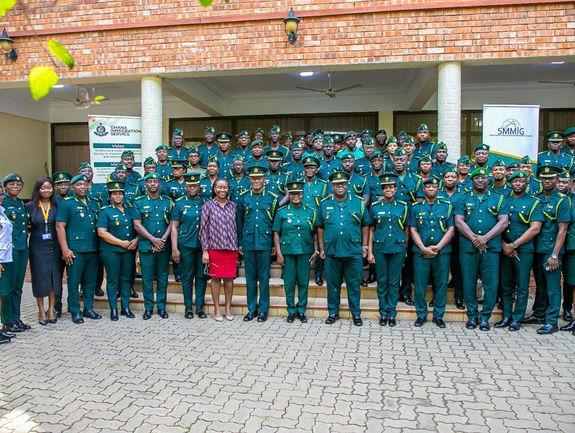
Amadu announced the new Regional Rotational Transfer System during a durbar with officers at the Upper West Regional Headquarters, where he explained that the arrangement would replace the longstanding practice under which some officers could remain at one duty post for four or five years before being reassigned. Under the new system, personnel will generally rotate after six months, giving them greater exposure to different assignments, operational conditions and command structures while remaining within their respective regions.
The new policy reflects a broader effort by the GIS leadership to professionalise its workforce and ensure that officers develop experience beyond a single operational environment. Immigration duties in Ghana vary considerably depending on location, with some personnel working at border posts, airports and seaports while others are involved in enforcement, intelligence, permit processing, investigations and inland monitoring. Management believes rotating officers through different assignments can help build a workforce that understands the wider responsibilities of the service rather than becoming specialised only in one narrow area.
Ghana Immigration Service operations extend across regional commands, sector commands, district offices, border controls, inland checkpoints, airports and seaports. Official GIS information shows that the service operates 19 regional commands, 89 sector commands, 138 district immigration offices, 41 approved minor border controls and 58 inland checkpoints, in addition to major entry points including Kotoka International Airport, Paga, Elubo, Aflao and Akanu. The scale and diversity of that network mean officers can encounter very different operational challenges depending on where they are posted.
The service’s responsibilities include monitoring entry and exit from Ghana, patrolling national borders, processing visas and residence permits, enforcing immigration laws, investigating breaches, gathering intelligence and working with other security agencies to combat transnational crime. Officers may also be involved in counterterrorism, human trafficking investigations, migrant management and the removal of individuals found to be in violation of immigration laws. By moving personnel through different operational settings, the GIS hopes to improve their understanding of these responsibilities and strengthen coordination across commands.
The rotational system is also intended to reduce the limitations created when officers remain at one station for extended periods. Long postings can allow personnel to develop valuable local knowledge, but they can also leave officers with limited experience outside their immediate environment. Management believes a structured transfer system can balance the benefits of local familiarity with the need for officers to develop broader professional skills.
The reform is consistent with the GIS Human Resource Policy and Procedures Manual, which already identifies transfers as an important tool for career development. The policy states that transfers can help officers gain wider and broader experience within the service and allow personnel to develop skills in other departments, regions and operational areas. The new six month rotation appears to formalise that principle into a more regular and systematic programme at regional level.
Amadu told officers that management wants personnel to become more adaptable and capable of serving effectively wherever they are assigned. Exposure to different commands can help officers understand how immigration challenges vary from one location to another, particularly between border communities, urban centres, major commercial corridors and international entry points. That experience can become especially valuable as the GIS responds to changing migration patterns, cross border crime and regional security threats.
The Upper West Region, where the announcement was made, is particularly important to Ghana’s border security because it shares international boundaries and contains several areas where immigration personnel operate close to neighbouring countries. Officers in such regions are often involved in border surveillance, traveller screening and monitoring informal crossing routes, giving them a different set of operational challenges from colleagues serving in major urban centres or at international airports.
The announcement also came against the background of the recent explosion at Hamile, which affected immigration personnel and highlighted some of the dangers faced by officers working in border areas. Amadu used the durbar to encourage personnel not to become discouraged by the incident and urged them to remain resilient, disciplined and focused on their responsibilities. He emphasised that immigration officers must continue performing their duties professionally even when operating in difficult or high risk environments.
Management has also placed increasing emphasis on staff welfare as part of the wider reform programme. Amadu told officers that physical and mental health are important to effective service delivery and encouraged personnel to undergo regular medical examinations and maintain healthy lifestyles. The message reflects a recognition that professional effectiveness depends not only on training and discipline but also on the wellbeing of officers deployed in demanding operational environments.
The service says the rotational transfer programme will also support career development by allowing officers to accumulate experience that could prepare them for higher responsibilities. Personnel who understand border management, enforcement, permit processing, intelligence and administration may be better equipped for supervisory or command positions than officers whose careers have been concentrated almost entirely in one operational area. The policy therefore has implications for long term leadership development within the GIS.
The approach could also help management identify individual strengths more effectively. Officers moved through different environments may demonstrate particular ability in intelligence gathering, enforcement, administration or border operations, allowing supervisors to make better informed decisions about training and future assignments. In that sense, rotation can function not only as a transfer mechanism but also as a personnel development tool.
The new system forms part of a broader transformation agenda being pursued by the Ghana Immigration Service. In August, the GIS Governing Council approved a series of new policies intended to improve operations, strengthen service delivery and support what management has described as its institutional reset agenda. The council said the reforms are designed to build a more effective, responsive and professional immigration service capable of dealing with contemporary migration and national security challenges.
Infrastructure development is also taking place alongside the personnel reforms. The government announced earlier this year that eight new regional offices are being constructed for the Ghana Immigration Service to improve operational efficiency and working conditions. The Interior Ministry has also disclosed plans to procure armoured vehicles for difficult and high risk areas and provide additional accommodation for officers serving in northern regions.
Those investments are particularly important because rotation policies are most effective when officers being transferred have appropriate accommodation, equipment and administrative support at their new duty stations. Moving personnel frequently without addressing logistical challenges could create additional pressure on officers and their families, especially where postings require significant travel or adjustment to new working environments.
The GIS has not publicly detailed every administrative arrangement that will accompany the new six month system, including how accommodation, transport and family considerations will be handled for affected officers. However, because the rotation is designed to occur within individual regions, management may be attempting to broaden officers’ experience without creating the same level of disruption associated with transfers across the country.
Keeping rotations within regional boundaries could also help preserve valuable local knowledge. An officer serving in the Upper West Region, for example, may move from one sector or command to another while continuing to operate within a familiar regional security environment. That approach can allow personnel to gain different operational experiences without completely losing the geographical knowledge they have already developed.
The system may also strengthen cooperation between sectors within the same regional command. Officers who have served in multiple locations are more likely to understand the challenges faced by colleagues elsewhere and may be able to share information more effectively across units. This can be particularly important in border regions where suspicious movements or criminal activity may shift rapidly from one area to another.
Human trafficking and migrant smuggling are among the problems requiring that kind of coordination. Criminal networks often operate across several districts and crossing points, meaning officers who understand only one location may have an incomplete picture of how routes and networks function. Rotational experience could help personnel recognise broader patterns and improve intelligence sharing between commands.
The same principle applies to document fraud and irregular migration. Officers working at airports may encounter forged passports and visas, while personnel at land borders may deal more frequently with irregular crossings and undocumented movement. Exposure to different environments can strengthen officers’ ability to identify suspicious behaviour and understand how different forms of immigration violations are connected.
Ghana’s role as both a destination and transit country also makes immigration management increasingly complex. Economic migration, tourism, regional trade and security concerns all require officers to balance facilitation with enforcement. The service must allow legitimate travellers and businesses to move efficiently while still identifying individuals who may pose security or legal concerns.
Training alone cannot provide every skill required for that balance. Field experience remains essential, and the rotational policy appears intended to create more opportunities for officers to learn directly from different operational settings. Management believes repeated exposure to new assignments can strengthen judgment and professional confidence over time.
There are also potential anti-corruption benefits to regular rotation, although GIS has not presented the policy primarily in those terms. Security organisations sometimes use transfers to reduce the risk of officers developing overly close relationships with individuals or businesses in particular locations. Long term familiarity can be useful for intelligence gathering, but it can also create opportunities for conflicts of interest if proper controls are not maintained.
Regular movement can therefore help reinforce institutional rather than personal relationships at sensitive duty posts. Border controls, permit offices and enforcement units often involve decisions with significant financial or legal consequences, making transparency and professional discipline especially important.
Amadu used his address in the Upper West Region to remind officers of the importance of integrity and adherence to the core values of the service. He urged personnel to remain disciplined and loyal while carrying out their duties and said management remains committed to supporting their professional development and welfare.
The Comptroller-General also praised officers for their dedication and commitment, particularly those operating under difficult conditions. His message appeared designed to reassure personnel that the new rotation system should be viewed as a career development opportunity rather than simply an administrative disruption.
How officers respond to the policy will become important as implementation expands. Transfers can create practical challenges, including transportation, accommodation, family responsibilities and adjustment to new supervisors or duty schedules. Clear communication from management will therefore be necessary if the system is to achieve its intended goals without undermining morale.
Regional commanders will also play a major role in implementation because they will have to ensure that movement between sectors does not create staffing shortages or leave critical locations without experienced personnel. A successful rotation programme requires careful planning so that knowledge is distributed rather than simply moved from one problem area to another.
Operational continuity will be especially important at major border posts and other sensitive locations. Officers require time to understand local routes, communities and security patterns, meaning management will need to balance the advantages of frequent rotation with the need to preserve institutional knowledge at key commands.
The six month duration appears intended to provide enough time for personnel to become familiar with a new assignment while ensuring they do not remain in one position indefinitely. Whether that period proves optimal will likely become clearer after the first rounds of implementation.
The GIS could eventually adjust the system depending on operational feedback. Some specialist roles may require longer postings because officers need advanced training or continuity, while other assignments may benefit from more frequent rotation. Management has not indicated that every officer in every function will necessarily move according to an identical schedule regardless of operational circumstances.
The broader objective is to create a workforce capable of responding more flexibly to national security requirements. Ghana’s borders face evolving challenges linked to violent extremism in the wider Sahel, smuggling, human trafficking and irregular migration. Immigration officers are among the first security personnel responsible for identifying unusual movements across official and unofficial crossing points.
Recent security concerns in West Africa have increased pressure on Ghana to strengthen border management, particularly in northern areas close to countries facing extremist violence. The government has therefore invested more heavily in immigration infrastructure, vehicles, personnel and intelligence capacity as part of its wider national security strategy.
A more experienced and adaptable workforce could strengthen those efforts. Officers who have served across different border environments may be better prepared to recognise emerging risks and support coordinated responses involving police, military and intelligence agencies.
The GIS also works closely with international partners on migration management, counterterrorism and border security. Professional development reforms can improve the service’s ability to participate effectively in joint operations and information sharing with neighbouring countries and international organisations.
The rotational transfer programme therefore fits into a wider shift toward modernising the institution rather than operating as an isolated human resources decision. Training, infrastructure, equipment, decentralisation and staff development are all being pursued simultaneously as the service attempts to improve its operational capacity.
The GIS Strategic Plan for 2023 to 2029 identifies professional development and decentralisation as important areas requiring improvement. The plan notes that regional commands need greater capacity to perform functions traditionally concentrated at headquarters, making experienced personnel at regional level increasingly important.
Rotational transfers could contribute to that decentralisation by creating officers with wider knowledge who are capable of handling more complex responsibilities outside Accra. If regional commands are expected to perform additional functions, their personnel must have the skills and experience required to manage them effectively.
That could improve service delivery for the public as well. Applicants seeking immigration permits, extensions or other services may benefit when regional officers have broader training and do not need to refer routine matters to headquarters.
Improved regional capacity can also reduce pressure on national headquarters and make immigration services more accessible to people outside Accra. The long term success of decentralisation will depend on whether management provides regional commands with both qualified personnel and adequate resources.
The new transfer system could therefore become one part of a larger restructuring of how immigration services are delivered. Rather than allowing expertise to remain concentrated among a limited number of officers or locations, rotation can spread operational knowledge across the institution.
For officers themselves, the policy may eventually create more varied career paths. Personnel who demonstrate competence across different assignments could become stronger candidates for specialised training, promotion or command positions.
Management will still need to ensure that performance assessments remain fair and that officers are given sufficient time to demonstrate competence at each new station. Frequent movement without clear evaluation standards could create uncertainty about career progression.
The existing GIS human resource framework provides mechanisms for transfer decisions and allows officers to petition the Comptroller-General where they have concerns about postings. Those safeguards may become increasingly important as the new system is implemented more widely.
Transparency in transfer decisions will also matter. Officers are more likely to accept rotation when they believe the system is applied consistently rather than used selectively for punishment or favouritism.
GIS management has described transfers as a professional development tool, meaning implementation will need to reflect that objective. Clear schedules, predictable procedures and communication with affected personnel can help establish trust in the new approach.
The reform will ultimately be judged by whether it improves operations. Management expects officers with broader experience to become more versatile, professional and effective, but those benefits will need to be reflected in actual border security, enforcement and public service outcomes.
If the system works as intended, officers who have served across multiple sectors should be better equipped to handle different challenges and support colleagues across the service. They may also develop a stronger understanding of how individual commands fit into the national immigration system.
The policy could also strengthen succession planning by ensuring future regional commanders and senior officers have experience beyond a limited number of posts. Leadership positions in a national security institution require an understanding of varied operational conditions, and structured rotation can provide that exposure earlier in an officer’s career.
For now, the Ghana Immigration Service has made clear that the days when officers routinely remain at one regional duty post for four or five years are being replaced by a more active model of professional mobility. The six month rotational system represents a significant change in how personnel will gain experience and how regional commands will manage their workforce.
The reform is part of a wider effort to strengthen discipline, professionalism, welfare and operational readiness across the GIS. Its success will depend on careful implementation, adequate logistical support and the ability of regional commanders to maintain continuity while personnel rotate through different assignments.
For Ghana’s immigration officers, the policy means greater movement and exposure to new responsibilities. For the service as an institution, management hopes it will create a more experienced and adaptable workforce capable of protecting the country’s borders, managing migration efficiently and responding more effectively to emerging national security challenges.