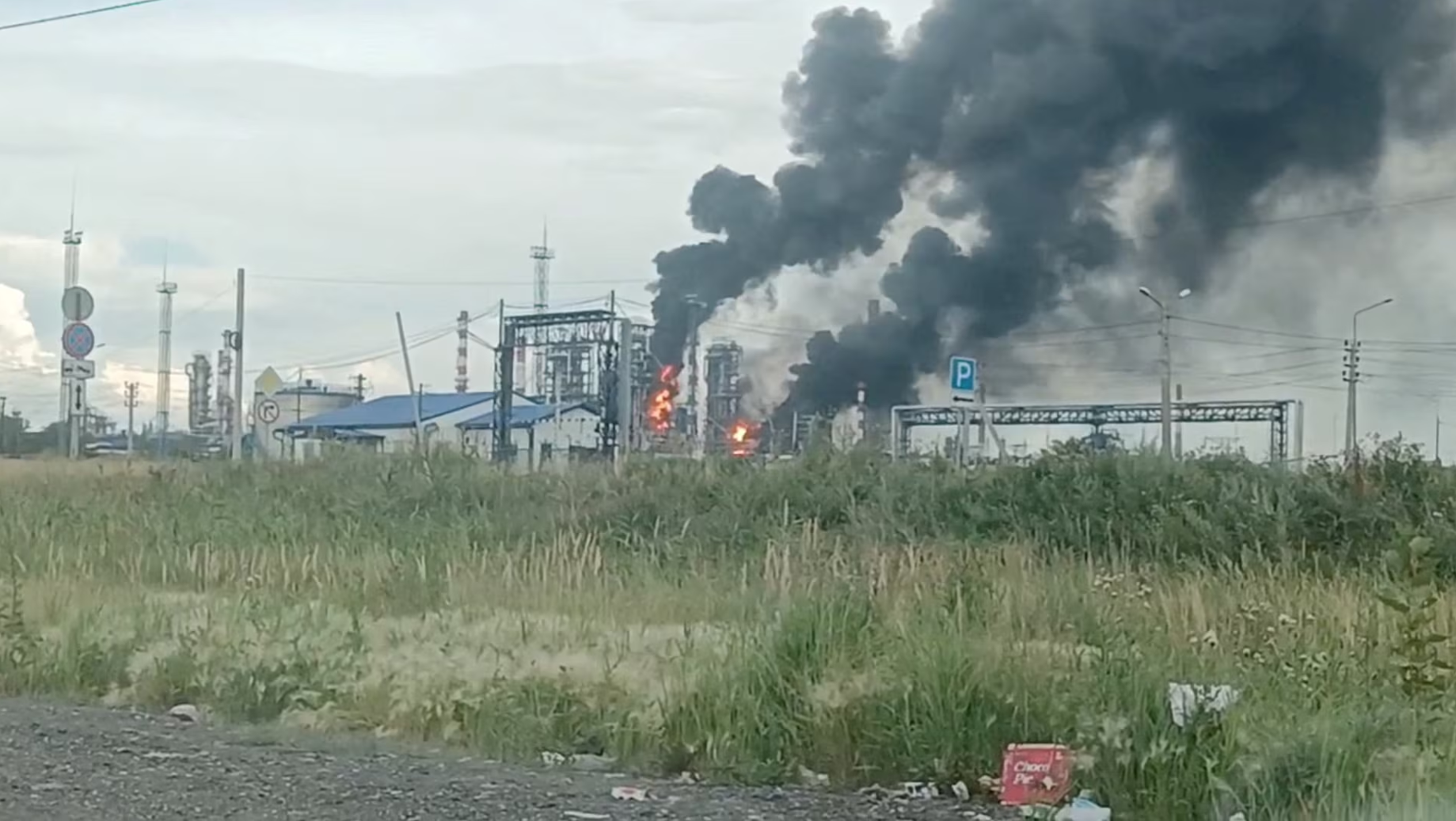

GERMAN CHANCELLOR ARRIVES IN KYIV AMID EXPLOSIONS AS BERLIN UNVEILS NEW €1 BILLION MILITARY AID
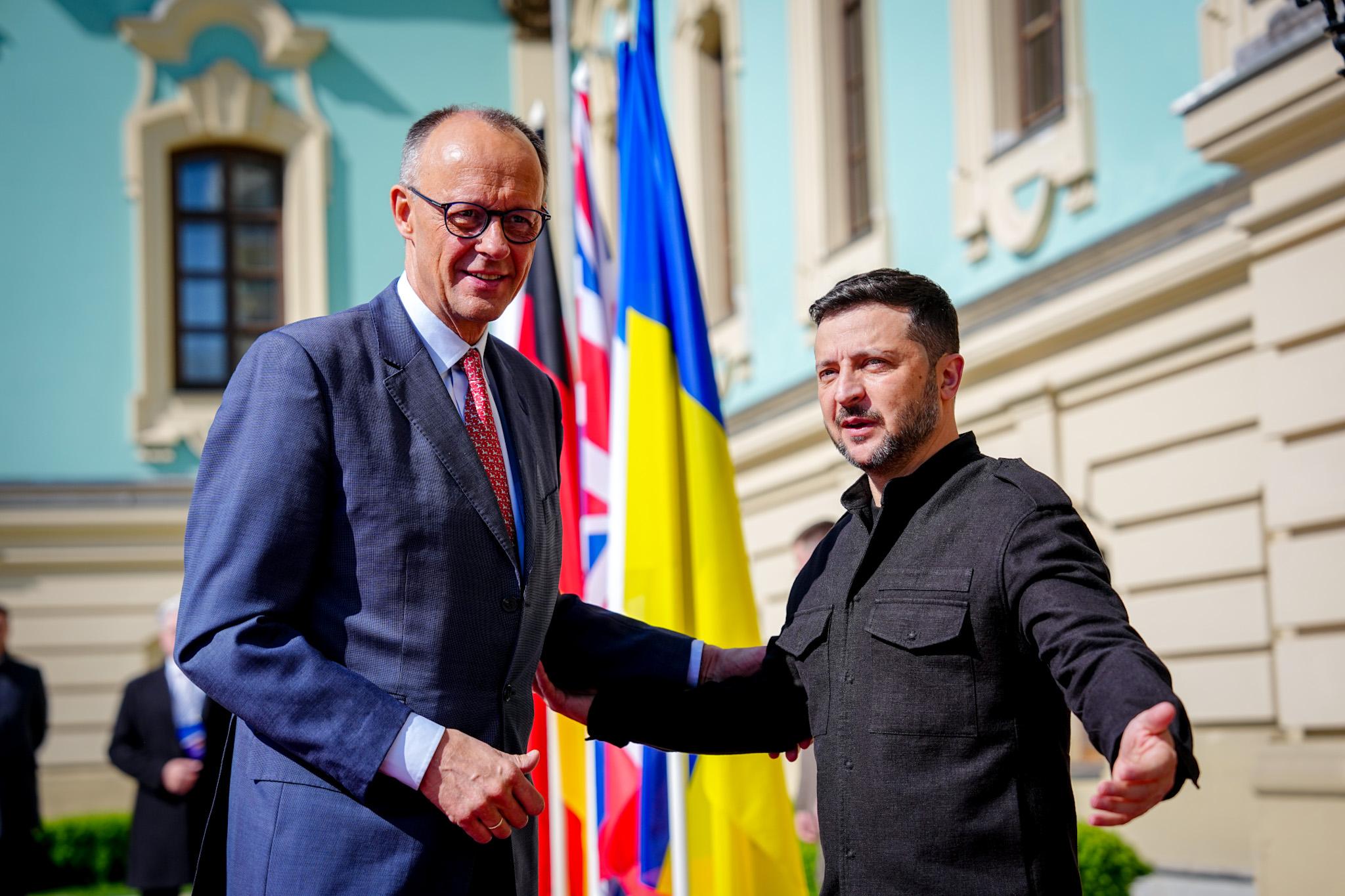
German Chancellor Friedrich Merz arrived in Kyiv on Sunday as air raid sirens and explosions were heard across the Ukrainian capital during another period of intensified Russian attacks. Merz met Ukrainian President Volodymyr Zelenskyy and announced a new German support package that includes approximately €1 billion in military assistance and €350 million for repairs to Ukraine’s heavily damaged energy infrastructure. The visit also includes plans to deepen joint German Ukrainian drone production, particularly interceptor drones designed to counter Russian aerial attacks. The trip comes as both Russia and Ukraine signal further escalation, with Moscow saying it will intensify strikes on Ukrainian military and defense related infrastructure while Kyiv says it will increase attacks on Russian oil refineries.
German Chancellor Friedrich Merz arrived in Kyiv on Sunday as air raid sirens and explosions were heard in the Ukrainian capital, underscoring the dangers surrounding his visit at a time of intensified Russian attacks.
Merz traveled to Ukraine for talks with President Volodymyr Zelenskyy and to announce a major new German support package covering military assistance, energy repairs and expanded defense industry cooperation.
Berlin says the package includes approximately €1 billion in additional military support and €350 million to help repair Ukraine’s damaged energy infrastructure.
MERZ ARRIVES AS KYIV FACES NEW ATTACKS
The German chancellor entered Kyiv during another period of Russian aerial attacks.
Sirens sounded and explosions were reported around the capital as Merz arrived.
Russian strikes have increasingly targeted transport, energy and other infrastructure across Ukraine in recent weeks.
The timing of the visit gave the trip added symbolic importance, with the German leader entering a city still facing active wartime threats.
GERMANY ANNOUNCES €1 BILLION IN MILITARY SUPPORT
Germany announced roughly €1 billion in new military assistance for Ukraine.
The package is intended to strengthen Kyiv’s ability to defend itself against continuing Russian attacks.
Germany has become one of Ukraine’s most important European military supporters since Russia’s full scale invasion began in 2022.
Berlin has supplied air defense systems, armored vehicles, ammunition and other equipment.
€350 MILLION TO HELP REPAIR ENERGY INFRASTRUCTURE
The package also includes €350 million for Ukraine’s energy sector.
Russian attacks have damaged power stations, transmission networks and other infrastructure.
Ukraine faces particular pressure ahead of winter because repeated strikes have reduced its ability to generate and distribute electricity.
The German funding is intended to help repair damaged systems and improve resilience.
DRONE COOPERATION BECOMES MAJOR PART OF VISIT
One of the most important elements of Merz’s visit is the planned expansion of joint German Ukrainian drone production.
Ukraine has become one of the world’s most experienced users and developers of battlefield drones during the war.
Germany is seeking to combine Ukrainian operational experience with German industrial capacity and financing.
The cooperation includes interceptor drones designed to destroy hostile unmanned aircraft.
INTERCEPTOR DRONES TARGET RUSSIAN ATTACK SYSTEMS
Interceptor drones have become increasingly important because Russia continues to launch large numbers of attack drones against Ukrainian cities and infrastructure.
Ukraine is developing cheaper systems that can intercept those drones without relying exclusively on expensive air defense missiles.
Joint production with German companies could allow Kyiv to increase manufacturing capacity.
It could also provide Germany with access to battlefield tested technologies.
EARLIER AGREEMENTS ALREADY LAID FOUNDATION
Germany and Ukraine have already signed several agreements under the Build with Ukraine initiative.
Those agreements include joint ventures involving Ukrainian and German companies.
Some are focused specifically on interceptor drones.
Others involve reconnaissance drones, strike drones and related defense technology.
The latest visit is expected to deepen those partnerships.
COOPERATION EXTENDS TO LONGER RANGE WEAPONS
The defense relationship also includes work involving longer range weapons technology.
Germany has supported programs designed to strengthen Ukraine’s ability to strike military targets at greater distances.
The exact technical details of some programs remain confidential.
Merz has previously argued that Ukraine must be able to target military infrastructure used to launch attacks against it.
MERZ MEETS ZELENSKYY
Merz met Zelenskyy shortly after arriving in Kyiv.
The two leaders discussed military support, energy security and defense industry cooperation.
They also discussed Ukraine’s broader relationship with Europe.
Germany continues to support Ukraine’s long term integration into European institutions while calling for reforms required under the European Union accession process.
GERMAN BUSINESS LEADERS JOIN VISIT
Merz traveled with representatives from German defense and energy companies.
Their presence highlights the increasingly industrial nature of Germany’s support for Ukraine.
The relationship is moving beyond direct government weapons deliveries toward joint production and investment.
German companies are expected to play a larger role in rebuilding Ukraine’s defense and energy sectors.
MERZ VISITS DAMAGED SITE
During the visit, Merz and Zelenskyy toured areas damaged by Russian attacks.
Among the locations visited was a Ukrainian Academy of Sciences facility damaged in a recent drone strike.
The visit was intended to highlight the continuing impact of Russian attacks on civilian and scientific infrastructure.
RUSSIA SAYS IT WILL INTENSIFY STRIKES
The visit comes as Russia says it intends to intensify strikes on Ukrainian military facilities, defense industry sites and related infrastructure.
Moscow says the attacks are retaliation for Ukrainian strikes on Russian territory.
Russia has also warned foreign nationals and diplomats about security risks in Ukraine.
Both sides accuse the other of escalating the conflict.
UKRAINE PLANS MORE STRIKES ON RUSSIAN REFINERIES
Zelenskyy has said Ukraine will increase attacks on Russian oil refineries.
He argues that Russia has adopted a broader airstrike strategy targeting Ukrainian infrastructure.
Ukraine says refinery strikes are intended to reduce Moscow’s ability to finance and sustain military operations.
Zelenskyy has also said Ukraine does not intend to deliberately target civilians.
ENERGY INFRASTRUCTURE BECOMES CENTRAL BATTLEFIELD
Energy systems have become a major focus of the war.
Russia has repeatedly targeted Ukraine’s electricity network and other energy infrastructure.
Ukraine has responded by attacking Russian oil refineries and fuel facilities.
Both sides argue that the targets are connected to military operations.
The result has been an increasingly intense campaign against energy infrastructure.
WINTER ADDS URGENCY
The timing of Germany’s energy support is especially important because winter is approaching.
Ukraine has suffered repeated attacks on power infrastructure during previous winters.
Those attacks have caused blackouts and heating shortages.
Kyiv is trying to repair and reinforce its energy system before temperatures fall.
GERMANY REMAINS ONE OF UKRAINE’S BIGGEST SUPPORTERS
Germany has become one of Ukraine’s largest military and financial supporters in Europe.
The shift has been significant because Berlin initially faced criticism for moving slowly on certain weapons deliveries.
Under Merz, Germany has pushed for deeper defense cooperation and stronger European support for Ukraine.
Berlin has also increased its own defense spending.
DRONES ARE TRANSFORMING THE WAR
The war in Ukraine has accelerated the development of unmanned weapons.
Both Russia and Ukraine use drones for reconnaissance, targeting, attacks and interception.
Low cost drones can destroy equipment worth many times more than the drone itself.
That has changed how both militaries operate.
GERMANY WANTS TO LEARN FROM UKRAINE
Ukraine’s battlefield experience has made it an important technology partner.
German defense companies are increasingly interested in Ukrainian drone designs and production methods.
Joint manufacturing allows both countries to benefit.
Ukraine receives financing and production capacity.
Germany gains access to technology tested under real combat conditions.
MERZ ALSO PUSHES REFORM AGENDA
Germany’s support is not limited to military assistance.
Merz has also emphasized the importance of reforms in Ukraine.
Those include measures related to governance, corruption and European Union membership requirements.
Germany remains supportive of Ukraine’s EU ambitions but says reforms must continue.
RUSSIA WARNS WESTERN SUPPORTERS
Moscow has repeatedly criticized Western countries for supplying weapons to Ukraine.
Russia argues that military support from NATO countries prolongs the war.
Western governments reject that position and say Ukraine has the right to defend itself.
Germany says its support is intended to protect Ukrainian sovereignty.
KYIV REMAINS UNDER CONSTANT THREAT
Kyiv has faced repeated drone and missile attacks.
The capital’s air defense systems intercept many incoming weapons.
However, debris and successful strikes continue to damage buildings and infrastructure.
The sound of explosions during Merz’s arrival highlighted the reality of the continuing conflict.
WHAT IS CONFIRMED
Friedrich Merz arrived in Kyiv on Sunday.
Air raid sirens and explosions were heard during his arrival.
Germany announced approximately €1 billion in new military assistance.
Berlin also announced €350 million for energy infrastructure repairs.
Germany and Ukraine are expanding cooperation on drone production.
WHAT REMAINS UNDER DEVELOPMENT
Some details of the joint drone production agreements are still being finalized.
The scale and timing of future manufacturing have not been fully disclosed.
Details concerning longer range weapons cooperation also remain limited.
WHY THE VISIT MATTERS
Merz’s visit sends both political and military signals.
Germany is showing that it intends to remain a major supporter of Ukraine.
The trip also demonstrates how Western assistance is evolving.
Instead of relying only on weapons deliveries, Germany and Ukraine are increasingly building weapons together.
That could have long term consequences for both countries’ defense industries.
WHAT HAPPENS NEXT
Germany and Ukraine are expected to finalize additional defense industry agreements.
Energy repair projects will also move forward ahead of winter.
At the same time, both Russia and Ukraine are signaling that their strike campaigns will continue.
That means the diplomatic symbolism of Merz’s visit is unfolding against a backdrop of renewed military escalation.