COURT DENIES WONTUMI BAIL PENDING APPEAL, KEEPS FORMER NPP CHAIRMAN IN PRISON OVER 20-YEAR SAMREBOI SENTENCE
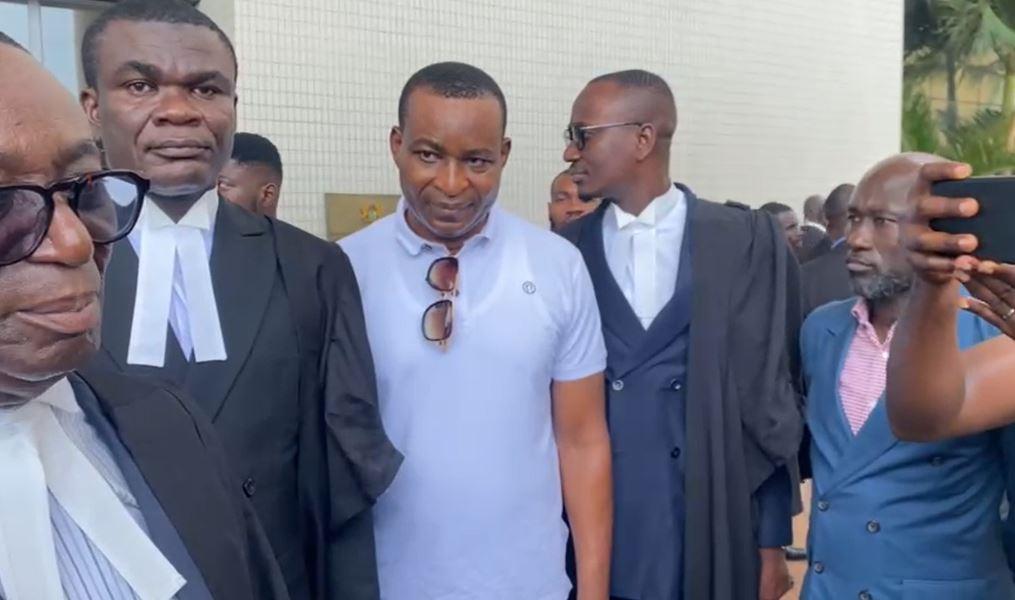
The Accra High Court on November 16 dismissed Bernard Antwi-Boasiako’s application for bail pending appeal, holding that he failed to demonstrate sufficiently arguable grounds with a reasonable likelihood of success or exceptional circumstances justifying release. He will remain at Nsawam Medium Security Prison while challenging his conviction.
ACCRA, GHANA — An Accra High Court has rejected former New Patriotic Party Ashanti Regional Chairman Bernard Antwi-Boasiako’s bid to leave prison while challenging his 20-year sentence in the high-profile Samreboi illegal mining case, ruling that the arguments raised by his lawyers were not sufficiently compelling to justify bail pending appeal. The decision means Antwi-Boasiako, popularly known as Chairman Wontumi, will remain at the Nsawam Medium Security Prison while his lawyers pursue an appeal seeking to overturn both his conviction and sentence. The ruling marks another major legal setback for one of Ghana’s most recognizable opposition politicians and businessmen, whose prosecution over Akonta Mining Company Limited’s operations has become one of the most politically consequential cases in the country’s intensified campaign against illegal mining. Although the court’s refusal keeps him behind bars, it does not dispose of his substantive appeal, which remains capable of being considered separately by the Court of Appeal.
Justice Audrey Kocuvie-Tay, the same High Court judge who convicted and sentenced Antwi-Boasiako in July, held that his lawyers had failed to demonstrate that the grounds relied upon for the appeal were sufficiently arguable or carried the level of likelihood of success required to justify releasing a convicted prisoner before the appeal is determined. The court also found that the matters presented by the defence did not amount to exceptional circumstances distinguishing his case from the ordinary situation of a person who has been convicted and has subsequently exercised the right of appeal. In practical terms, the ruling preserves the position created by the July judgment: Antwi-Boasiako remains a convicted prisoner unless and until an appellate court interferes with that decision, while the burden now shifts fully to his legal team to persuade the Court of Appeal that the trial court committed errors serious enough to invalidate the conviction or alter the sentence.
Antwi-Boasiako’s lawyers, led by former Attorney-General and former Abuakwa South Member of Parliament Samuel Atta Akyea, had mounted an extensive argument for temporary release, relying on 19 grounds of appeal which they said raised substantial legal and constitutional issues. The defence challenged the trial court’s interpretation of the Minerals and Mining Act, 2006, Act 703, as amended, and argued that the judge had wrongly imposed personal criminal liability on Antwi-Boasiako despite Akonta Mining Company Limited existing as a separate corporate entity. They also questioned aspects of the prosecution evidence and the court’s treatment of the arrangement under which other individuals operated on portions of Akonta Mining’s Samreboi concession. According to the defence, those issues gave the appeal a reasonable prospect of success and justified allowing Antwi-Boasiako to leave prison while the appellate process continued.
The High Court was not persuaded. In rejecting the application, the court held that the defence had not demonstrated through the relevant provisions of the Minerals and Mining Act that its interpretation was sufficiently strong to establish a likely error in the original judgment. It also rejected arguments relating to the treatment of other accused persons and prosecution witnesses, emphasizing that Antwi-Boasiako had been convicted on the basis of findings concerning his own conduct and responsibility for what occurred on the concession. The judge consequently concluded that the grounds being advanced were essentially matters for the substantive appeal rather than exceptional circumstances requiring the court to suspend the normal consequences of a criminal conviction and return the applicant to temporary freedom.
The ruling followed a forceful response from the Attorney-General’s Department, represented by Deputy Attorney-General Dr Justice Srem-Sai, which opposed the application and argued that bail pending appeal should not be treated as automatic merely because an appeal had been filed. Prosecutors maintained that Antwi-Boasiako had not demonstrated a genuine likelihood that the conviction would be overturned and had not established circumstances sufficiently exceptional to warrant release. The state also raised concerns about flight risk, pointing to two other criminal cases pending against him before separate High Courts and arguing that the possibility of further convictions or custodial sentences gave him an additional incentive to abscond if released.
Atta Akyea rejected that suggestion, telling the court that his client was not a flight risk and had previously complied with bail conditions while the case was being tried. The defence stressed that Antwi-Boasiako’s passport remained in the custody of the Economic and Organised Crime Office and argued that he therefore could not simply leave the jurisdiction. His lawyers also said having him outside prison would enable him to give instructions more easily, participate fully in preparation of the appeal and assist his legal team with the other criminal cases still pending against him. They argued that the state would suffer no meaningful prejudice if bail were granted under strict conditions and maintained that Antwi-Boasiako had every incentive to remain in Ghana because his objective was to overturn the conviction and reclaim his freedom through the courts.
The Deputy Attorney-General countered that a convicted person’s physical presence outside prison was not essential for lawyers to prepare written appellate arguments and that the existence of a pending appeal does not erase the legal force of the conviction. The prosecution also argued that the other criminal proceedings facing Antwi-Boasiako were relevant when considering whether release was appropriate. In refusing bail, the High Court broadly accepted the state’s position that the circumstances presented did not cross the unusually high threshold required for releasing someone who is already serving a substantial prison sentence following conviction.
Antwi-Boasiako’s current imprisonment stems from the judgment delivered on July 20, when the Accra High Court found him guilty of assigning mineral rights without the required approval of the Minister for Lands and Natural Resources and purposely facilitating an unlicensed mining operation connected to Akonta Mining Company Limited’s concession at Samreboi in the Western Region. The court sentenced him to 20 years’ imprisonment with hard labour on each of the two counts on which he was personally convicted, but ordered the sentences to run concurrently, meaning he faces an effective custodial term of 20 years rather than 40. He was also fined 10,000 penalty units on each count, totaling GH¢120,000, with additional custodial consequences attached to default.
Akonta Mining Company Limited was separately convicted on corresponding offences and fined 15,000 penalty units on each count, amounting to 30,000 penalty units in total. The company’s conviction was legally distinct from that of Antwi-Boasiako, but the High Court concluded during the trial that the businessman exercised sufficient control over the concession and the arrangements surrounding the mining activities to attract personal criminal responsibility. The court described him as the de facto holder of the mineral rights and rejected the argument that the corporate structure of Akonta Mining insulated him from liability for activities carried out on the concession.
The prosecution case centered on arrangements through which small-scale miners, including Henry Okum and others identified during proceedings, were permitted to undertake mining-related activities on portions of Akonta Mining’s Samreboi concession without the necessary ministerial approval and licensing. The state argued that what was presented by the defence as reclamation or other permitted activity was in reality unlicensed mining facilitated by the company and those controlling it. Justice Kocuvie-Tay ultimately found that the prosecution had proved the essential ingredients of the offences beyond reasonable doubt, including the transfer or assignment of access to mineral rights without approval and the deliberate facilitation of operations that lacked the required authorization.
In imposing sentence, the court placed substantial weight on the seriousness of illegal mining and the environmental damage associated with unlawful exploitation of Ghana’s mineral resources. Ghana has spent years struggling with galamsey, the local term widely used for illegal small-scale mining, which has contaminated rivers, destroyed agricultural land, damaged forest reserves and generated intense political pressure for stronger enforcement. Successive governments have declared campaigns against the practice, but enforcement has frequently been criticized as inconsistent, particularly when individuals with significant political or business influence are accused of involvement. The prosecution and conviction of Antwi-Boasiako therefore attracted unusual public attention because of his senior role within the NPP and his ownership relationship with Akonta Mining.
The July judgment also ordered the forfeiture to the state of equipment and other items recovered during enforcement activity connected to the concession, including excavators, vehicles and cash seized during an April 2025 operation. The court said deterrence was an important sentencing consideration because mining offences can cause environmental harm extending far beyond the immediate concession and affecting water bodies, forests and communities. Antwi-Boasiako’s lawyers, however, maintain that the trial court reached those conclusions through an incorrect interpretation of the law and evidence and have asked the appellate court to set aside the judgment and acquit and discharge him.
The notice of appeal filed after the conviction challenges the High Court’s reasoning on several fronts. Among the defence’s arguments is that the court failed to properly consider the combined effect of provisions within Act 703 governing mineral rights and arrangements involving concession holders, while also allegedly drawing conclusions unsupported by the evidence presented at trial. His lawyers dispute the finding that the legal arrangements established the criminal acts attributed personally to Antwi-Boasiako and argue that the trial court improperly collapsed the distinction between the businessman and the corporate entity. Those arguments remain unresolved because Monday’s ruling addressed only whether he should be released while they are litigated, not whether they are ultimately correct.
That distinction is central to understanding the significance of the latest decision. A bail application pending appeal is not itself a retrial of the original criminal case, and the High Court’s assessment that the arguments did not justify temporary release does not prevent the Court of Appeal from reaching a different conclusion when it conducts a full examination of the trial record, legal arguments and grounds of appeal. Antwi-Boasiako retains the right to challenge the conviction, and depending on the eventual outcome, either side may have further appellate options available under Ghanaian law. For now, however, the original judgment remains fully operative and his sentence continues to run.
The application had been pending for several months. Antwi-Boasiako’s lawyers sought bail after filing the appeal following the July conviction, with an initial hearing scheduled for August 19. Proceedings were subsequently delayed after the presiding judge was unavailable because of ill health, and the matter was eventually argued in October. After hearing the defence and prosecution on October 15, the High Court set November 4 for the ruling, but a nationwide strike by the Judicial Service Staff Association of Ghana disrupted operations at the Law Court Complex and delayed the decision until Monday, November 16.
The postponements meant Antwi-Boasiako remained in custody throughout the process, and Monday’s decision now ensures that his imprisonment will continue while attention shifts toward the substantive appeal. His legal team has previously indicated that it is prepared to pursue available appellate remedies if the High Court refused bail, raising the possibility of another application or further legal steps before the Court of Appeal. Any such move would be separate from the substantive challenge to the conviction itself and would require his lawyers to persuade the appellate court that there is a legal basis for interfering with the High Court’s refusal.
The businessman’s legal difficulties also extend beyond the Samreboi conviction. He faces separate proceedings connected to alleged illegal mining activities in the Tano Nimiri Forest Reserve, another case involving Akonta Mining operations that has attracted significant public interest. The state has been pursuing that case separately, and its evidence and allegations must not be conflated with the offences for which he has already been convicted in the Samreboi matter. Antwi-Boasiako is entitled to the presumption of innocence in those pending proceedings unless and until a court finds him guilty.
He is also facing a separate financial case involving an alleged GH¢30 million loss to the Ghana Export-Import Bank. Prosecutors have brought charges including defrauding by false pretence, forgery, money laundering and causing financial loss to a public body. Antwi-Boasiako has pleaded not guilty in that case, meaning those accusations remain unproven. The Deputy Attorney-General referred to the existence of the other prosecutions during arguments over bail, not as evidence that Antwi-Boasiako is guilty of those separate allegations but as part of the state’s argument that the prospect of further imprisonment increased the risk that he might abscond if released.
The Samreboi case has carried significant political implications because Antwi-Boasiako has for years been one of the NPP’s most prominent regional organizers and public defenders. He built considerable influence as Ashanti Regional Chairman in a region historically central to the party’s electoral strength, developing a national profile through political campaigning, media ownership and his often combative public statements. His conviction therefore reverberated well beyond the environmental and mining sectors, generating debate within the NPP over the treatment of one of its senior personalities and broader questions about whether Ghana’s anti-galamsey enforcement is finally reaching politically connected figures.
His imprisonment has not completely removed him from party politics. Even after the 20-year sentence was imposed, political allies discussed his continuing interest in senior NPP leadership and his future within the party, highlighting the unusual intersection between his criminal appeal and internal opposition politics. Whatever political ambitions he may retain, however, his immediate circumstances are now determined by the criminal justice process. Unless he secures bail from a higher court or succeeds in overturning the conviction, he remains a prisoner serving the High Court’s sentence.
The case also feeds into Ghana’s larger debate over whether criminal prosecution can become an effective deterrent against illegal mining. Governments have repeatedly deployed soldiers, police officers, environmental regulators and special task forces to mining communities, yet rivers such as the Pra, Birim and Ankobra have continued to face severe pollution linked to mining activities. Environmental organizations, traditional leaders, professional bodies and religious groups have demanded stronger prosecution of financiers and concession holders rather than concentrating enforcement only on workers physically found at mining sites.
The High Court’s reasoning in Antwi-Boasiako’s case is therefore potentially important beyond the fate of one defendant. By holding that an individual who exercised effective control over mineral rights could be criminally liable even without personally operating excavators or physically appearing at the concession, the judgment addressed a recurring problem in illegal-mining prosecutions: the separation between those who finance, authorize or benefit from operations and those found working directly at mining sites. Antwi-Boasiako’s appeal challenges aspects of that reasoning, meaning the Court of Appeal could eventually provide broader guidance on how responsibility under Ghana’s mining laws should be interpreted.
For the state, an appellate affirmation of the conviction could strengthen future cases against concession owners or powerful individuals accused of enabling unlicensed operations through intermediaries. For the defence, a successful appeal could expose weaknesses in the legal interpretation used to impose personal liability and potentially affect similar prosecutions. That makes the substantive appeal legally significant even apart from Antwi-Boasiako’s political prominence.
The bail decision itself is narrower. The court did not need to decide every legal point raised in the 19 grounds of appeal, and its refusal should not be interpreted as a final appellate ruling that all those grounds are meritless. Instead, it decided that the defence had not shown enough at this stage to justify releasing a convicted man serving a lengthy sentence. The substantive appellate judges will ultimately have access to the full trial record and will be required to determine whether the conviction is supported by law and evidence.
That process could focus heavily on the relationship between Antwi-Boasiako and Akonta Mining, the interpretation of ministerial approval requirements and the evidence showing what arrangements were made with miners operating on the Samreboi concession. It could also examine the trial court’s reliance on circumstantial evidence and its decision to treat Antwi-Boasiako as the de facto mineral-rights holder despite the company’s separate legal identity. Those are technical legal questions with consequences extending beyond the political debate surrounding his imprisonment.
For Antwi-Boasiako, however, the immediate consequence is straightforward: the prison gates remain closed. His lawyers had argued that his passport was already in state custody and that he had previously complied with court requirements, but those assurances were not enough to overcome the court’s concern that the threshold for post-conviction bail had not been met. The High Court’s position effectively places the presumption in favor of continuing the sentence unless a superior court subsequently intervenes.
The ruling also illustrates the difference between bail before conviction and bail after conviction. Before judgment, an accused person continues to benefit fully from the presumption of innocence and may frequently be released subject to conditions designed to secure attendance at trial. Once conviction occurs, the legal position changes substantially because a court has already determined guilt beyond reasonable doubt and imposed punishment. A person appealing that decision can still seek bail, but courts generally require a stronger justification for interrupting the sentence while an appeal remains unresolved.
The defence attempted to meet that standard by emphasizing the number and substance of its appellate grounds, Antwi-Boasiako’s previous compliance with bail, the seizure of his passport and the need for him to participate in his other cases. The prosecution responded that these were not exceptional circumstances and that the possibility of additional criminal liability strengthened rather than weakened the argument for continued custody. Justice Kocuvie-Tay ultimately sided with the state.
Monday’s decision is consequently both significant and limited. It is significant because Antwi-Boasiako will continue serving a potentially decades-long sentence and because his release had become a major issue for supporters following the case. It is limited because the substantive appeal remains alive and because the High Court’s refusal of bail does not replace the appellate process or foreclose the possibility that a higher court could eventually overturn or modify the original judgment.
Attention will now turn to how quickly the appeal record is completed and when the Court of Appeal can begin substantive consideration of the case. During earlier proceedings, Atta Akyea told the High Court that the defence was eager for the appeal to be heard and was following up with the court registry to obtain the necessary records. Delays in preparing records can significantly slow criminal appeals, particularly in cases involving substantial evidence and lengthy judgments, although the defence has indicated it wants the challenge determined as soon as possible.
If the Court of Appeal ultimately dismisses Antwi-Boasiako’s challenge, the 20-year sentence would remain in force subject to any further appeal legally available. If the appellate judges find that the trial court made material errors, they could potentially interfere with the conviction or sentence depending on the nature of their findings. Until such a decision is delivered, the High Court judgment remains the controlling legal position.
The political reaction to the continuing imprisonment will also be watched closely, particularly within the NPP and Ashanti Region, where Antwi-Boasiako built his political career. Supporters have previously questioned aspects of the prosecution and defended him publicly, while government officials and anti-galamsey campaigners have emphasized the importance of allowing the courts to operate without political interference. The legal process now gives both sides a clear test: arguments about whether the conviction was justified will have to be resolved through the appellate courts rather than political declarations.
For Ghana’s broader anti-illegal-mining campaign, the case has already become a benchmark because it produced a lengthy custodial sentence against a politically influential concession holder rather than only low-level miners. Whether that judgment ultimately survives appellate scrutiny will be closely examined by environmental campaigners, mining companies, lawyers and political actors because it could influence how aggressively prosecutors pursue those accused of facilitating illegal operations without personally working at the site.
The environmental stakes behind the legal arguments remain considerable. Illegal and poorly regulated mining has degraded land and polluted major water bodies, prompting repeated warnings from the Ghana Water Company and environmental experts about the long-term threat to drinking-water treatment and aquatic ecosystems. Successive governments have promised to confront the problem, but public frustration has grown over perceptions that politically connected operators often escape the consequences imposed on poorer miners.
The Samreboi prosecution therefore sits at the intersection of environmental protection, political accountability, corporate responsibility and criminal law. Antwi-Boasiako argues through his appeal that the trial court wrongly interpreted his legal responsibility and that the evidence did not justify the convictions imposed upon him. The state maintains that he exercised effective control over the concession and deliberately facilitated operations that were not lawfully authorized. Those positions will eventually have to be tested before appellate judges on the complete record.
For now, however, the question before the High Court was considerably simpler: should Antwi-Boasiako be allowed to return home while that larger legal battle takes place? The court’s answer was no. Justice Kocuvie-Tay found that his lawyers had not demonstrated either sufficiently persuasive prospects of success or exceptional circumstances strong enough to outweigh the effect of his conviction and substantial prison sentence.
That means the former NPP regional chairman will continue serving his term at Nsawam while his legal team redirects its attention toward the Court of Appeal. His 19 appellate grounds remain to be tested, the state will have an opportunity to defend the July judgment, and any higher court considering the matter will decide the appeal on its own assessment of the law and trial evidence.
The latest ruling therefore does not close the Samreboi case; instead, it defines the conditions under which the next phase will unfold. Antwi-Boasiako will fight his conviction from prison rather than from temporary freedom, while the July judgment continues to carry full legal effect. For a politician and businessman who once wielded substantial influence in one of Ghana’s most politically important regions, the immediate reality is stark: unless a higher court grants relief, Chairman Wontumi will remain behind bars as one of the country’s most closely watched illegal-mining appeals moves into its next stage.