COCOBOD TURNS TO GHANA’S OWN MONEY MARKET WITH GH¢16.3BN COCOA FINANCING PLAN AS FOREIGN LOAN ERA FADES
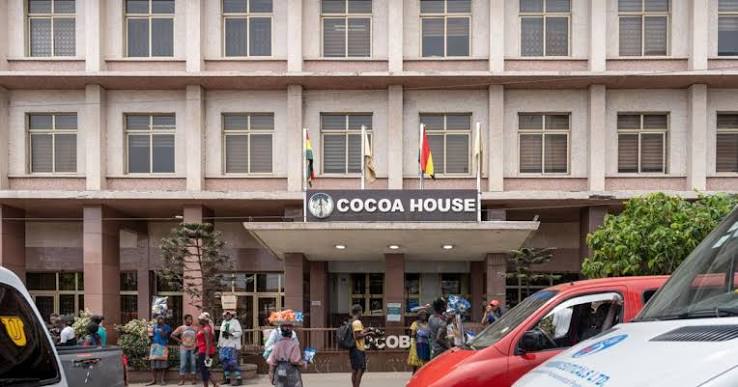
COCOBOD has launched a GH¢16.3 billion Domestic Cocoa Notes Programme on the Ghana Stock Exchange through its wholly owned subsidiary Cocoa Capital PLC as Ghana moves away from heavy reliance on foreign syndicated cocoa loans. The program comprises GH¢14 billion in commercial paper and GH¢2.3 billion in bonds. Contrary to some headlines, the entire GH¢16.3 billion has not yet been raised. The first commercial paper issuance has generated about GH¢3.4 billion, with further tranches expected to finance cocoa purchases and other approved sector obligations.
The Ghana Cocoa Board has formally launched a GH¢16.3 billion domestic financing program on the Ghana Stock Exchange, marking one of the most significant changes in the way Ghana finances the purchase of cocoa after decades of dependence on foreign syndicated loans. The program, being executed through COCOBOD’s wholly owned financing subsidiary Cocoa Capital PLC, is designed to mobilize money from Ghanaian banks, pension funds, fund managers, insurance companies and other investors to finance cocoa purchases while reducing the industry’s exposure to foreign currency borrowing.
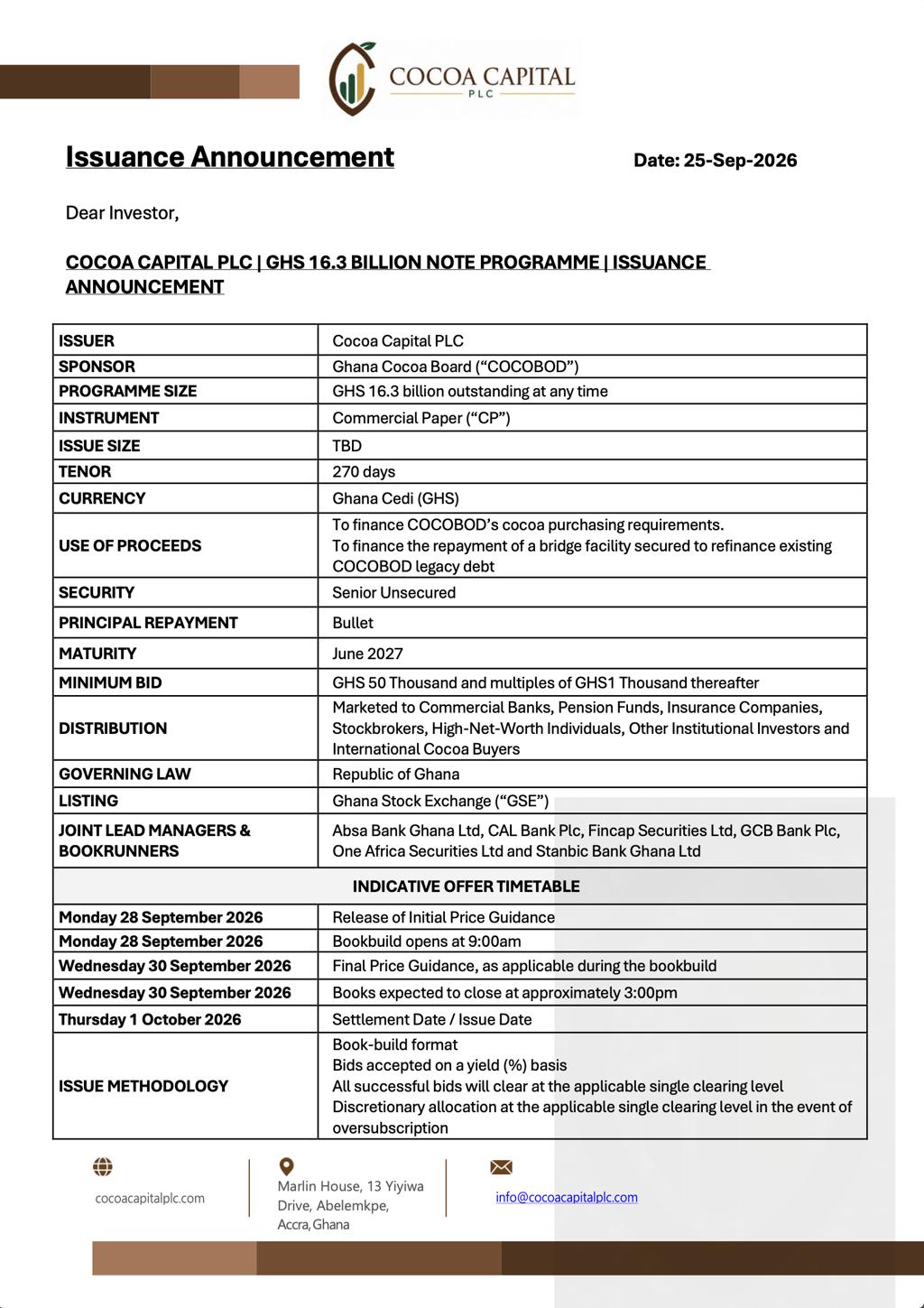
The Domestic Cocoa Notes Programme has a total approved size of GH¢16.3 billion, comprising GH¢14 billion in short-term commercial paper and GH¢2.3 billion in medium-to-long-term bonds. Although some reports have described COCOBOD as having already raised the full GH¢16.3 billion, the amount represents the overall financing capacity of the program rather than cash already collected. The first commercial paper issuance has raised roughly GH¢3.4 billion from domestic investors, with additional tranches expected as COCOBOD’s funding requirements develop during the 2026/2027 cocoa season.
The program was formally admitted to the Ghana Fixed Income Market of the Ghana Stock Exchange on Wednesday, October 14, with COCOBOD describing the move as a major break from the financing structure that has supported Ghana’s cocoa industry for generations. Instead of borrowing heavily in foreign currency from international banks before the start of each cocoa season, the Board is increasingly attempting to raise cedi-denominated funding from Ghana’s domestic capital market.
COCOBOD Chief Executive Dr Randy Anertey Abbey said the shift is intended to broaden the institution’s financing options and connect the country’s domestic savings more directly to one of Ghana’s most important productive industries. For decades, cocoa purchases were largely financed through annual syndicated loans arranged by international financial institutions, with COCOBOD borrowing foreign currency and repaying those facilities using proceeds from cocoa exports.
That model provided substantial liquidity to purchase beans from farmers, but it also exposed COCOBOD and the state to foreign exchange risks, international lending conditions and growing debt pressures. In recent years, the traditional syndicated loan model became increasingly difficult to sustain as Ghana went through a wider sovereign debt crisis and COCOBOD accumulated significant financial obligations of its own.
Under the new structure, Cocoa Capital PLC serves as a special-purpose financing vehicle through which domestic investors can provide funds for cocoa purchasing and related financing needs. The company was incorporated as a wholly owned subsidiary of COCOBOD and has received regulatory approval to issue debt instruments through Ghana’s domestic capital market.
The GH¢14 billion commercial paper component is expected to provide short-term liquidity for cocoa purchases during the 2026/2027 crop season. Commercial paper is generally issued for relatively short periods and allows institutions to raise working capital without relying exclusively on conventional bank loans. The remaining GH¢2.3 billion bond component is intended to provide longer-term financing and support the restructuring of specific cocoa-sector obligations.
The maiden issuance has already attracted billions of cedis from domestic institutional investors. Reports from the admission ceremony indicate that the first tranche raised approximately GH¢3.4 billion, demonstrating significant demand from investors even as Ghana’s capital market continues rebuilding confidence following the country’s domestic debt restructuring.
The initial commercial paper carries an interest rate of about 11 percent per year and has a maturity period of approximately nine months. The instruments are senior unsecured obligations, while repayment is expected to be supported by proceeds from selected cocoa forward sales contracts assigned to Cocoa Capital PLC. Those receivables are to flow into designated accounts under a structured payment arrangement intended to give investors greater visibility over how their money will be repaid.
COCOBOD has stressed that money raised under the program will be used primarily for cocoa purchases and the institution’s core operations. Abbey has also sought to address concerns that the funds could be diverted to settle unrelated historical obligations, saying proceeds will not be used to pay other legacy debts apart from specific obligations connected to the Domestic Debt Exchange Programme where applicable.
The financing overhaul comes at a critical time for Ghana’s cocoa industry. Ghana has traditionally ranked among the world’s largest cocoa producers, with the crop serving as an important source of export earnings, rural employment and government revenue. However, production has fallen sharply from previous peaks as the sector struggles with swollen shoot disease, aging farms, unfavorable weather, smuggling, illegal mining, financing difficulties and concerns over the long-term economic viability of cocoa farming.
Illegal small-scale mining has become an especially serious threat in some cocoa-growing communities, where farmland has been destroyed or converted into mining sites. Cocoa farmers have also complained for years about rising production costs, fertilizer availability, farm rehabilitation and the gap between international cocoa prices and the amount ultimately received at the farm gate.
The government has attempted to respond through a wider restructuring of the cocoa sector. Ghana’s new Cocoa Board Act introduces reforms intended to restrict COCOBOD to its central mandate and reduce the quasi-fiscal activities that contributed to its financial difficulties. The legislation also establishes protections around farmer remuneration and seeks to strengthen financial discipline within the institution.
For the 2026/2027 season, the producer price has been set at GH¢42,400 per metric ton, reflecting the government’s attempt to give farmers a larger share of cocoa export earnings while maintaining sufficient funding for industry operations. The legislation requires farmers to receive at least 70 percent of the realized gross free-on-board price under the new framework.
However, higher producer prices also increase the amount of working capital required to purchase cocoa beans from farmers. Licensed buying companies need sufficient liquidity to buy cocoa promptly during the season, and delays in financing can create payment problems that discourage farmers, increase smuggling incentives and disrupt the supply chain.
The GH¢16.3 billion program is intended to create a more predictable domestic source of that working capital. Rather than waiting for a single large foreign syndicated facility, Cocoa Capital can issue commercial paper in tranches as funding needs arise and market conditions permit. That flexibility could allow COCOBOD to better match borrowing with actual purchasing requirements.
There are also potential foreign exchange benefits. Borrowing in cedis to finance purchases made largely in cedis reduces the mismatch created when COCOBOD borrows dollars or other foreign currencies but incurs substantial domestic costs. Foreign currency borrowing becomes more expensive in cedi terms when the local currency depreciates, increasing the debt burden even where the original foreign currency amount remains unchanged.
The domestic financing strategy does not eliminate risk. COCOBOD must still generate enough revenue from cocoa sales to repay investors, and the program’s credibility will depend heavily on production volumes, cocoa prices, forward contracts and disciplined financial management. If harvests disappoint or export receipts weaken, the institution could still face significant repayment pressures.
That is why the structure of Cocoa Capital and its ring-fenced revenue arrangements has become central to the government’s pitch to investors. The model seeks to provide a clearer connection between money borrowed, cocoa purchased, cocoa sold and debt repaid. It is intended to reassure investors that proceeds and repayments will be managed through defined financial channels rather than becoming part of COCOBOD’s wider cash flow without sufficient safeguards.
Ghana Stock Exchange Managing Director Abena Amoah has welcomed the program as evidence that the domestic capital market can play a larger role in financing important sectors of the economy. For the GSE, the transaction also expands the range and scale of fixed-income securities available to investors at a time when Ghana is seeking to deepen its domestic capital markets.
Banks and pension funds are particularly important to the success of the program because they control large pools of cedi liquidity. By directing a portion of those resources into cocoa financing, policymakers argue that domestic savings can support productive economic activity rather than flowing predominantly into government securities or other financial assets.
The Ghana Association of Banks has also backed the approach, describing cooperation between financial institutions, the capital market and COCOBOD as an opportunity to create stronger links between savings and agricultural production. The challenge will be ensuring that the instruments remain sufficiently attractive to investors without imposing unsustainable borrowing costs on the cocoa industry.
The shift is particularly notable because Ghana’s annual syndicated cocoa loan was for years treated as one of the major events on the country’s economic calendar. The inflow of hundreds of millions of dollars at the beginning of the cocoa season traditionally provided foreign exchange support to the Bank of Ghana and could influence market expectations around the cedi.
Moving toward domestic financing changes that dynamic. Ghana may reduce its exposure to offshore borrowing and foreign currency debt, but it could also lose some of the seasonal foreign exchange inflows historically associated with the syndicated facility. The broader impact will therefore depend on how cocoa export proceeds are managed and how successfully foreign currency earnings continue to enter the domestic financial system.
COCOBOD’s debt history also makes investor confidence essential. The institution was affected by Ghana’s 2023 Domestic Debt Exchange Programme, including restructuring involving cocoa-backed securities. In July 2026, COCOBOD announced that it had paid GH¢162 million to settle outstanding obligations owed to individual Cocoa Bill holders who had not participated in the domestic debt exchange, describing the payment as part of its effort to restore confidence and normalize its finances.
For domestic investors considering the new Cocoa Capital securities, that history will remain relevant. Banks, pension funds and fund managers will assess not simply the importance of cocoa to Ghana but the ability of the financing vehicle to meet its obligations at maturity. COCOBOD has therefore promised stronger disclosure, adherence to reporting requirements and disciplined use of funds.
The program also comes as global cocoa markets remain volatile. Cocoa prices surged dramatically in recent years as supply shortages from West Africa tightened the global market, but elevated prices alone have not solved Ghana’s structural production problems. Higher international prices can increase export revenues, but they can also intensify smuggling where neighboring markets offer more attractive returns and can create stronger pressure for governments to increase farm-gate prices.
Ghana’s challenge is therefore not merely finding GH¢16.3 billion. It is ensuring that borrowed funds produce cocoa purchases and export revenues strong enough to repay investors while farmers receive timely payments and the industry addresses production constraints. Financing can keep the purchasing system functioning, but it cannot by itself reverse disease, farm degradation, illegal mining or declining yields.
The government is presenting the Cocoa Capital structure as part of a broader reset rather than simply another borrowing exercise. Officials argue that domestic financing, a new legal framework, higher farmer returns and stronger restrictions on COCOBOD’s non-core activities can gradually restore financial stability to the sector. The success of that strategy will ultimately depend on execution and whether production begins recovering alongside the financial restructuring.
For now, the most immediate development is the successful launch of a GH¢16.3 billion financing platform and the completion of its first multibillion-cedi commercial paper issuance. The full GH¢16.3 billion has not yet been raised, and future tranches will depend on funding requirements, investor appetite and market conditions. That distinction matters because the program represents borrowing capacity rather than a single GH¢16.3 billion cash injection into COCOBOD.
If subsequent issuances attract sufficient demand, the model could fundamentally alter how Ghana finances its most important agricultural export and reduce one of the cocoa sector’s longstanding dependencies on foreign banks. It could also provide a template for using the domestic capital market to fund other productive sectors, provided the securities are repaid on time and investors retain confidence in the structure.
The real test will come during the 2026/2027 season as COCOBOD draws on the program to purchase cocoa, pays farmers and licensed buying companies, and begins meeting obligations to investors. The launch on the Ghana Stock Exchange is therefore only the beginning of the financing transition. Its long-term significance will depend on whether domestic borrowing can deliver the liquidity Ghana’s cocoa sector needs without recreating the debt problems that made the old system increasingly difficult to sustain.