AFREXIMBANK COMMITS $75 MILLION TO DEVELOPMENT BANK OF NIGERIA TO EXPAND SME FINANCING
Afreximbank has committed a $75 million financing facility to the Development Bank of Nigeria to expand access to capital for Nigerian SMEs, with fashion, film, music, design and other creative businesses among the intended beneficiaries. DBN will channel the funding through participating financial institutions for working capital, asset purchases, export financing and supply chain activities. The partnership will also provide capacity building, export readiness support and access to Afreximbank trade platforms and international buyers.
The African Export Import Bank has committed a $75 million financing facility to the Development Bank of Nigeria in a major intervention aimed at expanding access to capital for Nigerian small and medium sized enterprises, with a strong focus on businesses operating in the creative economy and export oriented sectors. The agreement was announced during CANEX WKND 2026 in Lagos and is designed to provide financing for working capital, asset acquisition, pre export and post export activities, as well as supply chain operations. Businesses in fashion, film, music, design and other creative industries are among the intended beneficiaries, while the broader structure of the facility will also support eligible SMEs seeking to strengthen production and access regional and international markets.
Under the arrangement, the Development Bank of Nigeria will not lend the entire $75 million directly to individual entrepreneurs. Instead, it will route the funding through its network of participating financial institutions, which will then provide financing to eligible businesses. This structure reflects DBN’s wholesale development finance model, which relies on commercial banks, microfinance institutions and other approved lenders to reach businesses across different sectors and parts of the country.
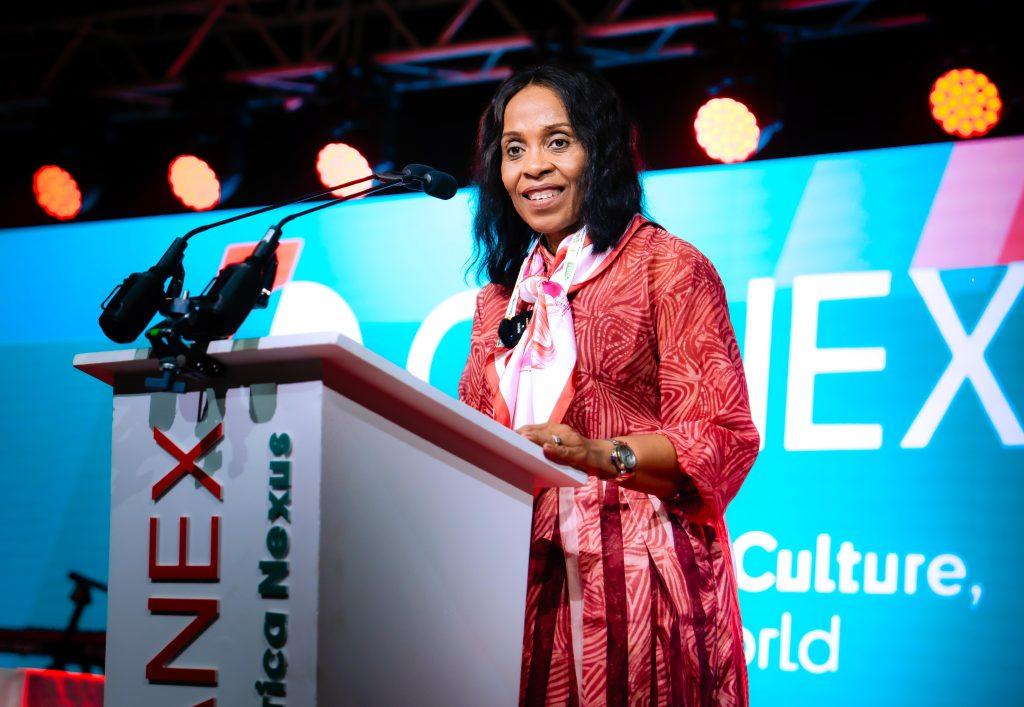
The agreement was formally presented at CANEX WKND 2026, held from November 5 to November 8 at the Wole Soyinka Centre for Cultural and Creative Arts in Lagos. Afreximbank’s Executive Vice President for Intra African Trade and Export Development, Kanayo Awani, and Development Bank of Nigeria Managing Director and Chief Executive Officer Tony Okpanachi led the ceremonial signing on behalf of their respective institutions. The event brought together creators, investors, policymakers, financial institutions and buyers from Africa, the Caribbean and the wider diaspora.
Afreximbank said the financing forms part of its Export SME Development Programme and is intended to address one of the biggest challenges facing Nigerian businesses, the lack of affordable and appropriate capital for growth. Many small businesses struggle to secure funding for machinery, raw materials, large orders and expansion because conventional bank lending often comes with high interest rates, short repayment periods or collateral requirements that smaller companies cannot meet.
The $75 million facility is designed to target those financing constraints while also helping businesses prepare for export opportunities. Afreximbank says the objective is not simply to lend money but to create a broader support system combining finance, training, export readiness and access to markets. That approach is particularly important for creative businesses, where companies may have valuable intellectual property, strong brands or growing audiences but lack the physical assets traditionally demanded as collateral by lenders.
Kanayo Awani said the partnership with DBN goes beyond providing capital and will combine financing with practical support intended to help Nigerian SMEs improve their competitiveness. She said the goal is to help promising local businesses become sustainable exporters that can participate in trade across Africa and beyond.
The partnership will therefore include capacity building programmes designed for both businesses and the financial institutions lending to them. Afreximbank and DBN plan to work together to improve lenders’ understanding of export oriented businesses and the specific financing needs of SMEs, particularly companies operating in sectors that may not fit traditional banking models.
For creative businesses, the initiative could be especially significant. Nigeria has one of Africa’s largest creative economies, with major industries in music, film, fashion, design, television, digital content and entertainment. Nigerian artists, filmmakers, designers and creative entrepreneurs have built internationally recognized brands, but many still struggle to secure the financing needed to scale production, improve distribution and enter new markets.
Fashion businesses, for example, often require financing to purchase equipment, import or source fabrics, expand workshops and fulfil large wholesale orders. Film producers may need funding for production, post production and international distribution. Music businesses may require capital for recording, touring, marketing and content ownership, while design companies may need funding for technology, staff and export development.
The new facility is intended to help address those challenges by creating more predictable financing channels through DBN’s existing network. Instead of relying entirely on informal loans or expensive short term borrowing, eligible businesses may be able to access financing linked to specific business activities and export opportunities.
The facility will support working capital, meaning businesses can use financing to manage the everyday costs associated with production and operations. This can include salaries, inventory, raw materials, logistics and expenses incurred before customers make payments. Working capital shortages are a common reason small businesses struggle to fulfil contracts even when they have confirmed buyers.
Asset acquisition is another major component. Businesses may be able to use financing to purchase equipment, machinery, technology and other productive assets needed to increase output or improve quality. For creative businesses, this could include production equipment, studio infrastructure, manufacturing machinery or tools used in fashion, film, music and design.
The pre export component is intended to help businesses finance expenses that arise before goods or services are sold internationally. A company may have an export order but still need money to produce the goods, package them, obtain certifications or arrange transportation. Without financing, a business can lose an international contract even when demand exists.
Post export financing can help companies manage the period between delivering goods and receiving payment from foreign customers. International buyers may operate on payment terms of several weeks or months, which can create cash flow problems for smaller companies. Financing during that period can help businesses continue operating while waiting for payment.
Supply chain financing is also part of the facility. This can support businesses that supply goods or services to larger companies and need cash before invoices are paid. For SMEs operating in creative or manufacturing value chains, that type of financing can reduce the pressure created by delayed payments.
Afreximbank is also providing access to several trade platforms intended to help beneficiaries operate across African markets. These include MANSA, TRADAR, the Pan African Payment and Settlement System and the Africa Trade Exchange. Each platform addresses a different challenge associated with cross border business, including due diligence, market information, payments and trade connections.
PAPSS is particularly important for businesses seeking to trade across Africa because it allows payments to be made and settled in local currencies. The system is designed to reduce dependence on hard currencies such as the U.S. dollar for intra African transactions, potentially lowering costs and simplifying payments between businesses operating in different African countries.
MANSA provides information intended to support customer due diligence and compliance. Smaller African businesses often face difficulties convincing foreign partners and banks that they meet regulatory and financial requirements. Access to a centralized information platform can help reduce some of those barriers.
TRADAR provides trade intelligence and market information that businesses can use when identifying potential markets and customers. For a small Nigerian company trying to sell into Ghana, Kenya, South Africa or another market, information about demand, regulations and buyers can be as important as the financing itself.
The Africa Trade Exchange is intended to connect buyers and sellers and improve access to trade opportunities. Afreximbank says linking financing with these platforms is part of its effort to ensure that businesses do not receive capital without also gaining the tools needed to find customers.
The facility will additionally connect companies with the Africa Buyer Programme, the African Trade and Distribution Company and the Intra African Trade Fair. Those channels are designed to help African businesses meet potential buyers and enter supply networks that extend beyond their domestic markets.
This wider market access strategy reflects one of the main objectives of the African Continental Free Trade Area. AfCFTA is intended to create a much larger integrated African market by reducing barriers to trade between countries. However, small businesses cannot benefit fully from the agreement if they lack the financing and information needed to reach customers outside their home markets.
Afreximbank has become one of the main financial institutions supporting AfCFTA implementation. It has developed trade finance programmes, payment infrastructure and other initiatives intended to encourage African companies to trade more with one another rather than relying heavily on markets outside the continent.
The partnership with DBN brings that continental strategy directly into Nigeria’s SME financing system. DBN already works through participating lenders across the country and has provided financing to a large number of micro, small and medium sized businesses since beginning operations.
Tony Okpanachi described the $75 million facility as another important step in DBN’s effort to expand access to finance for Nigerian MSMEs. He said the funding will create greater opportunities for businesses, particularly those in creative and export oriented sectors, to increase production and enter new markets.
Okpanachi emphasized that the capacity building and market access components are as important as the financing itself. He said strengthening financial institutions and connecting Nigerian companies to wider markets will help local businesses move into regional and global value chains.
That approach addresses a longstanding problem in Nigeria’s SME sector. Businesses often complain that financial institutions do not fully understand their operations, particularly in newer or less traditional sectors. Banks may be comfortable lending to established companies with property and long financial histories but less comfortable financing creative companies whose value may be based on intellectual property, contracts and future revenue.
The creative economy frequently faces that challenge. A musician may own valuable rights but have little physical collateral. A fashion designer may have substantial orders but operate from a relatively small workshop. A film producer may have distribution agreements but require significant financing before a project generates revenue.
By helping participating financial institutions understand those business models, Afreximbank and DBN hope to make lending decisions more responsive to the realities of modern enterprises.
The initiative comes at a time when Nigeria is increasingly looking to its creative sector as a source of economic diversification. Oil remains an important part of the economy, but music, film, fashion, technology enabled services and other creative industries have become major sources of employment, exports and international cultural influence.
Nollywood is one of the world’s most prolific film industries and Nigerian music has achieved extraordinary global success. Afrobeats artists regularly perform in major international venues and generate substantial streaming revenue, while Nigerian fashion designers have developed strong recognition across Africa, Europe and North America.
Despite that global cultural reach, the financial infrastructure supporting many of these industries remains underdeveloped. Creatives frequently finance projects personally or depend on informal investors because traditional financial institutions may consider their businesses too risky.
A structured facility backed by Afreximbank and delivered through DBN could therefore help create more formal financing relationships. If the programme succeeds, it could also encourage private lenders to see the creative economy as a commercially viable sector rather than a niche area dependent on sponsorship or grants.
The $75 million commitment is substantial, but it is not a grant programme. Businesses will need to meet the eligibility and lending requirements established through participating financial institutions. The money will be provided as financing that must be repaid according to agreed terms.
That distinction is important for entrepreneurs. The initiative is intended to expand access to business capital rather than distribute free funds. Applicants will therefore need viable businesses, credible financing needs and the ability to meet the requirements set by the lenders implementing the programme.
The specific interest rates, repayment periods, collateral requirements and application procedures have not yet been publicly detailed across all participating institutions. Those terms may vary depending on the lender, business and type of financing requested.
Entrepreneurs interested in accessing the facility will therefore need to monitor announcements from DBN and its participating financial institutions. DBN typically operates through approved banks and other lenders rather than accepting every SME loan application directly.
The facility also does not appear to be restricted entirely to the creative economy. Creative and export oriented businesses have been highlighted as important beneficiaries, but the broader objective is to finance eligible Nigerian SMEs that fit the programme’s trade and development criteria.
That means businesses outside entertainment and fashion may also qualify where they are involved in export production, supply chains or activities aligned with the Export SME Development Programme.
Technology is not separately listed among the specific priority sectors in the announcement, although digital and technology enabled creative businesses may fall within the broader categories supported by CANEX and Afreximbank programmes. Tech companies with export oriented business models may also qualify through the wider SME framework if they meet eligibility requirements.
This distinction matters because the announcement has sometimes been described as a dedicated creative, fashion and technology fund. The actual agreement is broader. It is a $75 million finance facility for Nigerian SMEs, with fashion, film, music, design and the wider creative economy specifically identified among intended beneficiaries.
CANEX itself has a broader mandate. The Creative Africa Nexus programme was created by Afreximbank to support Africa’s creative and cultural industries through finance, skills development, market access, commercial partnerships and policy support.
The Lagos event provided a platform for financing announcements because one of CANEX’s central objectives is to move African creative businesses from informal or small scale operations into commercially sustainable enterprises.
CANEX WKND 2026 included a Deal Room connecting businesses with investors and financial institutions, alongside sessions on intellectual property, export readiness and business development. The event also created opportunities for entrepreneurs to meet buyers and potential commercial partners.
The $75 million DBN facility therefore represents one of the largest financial commitments linked to the event and gives Afreximbank a mechanism for reaching businesses beyond those physically attending CANEX.
Creative businesses will still face challenges beyond access to capital. Intellectual property protection, distribution, international marketing, infrastructure and skills development all remain significant barriers.
The partnership attempts to address some of those issues through capacity building and market access support. Beneficiaries could receive help understanding export requirements, improving business practices and preparing to operate in new markets.
This is particularly relevant for businesses that are successful locally but have little experience with international trade. Exporting can involve customs procedures, foreign exchange management, contracts, shipping, insurance and regulatory standards that smaller companies may find difficult to navigate.
By connecting financing with export support, Afreximbank and DBN hope to reduce the risk that businesses borrow money for expansion without having the knowledge needed to succeed internationally.
The programme could also help strengthen Nigerian suppliers participating in African value chains. A fashion company, for example, might source materials from another African country and sell finished products across the continent. A film or music company could distribute content through regional partnerships.
The growth of such businesses supports AfCFTA’s broader objective of increasing intra African trade and reducing fragmentation between national markets.
For Nigeria, the facility also supports efforts to improve access to foreign exchange through non oil exports. Businesses that sell goods or services internationally can generate foreign currency revenue and reduce the economy’s dependence on crude oil earnings.
Creative exports have already demonstrated significant potential in this area because music, film and digital content can reach global customers without the same physical logistics required for traditional manufactured goods.
Fashion and design exports also have growing potential as African brands gain international recognition. Access to capital can help designers move from small batch production into larger commercial operations capable of meeting international orders.
The long term impact of the facility will depend on how effectively the money reaches businesses. Development finance programmes can announce large funding commitments but still struggle if application processes are difficult or participating banks remain reluctant to lend to smaller companies.
Afreximbank and DBN appear to be attempting to address that risk by training financial institutions alongside the businesses themselves. The idea is to improve both the supply of capital and the ability of lenders to evaluate borrowers.
Transparency will also be important. Entrepreneurs will want clear information about which financial institutions are participating, what businesses qualify, how interest rates are determined and how long applications take.
If those details are communicated effectively, the facility could become a significant source of financing for companies that have historically struggled to secure loans.
The initiative may also provide useful lessons for other African countries. Many of the financing problems faced by Nigerian creative businesses are shared by entrepreneurs elsewhere on the continent.
If the model successfully combines wholesale finance, local lenders, export support and continental trade platforms, Afreximbank could potentially expand similar structures through other development finance institutions.
The timing of the agreement is also significant because African creative industries are attracting greater attention from international investors. Streaming platforms, record labels, fashion companies and global entertainment businesses have increasingly invested in African markets.
However, local companies often risk losing ownership or control when they cannot finance expansion themselves. Access to domestic and African backed financing can provide entrepreneurs with alternatives to selling large stakes simply to fund growth.
That could be particularly important for intellectual property. Music catalogs, film rights, fashion trademarks and digital content can become highly valuable assets over time, and creators who maintain ownership can build substantial long term wealth.
Afreximbank has repeatedly emphasized the importance of helping African creators monetize and retain value from intellectual property. The CANEX programme forms part of that strategy.
The new facility therefore sits at the intersection of development finance, trade policy and cultural investment. It is designed not simply to help businesses survive but to position them to compete in larger markets.
For Nigeria’s creative sector, the announcement represents recognition that artistic success alone is not enough to build globally competitive companies. Businesses need finance, distribution, professional management and access to customers.
For traditional SMEs, the opportunity is similar. Companies need reliable capital to acquire equipment, build inventory and take advantage of export orders without being constrained by cash flow.
The $75 million facility is intended to provide some of that capital through institutions already connected to DBN’s lending network.
The next stage will be implementation. DBN and Afreximbank will need to translate the agreement into actual loans reaching eligible companies, while participating financial institutions will need to identify businesses capable of using the money productively.
Entrepreneurs will also need clarity about application procedures and conditions. Until DBN publishes detailed information through participating lenders, businesses should be cautious about anyone claiming to offer guaranteed access to the facility in exchange for unofficial fees.
Development finance programmes can attract fraudsters who create false application portals or pretend to represent financial institutions. Businesses should therefore rely on official DBN, Afreximbank and participating bank channels when applying.
The broader significance of the agreement is nevertheless clear. Afreximbank is committing $75 million to expand SME financing in Nigeria and is linking the capital to export development, capacity building and market access.
Fashion, film, music, design and other creative industries have been specifically identified as beneficiaries, while the wider programme will support eligible SMEs seeking to expand productive capacity and participate in regional and international trade.
For a country where small businesses generate substantial employment but often struggle with financing, the intervention could provide an important new source of growth capital.
The challenge now is ensuring that the money moves from the headline announcement into the hands of businesses that can use it to expand production, create jobs and reach new markets.
If that happens, the facility could become more than another development finance agreement. It could help Nigerian businesses move from small local operations into African and international companies while strengthening the creative economy that has already become one of the country’s most visible global success stories.