

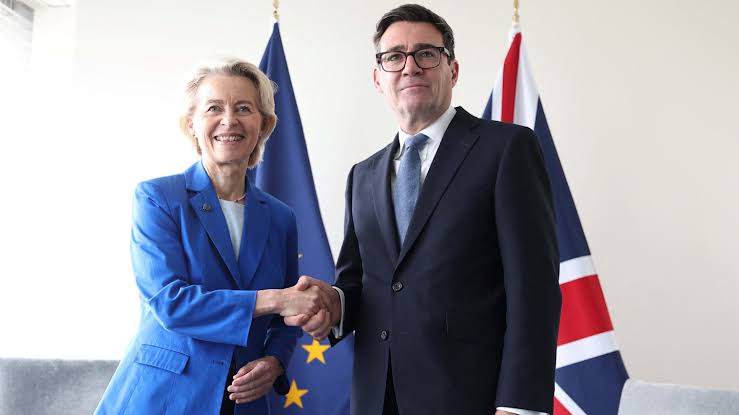
BRITAIN BUYS BACK A SLICE OF EUROPE AND CALLS IT A "LANDMARK": BURNHAM'S BREXIT RESET OPENS DOORS FOR EUROPE'S YOUTH WHILE AFRICA FACES TIGHTER VISAS, SHRINKING AID AND A NEW CARBON WALL
The United Kingdom and the European Union agreed a reset of their post-Brexit relationship at a summit in Brussels on Friday, November 20, 2026. Prime Minister Andy Burnham called it a "landmark agreement." The package covers three main areas: a food and drink trade deal on sanitary and phytosanitary (SPS) rules, a link between the British and European emissions trading systems, and a youth mobility scheme. That scheme will let 100,000 young people from each side live, work, study or travel in the other's territory for up to three years. British students will also rejoin the EU's Erasmus+ program from 2027. Burnham said the deals would add 0.5 percent to UK GDP, a boost of about £17 billion. There is a catch. The three sectoral deals have been signed, but they will not enter into force until a dispute over university tuition fees is settled. That issue was effectively kicked down the road after talks went to the wire. Burnham insisted "the deal is done" and rejected claims that it is a "fig leaf." He also admitted it is "probably the limit of what we can achieve in this parliament." European Council President António Costa said the EU wants "the closest possible relationship" with Britain, but he reminded London of the "indivisibility" of the single market's four freedoms. A 10-year plan for Britain is due next month. For Nigeria, Ghana and the rest of Africa, the reset raises sharp questions about UK trade rules, carbon border taxes, shrinking aid, tighter visa routes and scholarships, and where Africa fits as Britain turns back toward Europe.