
WORLD BANK PRESENTS NEW NIGERIA ECONOMIC ASSESSMENT, WARNS REFORM GAINS MUST REACH HOUSEHOLDS
The World Bank’s latest Nigeria Development Update projects average economic growth of about 4.4% a year through 2028, provided reforms continue and public-service delivery improves. Nigeria’s economy grew about 4.2% in the first half of 2026, up from 3.9% in 2025, while the Bank says state-government revenues increased roughly 93% in real terms between 2023 and 2025. It projects inflation could decline toward 12% by 2028, but warns that stronger revenues must now translate into better jobs, infrastructure, healthcare, education and living standards.
The World Bank has presented a new assessment of Nigeria’s economy projecting average annual growth of about 4.4 percent through 2028, but warned that stronger government revenues and improving macroeconomic indicators will matter little unless they are converted into better jobs, infrastructure, healthcare, education and living standards for households still carrying the cost of years of inflation and economic adjustment.
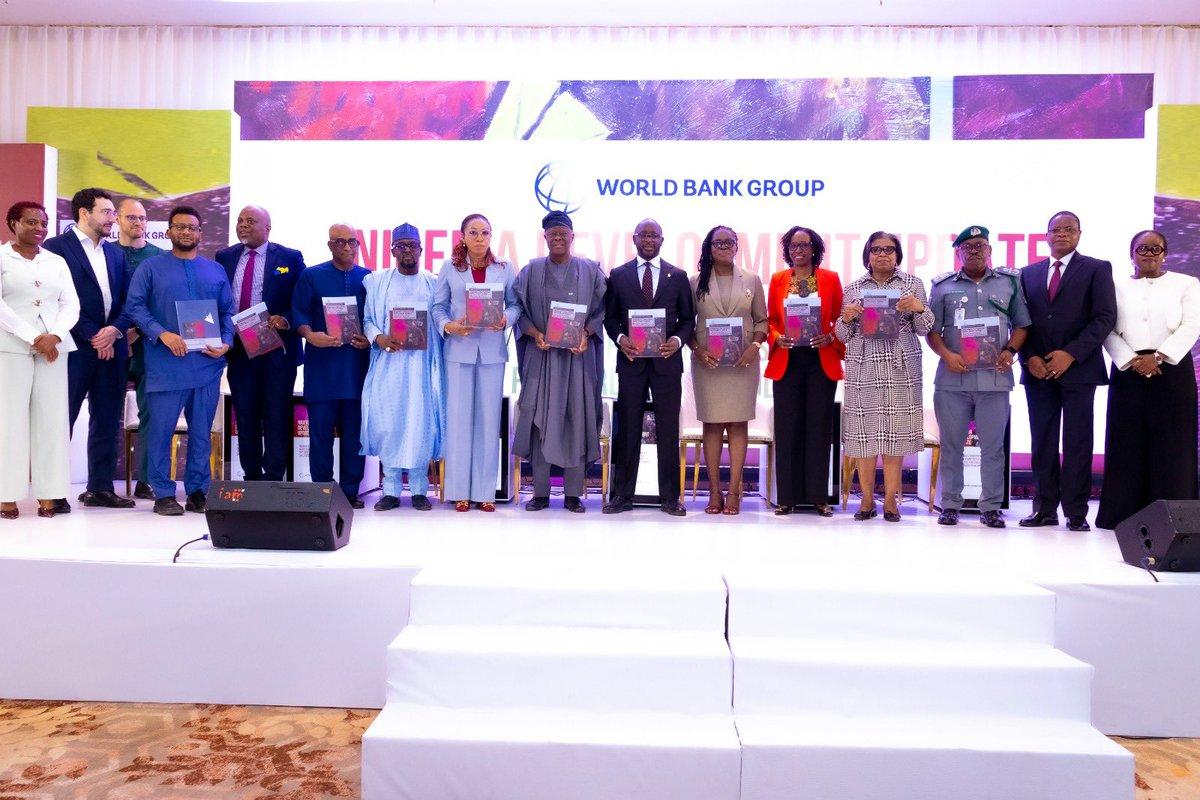
The latest Nigeria Development Update, presented in Abuja on Thursday under the theme Beyond the Federal Purse: How Higher Revenues Reshaped State Priorities, offers one of the clearest assessments yet of the next phase of Nigeria’s economic reform program. The Bank said the economy expanded by about 4.2 percent in the first half of 2026, compared with 3.9 percent growth in 2025, supported mainly by services and agriculture, while public revenues, the external position and other indicators have strengthened following major reforms introduced since 2023.
The assessment is cautiously more positive than many of the World Bank’s earlier reports on Nigeria, but its central message is not simply that the economy is improving. The institution said the challenge has shifted from macroeconomic stabilization to whether the gains are reaching ordinary Nigerians, especially after the removal of petrol subsidies, changes to the foreign-exchange system and years of high inflation weakened household purchasing power and pushed businesses into an environment of much higher operating costs.
Under the World Bank’s baseline outlook, Nigeria is expected to grow at an average rate of approximately 4.4 percent between 2026 and 2028 if reforms continue and government institutions improve the delivery of public services. Inflation, which has been one of the most damaging consequences of the economic adjustment period, is projected to decline toward 12 percent by 2028. That figure remains a forecast rather than a guaranteed outcome and depends on continued fiscal and monetary discipline, improved food production, a more stable exchange rate and the absence of severe new external shocks.
The Bank’s outlook is therefore conditional. It does not assume that Nigeria’s recent improvement will automatically produce faster long-term growth or lower poverty. It argues instead that the reforms have created stronger fiscal foundations, particularly for state governments, and that the quality of spending will now determine whether those improvements translate into a broader economic recovery.
One of the most striking findings in the report concerns state government finances. The World Bank estimates that revenues available to Nigeria’s states increased by approximately 93 percent in real terms between 2023 and 2025. That increase reflects a combination of higher federally distributed revenues and changes associated with the removal of petrol subsidies and foreign-exchange reforms, which increased the naira value of revenues flowing through the Federation Account.
The scale of that increase gives state governments significantly more fiscal space than they had before the reforms, but the World Bank said higher allocations by themselves should not be treated as evidence that citizens are better off. The report places considerable emphasis on what states do with the additional resources, arguing that spending should increasingly be directed toward infrastructure, education, healthcare, human capital, agricultural productivity and other investments capable of improving economic opportunity.
That is the significance of the report’s title. The Bank is effectively asking what happened after more money reached state treasuries. Nigeria’s federal structure means many of the services that directly shape household welfare are provided or heavily influenced by state governments, including basic education, primary healthcare, local roads, water systems, agricultural support and parts of the social protection system. Higher federal allocations therefore create an opportunity for states to improve services, but only if the money is used effectively.
The report also highlights the danger of measuring reform success exclusively through federal-level indicators. Nigeria can record stronger foreign reserves, increased public revenues, a more stable foreign-exchange market and faster GDP growth while millions of households continue to struggle with food prices, transport costs, rent, electricity expenses and weak employment opportunities. The World Bank’s argument is that economic stabilization is valuable because it creates the conditions for better outcomes, but it should not be confused with those outcomes themselves.
Finance Minister and Coordinating Minister of the Economy Taiwo Oyedele told the Abuja gathering that the government views stabilization as an intermediate stage rather than its final objective. He said the administration’s focus is moving toward stronger growth, private-sector investment and employment creation, and argued that Nigeria’s economy is now expanding faster than its population, a development that could help reduce poverty if it is sustained.
That distinction is important because Nigeria spent much of the previous decade experiencing growth rates that were either below or only slightly above population growth. When population expands at roughly the same pace as the economy, total GDP can increase without producing meaningful improvement in output or income per person. Faster growth must therefore be sustained for several years before it can produce a substantial improvement in living standards.
The World Bank’s 4.4 percent medium-term projection is stronger than the sluggish growth Nigeria experienced for much of the period following the 2016 recession and the COVID-19 shock, but it is still below the rates economists generally associate with rapid poverty reduction in a country with Nigeria’s demographic pressures. With a population exceeding 230 million and millions of young people entering the labor force, even growth above 4 percent may not generate enough employment unless it is concentrated in productive, labor-intensive sectors.
That is why the composition of growth matters as much as the headline figure. The first-half expansion in 2026 was led mainly by services and agriculture. Services are already the largest part of Nigeria’s economy and include telecommunications, finance, trade, transport, entertainment and professional activity. Some of those sectors can grow rapidly without creating employment on the scale needed to absorb Nigeria’s labor force, while agriculture employs large numbers of people but remains constrained by low productivity, insecurity, inadequate storage, weak transport networks and limited access to finance.
Manufacturing remains another critical part of the picture. Nigerian manufacturers have faced high energy costs, expensive credit, currency volatility and weak consumer demand in recent years. A stronger macroeconomic environment can reduce some of those pressures, but sustained industrial expansion will require more reliable electricity, better logistics, access to capital and policies that encourage investment without creating unstable trade rules.
The World Bank’s new assessment therefore places reform continuity alongside service delivery and productivity. The institution has consistently supported the broad direction of Nigeria’s removal of petrol subsidies and liberalization of the foreign-exchange system, arguing that the previous arrangements were fiscally expensive and created distortions. It has also repeatedly warned that the reforms imposed severe short-term costs and needed to be accompanied by social protection and measures that restore household purchasing power.
That remains one of the most politically sensitive aspects of the economic program. President Bola Tinubu removed the long-standing petrol subsidy at his inauguration in May 2023, triggering a sharp rise in fuel prices and transportation costs. Exchange-rate reforms subsequently led to a major depreciation of the naira, making imported goods and inputs significantly more expensive. Inflation accelerated sharply, eroding wages and savings even as the government argued that the changes were necessary to rebuild public finances.
The fiscal benefit was substantial. Money that had previously been absorbed by fuel subsidies and an artificially managed exchange-rate system became available through government revenue channels, particularly the Federation Account Allocation Committee system that distributes funds among the federal, state and local governments.
The World Bank’s estimate that state revenues rose by about 93 percent in real terms between 2023 and 2025 illustrates how significant that shift has been. An increase measured in real terms means the Bank adjusted for inflation, making the finding more consequential than a simple nominal increase caused by higher prices.
However, the institution said that fiscal improvement has not been matched uniformly by improvements in public services. Spending patterns vary substantially between states, and some subnational governments remain heavily dependent on federal transfers instead of expanding internally generated revenue. The quality of budget execution also differs widely.
That matters because higher allocations can be consumed quickly by wages, debt servicing, administrative costs or projects with limited economic impact. The World Bank is urging states to place more emphasis on investments that increase productivity and human capital rather than simply expanding recurrent spending.
Education is one of the most important areas. Nigeria continues to face major challenges with school enrollment, learning outcomes, teacher quality and infrastructure. Millions of children remain out of school, while many who attend school do not acquire literacy and numeracy skills at levels needed for a modern labor market. Higher state revenues give governments more room to rehabilitate schools, recruit teachers and improve instructional quality, but the Bank’s position is that spending must be linked to measurable outcomes rather than inputs alone.
Healthcare presents a similar challenge. State and local governments play an important role in primary healthcare, yet many Nigerians continue to pay a large share of medical expenses directly from household income. Better-funded public health systems could reduce that burden, particularly for lower-income households, but only if additional resources translate into functioning clinics, medicines, staff and reliable services.
Infrastructure is another major area where the World Bank believes improved public finances could have a direct effect on growth. Poor roads, unreliable electricity, inadequate transport systems and weak logistics raise the cost of doing business across Nigeria. Capital spending that removes those constraints can have a multiplier effect by reducing production costs and attracting private investment.
The government’s argument is that the painful reforms of the past three years are now beginning to create the fiscal space required for those investments. The World Bank’s latest assessment partly supports that claim, but it also sets a clear standard by which the next phase will be judged: whether higher revenues actually produce visible improvements.
The inflation outlook is especially important for households. The Bank projects inflation could fall toward 12 percent by 2028 from around 15 percent under its current assessment. That would represent a substantial improvement from the extremely high inflation experienced earlier in the reform period, but lower inflation does not mean prices return to their old levels. It means prices continue rising at a slower pace.
For Nigerians whose wages failed to keep pace with the earlier surge in living costs, that distinction is significant. Even if inflation falls to 12 percent, households may continue to feel poorer if incomes do not recover sufficiently. The real test is therefore not only disinflation but growth in real wages, employment and purchasing power.
The World Bank has made that point repeatedly in its Nigeria analysis. Macroeconomic stabilization can improve investor confidence, reduce exchange-rate uncertainty and make government finances more sustainable, but households experience the economy through jobs, food prices, transport costs and access to services rather than through reserve levels or fiscal ratios.
Poverty remains one of the most serious risks to the outlook. Nigeria has one of the world’s largest populations living in poverty, and the economic shocks of recent years have placed additional pressure on vulnerable households. The Bank expects poverty to decline gradually if growth remains strong and inflation moderates, but that outcome depends heavily on whether economic expansion creates jobs and whether governments improve social services.
A 4.4 percent average growth rate can help, but it is not sufficient on its own. Growth concentrated in capital-intensive sectors can raise GDP without creating large numbers of jobs. The government and the Bank therefore emphasize private-sector-led, employment-intensive growth.
Agriculture has significant potential in that regard because it employs millions of Nigerians and can support food processing, logistics, storage and export industries. Improvements in security, irrigation, rural roads and access to finance could raise productivity and reduce food inflation at the same time.
The energy sector is equally important. Nigeria remains a major oil and gas producer, but inadequate electricity supply continues to limit industrial activity. Businesses routinely spend heavily on generators and alternative power systems, reducing competitiveness. Reforms that improve power generation, transmission and distribution could therefore have a larger impact on productivity than many short-term fiscal measures.
The external environment also remains uncertain. Nigeria has benefited in 2026 from stronger oil prices associated with geopolitical tensions in the Middle East, which have supported export earnings and government revenue. That creates a near-term advantage for an oil-exporting country, but it also exposes the economy to renewed volatility.
Higher oil prices can improve government finances while simultaneously increasing domestic fuel and transportation costs if petroleum products are priced according to market conditions. Nigeria therefore experiences both benefits and risks from an energy shock.
The World Bank’s projections assume reforms continue and that global conditions do not deteriorate severely. A sharp fall in oil production, renewed currency instability, worsening insecurity or another global economic shock could weaken the growth outlook.
Nigeria’s debt position is another area requiring continued discipline. Public revenues have improved significantly compared with the severe fiscal pressures of earlier years, when debt-service costs absorbed an exceptionally high share of government income. The improvement gives government more space, but debt servicing remains a major claim on public resources.
That reinforces the Bank’s focus on spending efficiency. Raising revenue is only part of fiscal reform. Government must also ensure that borrowed money and current revenues generate economic or social returns high enough to justify the cost.
At the state level, the issue becomes even more important because some governments have increased borrowing as revenues have improved. More fiscal space can support productive investment, but it can also create incentives for politically attractive spending that does not improve long-term economic capacity.
The World Bank’s latest Nigeria Development Update therefore represents both an endorsement and a warning. It recognizes that the economy has moved away from some of the immediate instability that followed the major policy changes of 2023 and 2024, and it sees stronger growth potential through 2028. At the same time, it is explicitly challenging federal and state authorities to demonstrate that stabilization is producing a social dividend.
The state-revenue finding is particularly important because it changes the accountability debate. During periods of fiscal crisis, governors could point to inadequate federal allocations as a major constraint on roads, hospitals, schools and other services. With revenues now substantially higher in real terms, the Bank argues that citizens should expect more visible results from state budgets.
That does not mean every state has the same fiscal capacity. Oil-producing states receive derivation revenues, Lagos generates exceptionally large internal revenue, while many smaller states remain dependent on monthly federal allocations. Spending needs also differ based on population, geography, security and infrastructure gaps.
Nevertheless, the overall increase in resources gives governors greater responsibility for outcomes.
The federal government faces a parallel challenge. It must maintain policies that support macroeconomic stability while ensuring that the cost of reform does not permanently weaken consumer demand or push more households into poverty. Social protection, employment creation and public investment therefore become essential components of the next stage.
Private investment will also be critical because government spending alone cannot generate the scale of employment Nigeria requires. Investors need predictable regulation, functioning infrastructure, access to foreign exchange, lower financing costs and confidence that policy will not shift abruptly.
The relative stabilization of the naira and lower inflation could help create those conditions if sustained. High interest rates remain a major obstacle, however, particularly for smaller businesses that cannot borrow at affordable rates.
The Central Bank has been balancing the need to restrain inflation against the need to avoid choking off economic activity. If inflation continues declining, monetary conditions could eventually become less restrictive, providing greater support to investment.
That process will need to be gradual. Cutting rates prematurely could reignite inflation or weaken the currency, undermining the progress the World Bank says has been made.
The October update therefore presents a medium-term path rather than a declaration that Nigeria’s economic difficulties are over. Growth is stronger, government revenues have increased sharply and the external position has improved, but many households remain under pressure and the economy is still vulnerable to shocks.
The Bank’s 4.4 percent average growth projection through 2028 depends on reforms continuing, public services improving and investment expanding. Its inflation projection of around 12 percent by 2028 similarly assumes that fiscal, monetary and structural policies remain broadly consistent.
Finance Minister Taiwo Oyedele used the Abuja presentation to argue that the government understands that distinction, saying the objective is not stabilization for its own sake but shared prosperity. The administration’s claim will increasingly be judged against whether employment, incomes and basic services improve as the macroeconomic indicators strengthen.
The latest Nigeria Development Update therefore shifts the policy conversation from whether the reforms have increased government revenue to what governments are doing with that money. The World Bank’s finding that state revenues rose roughly 93 percent in real terms between 2023 and 2025 gives subnational governments considerably more room to invest, but it also reduces the credibility of explanations based solely on lack of funds where public services remain weak.
For households, the central question remains simpler. Nigerians who endured the inflationary consequences of subsidy removal, currency depreciation and higher transportation costs will measure the recovery by whether food becomes more affordable relative to income, whether jobs become easier to find, whether electricity and roads improve and whether public schools and hospitals deliver better services.
The World Bank’s assessment suggests Nigeria has made measurable progress in rebuilding parts of its macroeconomic foundation, but it is equally clear that the institution does not regard stabilization as the end of the reform story. The next phase must convert stronger revenues and faster growth into higher productivity, job creation and improvements in household welfare, particularly at the state level where much of the additional public money is now being received.
The outlook through 2028 is therefore more favorable than it was during the most disruptive period of the reforms, but it remains conditional rather than assured. Nigeria could average growth of about 4.4 percent and bring inflation closer to 12 percent if policy stability is maintained, investment expands and public spending becomes more effective. The unresolved question is whether those gains will move quickly enough from government balance sheets into the daily lives of Nigerians, and Thursday’s World Bank assessment makes clear that this, rather than the headline growth rate alone, will be the main test of the country’s economic recovery.