
WEST AFRICA'S FIRST TELEROBOTIC SURGERY PERFORMED ACROSS 500 KM IN NIGERIA
Nigeria's Redeemer's Health Village and its partners have performed what they describe as West Africa's first telerobotic surgery. A surgeon in Mowe, Ogun State remotely performed a right radical nephrectomy on a kidney cancer patient approximately 500 kilometres away at Nisa Premier Hospital in Abuja.
Nigeria has recorded what medical teams involved describe as West Africa's first telerobotic surgery, with a surgeon in Ogun State remotely operating on a patient approximately 500 kilometers away in Abuja.
The landmark procedure involved the removal of a kidney affected by a cancerous tumor and was performed through a collaboration involving Redeemer's Health Village, RoboMed Global and Nisa Premier Hospital.
Professor Obi Ekwenna Davis, a professor of urology and transplantation and co founder of RoboMed Global, controlled the robotic surgical system from Redeemer's Health Village in Mowe, Ogun State.
The patient was undergoing surgery at Nisa Premier Hospital in Abuja.
The procedure demonstrates how robotic technology and high speed communications could allow specialist surgeons to operate on patients hundreds or potentially thousands of kilometers away.
SURGEON OPERATED FROM OGUN STATE
The procedure was a telerobotic assisted right radical nephrectomy.
A radical nephrectomy involves removing a kidney affected by serious disease such as cancer.
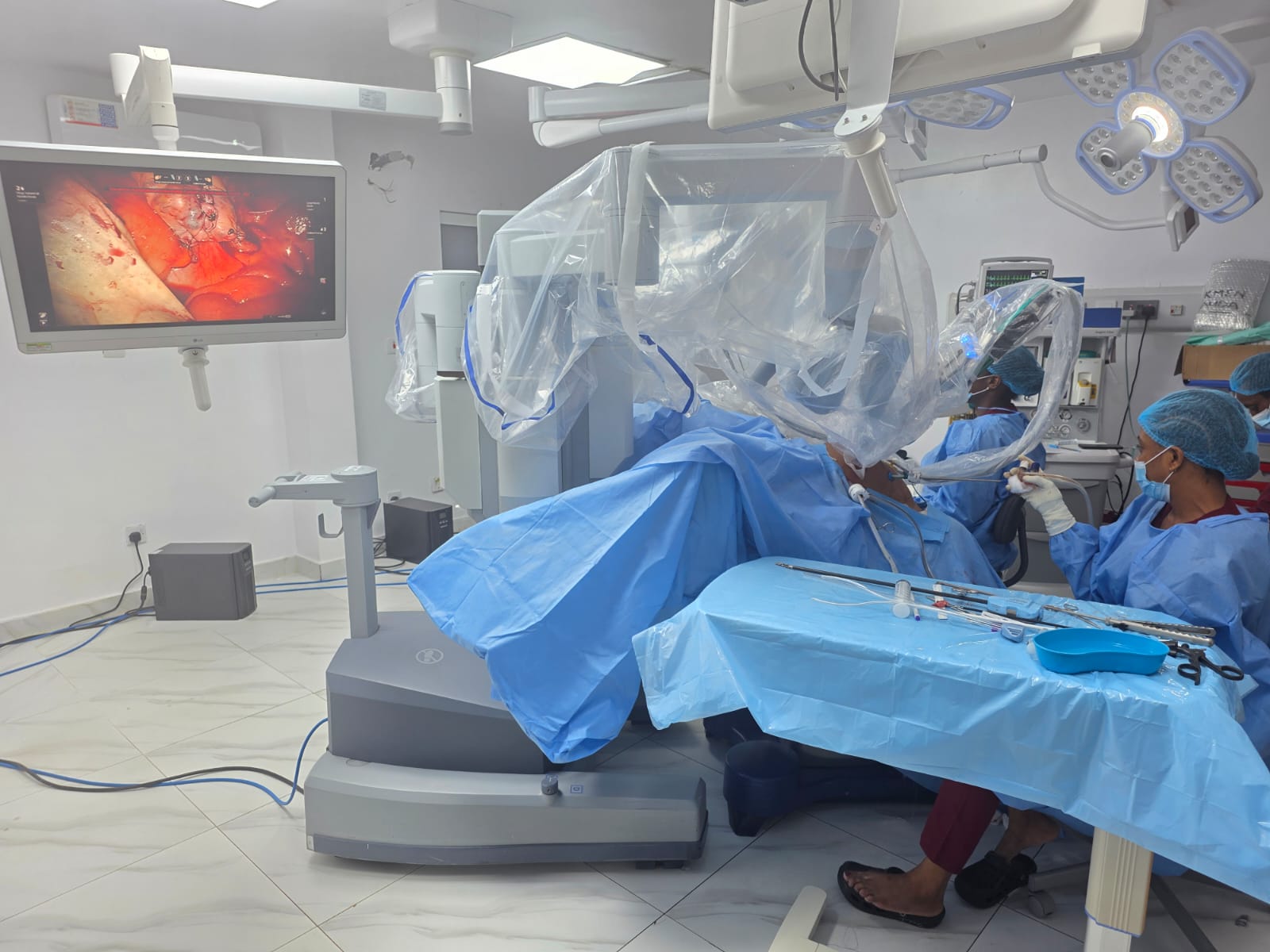
The surgeon operated from a Toumai robotic console at Redeemer's Health Village while robotic surgical equipment physically positioned with the patient in Abuja reproduced the surgeon's movements.
The two locations are approximately 500 kilometers apart.
The operation lasted about three hours, according to reports on the procedure.
Brief pauses were made during the surgery to ensure the equipment and communications systems were functioning properly.
PATIENT HAD CANCEROUS KIDNEY TUMOUR
The medical team said the patient had a cancerous kidney tumour requiring surgical treatment.
Professor Ekwenna Davis said the operation was successful and that the patient was in good condition afterwards.
The patient was expected to be discharged within approximately 24 hours following the procedure.
The development highlights one of the potential advantages of robotic surgery, which can allow surgeons to perform complex procedures with smaller incisions and greater precision than some conventional approaches.
INTERNET CONNECTED SURGEON TO PATIENT
Telerobotic surgery differs from conventional robotic surgery because the surgeon and patient do not need to be in the same location.
Instead, the surgeon controls a robotic system remotely through a communications network.
During the Nigerian procedure, the robotic system in Abuja was connected to the surgeon's control system in Ogun State using internet connectivity.
Every movement made by the surgeon at the console was transmitted to the robotic equipment operating on the patient in Abuja.
Reliable and extremely responsive communications are essential because interruptions or excessive delays could affect the surgeon's ability to safely control the robotic system.
TEAM DESCRIBES IT AS WEST AFRICA FIRST
Redeemer's Health Village described the procedure as the first telerobotic surgery performed in West Africa.
Chief Executive Officer Dr Adedamola Dada called the operation a major breakthrough for Nigerian healthcare.
The claim of being the first in West Africa has been made by the institutions involved in the procedure.
The development follows Nigeria's growing adoption of robotic surgery and other advanced medical technologies.
TECHNOLOGY COULD CONNECT PATIENTS WITH GLOBAL SPECIALISTS
The medical team says one of the most important possibilities created by telerobotic surgery is the ability to connect patients with specialist surgeons regardless of geographical distance.
In principle, a specialist could remain in another Nigerian city or even another country while operating on a patient through an appropriately equipped hospital.
That could have particular significance for countries where highly specialized surgeons are concentrated in a small number of major cities.
Dr Dada said the technology could eventually allow specialists outside Nigeria to perform complex procedures on patients inside the country without either the surgeon or patient having to make an international journey.
POTENTIAL TO REDUCE MEDICAL TOURISM
Nigeria has historically experienced substantial outbound medical travel as patients seek specialized treatment abroad.
Advanced robotic and remote surgery could potentially allow some procedures to be performed locally while still giving patients access to specialist expertise.
However, expanding the technology would require hospitals to invest in robotic equipment, communications infrastructure, technical support and trained medical personnel.
The medical team involved in the latest procedure said developing skilled personnel is now one of the most important priorities.
ROBOTIC SURGERY ACADEMY PLANNED
Redeemer's Health Village and its partners plan to expand training in robotic surgery.
The programmed aims to train at least 150 surgeons within the next two years.
Training would also be required for nurses, biomedical engineers and other professionals responsible for maintaining and supporting robotic surgical systems.
Dr Dada called for government support, including scholarships and sponsorship programmed, to help Nigerian medical professionals obtain the specialized training required.
ANOTHER ROBOTIC OPERATION PERFORMED
The telerobotic kidney cancer operation was not the only advanced procedure performed by the medical team.
Redeemer's Health Village also carried out a robotic assisted pyeloplasty on a 28 year old patient.
That procedure was intended to correct an obstruction affecting urine drainage from the kidney.
The hospital said urine began flowing normally after the obstruction was removed.
NEW POSSIBILITY FOR NIGERIAN HEALTHCARE
The successful remote operation represents an important demonstration of what could become possible as robotics and telecommunications increasingly converge in medicine.
The technology could potentially allow highly specialized surgeons to reach patients in locations where their expertise would otherwise be unavailable.
However, widespread adoption will depend on reliable communications infrastructure, trained personnel, appropriate regulation, equipment availability and robust patient safety systems.
For Nigeria, the procedure nevertheless represents a significant step towards delivering advanced specialist surgery across geographical boundaries without requiring the surgeon and patient to be in the same hospital.