
US APPROVES UP TO 414 MILLION DOLLARS FOR MAJOR URANIUM PROJECT IN NIGER
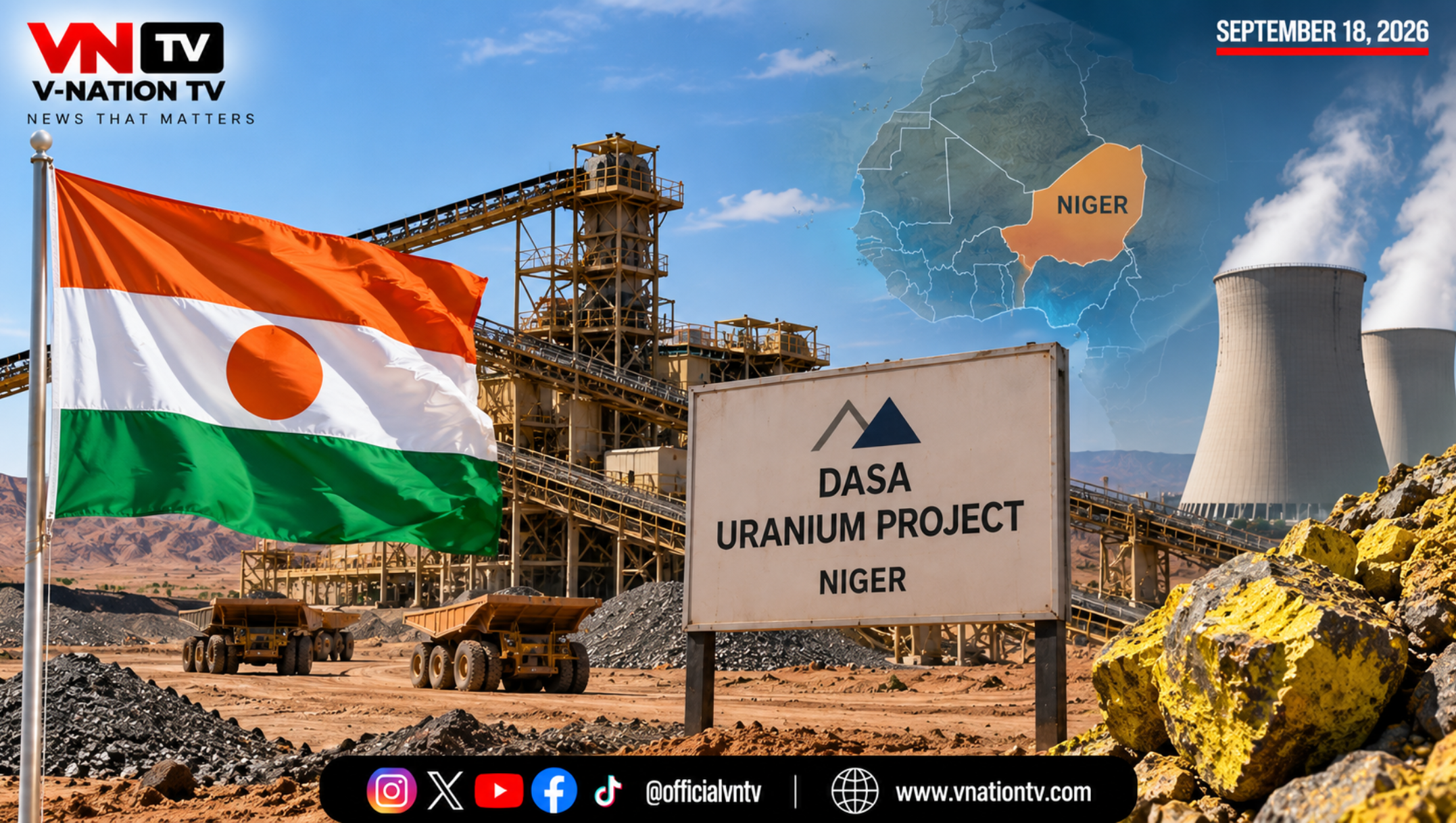
The US government has approved financing of up to $414.2 million for Global Atomic's Dasa uranium project in Niger. The investment marks a significant American commercial return to the country following the withdrawal of US troops in 2024 and comes as Washington seeks more secure uranium and critical mineral supply chains.
The United States government has approved financing of up to $414.2 million for the Dasa uranium project in Niger, marking a major American investment in the West African country's mining sector two years after US troops withdrew from the country.
The financing was approved by the US International Development Finance Corporation for Global Atomic's Dasa project, as Washington expands efforts to secure supplies of uranium and other minerals considered strategically important to the American economy and energy sector.
The investment also signals renewed commercial engagement between Washington and Niamey following a period of strained relations after Niger's 2023 military coup and the subsequent withdrawal of American forces in 2024.
DASA AMONG AFRICAS HIGHEST GRADE URANIUM DEPOSITS
The Dasa project is located in Niger's Agadez region, about 105 kilometres south of the established uranium mining town of Arlit.
Global Atomic describes Dasa as Africa's highest grade uranium deposit. The company's current mine plan projects production of about 68.1 million pounds of uranium oxide over 23 years.
Global Atomic owns 80 percent of the project, while the government of Niger holds the remaining 20 percent.
Development work has already been underway at the mine, including underground construction and work connected to the planned processing facility.
US SEEKS MORE SECURE URANIUM SUPPLIES
The financing comes as Washington places greater emphasis on securing critical mineral and nuclear fuel supply chains.
The DFC has said its investments in critical minerals are intended to strengthen US economic and national security while reducing vulnerabilities in strategically important supply chains.
Uranium has become increasingly important as the United States seeks to expand nuclear power generation and secure reliable fuel supplies.
Reuters reported that uranium produced from Dasa is expected to be supplied to US nuclear utilities, adding a strategic dimension to Washington's decision to support the project.
MAJOR INVESTMENT AFTER US TROOP WITHDRAWAL
The agreement is particularly notable because of the deterioration in relations between Niger and Western countries following the July 2023 military takeover.
US forces completed their withdrawal from Niger in 2024 after the country's military authorities ended a longstanding security partnership with Washington.
Niger had also strengthened relations with Russia while relations with former colonial power France deteriorated sharply.
Despite those geopolitical changes, Washington has continued pursuing economic engagement with Niger, with the Dasa financing emerging as one of the most significant examples.
PROJECT STILL FACES RISKS
The financing does not eliminate the substantial political, security and operational risks surrounding the project.
Niger and neighbouring Sahel countries continue to face attacks by armed groups, while political instability has complicated investment and transportation across the region.
Global Atomic has also considered alternative export routes through Algeria as instability affects traditional transportation options.
The DFC previously classified the Dasa development as a Category A project because uranium mining and processing can create significant environmental and social impacts requiring extensive safeguards.
Potential issues identified by the agency include radiation, mine safety, groundwater, waste management, community health and security.
The approved financing therefore represents a major step for the project, although funding remains subject to applicable conditions before full disbursement.
For Niger, successful development could strengthen a uranium industry that has long played an important role in the country's mining economy.
For Washington, the project provides another potential source of uranium at a time when access to secure nuclear fuel and critical mineral supplies has become an increasingly important part of US economic and energy strategy.