

Trump promises $5,000 dividend to every US adult if Republicans retain Congress
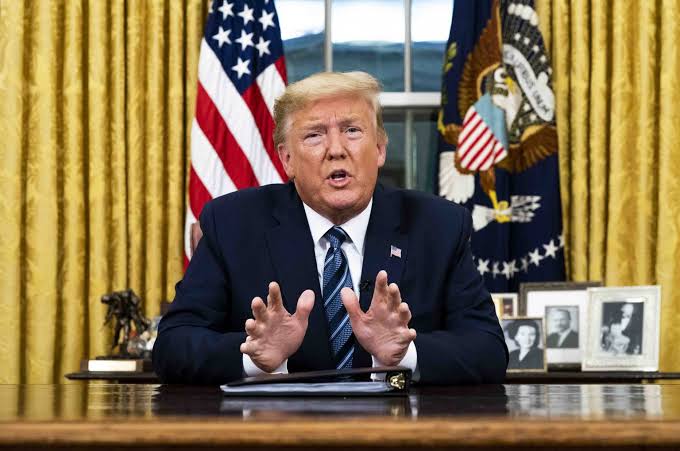
President Donald Trump has promised a $5,000 payment to every adult US citizen if Republicans retain control of both the House and Senate in November. The proposed Trump Dividend could cost approximately $1.35 trillion if paid to roughly 270 million adults. No funding mechanism or implementation plan has yet been announced.
DALLAS — US President Donald Trump has promised a $5,000 federal payment to every adult American if Republicans retain control of both the House of Representatives and Senate in the November midterm elections, unveiling an extraordinary proposal that could cost the federal government more than $1 trillion.
Trump announced what he called the “Trump Dividend” on Wednesday during the Republican Party's midterm convention in Dallas, Texas, putting the proposed direct payment at the centre of his pitch to voters ahead of the November 3 elections.
“If the Republicans win the Senate and House, because of our tremendous strength and success economically, I will issue a dividend to every adult citizen in the United States of America for $5,000,” Trump told supporters.
The president added that recipients would be required to spend the money inside the United States.
Trump provided no detailed funding mechanism, eligibility rules or timetable for distributing the proposed payments.
Reuters estimates that providing $5,000 to approximately 270 million American adults would cost around $1.35 trillion.
The proposal is therefore a campaign promise and not an existing federal payment programme.
Congressional approval likely required
Trump did not explain precisely how his administration would establish or finance the programme.
The Associated Press reported that such a payment would likely require congressional approval and could add substantially to federal spending.
The proposal also comes as the United States faces a federal budget deficit of nearly $1.8 trillion and a national debt that recently exceeded $40 trillion.
Vice President JD Vance appeared to offer additional details shortly after Trump's announcement, suggesting that wealthy Americans might not receive the payment.
Vance also suggested tariff revenue could potentially be used to finance the proposal.
However, the amount required to provide payments on the scale Trump announced would substantially exceed existing tariff revenue.
The White House had not provided additional details on the proposal immediately following Trump's speech.
Trump puts himself at centre of midterms
Trump used the Dallas convention to position himself prominently in Republican efforts to retain control of Congress despite not being on the ballot himself.
All seats in the House of Representatives and approximately one third of Senate seats will be contested in the November 3 elections.
Republicans currently control both chambers.
Trump urged supporters to approach the election as though they were voting for him personally.
“So I'm asking you to pretend that I'm on the ballot,” he told the convention.
The two day Dallas gathering is an unusual event for an American political party because national conventions are traditionally held during presidential election years.
Republicans organised the event as part of efforts to mobilise supporters and promote their candidates ahead of the midterms.
Proposal echoes earlier $5,000 payment idea
Trump's latest announcement follows an earlier proposal involving $5,000 payments to Americans.
In 2025, Trump expressed interest in a proposed “DOGE dividend” that would have returned some of the savings generated by the Department of Government Efficiency to taxpayers.
That proposal contemplated using a portion of government savings for payments but never developed into a nationwide $5,000 distribution programme.
The new Trump Dividend is different because the president has explicitly linked the proposed payment to Republicans retaining control of both chambers of Congress.
Trump compared the idea to a company distributing profits to its shareholders, arguing that the country's economic performance would allow Americans to receive a direct benefit.
Questions remain over funding
The financial details could become the most significant challenge facing the proposal.
At $5,000 for approximately 270 million adults, the programme could require around $1.35 trillion if implemented universally.
That would make it one of the largest direct federal payment programmes in US history.
Trump has not said whether the payments would be financed through tariff revenue, spending reductions, borrowing or another source.
There is also uncertainty over whether the final proposal would actually cover every adult citizen.
While Trump specifically promised the payment to every adult US citizen, Vance's subsequent comments raised the possibility that higher income Americans could be excluded.
Those details would need to be resolved before any programme could be implemented.
For now, no applications are open and no $5,000 payments have been authorised.
The announcement remains a campaign pledge tied to Republicans retaining control of both the House and Senate in November.
Whether the proposal advances beyond Trump's convention promise will depend on the election result and, if Republicans retain Congress, the legislative and funding decisions that follow.