TRUMP MEETS ASIAN ALLIES IN MANILA AT ASEAN SUMMIT BEFORE HEADING TO SHENZHEN FOR A HISTORIC FIRST-EVER TRILATERAL SUMMIT WITH XI JINPING AND VLADIMIR PUTIN
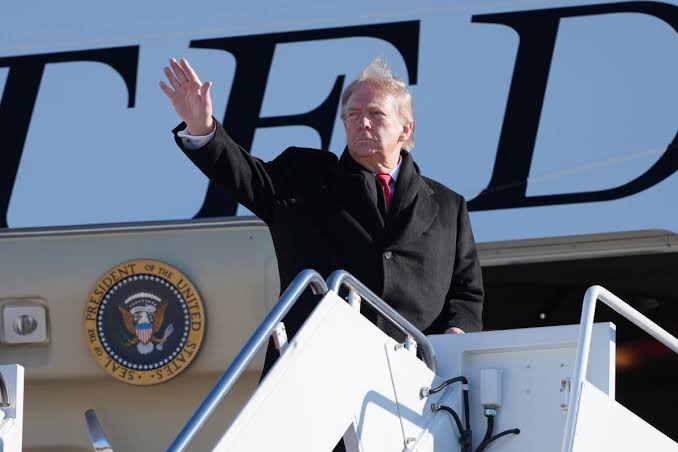
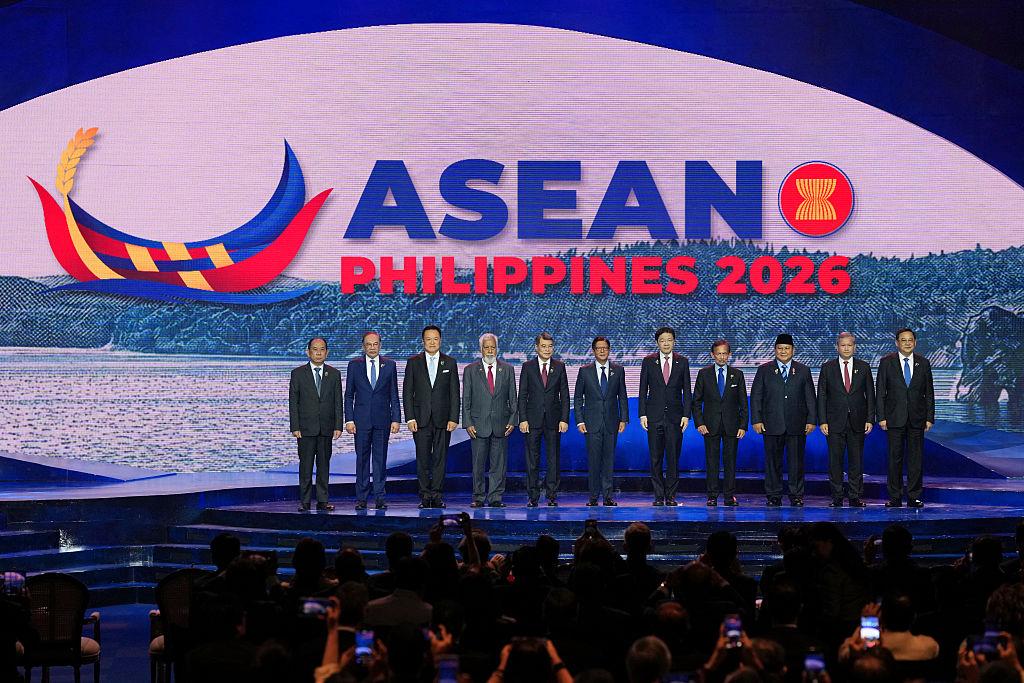
U.S. President Donald Trump is in Manila today, Tuesday, November 17, 2026, meeting with regional allies at the summit of the Association of Southeast Asian Nations (ASEAN), hosted by the Philippines as this year's ASEAN chair. Tomorrow, he travels to Shenzhen, China, for what is being described as a historic first-ever trilateral summit with Chinese President Xi Jinping and Russian President Vladimir Putin, held on the sidelines of the Asia-Pacific Economic Cooperation (APEC) summit. China says the three leaders will discuss "world peace." Trade and artificial intelligence are among the main items on the wider APEC agenda. The back-to-back events capture the tension at the center of Trump's foreign policy. In Manila, he faces allies and partners who rely on American power to balance China, especially in the contested South China Sea, where the Philippines has clashed repeatedly with Chinese vessels. In Shenzhen, he will sit down with the leaders of the two countries Washington has long treated as its chief strategic rivals. Protesters are expected to greet him in Manila, reflecting mixed public feeling about U.S. policy in the region. Trump met Xi at last year's APEC gathering in South Korea, where the two sides agreed to a truce in their trade war. He also met Putin in Alaska in August 2025 as part of his push to end the war in Ukraine. A three-way meeting goes much further. Supporters see a bold chance to ease great-power tensions, stabilize trade and push for peace. Critics warn of a deal struck over the heads of smaller nations, from Southeast Asia to Ukraine. The key questions are what, if anything, the three leaders agree to, and whether America's allies will still feel secure once the cameras leave Shenzhen.
President Donald Trump began his week in Asia surrounded by friends. He will end it sitting across the table from the two leaders Washington has spent years describing as its greatest rivals. Today, Tuesday, November 17, 2026, Trump is in Manila, the capital of the Philippines, meeting with regional allies at the summit of the Association of Southeast Asian Nations. Tomorrow, he flies to Shenzhen, China, for a meeting no American president has ever held: a three-way summit with Chinese President Xi Jinping and Russian President Vladimir Putin, set on the sidelines of the Asia-Pacific Economic Cooperation summit. Beijing says the leaders will discuss "world peace." Few phrases in diplomacy carry more promise, or more room for interpretation. Over the next 48 hours, the world will learn whether this trip marks a turning point in relations between the three biggest military powers on Earth, or a spectacle that leaves the hardest questions unanswered.
The Manila leg of the trip carries its own weight. The Philippines holds the rotating chairmanship of ASEAN in 2026, which makes it the host of this year's leaders' summit and the wider meetings that surround it. ASEAN brings together ten Southeast Asian nations, including Indonesia, Vietnam, Thailand, Malaysia, Singapore and the Philippines, home to roughly 680 million people and some of the fastest-growing economies in the world. Every year, the bloc's summit draws major outside powers, including the United States, China, Japan, India and Australia, to discuss trade, security and regional stability. For Washington, showing up matters. Southeast Asian leaders often judge American commitment by presence as much as by policy, and a president who skips the gathering sends a message that lingers long after the summit ends.
Trump's presence in Manila follows his attendance at last year's ASEAN summit in Kuala Lumpur, where he oversaw the signing of a peace accord between Thailand and Cambodia after deadly border clashes. That appearance helped ease fears in the region that the United States had lost interest in Southeast Asia. This year, the stakes are different. The Philippines is not only the host but one of America's oldest treaty allies in Asia, bound to Washington by a Mutual Defense Treaty signed in 1951. Under President Ferdinand Marcos Jr., Manila has moved closer to the United States than at any point in years. It has expanded American access to Philippine military bases under the Enhanced Defense Cooperation Agreement, stepped up joint military exercises and taken a far tougher public line against Chinese pressure at sea.
That pressure is the issue that hangs over every conversation in Manila. China claims most of the South China Sea, a vital waterway through which a huge share of global trade passes. Its claims overlap with those of the Philippines, Vietnam, Malaysia, Brunei and others. In 2016, an international tribunal in The Hague ruled that China's sweeping claims had no legal basis under the United Nations Convention on the Law of the Sea. Beijing rejected the ruling and has continued to expand its presence. Philippine vessels have faced water cannon attacks, ramming incidents and dangerous maneuvers by Chinese coast guard and maritime militia ships near Scarborough Shoal and Second Thomas Shoal. Filipino sailors have been injured. Each confrontation raises the same question in Manila: if a clash turns deadly, will the United States stand by its treaty commitments?
ASEAN has spent more than two decades trying to negotiate a code of conduct with China to manage these disputes. Progress has been painfully slow. The Philippines has made concluding that code a priority of its chairmanship, but deep differences remain over whether the code should be legally binding and how far it should limit Chinese activity. Southeast Asian leaders meeting Trump in Manila will want to hear that Washington's support is firm. They will also want reassurance that whatever he discusses with Xi tomorrow will not come at their expense. That is the delicate balance hanging over the entire trip. Trump arrives in Manila as an ally and leaves for Shenzhen as a negotiator with the very power many of his hosts fear most.
Not everyone in Manila is welcoming him. Protesters have prepared demonstrations around the summit, reflecting a long tradition of activism in the Philippines against U.S. military presence and American foreign policy. Some protesters object to the expanded U.S. basing arrangements, arguing they risk dragging the Philippines into a conflict between great powers. Others are angry about trade policies, including tariffs that have hit exporters across the region. Still others protest Trump himself and his administration's approach to immigration and global affairs. The demonstrations are a reminder that public opinion in allied countries is not simple. Many Filipinos see the United States as a protector against China. Many others see it as a powerful outsider whose interests do not always match their own.
Trade is the other thread running through the Manila meetings. Southeast Asian economies have been deeply affected by the tariff policies of Trump's second term. Countries such as Vietnam, Thailand and Malaysia have become major manufacturing hubs, partly because companies moved production out of China to avoid earlier rounds of tariffs. That shift turned them into prime targets for Washington's own trade pressure. Several ASEAN members negotiated trade agreements and frameworks with the United States over the past year in an effort to lower tariffs and protect access to the American market. Leaders in Manila will be looking for stability. Businesses across the region want to know what rules they will be trading under next year, and whether a deal between Washington and Beijing would open doors or close them.
Then comes Shenzhen. The choice of city is itself a statement. Four decades ago, Shenzhen was a small border town across from Hong Kong. In 1980, under Deng Xiaoping, it became one of China's first special economic zones, a testing ground for market reforms and foreign investment. Today it is a sprawling metropolis of more than 17 million people and one of the world's great technology centers, home to companies such as Huawei, Tencent, BYD and DJI. By hosting APEC there, Beijing is showcasing its economic transformation and its ambition to lead in the industries of the future. Xi has already begun greeting leaders in the city as delegations arrive for the summit. Trade and artificial intelligence are among the key items on the APEC agenda, and few places on Earth tell China's story on both topics as clearly as Shenzhen.
APEC brings together 21 member economies around the Pacific Rim, including the United States, China, Russia, Japan, South Korea, Australia, Canada, Mexico and several Southeast Asian nations. Together they account for roughly 60% of global economic output and close to half of world trade. The forum was founded in 1989 to promote free trade and economic cooperation in the region. In recent years, though, it has often served as a stage for great-power diplomacy rather than a place for sweeping trade deals. The most important meetings frequently happen on the sidelines, away from the official sessions. That is exactly where tomorrow's historic encounter will take place.
The trilateral meeting between Trump, Xi and Putin has no clear precedent. American, Chinese and Russian leaders have met in pairs many times, and they have sat in the same room at gatherings such as the G20. But a dedicated three-way summit among the leaders of the world's three most powerful militaries, and three of the five permanent members of the United Nations Security Council, is new ground. China says the leaders will discuss "world peace." That framing is broad enough to cover almost anything, from the war in Ukraine to tensions on the Korean Peninsula, nuclear arms control and conflicts in the Middle East. It also allows Beijing to present itself as a peacemaker and a central player in global affairs, a role Xi has been eager to claim.
Each leader comes to the table with different goals. For Trump, the meeting fits his long-standing belief that personal diplomacy between strong leaders can break deadlocks that traditional diplomacy cannot. He has repeatedly said he wants to be remembered as a peacemaker. He has made ending the war in Ukraine a central promise and has invested heavily in direct talks with Putin, including their summit in Anchorage, Alaska, in August 2025. He has also pursued a trade truce with Xi. When the two met at last year's APEC summit in South Korea, they agreed to pull back from an escalating trade war, with Washington easing some tariffs and Beijing making commitments on issues such as rare earth exports, fentanyl-related chemicals and purchases of American agricultural goods. A three-way meeting gives Trump a chance to reach for something larger: a framework for stability among the great powers that he can present as a historic achievement.
For Xi, hosting the meeting on Chinese soil is a major prize. It places China at the center of global diplomacy and shows that Beijing can bring Washington and Moscow together. China has presented itself as neutral on the war in Ukraine while maintaining a close partnership with Russia, buying Russian oil and gas and supplying goods that Western governments say have supported Moscow's war effort. Beijing denies providing lethal aid. A successful summit would strengthen Xi's claim that China is a responsible global power, not a threat. It could also help secure a more stable trading relationship with the United States at a time when China's economy faces slower growth, weak consumer demand and pressure from Western restrictions on advanced technology.
For Putin, the summit offers something Russia has sought since its full-scale invasion of Ukraine in 2022: a seat among the world's top powers, treated as an equal rather than an outcast. Western governments imposed heavy sanctions on Russia and worked to isolate it diplomatically. Sitting alongside the American and Chinese leaders sends a strong signal that those efforts have limits. Putin will likely use the meeting to push his view of European security and his conditions for any settlement in Ukraine. He has long argued that NATO's expansion threatened Russia and that any peace must address what Moscow calls its security concerns.
That is precisely what worries many observers. Critics fear that a three-way meeting among great powers could produce understandings that ignore the interests of smaller nations. Some have drawn comparisons with historic summits in which major powers carved out spheres of influence while others waited outside the room. Ukraine's leaders have repeatedly insisted that no deal about Ukraine can be made without Ukraine. European governments have pushed for a central role in any settlement affecting their continent. In Asia, Taiwan watches closely whenever American and Chinese leaders meet, wary of any shift in U.S. language or policy. Southeast Asian nations with claims in the South China Sea share similar fears. If great powers trade concessions with each other, smaller countries often pay the price.
Supporters of the meeting see it very differently. They argue that dialogue among the three most powerful nations is better than silence, especially at a time when the risk of conflict is high. Arms control is one example. The New START treaty, the last major nuclear arms control agreement between the United States and Russia, was set to expire in February 2026, leaving the world without binding limits on the two largest nuclear arsenals for the first time in decades. China's nuclear arsenal has also been growing quickly. Trump has said he wants talks on nuclear arms that include both Russia and China. A trilateral meeting is the most natural setting for such a conversation. Even modest progress, such as agreement to begin formal talks, would matter a great deal.
Artificial intelligence adds another layer of urgency. The United States and China are locked in fierce competition over advanced chips, AI models and the technology that powers them. Washington has imposed export controls on cutting-edge semiconductors and chipmaking tools, while Beijing has poured resources into building its own capabilities. AI is reshaping economies, militaries and information systems at a rapid pace. Experts across the political spectrum have warned about the risks of AI in military decision-making, especially in the command and control of nuclear weapons. In 2024, the American and Chinese presidents at the time affirmed that humans, not machines, should control decisions on nuclear weapons use. Building on that kind of understanding, and possibly bringing Russia into it, would be a meaningful step. AI's place on the APEC agenda also reflects the economic side of the issue, from regulation and data flows to the impact on jobs across the region.
Trade will run through every conversation in Shenzhen, just as it does in Manila. The truce reached between Washington and Beijing last year eased tensions, but it did not resolve the deeper disputes over technology, industrial subsidies, market access and supply chains. Businesses around the world, including many across Southeast Asia, want predictability above all. A more stable U.S.-China trade relationship could lower costs, calm markets and support growth. A breakdown could send shockwaves through global supply chains. Russia's role in trade talks is more limited, given the sanctions it faces, but any discussion of Ukraine inevitably touches on sanctions relief, energy markets and the future of Russian exports.
There are reasons for caution about what the summit will actually produce. Grand meetings often deliver warm words and memorable images rather than concrete agreements. The interests of the three leaders overlap in some areas but clash sharply in others. The United States and China remain strategic competitors in the Pacific. Russia and the West remain deeply divided over Ukraine. China and Russia have declared a partnership with "no limits," yet they too have different priorities and do not fully trust each other. A joint statement on "world peace" could prove so broad that it commits no one to anything. The real measure of success will be whether specific follow-up steps emerge, such as formal arms control talks, a credible path toward a ceasefire in Ukraine or clear rules on trade and technology.
For America's allies, the trip will be judged on a simple test: did Trump strengthen their security, or did he trade it away? Leaders in Manila, Tokyo, Seoul, Canberra and across Europe will study every word that comes out of Shenzhen. If Trump returns with commitments that ease tensions while standing firmly behind allies, the trip could be remembered as a diplomatic success. If the summit appears to grant Beijing or Moscow concessions at the expense of partners, it could shake confidence in American commitments for years to come. Allies have watched closely throughout Trump's second term as he has pressed them to spend more on defense, renegotiated trade terms and pursued direct deals with rivals. Many have adapted by hedging their bets, building closer ties with each other and expanding their own military capabilities.
The order of the trip may itself carry a message. By stopping first in Manila, Trump gave allies the first word. He met them face to face before sitting down with Xi and Putin, a sequence that diplomats often use to signal priorities and reassure partners. Whether that reassurance holds will depend on what follows. Words spoken in Manila today will be weighed against agreements reached in Shenzhen tomorrow.
The coming days could shape the direction of global politics well into the next decade. Three leaders who command vast militaries, enormous economies and the world's largest nuclear arsenals will share one table, in a city that symbolizes China's rise, under a banner of peace. Outside the room will be Southeast Asian nations navigating a contested sea, Ukrainians living through a long and brutal war, Taiwanese watching every word, and businesses and workers across the Pacific hoping for stable trade. Trump has said many times that he can make deals no one else can. Shenzhen will put that claim to its biggest test yet. The world will soon learn whether "world peace" becomes a real agenda or remains a slogan.