
TRUMP BACKS POSSIBLE US DIESEL EXPORT BAN AS FUEL PRICES HIT RECORD HIGHS
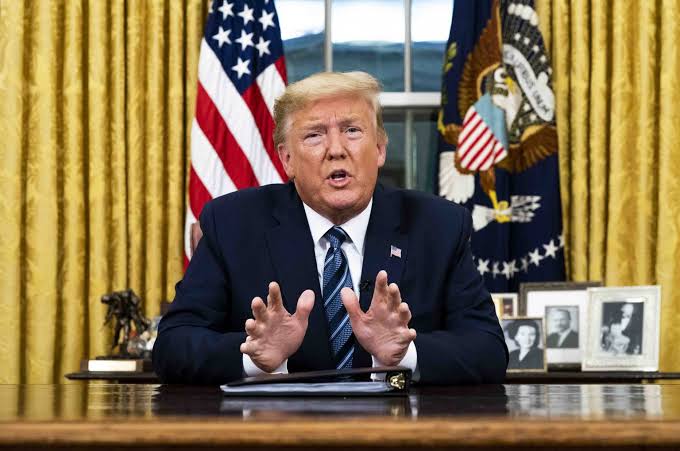
President Donald Trump says he supports restricting US diesel exports as record fuel prices put increasing pressure on American households, farmers and businesses. The administration is studying whether a full or partial restriction could work, although senior energy officials have warned that such a policy could have unintended consequences.
NEW YORK, President Donald Trump said Tuesday that he supports the idea of restricting US diesel exports as his administration searches for ways to bring down record fuel prices ahead of November's midterm elections.
Speaking to reporters on the sidelines of the United Nations General Assembly in New York, Trump said he had already raised the possibility of keeping more American diesel inside the United States.
Trump said the United States produces significant quantities of diesel and indicated that restricting exports could help increase domestic supplies.
Treasury Secretary Scott Bessent, speaking alongside the president, confirmed that the administration is examining the proposal.
Bessent said officials are studying whether restricting exports is feasible and whether a full or partial ban could work.
The proposal comes as diesel prices have climbed to record levels in the United States and Europe following severe disruptions to global energy supplies linked to the wars in Iran and Ukraine.
US retail diesel prices exceeded $6 per gallon this month for the first time, according to Reuters, creating significant pressure on industries that depend heavily on the fuel.
Diesel plays a critical role across the American economy, powering trucks, agricultural machinery and other equipment used in transportation, manufacturing and farming.
US diesel inventories have also fallen sharply. Reuters reported that inventories dropped to 107.9 million barrels by September 11, the lowest level recorded for that time of year since records began in 1982.
The situation has prompted several Republican lawmakers and candidates to call for restrictions on exports in an effort to keep more fuel available domestically.
The issue has taken on additional political significance ahead of the November 3 midterm elections, with high energy costs becoming an economic concern for voters and candidates.
However, restricting diesel exports carries significant risks.
Interior Secretary Doug Burgum warned earlier this month that banning US oil or fuel exports would be unlikely to reduce prices and could provoke retaliatory measures from trading partners.
Burgum specifically warned that states such as California, which depend partly on imported energy supplies, could be vulnerable if other countries responded by restricting their own exports to the United States.
Energy analysts and industry groups have also cautioned that restricting exports could disrupt refinery economics and global fuel flows, potentially producing different price effects across regions of the United States.
The consequences would also extend beyond American borders.
The United States is a major supplier of diesel to international markets, including Europe and Latin America. Removing or substantially reducing those supplies at a time of already tight global inventories could place additional pressure on international fuel prices.
The debate comes during an unusually severe global diesel shortage.
Wars involving Iran and Ukraine have disrupted supplies from major producing regions, while inventories in the United States and Europe have fallen to historically low levels.
Trump also said Tuesday that he planned to discuss Ukrainian attacks on Russian refining facilities during his meeting with Ukrainian President Volodymyr Zelenskiy, acknowledging that damage to Russian refineries was also affecting diesel markets.
For now, no US diesel export ban has been announced.
The administration is examining the proposal, leaving unanswered whether any eventual measure would involve a complete prohibition, temporary restrictions or more limited controls designed to increase domestic supplies without severely disrupting international markets.