THREE CHILDREN AND TEACHER KILLED IN OREGON ELEMENTARY SCHOOL SHOOTING, 16 YEAR OLD SUSPECT SHOT DEAD BY BYSTANDER
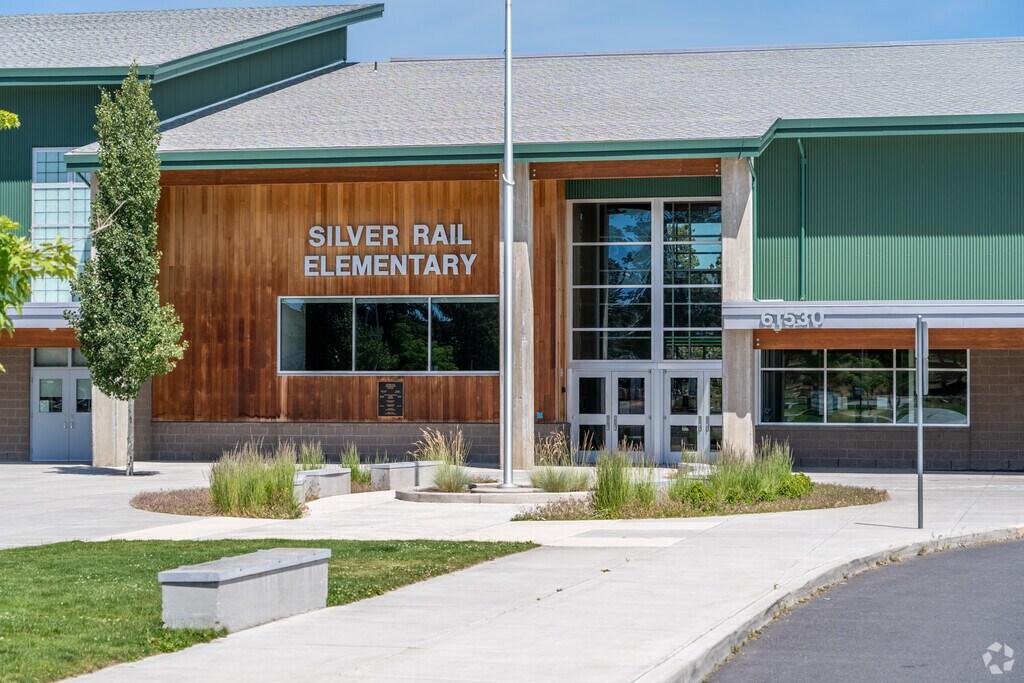
Three children aged 5, 8 and 11 and one teacher were killed in a shooting at Silver Rail Elementary School in Bend, Oregon, on October 15. A 7-year-old student and a 54-year-old teacher were critically injured. Police say the suspected shooter, a 16-year-old Bend resident, forced his way into the school by firing at locked doors and was then fatally shot by a community member who followed him inside. Authorities have not yet established a motive or confirmed the teenager’s connection to the school. CBS News
Three children and a teacher have been killed in a shooting at Silver Rail Elementary School in Bend, Oregon, after a 16-year-old gunman forced his way into the building by firing at locked doors and opened fire before being fatally shot by a community member who followed him inside, according to police. The children killed were ages 5, 8 and 11, while a 7-year-old student and a 54-year-old teacher were critically injured and transported to St. Charles Medical Center in Bend. The suspected shooter, identified only as a 16-year-old Bend resident because he was a minor, died at the scene, bringing the total number of people killed in the incident to five when the attacker is included.
The shooting unfolded shortly before 1 p.m. local time on Thursday, October 15, in a quiet residential area of Bend, a central Oregon city located southeast of Portland. Bend Police Chief Mike Krantz said the first emergency call came at 12:59 p.m. from a person sitting in a vehicle who reported that someone armed with a long gun had fired at them multiple times. Within minutes, dispatchers began receiving dozens of additional calls reporting that an armed person had entered Silver Rail Elementary School and was shooting inside the building.
The school was placed on lockdown at approximately 1:01 p.m., and the first police officers arrived about a minute later. Krantz said investigators believe the teenage shooter gained access by firing at locked school doors rather than entering through an unsecured entrance. Authorities have not publicly disclosed exactly which entrance was breached or how far the gunman moved through the building before he was confronted.
By the time officers reached the scene, another person had already intervened. According to Krantz, a community member saw the suspected shooter entering the school, followed him inside and confronted him. The community member then fatally shot the teenager before police officers reached the gunman. Authorities have not publicly identified the person who intervened, and officials have released few details about the confrontation itself, including the exact location inside the school where it occurred or the type of firearm used by the community member.
Police said the intervention likely prevented further loss of life, although investigators are continuing to reconstruct the precise sequence of events. Oregon Governor Tina Kotek publicly acknowledged the community member’s actions, saying the person intervened in a moment of extraordinary danger while also carrying what she described as a heavy emotional burden. Law enforcement officials have not suggested that the person who shot the teenager is facing criminal charges, but the shooting remains part of the broader investigation.
After entering the school, officers found three children and a teacher dead. A 7-year-old child and another teacher, aged 54, were critically injured and rushed to St. Charles Medical Center. Their identities and the identities of the four people killed had not been publicly released in the immediate aftermath, as authorities worked to notify families and protect the privacy of those involved.
Silver Rail Elementary serves more than 400 students and is part of the Bend-La Pine Schools district. Following the attack, children and staff were evacuated and taken to Journey Church, where officials established a reunification center for families. Hundreds of parents and relatives gathered there waiting for information, while police controlled access and worked to account for students and school employees.
The district canceled classes, sports and other activities across Bend schools for Friday as the community began dealing with the aftermath. Superintendent Steven Cook described the shooting as an unimaginable tragedy and said the district’s immediate priorities were supporting affected students and staff and assisting law enforcement. Mental health professionals were also mobilized to help children, families and school employees cope with the trauma.
Investigators have not announced a motive. Police said they were still trying to determine whether the 16-year-old had any previous connection to Silver Rail Elementary, whether he had attended the school in the past or whether any of the victims were specifically targeted. Authorities have also not publicly identified the teenager, citing the ongoing investigation and his status as a minor.
Police initially described the weapon as a long gun, a broad category that includes rifles and shotguns. Multiple law enforcement sources later told CBS News that the gun was believed to have been a shotgun, although police had not formally released a full firearms report at the time of the latest updates. Investigators are expected to examine where the weapon came from, how the teenager obtained it and whether any adults could face legal scrutiny depending on what those findings show.
Authorities also declined to say exactly how many shots were fired or how long the attack lasted. The timeline released by police indicates that the sequence moved extraordinarily quickly, from the first 911 call at 12:59 p.m. to the school lockdown at 1:01 p.m. and the arrival of officers at approximately 1:02 p.m. The suspected shooter had already been fatally wounded by the community member when officers began securing the building.
The rapid response was notable because Bend police had conducted active shooter training in recent months, according to local reporting. Officers spent hours after the attack clearing classrooms, searching the school and surrounding grounds and ensuring there was no second assailant. A large law enforcement presence remained around the campus into the evening as investigators marked evidence and processed the scene.
Federal agencies also joined the investigation. FBI Director Kash Patel said personnel from the FBI’s Portland field office were assisting local law enforcement, while other federal and state agencies provided technical and investigative support. The involvement of federal authorities is standard in major school shootings and can include firearms tracing, digital forensics, behavioral analysis and evidence processing.
One of the central unanswered questions is whether the shooting had been planned in advance. Investigators are expected to examine the teenager’s phone, computer, online activity, social media accounts and communications with friends or family members. They will also likely look for any written statements, threats or warning signs that could clarify motive and determine whether anyone else knew of the plan before the attack.
Authorities will also examine whether the suspected shooter had previous interactions with law enforcement, school officials or mental health services. No verified information released so far establishes such a history, and officials have cautioned against drawing conclusions from online speculation while the investigation is still developing.
The fact that the teenager reportedly shot through locked doors is expected to become a major part of the security review. Schools across the United States have invested heavily in controlled access systems, lockdown procedures, reinforced doors and active shooter training, but the Bend attack illustrates the limitations of security measures when an armed attacker is willing to fire directly through or around barriers.
At the same time, investigators will examine whether the locked entrance slowed the shooter enough to reduce casualties. The minutes between the first shots and the intervention by the community member appear to have been extremely limited, and authorities may eventually determine that security features and rapid action prevented the attack from becoming even more deadly.
The role of the armed bystander has already drawn national attention and is likely to become part of wider debate over armed civilian intervention during mass shootings. Supporters of expanded lawful gun carrying have pointed to the incident as evidence that armed citizens can stop active shooters before police arrive, while gun control advocates argue that the larger issue remains preventing teenagers from gaining access to firearms in the first place.
Those competing arguments are likely to intensify, but the investigation has not yet established enough detail to resolve broader policy questions from this single incident. Authorities have not said how the community member obtained access to the school, what legal status applied to the firearm he used or whether he had any formal connection to the campus. Police have focused instead on the immediate fact that he confronted and stopped the suspected shooter.
The attack is also likely to renew scrutiny of firearm storage laws in Oregon, particularly if investigators determine that the gun used by the 16-year-old belonged to a parent or another adult. Oregon law includes requirements related to safe firearm storage and restrictions on access by minors, but whether any of those provisions apply will depend entirely on how the teenager obtained the weapon.
At this stage, police have not announced charges against any other person. They have also not confirmed reports circulating online about the suspect’s family, background or possible ideological motives. Any such claims remain unverified unless supported by law enforcement findings.
The Bend shooting adds to a long history of deadly attacks at U.S. schools and is particularly devastating because the victims included very young children. The ages of the three children killed, 5, 8 and 11, place the attack among the most emotionally difficult school shootings in recent years and have already prompted renewed expressions of grief from political leaders, educators and gun violence prevention groups.
Governor Kotek ordered flags at Oregon public institutions to be flown at half-staff on Friday in honor of the victims. She also thanked first responders, school staff, families and the community member who intervened, while emphasizing that schools should be places where children can learn without fear of violence. Bend Mayor Melanie Kebler similarly described the attack as a profound loss for the city and said the community was struggling to process what happened.
Hundreds of people gathered at a candlelight vigil in Drake Park on Thursday evening, only hours after the shooting. Families, clergy members, children and other residents came together to mourn, sing and pray, while flowers, balloons and candles began appearing near the school. Bend is a relatively small city, and the attack has affected a community where many residents are closely connected through schools, neighborhoods and local organizations.
The immediate focus remains on the two survivors who were critically injured. Medical officials had not released detailed updates on their conditions beyond saying they were receiving care at St. Charles Medical Center. Their recovery is likely to remain one of the most closely watched developments in the coming days.
Police are also expected to release additional information once families have been notified and investigators have completed initial interviews. Authorities may eventually identify the victims publicly, but officials have so far prioritized privacy and family notification over immediate disclosure.
The teenage suspect’s identity may also be released later depending on Oregon law, investigative decisions and the interests of the families involved. Because he was 16, authorities face additional privacy considerations even though he died at the scene.
Investigators will be under pressure to explain how the attacker obtained the weapon, why he chose Silver Rail Elementary and whether warning signs were missed. Those questions are likely to dominate both the criminal investigation and the public debate that follows.
Another important issue will be the exact role of school security protocols. The school went into lockdown within roughly two minutes of the first emergency call, suggesting staff responded quickly. Investigators may review whether classroom doors were secured, how students were sheltered and whether internal communication systems functioned as designed.
The district is likely to conduct its own review separate from the police investigation. Such reviews typically examine emergency procedures, physical security, communication with families and coordination with law enforcement. The purpose is not only to understand what happened but to identify whether changes could reduce risk in the future.
The attack also underscores the limitations of focusing exclusively on response time. Bend police arrived within minutes, but the shooting had already produced multiple fatalities before officers entered the building. That reality is likely to intensify discussion about prevention, firearm access, threat assessment and early intervention.
Federal officials and gun violence researchers have long emphasized that many school shootings involve warning behaviors, threats or access to weapons before an attack. Whether any of those patterns apply here remains unknown and should not be assumed until investigators release evidence.
The role of social media will also be examined. In previous school shootings, false information about suspects, motives and casualty numbers has spread rapidly online before authorities could verify facts. Bend police and local media have urged residents to rely on official updates and avoid circulating unconfirmed claims.
That caution is especially important because the suspect was a minor. Misidentifying a teenager or falsely linking another person to the attack could cause serious harm while also interfering with the investigation.
For the families of the victims, the broader political debate may feel distant from the immediate reality of loss. Three families lost young children who went to elementary school on Thursday morning, while a teacher was also killed and another teacher and child remain critically injured.
The school community will now face a long recovery process. Students who survived may have witnessed or heard gunfire, evacuation procedures or the immediate aftermath of the attack. Teachers and staff will also have to process the trauma while eventually preparing for students to return.
Mental health professionals are expected to remain involved for an extended period. Research on school shootings shows that psychological effects can continue long after physical injuries have healed, particularly for children who experienced lockdowns, saw victims or feared they would be killed.
The decision to close schools across the district on Friday gives families and staff time to process the immediate shock, but it does not resolve the larger challenge of reopening Silver Rail Elementary. District leaders will need to determine when the building can safely be returned to educational use and how to support students who may be frightened to go back.
Law enforcement evidence processing could also keep parts of the campus closed for some time. Investigators need to document bullet impacts, shell casings, entry points, blood evidence and other physical details before the scene can be released back to school officials.
The fact that the gunman forced entry through locked doors may also lead to examination of whether stronger ballistic resistance should be considered for school entrances. Such upgrades can be expensive and are not universally used, especially in elementary schools.
At the same time, security experts generally caution that no single physical measure can eliminate the risk of a determined attacker. Layered security involving controlled access, threat assessment, staff training, communication systems and responsible firearm storage is typically considered more effective than relying on one barrier.
The Bend attack is likely to become another case studied in national debates over school safety and gun policy, particularly because of the unusual intervention by an armed community member. Different groups will likely emphasize different aspects of the incident, from the speed of the intervention to the teenager’s access to a weapon.
For now, investigators are resisting broad conclusions and focusing on reconstructing events. Police have said the motive remains unknown, the teenager’s connection to the school is unclear and the precise origin of the firearm has not been publicly confirmed.
Those unanswered questions are central to understanding the attack. Without them, it is impossible to know whether the school was chosen deliberately, whether particular victims were targeted or whether the shooting was part of a broader grievance unrelated to Silver Rail itself.
The FBI’s involvement may help accelerate the digital and firearms investigation. Federal agents can trace weapon sales, examine electronic devices and coordinate with online platforms where necessary, while local police continue interviewing witnesses and families.
The community member who shot the attacker is also likely to be interviewed extensively as a key witness. Authorities will need a precise account of what he saw outside the school, why he decided to follow the teenager inside and what happened during the confrontation.
Police have so far described his actions positively, and Governor Kotek publicly praised the intervention. Even so, investigators will still document the shooting as part of the overall case, including the number of shots fired and the location of the confrontation.
The timeline already shows how quickly the incident unfolded. The first 911 call came at 12:59 p.m., the school was locked down by 1:01 p.m. and officers arrived at approximately 1:02 p.m. By then, the suspected shooter had already been confronted and fatally shot.
That compressed sequence suggests the entire active phase of the attack may have lasted only minutes. Yet within that brief period, four people were killed and two critically injured, illustrating how rapidly school shootings can produce catastrophic consequences.
The current confirmed death toll excludes the shooter when describing victims. Three children and one teacher were killed by the attacker. Including the suspected gunman, five people died at the school.
Authorities will continue releasing information as the investigation develops, but the main facts are now clear. A 16-year-old Bend resident armed with a long gun shot his way into Silver Rail Elementary, killed three children and a teacher and critically injured two others before being stopped by a community member.
The next phase will focus on motive, firearm access and whether warning signs existed before the attack. Investigators will also examine how the school’s security procedures functioned and whether any changes are needed across the Bend-La Pine district.
For the Bend community, the immediate priority remains supporting the families of the victims and the two people still fighting for recovery in hospital. The police investigation may eventually provide answers about why the shooting happened, but those findings will not change the scale of the loss already suffered by children, educators and families in a school community that began Thursday as an ordinary day and ended in tragedy.
The case will also continue to draw national attention because it combines several of the most contested issues in the American debate over gun violence, including access to firearms by minors, school security, police response and armed civilian intervention. Those debates will develop in the days ahead, but the factual foundation remains narrower and more immediate: four victims were killed, two were critically injured, the suspected shooter is dead and investigators are still trying to understand what led a 16-year-old to attack an elementary school.