
TAIWAN RECEIVES FIRST NEW F 16V FIGHTER JETS AMID CHINA TENSIONS
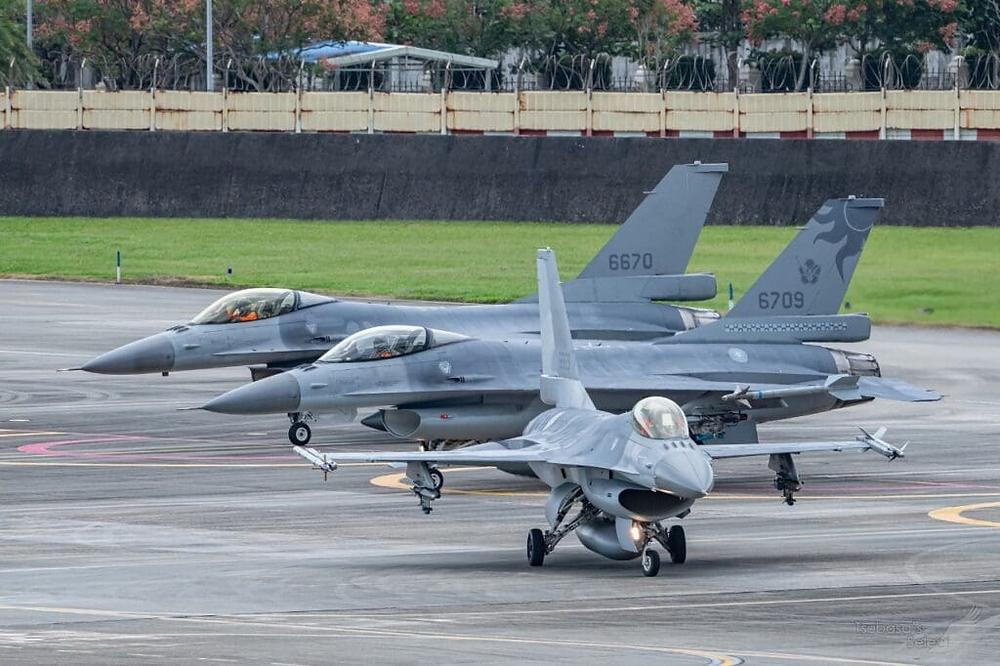
Taiwan is receiving the first two aircraft from its long delayed order of 66 new F 16V Block 70 fighter jets, marking the beginning of deliveries under a major United States arms deal approved in 2019. The first pair is expected to arrive at Chihhang Air Base in Taitung on Friday, October 2, after travelling from the United States through Hawaii. The approximately $8 billion programme is intended to strengthen Taiwan's air defence capabilities as China's military continues regular air and naval operations around the island.
Taiwan is set to receive its first newly built F 16V Block 70 fighter jets on Friday, beginning a long awaited delivery programme that will significantly expand the island's combat aircraft fleet at a time of sustained military pressure from China.
The first two aircraft from Taiwan's order of 66 new fighters are expected to land at Chihhang Air Base in Taitung on October 2.
Their arrival represents an important milestone for an approximately $8 billion arms programme approved by the United States in 2019 but affected by years of production and integration delays.
Taiwan's Defence Minister Wellington Koo has said additional aircraft are expected before the end of 2026 as Taipei and Washington work to accelerate the programme.
FIRST TWO AIRCRAFT CROSSED THE PACIFIC
The first pair, carrying aircraft numbers 6727 and 6728, left the United States in August.
They subsequently stopped in Hawaii as part of preparations for the long journey across the Pacific.
Their onward journey to Taiwan was delayed for several weeks before the aircraft departed Hawaii on Thursday ahead of their expected Friday arrival in Taitung.
Moving fighter aircraft across the Pacific is considerably more complicated than an ordinary delivery flight.
The journey requires extensive planning, technical support, refuelling and stops that allow both pilots and aircraft to prepare for subsequent stages of the flight.
Once the fighters reach Taiwan, they will still have to go through local acceptance, integration and operational preparations before becoming fully available for combat duties.
THESE ARE NEW FIGHTERS, NOT SIMPLY ANOTHER UPGRADE
An important distinction in Taiwan's F 16 programme is that the 66 aircraft now beginning to arrive are newly manufactured fighters.
Taiwan already operates a large fleet of F 16s.
Under a separate modernisation programme, approximately 140 older F 16A/B aircraft were upgraded to the F 16V standard.
That project was completed in 2023.
The new aircraft belong to the Block 70 generation and were built specifically for Taiwan.
Once the 66 aircraft are delivered and operational, Taiwan's total F 16 fleet will exceed 200 aircraft, giving the island one of the world's largest F 16 forces.
WHAT MAKES THE F 16V DIFFERENT
The F 16 design dates back decades, but the Block 70 is substantially different from the earliest versions of the fighter.
At the centre of the upgrade is the AN/APG 83 Active Electronically Scanned Array radar.
AESA radar technology allows pilots to detect and track multiple targets more effectively and improves situational awareness in complex air combat environments.
The aircraft also features modernised avionics, mission computers, electronic warfare capabilities and cockpit systems.
The Block 70 has an extended structural service life compared with earlier F 16 variants, allowing it to remain operational for decades.
Taiwan's aircraft are powered by F110 GE 129 engines capable of producing approximately 29,500 pounds of thrust with afterburner.
The fighters are also designed to employ modern air to air and precision guided weapons.
Together, these systems are intended to allow Taiwan's pilots to detect threats earlier, share information more efficiently and engage targets at greater distances.
WHY THE DELIVERY WAS DELAYED
Taiwan was originally expected to begin receiving the new aircraft considerably earlier.
The programme encountered delays involving production as well as the integration of specialised equipment and software requested for Taiwan's configuration.
Taiwanese defence officials have repeatedly raised concerns with the United States about the delivery timetable.
In March, Taiwan's Ministry of National Defense said the Block 70 was a new configuration specifically designed for Taiwan and that different systems, wiring and software required extensive testing and adjustment to ensure compatibility and flight safety.
Lockheed Martin increased production activity as efforts continued to move the programme forward.
The arrival of the first two aircraft therefore marks progress, but it does not mean the delivery backlog has been resolved.
Sixty four aircraft will remain to be delivered after the first pair arrives.
TAIWAN WANTS MORE AIRCRAFT BEFORE YEAR END
Defence Minister Wellington Koo has said Taiwan expects additional F 16Vs before the end of the year.
The precise number expected in 2026 has not been publicly confirmed.
Taiwanese officials will therefore be watching the delivery rate closely.
The original programme envisioned all 66 aircraft being delivered by the end of 2026, a schedule that has become increasingly difficult following the accumulated delays.
Taipei has discussed possible compensation measures with Washington related to the delays.
These could involve additional logistical support, spare parts or other arrangements rather than conventional financial penalties.
WHY TAIWAN NEEDS MORE FIGHTERS
The arrival comes as Taiwan's air force faces sustained operational demands.
China sends military aircraft and naval vessels into areas around Taiwan on a regular basis.
Taiwan's Ministry of National Defense frequently reports People's Liberation Army aircraft operating across the Taiwan Strait median line and around the island's air defence identification zone.
In June, for example, Taiwan said it detected 21 Chinese military aircraft during a long range flight training operation, with 19 operating through Taiwan's southwestern airspace towards the Western Pacific.
Taiwan responds to such activity using aircraft, naval vessels, radar and shore based missile systems.
The frequency of Chinese operations creates a challenge that extends beyond preparing for a possible conflict.
Every response requires personnel, maintenance and aircraft availability.
New fighters can therefore provide Taiwan with additional capacity while reducing some of the pressure placed on an ageing fleet.
CHINA'S AIR FORCE IS ALSO BECOMING MORE ADVANCED
The challenge facing Taiwan is not simply the number of Chinese military aircraft.
China has spent years modernising the People's Liberation Army Air Force.
Its inventory includes advanced J 16 multirole fighters and the J 20 stealth fighter, alongside airborne early warning aircraft, aerial refuelling platforms and increasingly sophisticated missiles.
The F 16V gives Taiwan considerably improved capabilities compared with older F 16 configurations.
However, it is not a stealth aircraft.
Taiwan has not been offered advanced American stealth fighters such as the F 35 or F 22.
That means Taipei's air defence strategy depends on combining fighters with ground based air defence systems, radar, missiles, hardened facilities and other capabilities rather than expecting the F 16V alone to offset China's much larger military.
TAITUNG HAS STRATEGIC IMPORTANCE
The decision to base the new aircraft in eastern Taiwan is also significant.
Taiwan's western coastline faces mainland China across the Taiwan Strait and contains many of the island's major population centres and military facilities.
Eastern Taiwan is separated from the mainland by the island's mountainous interior.
Air bases in the east are therefore important to Taiwan's plans for preserving combat aircraft during a conflict.
The new fighters are expected to become part of the Air Force's Seventh Tactical Fighter Wing.
Taiwan has also invested in hardened shelters and infrastructure intended to improve the survivability of aircraft during an attack.
THE UNITED STATES REMAINS TAIWAN'S MAIN ARMS SUPPLIER
The F 16 programme also demonstrates the unusual nature of the relationship between Washington and Taipei.
The United States does not maintain formal diplomatic relations with Taiwan.
However, American law requires Washington to provide Taiwan with the means necessary to maintain sufficient self defence capabilities.
The United States has consequently remained Taiwan's most important weapons supplier.
China strongly opposes American arms sales to Taiwan and argues that they interfere in what Beijing considers an internal matter.
Beijing regards Taiwan as part of China and has not renounced the use of force to bring the island under its control.
Taiwan's government rejects Beijing's sovereignty claims and says the island's future should be determined by its people.
Washington has repeatedly said it supports maintaining peace and stability across the Taiwan Strait.
AN $8 BILLION DELIVERY WITH A MUCH BIGGER STRATEGIC MEANING
The significance of Friday's arrival extends beyond two aircraft.
For Taiwan, the delivery is the beginning of a programme intended to increase the number of modern combat aircraft available to defend its airspace.
For Washington, it is also a visible test of whether the United States can deliver previously approved weapons to Taiwan at the speed required by a rapidly changing security environment.
For Beijing, the programme represents another major American arms sale to an island it claims as its territory.
That makes the arrival of the first aircraft militarily significant but also politically sensitive.
WHAT HAPPENS NEXT
The immediate focus will shift from the arrival ceremony to how quickly the aircraft can be integrated into Taiwan's operational fleet.
Pilots and maintenance crews must be trained, logistical systems established and weapons and spare parts made available.
Taiwan will also be watching closely for the arrival of the remaining 64 fighters.
The first two aircraft demonstrate that physical deliveries have finally begun after years of delays.
The more important measure of the programme's success, however, will be how quickly the rest of the fleet arrives and becomes operational.
As military activity around Taiwan continues, that timetable will remain closely watched in Taipei, Washington and Beijing.