RUSSELL BRAND ACCUSER TELLS LONDON COURT HE TURNED INTO A “WILD-EYED MANIAC” AND TRIED TO DRAG HER INTO TOILETS AS SEXUAL ASSAULT TRIAL INTENSIFIES
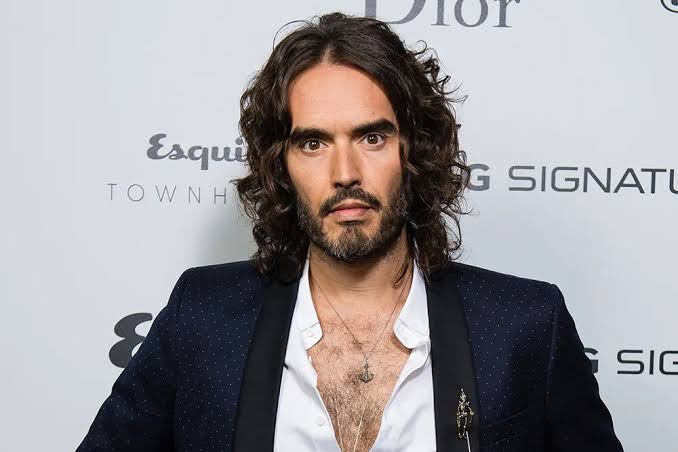
A woman has testified at London’s Southwark Crown Court that Russell Brand allegedly grabbed her and attempted to pull her into a men’s toilet while she was working at MTV Europe in 2001. She told jurors that Brand initially appeared friendly before allegedly becoming a “wild-eyed maniac” and said she managed to free herself. Brand, 51, is on trial facing seven charges involving six women, including three counts of rape, three counts of sexual assault and one count of indecent assault relating to alleged incidents between 1999 and 2009. He has pleaded not guilty to all charges, and no verdict has been reached.
A woman accusing British comedian and actor Russell Brand of sexual misconduct has told jurors at Southwark Crown Court that he allegedly grabbed her and tried to drag her into a men’s toilet while she was working at MTV Europe in 2001, giving fresh testimony in a high-profile criminal trial in which Brand faces seven charges involving six women. The woman, whose identity is legally protected, told the court that what began as an apparently friendly interaction changed suddenly when Brand allegedly took hold of her arm and attempted to pull her toward a toilet cubicle for a sexual encounter she says she did not want. She described him as changing from an “affable” personality into what she called a “wild-eyed maniac” and said she managed to wrench herself free after a struggle lasting only seconds. Brand, 51, denies all seven charges and has pleaded not guilty to three counts of rape, three counts of sexual assault and one count of indecent assault arising from alleged incidents between 1999 and 2009. No verdict has been reached, and the trial is expected to continue for several weeks.
The woman told jurors that she was working at MTV Europe when the alleged incident took place in 2001. According to her evidence, she encountered Brand at work and initially found him friendly before his behaviour changed. She said he grabbed her arm and tried to persuade or pull her into the men’s toilets, while she resisted and eventually freed herself. Her account formed part of the prosecution case that Brand repeatedly ignored women’s boundaries as his public profile was growing. Prosecutors have told jurors that the six complainants, who do not know one another, allege separate incidents over a decade in different locations including workplaces, hotels, bars and Brand’s home. Brand’s defence rejects that interpretation and says the encounters were consensual or have been misremembered or reinterpreted years later.
During questioning, the woman explained why she did not report the alleged incident at the time. She said Brand was already an important figure at MTV and that she was concerned about protecting her job and meeting her financial responsibilities. She told the court that she had a mortgage and did not want to create professional difficulties for herself by making an allegation against someone she viewed as one of the company’s major on-air personalities. Her account reflects one of the themes likely to feature repeatedly during the trial, namely why some of the women did not go to police or employers immediately after the alleged incidents. Prosecutors say fear, embarrassment, career concerns and Brand’s growing fame influenced some complainants’ decisions to remain silent. The defence is expected to scrutinise those delays closely and has already challenged whether later media coverage influenced how some of the women remembered their encounters.
The witness came forward to police after watching a 2023 television documentary and reading related reporting about allegations against Brand. Her evidence is therefore being tested against the possibility that later publicity affected her recollection. Brand’s lawyer suggested in cross-examination that the encounter had been brief and less forceful than she now describes and questioned whether her interpretation of what happened had changed after seeing the documentary. The woman rejected that suggestion and maintained that the interaction was non-consensual. The trial judge has also reminded jurors that allegations discussed in previous documentaries or newspaper investigations are not automatically evidence in the present criminal proceedings and that the jury must decide the case only on evidence properly presented in court.
Brand’s current trial centres on seven alleged offences involving six women over a period stretching from 1999 to 2009. He faces three rape charges, three sexual assault charges and one indecent assault charge. Prosecutors opened the case by describing him as a manipulative and calculated sexual predator who, they allege, used fame, force and an intense pursuit of sexual gratification to ignore the wishes of women around him. Brand completely denies that characterisation. He has pleaded not guilty to every charge and has publicly maintained that he has never engaged in non-consensual sexual activity. The legal question before the jury is not whether Brand lived a highly sexualised public lifestyle, something he has discussed extensively in the past, but whether prosecutors can prove beyond reasonable doubt that the specific charged encounters were criminal and non-consensual.
The MTV allegation is one of several very different incidents that jurors are being asked to consider. The prosecution has said the alleged offending occurred in a wide range of circumstances, reflecting different stages of Brand’s rise from stand-up comedy and television into international celebrity. One complainant alleges that Brand raped her after they met at a political event in Bournemouth in 1999. She has already given emotional evidence, telling the jury that she initially felt comfortable around him before becoming frightened and that she repeatedly did not consent to what followed. Brand denies raping her, and his defence has challenged her account.
Another allegation concerns a woman who was at a bar in Soho in 2004. Prosecutors say Brand grabbed her breasts and later pulled her toward toilets, where she alleges he forced her into a sexual act despite her objections. A different complainant who worked at a radio station alleges that Brand aggressively kissed and groped her during another encounter in the mid-2000s. Yet another woman, who had initially been a fan, alleges that after earlier consensual sexual contact Brand later anally raped her at his home despite her asking him to stop. Brand denies every allegation.
The prosecution’s strategy is to present the six women as independent complainants whose accounts, despite differences in time and circumstance, allegedly show a pattern in Brand’s behaviour. Prosecutor Riel Karmy-Jones KC told the jury at the opening of the case that Brand was not deterred by women saying no or resisting his advances and alleged that his pursuit of sexual contact was intense and indiscriminate. Those are prosecution allegations, not findings of fact, and Brand’s lawyers are expected to argue that the women’s experiences cannot simply be combined into one narrative. Each charge must be considered separately and proved according to the evidence relating to that alleged incident.
The defence has also highlighted the passage of time. The alleged offences span more than two decades into the past, creating obvious challenges around memory, documentation and the availability of witnesses. Historical sexual offence cases are legally permissible in England and Wales, but juries are routinely warned to consider both the reasons victims may delay reporting and the difficulties a defendant may face when responding to allegations many years later. Brand’s legal team is expected to argue that memory can change, particularly after extensive media coverage, while prosecutors are expected to say delayed reporting is not unusual in sexual assault cases.
The woman who testified about the MTV incident said the alleged encounter lasted approximately 20 seconds. The brevity of the event is likely to become an important element of the defence argument, which has sought to portray the interaction as far less forceful than the prosecution suggests. The witness, however, told jurors that the short duration did not make the experience consensual and said she remembered struggling to free herself. Her description of Brand’s expression and behaviour was among the strongest moments of the day’s testimony.
She also told the court she did not speak formally to management at the time, although she said she mentioned what had happened to another person afterwards. Questions about who complainants told, when they told them and whether contemporaneous accounts exist are likely to play a major role throughout the trial. In historical cases, early disclosures to friends or colleagues can become significant because they may support the argument that a complaint did not emerge only after later publicity.
Brand sat in the dock at Southwark Crown Court as the evidence was given. Reporters covering the trial have described him as largely composed during the proceedings. He has attended court in formal clothing, often accompanied by family or security, and has made only limited comments outside the building. The trial has attracted substantial media attention in Britain and internationally because of Brand’s long career in television, radio, film and comedy, as well as the public transformation of his image in recent years from entertainment personality to online political and religious commentator.
Brand was once one of Britain’s most recognisable broadcasters. He rose through stand-up comedy and MTV before presenting radio and television programmes and later appearing in Hollywood films. He was briefly married to American singer Katy Perry and developed a global profile at the height of his entertainment career. In later years, he moved increasingly toward online platforms, where he built a large following discussing politics, free speech, religion and institutional distrust. None of that background determines the criminal charges before the jury, but it explains the extraordinary public attention surrounding the trial.
The proceedings have also required careful handling because all six complainants are entitled to lifelong anonymity under British law. News organisations can report their evidence but cannot publish information likely to identify them. The court has also placed strong emphasis on ensuring jurors are not influenced by Brand’s fame or previous media investigations. During jury selection, Mr Justice Joel Bennathan instructed prospective jurors to disclose whether previous reporting had affected their ability to approach the case impartially and warned those selected not to conduct independent research.
That instruction is particularly significant because the trial follows years of intense publicity surrounding Brand. A 2023 television documentary and newspaper investigation contained allegations from several women and generated enormous public debate. The present criminal case, however, is governed by the evidence relating to the seven charges before the court. The judge has made clear that jurors must not assume anything from allegations reported elsewhere.
The prosecution says the six women came forward independently and had never met. Defence lawyers are expected to challenge aspects of their credibility and memories while arguing that consensual encounters may now have been interpreted differently. The opposing positions create the central task for the jury: deciding whether the prosecution has proved the charged offences beyond reasonable doubt after hearing all witnesses, cross-examination and any evidence presented by the defence.
Friday’s testimony added another detailed account to a case that had already heard highly emotional evidence. The previous day, another complainant told the court that she believed Brand raped her in 1999. She described him changing dramatically after they entered a hotel room and said she felt frightened and unable to escape. Brand denies that allegation. The jury will ultimately have to assess that account alongside the MTV worker’s testimony and evidence from the remaining complainants.
The length of the trial reflects the complexity of hearing allegations from six different women involving incidents spread over a decade. Proceedings are expected to last approximately six weeks, meaning the evidence currently before the public represents only the early stage of the prosecution case. More complainants, witnesses and investigators are expected to testify before the prosecution closes its case, after which Brand’s defence will have the opportunity to present evidence and arguments.
No conclusion should therefore be drawn from the order in which evidence is heard. Criminal trials frequently begin with the prosecution setting out its strongest version of events before the defence has fully responded. Brand remains legally presumed innocent unless and until the jury returns guilty verdicts on any of the counts.
The case has attracted particularly strong attention because Brand has previously responded publicly to sexual misconduct allegations by insisting that his relationships were consensual. Before the criminal proceedings reached trial, he repeatedly denied ever engaging in non-consensual sex. His current not-guilty pleas formalise that denial in court, where prosecutors must now prove each charge to the criminal standard.
The testimony from the former MTV worker is important because it places one of the alleged incidents inside Brand’s workplace during the early stages of his television career. She portrayed him as someone whose professional status made her reluctant to complain at the time. Prosecutors may use that context to explain the reporting delay, while defence lawyers are likely to argue that the lack of an immediate complaint makes it harder to independently establish what occurred.
Her evidence also demonstrates how the case is likely to turn on precise details rather than general impressions. How tightly was she held? How far was she pulled? What was said? How did she react? Did anyone see her immediately afterwards? Did she tell anyone? How clearly does she remember those details 25 years later? Each of those questions matters because a jury deciding a sexual assault charge must determine what actually happened and whether the necessary criminal elements have been established.
The defence has already begun pressing on those issues. Brand’s lawyer challenged the witness’s description of force and questioned whether later media coverage influenced her understanding of the encounter. The woman rejected that suggestion. Such exchanges are expected throughout the trial as Brand’s legal team tests the reliability of each complainant’s evidence.
The case may also raise wider public discussion about celebrity, workplace power and delayed reporting, but the court itself will be focused narrowly on criminal liability. Jurors are not being asked to decide whether Brand behaved badly in a general sense or whether aspects of his public persona were offensive. They are deciding whether he committed specific offences against six women.
Likewise, the prosecution’s description of Brand as a predator remains an allegation made in advocacy to the jury, not an established judicial finding. Reporting on the trial therefore requires constant distinction between what witnesses allege, what prosecutors argue, what the defence disputes and what has actually been proven.
As of October 17, nothing has been proven against Brand in this trial and no verdict has been reached. The jury has heard only part of the prosecution case. Brand continues to deny all seven charges.
The next stages of the proceedings are expected to bring further testimony from other complainants and witnesses before the prosecution concludes its evidence. Defence lawyers will continue cross-examining witnesses and are expected to set out in greater detail why they say the encounters were consensual or have been inaccurately remembered.
For the former MTV worker, however, Friday was the moment she publicly gave her account to a jury after remaining silent about the alleged encounter for more than two decades. She told the court that Brand initially appeared friendly before suddenly changing and trying to pull her toward the toilets. She said she resisted, escaped his grip and later chose not to report the incident because she feared the consequences for her career.
Brand says the prosecution’s version is wrong.
That conflict is now for the jury to decide.