PENSIONERS TURN TO TINUBU AS ₦70,000 WORKERS’ TRANSPORT ALLOWANCE EXCLUDES RETIREES
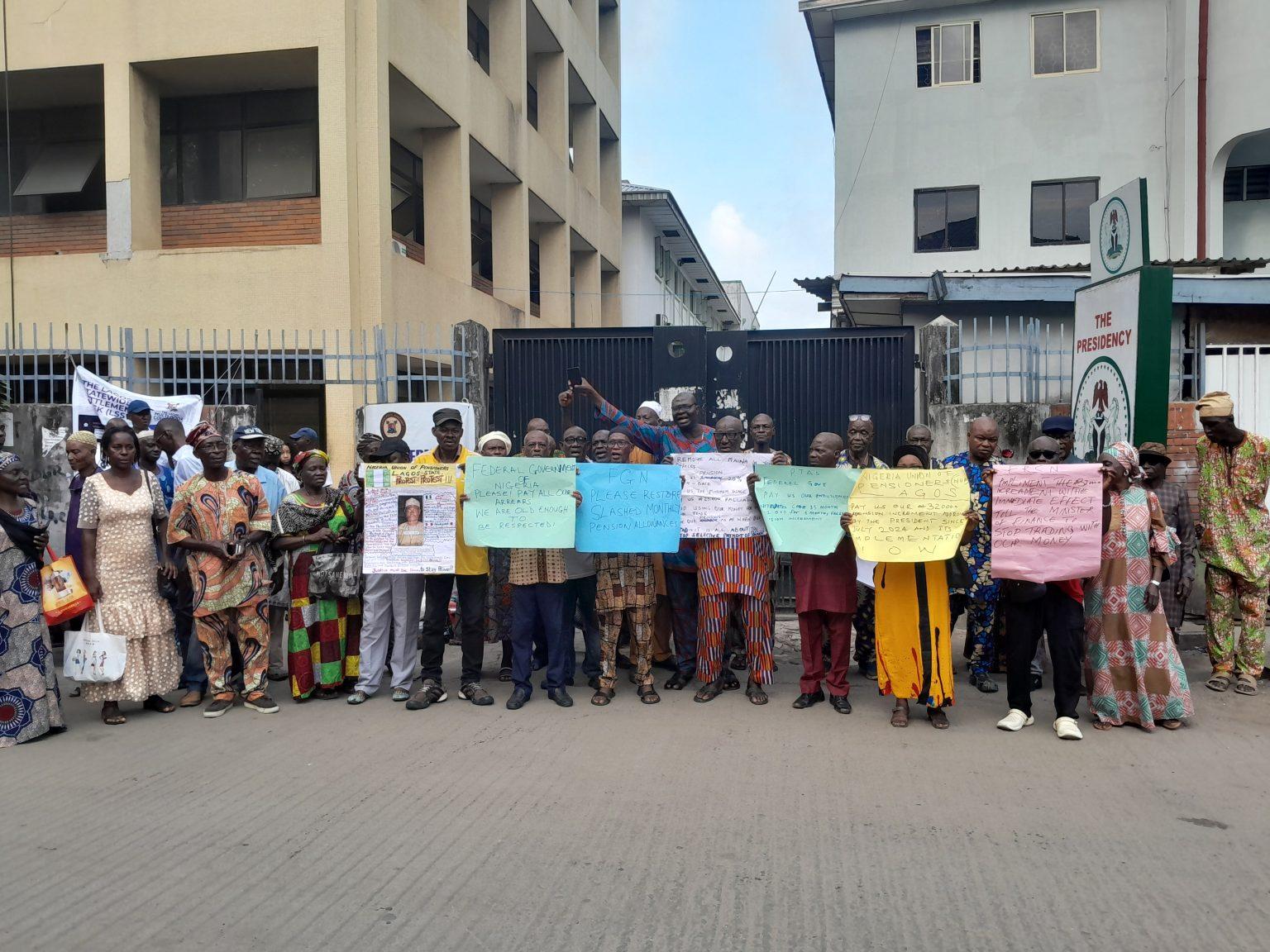
FEPPPAN has appealed to President Bola Tinubu to extend the Federal Government’s new ₦70,000 monthly transport allowance for public servants to pensioners, arguing that retirees also face rising transport, healthcare and food costs. The association is also demanding payment of three outstanding ₦25,000 subsidy-removal palliatives, totalling ₦75,000 for eligible pensioners, while calling for clearer pension harmonisation and improved healthcare support. The government has not yet announced that retirees will receive the new transport allowance.
Nigeria’s federal pensioners have appealed directly to President Bola Tinubu to extend the newly approved ₦70,000 monthly transport allowance for public servants to retirees, arguing that elderly Nigerians who spent decades in public service are being left behind at a time when transportation, food, medication and other essential living costs continue to rise sharply. The Federal Parastatals and Private Sector Pensioners Association of Nigeria, FEPPPAN, says the government’s latest relief package for serving workers has reopened a wider question about how economic support measures are designed and why pensioners who face many of the same inflationary pressures are frequently excluded from benefits introduced for active employees.
The association’s appeal follows the Federal Government’s agreement with organised labour to provide a ₦70,000 monthly transport intervention for public servants for six months beginning in November 2026. The allowance emerged from negotiations between the government and labour unions over wages, petrol prices, taxation and the declining purchasing power of Nigerian workers, with the temporary transport payment intended to reduce the effect of high commuting costs while broader minimum-wage discussions continue. FEPPPAN says retirees should receive similar consideration because leaving active employment does not eliminate the need to travel, particularly for elderly people who frequently make journeys to hospitals, pharmacies, markets, banks and other locations necessary for daily life.
In a statement jointly signed by FEPPPAN President-General Elder Benjamin Maisamari Amako and General Secretary Franklin Erinle, the association argued that pensioners continue to bear transportation costs just like serving workers and should not be excluded from government interventions designed to cushion economic hardship. The group said many retirees travel regularly for medical appointments and to purchase essential goods, while others continue undertaking small economic activities to supplement pensions that have been eroded by inflation. For pensioners living on fixed monthly incomes, even routine transportation costs can consume a growing proportion of available money before food, medication, rent and other necessities are paid.
The appeal is not a demand to cancel or reduce the allowance granted to serving public servants. FEPPPAN has instead stressed that its concern is the absence of a comparable arrangement for retirees at a time when the cost-of-living crisis affects both workers and pensioners. The association says people who have already left government employment should not be treated as though they are insulated from increases in fuel prices, transportation fares, food costs and healthcare expenses simply because they no longer commute to government offices every day.
That argument has particular force because many pensioners face healthcare-related travel costs that younger active workers may not encounter as frequently. Retirees often need repeated hospital consultations, diagnostic tests, specialist appointments and pharmacy visits, all of which require transportation. For people with limited mobility or chronic age-related conditions, the cost can be even higher if public transport is difficult to use and taxis or other private arrangements become necessary.
The debate also comes against the background of another unresolved pensioner grievance. FEPPPAN says eligible retirees are still waiting for the three months of ₦25,000 subsidy-removal palliative announced by the Federal Government in October 2023, amounting to ₦75,000 for each qualifying beneficiary. The association argues that it is difficult for pensioners to understand why a new support package can be introduced for serving workers while an older relief promise affecting retirees has still not been fully settled.
The unpaid palliative has become one of several issues FEPPPAN has raised with the Tinubu administration in recent weeks. The group has also called for the payment of outstanding pension entitlements, clearer implementation of pension harmonisation and improved healthcare access for retirees under the Defined Benefit Scheme. Together, those demands suggest that pensioners are not simply seeking one temporary payment but are pushing the government to review the broader structure of economic protection available to Nigerians after retirement.
FEPPPAN’s recent National Executive Council meeting in Abuja placed particular emphasis on the need for pension harmonisation to translate into meaningful increases in monthly benefits. The association has asked the Pension Transitional Arrangement Directorate to release the circular guiding the current harmonisation exercise and explain how the policy is being implemented, which categories of pensioners are covered and how much retirees should expect to receive. The group says uncertainty surrounding the process has made it difficult for pensioners to determine whether their payments accurately reflect the adjustments they have been promised.
The association has also asked the government to protect elderly, sick and physically incapacitated pensioners from losing access to payments because of difficulties connected to verification exercises. FEPPPAN has specifically raised concerns over the planned relaunch of PTAD’s “I Am Alive” verification platform, arguing that measures intended to prevent fraudulent pension payments must not create new obstacles for legitimate retirees who may struggle with digital technology, biometric procedures or physical travel.
The broader pension debate has become increasingly important as the cost of living has risen across Nigeria. Retirees are especially vulnerable to inflation because many receive fixed benefits that do not automatically increase whenever food, transport, electricity and medication become more expensive. An active worker may have some opportunity to negotiate higher wages, seek overtime or change employment, but a pensioner may depend almost entirely on a predetermined monthly payment.
That vulnerability has become more visible since the removal of the petrol subsidy in 2023, which contributed to higher transport and distribution costs across the economy. Increased fuel prices affected not only motorists but also public transportation, food distribution and the cost of moving goods between states. For pensioners, the result has been a steady decline in the purchasing power of fixed retirement income.
The ₦70,000 transport allowance approved for federal workers was itself a response to those pressures. Organised labour has argued that the existing wage structure no longer reflects the economic reality facing Nigerian households and that the value of the current minimum wage has been eroded by inflation and currency depreciation. The government and labour therefore agreed to establish a committee for new minimum-wage negotiations while introducing the temporary transport intervention as a short-term measure.
It is important, however, to distinguish the transport allowance from the minimum wage. Nigeria’s existing national minimum wage remains ₦70,000 under legislation signed in 2024, while the new ₦70,000 monthly transport payment is a separate temporary intervention for federal public servants. FEPPPAN is asking to be included in that transport intervention, not to have pensions converted directly into the national minimum wage.
That distinction matters because pensions are governed by different legal and administrative frameworks from salaries. Serving public servants are paid under employment structures, while pension benefits depend on retirement schemes, contribution histories, salary records, pension laws and other regulations. Extending a transport allowance to retirees would therefore require a specific government decision and potentially separate budgetary approval rather than occurring automatically because workers have received the benefit.
FEPPPAN has nevertheless argued that the government should look beyond technical distinctions and focus on the hardship facing pensioners. The association says a retiree taking a bus to a hospital pays the same fare as a worker travelling to an office and faces the same increase when fuel and transportation costs rise. From that perspective, excluding retirees from transport relief can appear inconsistent with the stated goal of cushioning vulnerable Nigerians against economic pressure.
The issue has also revived calls for a National Minimum Pension. Earlier in October, FEPPPAN proposed that Nigeria should establish a minimum pension floor to operate alongside the national minimum wage, arguing that income protection should not end when a worker retires. The association’s position is that after decades of service, pensioners should have access to a baseline income sufficient to protect them from extreme poverty.
A minimum pension would be a more structural reform than the current request for a six-month transport allowance. Instead of relying on temporary interventions each time the cost of living rises, such a system would establish a minimum retirement-income threshold and potentially require periodic adjustments as wages and inflation change. FEPPPAN has argued that this would reduce the risk of retirees falling into severe financial insecurity simply because their pension values fail to keep pace with the wider economy.
The National Pension Commission already uses the national minimum wage as one reference point in certain retirement-benefit rules under the contributory pension system. Following the increase of the national minimum wage to ₦70,000 in 2024, PenCom directed pension fund administrators to apply the new wage level when determining whether retirees with very small Retirement Savings Account balances could take the remaining balance as a lump sum. Under that rule, retirees whose monthly or quarterly pension was below one-third of the prevailing minimum wage, equivalent to ₦23,333.33 under the ₦70,000 wage floor, could choose between withdrawing the remaining RSA balance or continuing with the existing periodic payment.
That rule, however, is different from FEPPPAN’s current demand and should not be confused with a universal ₦70,000 pension entitlement. It affects specific benefit-processing provisions under the contributory pension system and does not mean every retiree automatically receives a pension equal to the minimum wage. This difference illustrates the complexity of Nigeria’s retirement system, where different categories of pensioners may be governed by separate schemes and administrative arrangements.
FEPPPAN represents federal parastatal and private-sector pensioners and has frequently focused on the welfare of retirees under the Defined Benefit Scheme and related arrangements. Under the defined-benefit structure, pensions are determined through established formulas and are paid through government-supported systems, including PTAD for eligible federal retirees. This differs from the contributory system, where employees and employers contribute into individual retirement savings accounts managed by pension fund administrators.
Those different structures have historically complicated efforts to introduce broad pension adjustments. A policy affecting one group may not automatically extend to another, leaving pensioner organisations to lobby separately for harmonisation and equal treatment. FEPPPAN’s latest appeal reflects that long-standing problem, with retirees arguing that relief measures should be designed in a way that recognises the economic reality facing all categories of elderly Nigerians.
The association’s call comes as the Federal Government tries to balance worker welfare with significant fiscal pressures. Extending a ₦70,000 monthly payment to a large population of pensioners would create a substantial additional budgetary obligation, particularly if the benefit matched the six-month duration approved for federal workers. The government has not publicly announced the number of pensioners who would qualify under such an arrangement, meaning the total financial cost cannot yet be determined from the available information.
That cost consideration is likely to form part of any decision by the Presidency. Temporary relief measures can be politically and socially attractive, but they still require funding, and expanding eligibility can significantly increase expenditure. The government would therefore need to determine which pensioners qualify, which agencies would administer payments and whether the funds are available within existing budget provisions or require supplementary authorisation.
FEPPPAN’s argument is that fiscal constraints should not result in pensioners being ignored while relief is provided to other groups. The association has repeatedly emphasised that retirees contributed to public service and economic development during their working years and should remain part of government welfare planning after retirement. It says pension policy should be treated as a continuing obligation rather than a residual expense.
The issue also has a constitutional and social dimension because pension payments are not generally regarded as discretionary charity. For eligible retirees, pensions represent earned entitlements arising from service and statutory arrangements. Delays or erosion in pension value therefore affect people who have already completed their employment obligations and may have limited opportunities to replace lost income.
The government has received some credit from FEPPPAN for maintaining regular monthly pension payments to many retirees under the Defined Benefit Scheme. The association has acknowledged this while continuing to press for outstanding benefits and reforms. Its position suggests that the dispute is not simply a blanket condemnation of the administration but a demand for additional measures where pensioners believe existing support remains inadequate.
Healthcare remains one of the most important areas of concern. FEPPPAN has called for improved access to health insurance and has urged authorities to make enrolment procedures easier for elderly pensioners. Medical costs generally increase with age, and retirees can face significant financial pressure when pension income must cover consultations, drugs, laboratory tests and transport to health facilities.
The transport allowance demand therefore connects directly to the healthcare issue. For a pensioner travelling repeatedly to hospitals or clinics, transportation is not an optional expense or a work-related convenience but part of accessing essential medical care. FEPPPAN argues that this reality should be considered when determining whether retirees deserve similar support to workers.
There is also the problem of geographical inequality. Pensioners living in major cities may have access to more healthcare facilities but face higher transport costs, while those in rural areas may need to travel greater distances to reach specialists or government services. A uniform transport support scheme would not eliminate those differences, but the association believes it could provide at least some relief.
The Tinubu administration has not yet publicly announced that the ₦70,000 transport allowance will be extended to pensioners. Until such a decision is formally made, the benefit remains an intervention approved for serving federal workers. FEPPPAN’s request is therefore an advocacy position rather than an implemented policy.
That distinction is important for pensioners who may see reports of the demand and assume payment has already been approved. No such approval has been confirmed. The association has asked the President to intervene, but any expansion would require an official government decision and details on eligibility, duration and payment mechanisms.
The same caution applies to the outstanding ₦25,000 palliative. FEPPPAN says eligible pensioners are still owed three monthly payments, but the government would need to clarify the beneficiary list and implementation status before a final nationwide liability can be established. The association maintains that the promise remains outstanding and is urging Tinubu to direct relevant agencies to settle it without further delay.
The combination of old and new demands has increased frustration among retirees. From their perspective, pensioners are watching serving workers receive a fresh six-month intervention while some retirees are still pursuing relief announced three years earlier. That contrast has become central to FEPPPAN’s public argument that the government needs a more consistent approach to pensioner welfare.
The debate is likely to continue as Nigeria moves toward new minimum-wage negotiations. Organised labour has made clear that it believes the existing wage is no longer adequate, while the government has agreed to begin a formal process for reviewing the structure. Any substantial increase in workers’ salaries could eventually intensify calls for corresponding adjustments to pensions, particularly where existing pension laws or harmonisation policies link retiree benefits to salary changes.
Pensioner organisations have historically argued that wage reforms should not create widening gaps between active workers and retirees. When salaries rise significantly while pensions remain static, people who retired on older salary structures can quickly fall behind. Harmonisation is intended in part to address these disparities, although implementation has frequently generated disputes over timing, percentages and eligibility.
FEPPPAN’s demand for greater clarity over the January 2026 harmonisation exercise therefore fits directly into the current argument. The group wants assurance that pensioners will actually receive meaningful increases rather than simply hearing that a policy has taken effect without being able to see the financial impact in their monthly payments.
The government will also need to consider how any temporary allowance interacts with permanent pension reforms. Providing ₦70,000 for six months could offer immediate relief but would not solve the underlying problem of low pension income after the intervention expires. A longer-term response may therefore require both short-term support and structural measures involving harmonisation, minimum pension standards and healthcare protection.
For pensioners, however, immediate relief remains important because household expenses cannot wait for long-term reform. Food prices, transportation fares and medication costs must be paid each month, and many retirees have little or no savings available to absorb sudden increases. FEPPPAN’s appeal therefore combines short-term urgency with a broader demand for reform.
The Presidency’s response will be closely watched because any extension could set a precedent for how future worker-relief packages treat retirees. If pensioners are included, it could strengthen expectations that subsequent wage interventions should have corresponding retirement provisions. If they remain excluded, pensioner associations are likely to continue pressing for a separate relief mechanism.
The debate also illustrates a wider demographic challenge Nigeria will increasingly face as its retired population grows. Pension systems must remain financially sustainable while also providing enough income to protect older people from poverty. That balance becomes harder during periods of high inflation because benefits that appeared adequate when originally calculated can lose value rapidly.
A strong pension system therefore requires both administrative efficiency and regular policy adjustment. Paying monthly benefits on time is essential, but so is ensuring that those payments retain enough purchasing power to support basic living standards. FEPPPAN’s latest intervention reflects concern that prompt payment alone is not sufficient if the amount received can no longer cover essential expenses.
The association’s appeal to Tinubu is ultimately based on a simple argument: pensioners still participate in the economy, still travel, still buy food, still need healthcare and still experience the same increases in prices faced by serving workers. Retirement changes employment status, but it does not remove the effects of inflation.
Whether the government accepts that argument in full remains uncertain. The administration must weigh the financial implications against the welfare needs of retirees, while also addressing outstanding palliatives and ongoing pension reforms. A decision to extend the allowance would provide immediate support, but it would also raise questions about funding and whether similar interventions should be made permanent.
For now, FEPPPAN is asking the President to act on two fronts: include pensioners in the ₦70,000 monthly transport allowance and clear the unpaid three months of ₦25,000 subsidy-removal relief. The association says doing so would demonstrate that retirees have not been forgotten in the government’s response to Nigeria’s cost-of-living crisis.
The issue now rests with the Federal Government. The ₦70,000 transport allowance for serving workers has been approved, but pensioners remain outside the announced arrangement. FEPPPAN has made its case publicly and directly to the President, arguing that people who gave decades of service should not reach retirement only to discover that economic relief stops at the office door.
Until the government responds, Nigeria’s pensioners remain in a familiar position: receiving regular pensions in many cases, but still fighting over their value, outstanding entitlements and access to the same economic protections being offered to serving workers. The latest appeal is therefore about more than transportation. It is part of a larger argument over whether retirement in Nigeria comes with genuine social protection or simply a smaller fixed income in an economy where nearly every essential cost continues to rise.