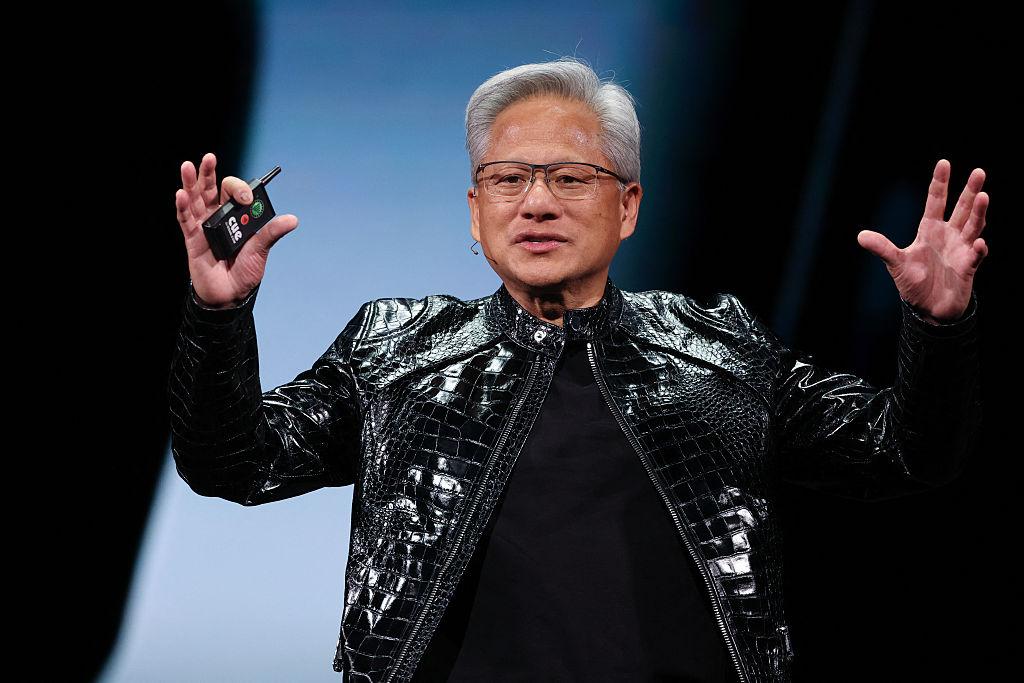

NVIDIA FACES DEFINING LEADERSHIP TEST AFTER JENSEN HUANG’S SHOCK RESIGNATION
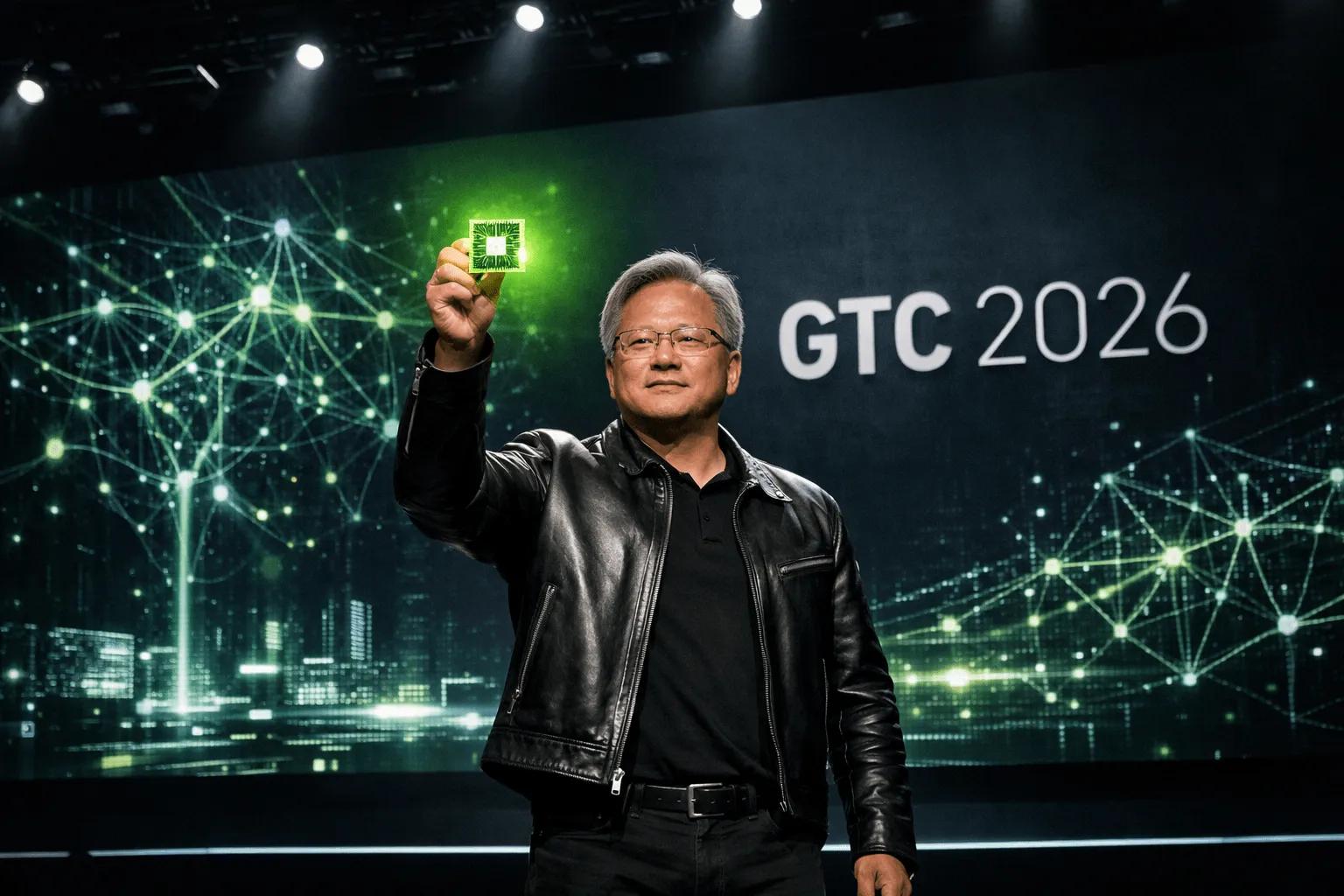
Nvidia has confirmed that Jensen Huang resigned as president, CEO and a member of the board, effective immediately, after its directors accepted his resignation on November 11. CFO Colette Kress, 59, has been appointed interim CEO while continuing in her finance role, and Nvidia says it has begun a search considering internal and external candidates. Longtime director Harvey C. Jones has become Nvidia’s first board chair.
SANTA CLARA, CALIFORNIA — Nvidia is confronting the most consequential leadership transition in its history after co-founder Jensen Huang abruptly resigned as chief executive and left the company’s board, ending a three-decade tenure in which he transformed a niche graphics-chip maker into the dominant supplier of computing hardware powering the global artificial-intelligence boom. The November 12 announcement stunned Wall Street and Silicon Valley because Huang had become almost inseparable from Nvidia’s corporate identity, technological strategy and relationship with governments, customers and investors, leaving interim Chief Executive Colette Kress with the immediate task of reassuring markets that the company can preserve its extraordinary lead in AI hardware without the executive who built and publicly personified it.
Nvidia said its board accepted Huang’s resignation on November 11 and that the departure took effect immediately. The company appointed Kress, its executive vice president and chief financial officer since 2013, to serve as interim CEO while continuing to oversee the finance organization, and said it had begun a search considering both internal and external candidates for a permanent successor. The board also appointed Harvey C. Jones, a director since 1993, as its first-ever chair, creating a more conventional governance structure after decades in which Huang exercised unusual influence over strategy, products, partnerships and corporate culture.
The official announcement did not explain why Huang resigned. His departure followed days of intense scrutiny triggered by reports concerning extramarital relationships and questions about whether he had been targeted by a foreign intelligence operation involving a Chinese businesswoman. Nvidia’s independent directors had already opened an investigation and retained outside counsel to examine the matter, while the company said before Huang’s resignation that it had no reason to believe either U.S. national security or confidential Nvidia information had been compromised. Those distinctions remain important because reports and investigations concerning Huang’s private relationships and contacts do not, by themselves, establish that he disclosed classified, proprietary or export-controlled information or knowingly assisted foreign intelligence activity.
Huang had publicly apologized to his family and Nvidia employees for infidelity before his resignation, saying he took responsibility for his actions and would cooperate fully with the board’s investigation. Subsequent reporting has raised further questions about his interactions with people connected to Nvidia’s China business, while lawmakers and regulators have shown increasing interest in the company’s chip exports and whether restricted processors have reached Chinese users through intermediaries. Those matters remain subject to investigation and political scrutiny, and there has been no final public determination establishing that Huang personally violated U.S. export-control law.
The leadership upheaval matters far beyond one company because Nvidia has become one of the central infrastructure providers of the AI economy. Its graphics processing units, networking systems, CUDA software ecosystem and increasingly integrated data-center platforms underpin much of the computing used to train and operate large artificial-intelligence models. Companies including Microsoft, Meta, Amazon, Alphabet, OpenAI and numerous emerging AI firms have committed enormous sums to facilities built around Nvidia hardware, making the stability of the company a question not merely for shareholders but for an industry spending hundreds of billions of dollars annually on AI infrastructure.
Markets reacted quickly to the uncertainty. Nvidia shares fell sharply as reports of Huang’s potential departure emerged and remained under pressure after his resignation was confirmed, contributing to wider losses in semiconductor and AI-related stocks. By November 13, the Nasdaq-100 had fallen about 2 percent during a session in which Reuters estimated roughly $800 billion in value was at risk of being erased from the index, while the Philadelphia semiconductor index was on course to lose more than $560 billion. Nvidia itself had fallen more than 30 percent from its October peak by November 14, wiping more than $1.8 trillion from its market capitalization, although the decline also reflected broader concerns about AI valuations, interest rates and the sustainability of enormous data-center spending.
The scale of the market reaction reflects what investors had come to regard as the “Huang premium”: the belief that Nvidia’s founder possessed a uniquely effective combination of technical vision, salesmanship, strategic judgment and political influence. Huang personally presented new chip architectures, negotiated with major technology customers, cultivated relationships with governments and regularly framed Nvidia as the foundation of a new industrial revolution centered on accelerated computing and artificial intelligence. His signature black leather jacket became almost as recognizable in technology circles as the Nvidia logo itself.
That concentration of influence is now one of the central risks facing the company. Investors had tolerated an unusually founder-centric governance structure because Nvidia’s financial and technological performance was exceptional. Huang helped lead the company from gaming graphics into data-center computing, then positioned its GPUs at the center of machine learning before generative AI exploded into a global commercial phenomenon. The question now is whether the organization and management systems built beneath him are strong enough to operate effectively without constant founder involvement.
Kress provides continuity on the financial side. She joined Nvidia in 2013 after senior finance roles at Cisco and Microsoft and has overseen the company’s finances during its transformation from a gaming-oriented semiconductor business into an AI infrastructure giant. Her tenure has included some of Nvidia’s most aggressive periods of investment, supply planning, strategic financing and expansion into data centers, cloud computing and AI companies. She is widely familiar to institutional investors and has often participated in earnings calls alongside Huang, making her one of the most visible Nvidia executives outside the founder himself.
Her challenge, however, extends well beyond managing the balance sheet. Nvidia is simultaneously navigating new product launches, multibillion-dollar supply commitments, relationships with Taiwan Semiconductor Manufacturing Co. and other manufacturing partners, rapidly shifting U.S.-China export rules and increasingly complex financing arrangements involving AI infrastructure companies that also buy Nvidia chips. An interim leader must reassure customers that product roadmaps will remain intact while also convincing investors that major strategic decisions will not stall during the search for a permanent CEO.
The board has said it will evaluate both internal and external candidates. Among the figures viewed by analysts and industry observers as credible internal contenders is Ian Buck, the veteran Nvidia executive closely associated with CUDA and the company’s data-center business. CUDA became one of Nvidia’s most important competitive advantages by allowing developers to use GPUs for general-purpose computing, creating a software ecosystem that rivals have struggled to reproduce at comparable scale.
External possibilities have also emerged. Reuters reported that Nvidia’s board has approached Arm Chief Executive Rene Haas as part of its search, though neither Nvidia nor Arm had publicly announced that Haas had agreed to enter formal negotiations. Haas has deep semiconductor-industry experience and leads a company whose processor designs are central to smartphones, servers and increasingly AI computing, but moving from Arm to Nvidia would present significant strategic, regulatory and competitive complexities.
The succession debate has also generated more speculative suggestions from political and technology figures. President Donald Trump publicly floated former Apple chief Tim Cook as a potential successor, while commentators have mentioned executives from companies including AMD and Micron. Those suggestions should not be confused with confirmed candidates. Nvidia has not publicly identified a shortlist and has said only that it is considering internal and external options.
The appointment of Harvey Jones as board chair is equally significant. Jones has served on Nvidia’s board since the company’s earliest years and has decades of experience as a technology executive, investor and entrepreneur. By creating a separate chairmanship after Huang’s departure, Nvidia is signaling a shift toward stronger board-led oversight at a moment when investors are questioning why so much strategic and public authority had accumulated around one founder.
Corporate governance is likely to remain a major issue even after a new chief executive is appointed. Huang owned only a minority of Nvidia’s shares but exercised influence far beyond his formal economic stake because of his founding status, technical credibility and success. Investors who had little reason to challenge that structure while the stock price soared may now demand clearer succession planning, stronger board independence and more formal controls over executive relationships and political exposure.
Nvidia also faces an immediate test from its next earnings report. Investors will scrutinize not only revenue, profit and demand but also any changes to guidance, supply commitments and capital-allocation strategy. The company has become deeply involved in the broader AI ecosystem by investing in or financing firms that are themselves customers for Nvidia hardware, creating what critics describe as circular relationships that can support demand while also increasing interconnected financial risk.
Companies such as CoreWeave and other specialized AI-cloud providers have benefited from Nvidia’s support as they build GPU-intensive data centers. If Kress or a future CEO becomes more conservative about those investments, the consequences could spread through firms that rely on Nvidia-linked financing to purchase Nvidia hardware. Conversely, continuing the same strategy could expose the company to criticism that it is helping finance demand for its own products.
That tension is particularly important as investors debate whether the AI infrastructure boom is sustainable. Technology companies are spending unprecedented amounts on servers, power, cooling systems and data centers, but questions remain about how quickly generative AI applications will produce revenues sufficient to justify the investment. Nvidia has benefited enormously because it sells the hardware regardless of which AI application ultimately succeeds, but a slowdown in customer spending would challenge the assumption of almost uninterrupted demand growth.
Competitors are already positioning themselves to exploit the uncertainty. Advanced Micro Devices has strengthened its Instinct accelerator business and is trying to persuade major cloud providers to diversify away from Nvidia. Broadcom has built a major business designing custom AI chips for hyperscale customers, while Marvell, Intel and numerous startups are competing for parts of the accelerator, networking and inference markets. Google, Amazon and other large cloud providers are also developing their own specialized AI chips to reduce dependence on outside suppliers.
Analysts have cautioned, however, that Huang’s departure does not automatically erase Nvidia’s technological advantages. The company’s competitive position rests on years of engineering, software development, developer relationships, manufacturing partnerships and product integration rather than solely on one individual. CUDA remains deeply embedded in AI research and enterprise software, and switching major computing workloads to another architecture can require substantial time and expense.
Nvidia’s product roadmap also extends years into the future. The company has already outlined successive generations of AI processors and systems, including its Rubin architecture and longer-term designs being developed by large engineering teams. Those programs will not disappear because the chief executive changed, although leadership decisions can affect pricing, manufacturing priorities, product timing and how aggressively the company enters new markets.
Kress must therefore strike a delicate balance between continuity and visible change. Moving too aggressively away from Huang’s strategy could alarm customers and employees who believe the existing roadmap produced Nvidia’s success. Acting as though nothing has changed could reinforce criticism that the company remains dependent on structures created by a leader who is no longer present.
Employee morale is another concern. Reports have indicated that some Nvidia employees want Huang to return, reflecting the emotional and cultural attachment many workers developed toward the founder. Nvidia expanded from a small Silicon Valley chip company into one of the world’s most valuable corporations under Huang, creating substantial wealth for long-serving employees through stock compensation. His abrupt exit therefore carries a psychological dimension that cannot be measured solely through share prices.
There is no indication, however, that Nvidia’s board is preparing to reverse the resignation. Huang stepped down from both management and the board, and the company has formally begun searching for a successor. The immediate institutional message is that Nvidia intends to move forward rather than operate under an expectation that the founder will return.
Huang’s departure also arrives at a particularly sensitive moment in the U.S.-China technology conflict. Nvidia’s most advanced chips have become strategic assets because they can be used for commercial artificial intelligence, scientific research and potentially military applications. Successive U.S. governments have tightened restrictions on exports of advanced processors to China, forcing Nvidia to redesign products and seek licenses for some transactions.
Huang had emerged as one of the technology industry’s most visible advocates for maintaining commercial access to China. He repeatedly argued that American companies should remain engaged in the Chinese market because excluding U.S. technology could accelerate the development of Chinese alternatives. Critics in Washington argued that commercial interests should not override national-security concerns and pushed for stronger limits.
His resignation may shift that political balance. Some lawmakers have already called for tougher restrictions and greater scrutiny of how Nvidia chips reach Chinese customers, including through data centers and intermediaries outside mainland China. Reuters reported that Chinese AI projects worth more than $3 billion rely on restricted Nvidia processors, illustrating the continuing demand for the company’s technology despite export controls.
The controversy surrounding Huang has intensified those concerns because U.S. authorities reportedly suspect that a Chinese businesswoman with whom he had a relationship may have connections to Chinese intelligence. Beijing has denied allegations that she worked for the Chinese government, and Reuters has not independently established that she acted as a spy. Nvidia’s board has similarly said it has no reason to believe secrets or national-security information were compromised, making it essential to separate suspicions being investigated from facts already established.
The board’s independent review will therefore be watched closely. Nvidia retained outside lawyers to examine the reporting and determine whether Huang’s personal relationships created national-security, governance or disclosure risks. The outcome could affect shareholder litigation, regulatory scrutiny and future controls on executive contacts, particularly in markets considered strategically sensitive.
Huang has also reportedly retained prominent legal counsel as investigations and political inquiries expand. U.S. lawmakers have sought records concerning Nvidia’s China exports, and House committee leaders have requested further information about the circumstances surrounding his relationships and the company’s dealings. Those inquiries are still developing, and there has been no criminal finding against Huang arising from the resignation controversy.
Potential shareholder litigation presents another risk. Investors may argue that Nvidia or its executives failed to disclose information that materially affected the company’s value, particularly if future investigations uncover facts that should have been reported earlier. Nvidia could face claims related to governance, disclosure or the sharp fall in its stock price, although filing a lawsuit would not itself establish wrongdoing and any such claims would have to be proven through the courts.
The crisis has also exposed Nvidia’s enormous influence over financial markets. Because the company became one of the largest components of major U.S. stock indexes, changes in its share price can move the Nasdaq, S&P 500 and semiconductor benchmarks. The selloff following Huang’s departure therefore affected pension funds, index investors and technology portfolios far beyond shareholders who specifically chose to buy Nvidia.
AI infrastructure companies have suffered alongside it. CoreWeave and other firms heavily exposed to Nvidia hardware have seen pressure as investors question whether financing, equipment commitments or demand expectations might change under new leadership. The possibility that Nvidia could become more selective about strategic investments has introduced uncertainty into a business ecosystem that had developed around Huang’s willingness to back customers and partners.
For rival chipmakers, that disruption creates an opening, but not necessarily an immediate transfer of market leadership. AI customers generally do not redesign computing infrastructure overnight, and many have committed billions of dollars to systems optimized around Nvidia technology. AMD, Broadcom and custom-chip programs can gain incremental share even while Nvidia remains dominant.
The more important question is what happens over the next product cycles. If a permanent successor maintains Nvidia’s engineering execution, software ecosystem and aggressive roadmap, Huang’s departure may eventually be remembered as a governance shock rather than a technological turning point. If product launches slip, customers diversify more rapidly or internal talent begins leaving, competitors could exploit the transition in ways that fundamentally alter the AI hardware market.
That uncertainty explains why Wall Street is pressing Nvidia to move quickly but carefully in selecting a successor. A rushed appointment could produce a leader without sufficient technical credibility or customer trust, while an extended interim period could complicate multiyear contracts and strategic decisions. Kress provides stability, but shareholders will want clarity about whether she is simply a caretaker or a serious candidate for the permanent position.
Her financial experience could prove particularly valuable during the immediate crisis. Nvidia is not facing a conventional turnaround caused by collapsing revenue or failed products. Instead, it is managing a governance and leadership shock while demand for its core technology remains extremely strong. The challenge is therefore maintaining confidence rather than rebuilding a broken business.
The transition also tests whether Nvidia has successfully institutionalized Huang’s methods. Great founder-led companies eventually face the question of whether the founder created an organization capable of outliving personal leadership. Apple faced a similar issue after Steve Jobs, while Microsoft transformed significantly after Bill Gates and Steve Ballmer. Nvidia now faces its own version at a moment when its technology has become strategically important to governments and corporations worldwide.
The company’s response over the next several months will reveal whether decision-making can become more distributed without slowing innovation. Huang was known for a relatively flat management structure and for receiving frequent direct reports from a large number of executives. Replicating that system under another CEO may be difficult because much of its effectiveness depended on Huang’s deep technical familiarity with multiple parts of the business.
A successor may instead introduce clearer layers of authority, potentially increasing conventional corporate discipline while sacrificing some of the speed associated with founder-led decision-making. Investors will need to decide whether that tradeoff strengthens Nvidia or dulls one of the characteristics that allowed it to move faster than larger semiconductor rivals.
The political dimension is equally uncertain. Huang had cultivated relationships across governments and had become a regular participant in discussions about industrial policy, chip exports, data centers and artificial intelligence. A new CEO will have to rebuild or inherit those relationships while navigating increasingly contentious debates about AI regulation, energy consumption, employment disruption and national security.
Export policy may be one of the first tests. Washington is already under pressure to tighten controls further, while Nvidia has commercial incentives to preserve access to one of the world’s largest technology markets. Huang personally argued that China should not be abandoned to domestic competitors. His successor may take a less publicly confrontational approach, but the underlying strategic conflict will remain.
China, meanwhile, is accelerating efforts to develop domestic alternatives to Nvidia hardware. Companies such as Huawei and other semiconductor designers have made progress in AI accelerators, while Chinese cloud providers are building software capable of reducing dependence on CUDA. The longer U.S. restrictions remain in place, the stronger the incentive for Chinese customers to develop or adopt substitutes.
That means Nvidia’s next CEO inherits a company that is simultaneously at the height of its technological importance and under unprecedented geopolitical pressure. Few corporate leadership jobs involve decisions with comparable implications for artificial intelligence, semiconductor supply chains, U.S.-China relations and global financial markets.
Huang’s own legacy is therefore unlikely to disappear simply because his tenure ended abruptly. He co-founded Nvidia in 1993 and led it through periods when the company nearly failed, through the rise of gaming GPUs and cryptocurrency demand, and eventually through the machine-learning revolution that transformed its chips into essential computing infrastructure. The company’s extraordinary market value and technical dominance are inseparable from decisions made under his leadership.
The circumstances of his exit will nevertheless become part of that legacy. His resignation followed reporting and investigations that raised questions about personal conduct, judgment and governance at precisely the moment Nvidia had become one of the most strategically sensitive companies in the United States. The difference between his achievements as a technology executive and the allegations surrounding his departure will likely remain a subject of debate for years.
Nvidia’s board now has to ensure that the company itself does not become trapped in that debate. Its immediate priorities are maintaining customer confidence, retaining key engineers, delivering upcoming products, completing the independent investigation and selecting a permanent chief executive capable of commanding credibility across both Wall Street and the semiconductor industry.
Kress begins the interim role with the advantage of deep institutional knowledge but under exceptional scrutiny. Every major contract, strategic investment and public statement will be examined for evidence of whether Nvidia’s direction is changing. Employees will look for stability, customers will want reassurance about supply and roadmaps, investors will demand governance improvements and policymakers will expect closer attention to national-security concerns.
The technology sector will be watching just as closely because Nvidia’s decisions increasingly shape the economics of artificial intelligence. Competitors will use the transition to pitch customers on diversification, cloud companies will reassess their dependence on one supplier and governments will reconsider how much strategic infrastructure has become concentrated around Nvidia technology.
That is why Huang’s resignation has produced a reaction much larger than a conventional chief-executive departure. Nvidia is no longer simply another semiconductor company. Its chips have become the engines behind the largest computing buildout in modern history, and its founder had become the dominant public advocate for that expansion.
The coming months will determine whether Nvidia can prove that its technological advantage belongs to the institution rather than the individual who created it. Kress’s interim stewardship, the board’s CEO search, the continuing investigation and the company’s next earnings and product milestones will provide the first answers.
For Wall Street, the central question is whether Nvidia’s valuation can recover once the leadership uncertainty begins to clear. For Silicon Valley, it is whether competitors can finally exploit a moment of weakness in a company that appeared almost untouchable during the AI boom. For Washington, the transition creates an opportunity to reassess export policy and governance around a strategically vital technology supplier. And for Nvidia itself, the challenge is more fundamental: demonstrating that one of the world’s most important technology companies can remain dominant after losing the founder whose identity became inseparable from its rise.