
NVIDIA CEO JENSEN HUANG APOLOGIZES TO EMPLOYEES OVER MISCONDUCT, ADMITS HURTING HIS FAMILY AFTER CONTROVERSIAL REINSTATEMENT
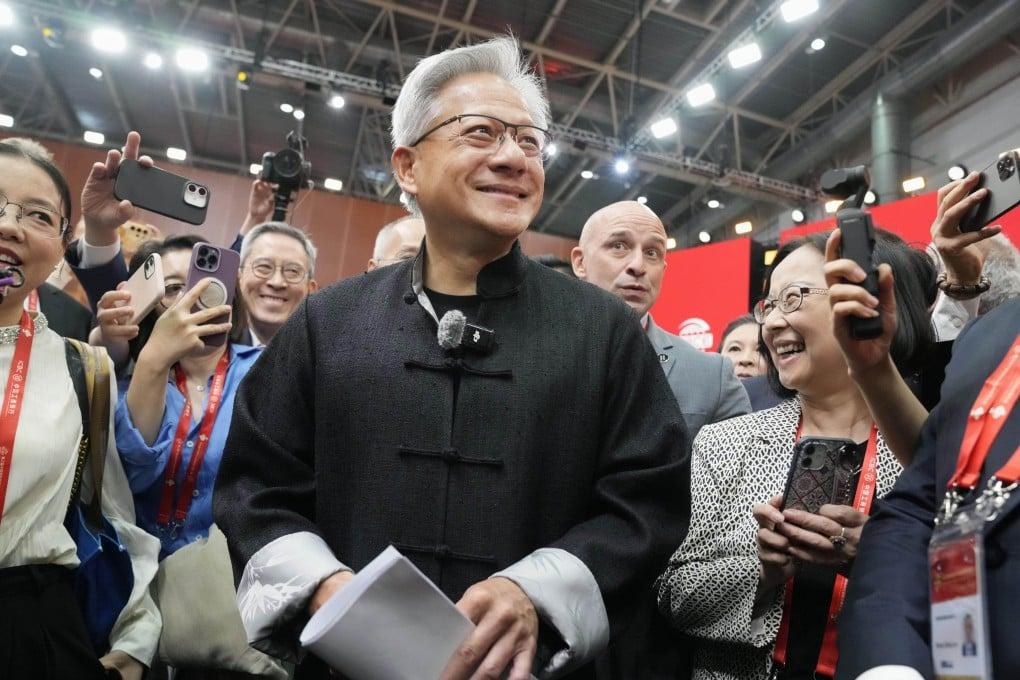
Nvidia Chief Executive Officer Jensen Huang has apologized to employees for violating the company's code of conduct, acknowledging that his actions hurt his wife, children and colleagues during an hour-long meeting at the semiconductor giant's headquarters in Santa Clara, California, on November 24, 2026. Huang, who was unanimously reinstated by Nvidia's board just 11 days after his resignation, disclosed that he is undergoing daily therapy and rejected claims that President Donald Trump's intervention was responsible for his return. Nvidia has confirmed that independent investigations into potential foreign intelligence activities will continue, alongside new measures designed to strengthen national security oversight and corporate compliance. The controversy continues to generate concern among investors and American lawmakers, with Huang expected to testify at a Senate hearing on December 3.
Nvidia Chief Executive Officer Jensen Huang has apologized to employees for violating the technology giant's code of conduct, acknowledging that his personal decisions caused considerable pain to his family and colleagues while plunging one of the world's most influential semiconductor companies into an unprecedented leadership crisis. Speaking during an hour-long companywide meeting at Nvidia's headquarters in Santa Clara, California, on Tuesday, November 24, 2026, Huang admitted making serious mistakes and disclosed that he had begun receiving daily therapy to address his behavior. The emotional address came just one day after Nvidia's board of directors unanimously reinstated him as president, chief executive officer and board member, reversing a decision that had removed the company's co-founder from its leadership following revelations concerning his extramarital relationships and questions about potential national security risks. Although Huang's return initially generated enthusiasm among investors and employees, his apology has done little to eliminate broader concerns about corporate accountability, government influence and the ongoing investigations surrounding the semiconductor giant.
“I made some terrible mistakes,” Huang told employees, according to The New York Times, which reviewed a livestream of the meeting. The billionaire technology executive acknowledged being unfaithful to his wife, Lori, and expressed regret over the consequences of his actions for his children and the company's workforce. He also admitted that his behavior violated corporate standards that he had personally helped establish, recognizing that his position as the company's founder did not excuse his failure to comply with those requirements. The apology represented Huang's most extensive reported discussion with employees since his reinstatement, offering an unusually personal account of the circumstances that contributed to his departure while attempting to reassure staff that he remained committed to rebuilding trust within the organization.
Huang's disclosure that he is undergoing approximately 90 minutes of therapy each day provided further insight into the steps he says he is taking to address his conduct. During the meeting, he acknowledged that his actions were unacceptable and explained that the circumstances had forced Nvidia's directors to reconsider whether he should continue leading the company. According to reporting by The New York Times and WIRED, Huang also discussed his demanding leadership approach and indicated that he intended to make adjustments to the way he manages employees. However, he disputed descriptions of himself as an abusive employer, rejecting suggestions that his reinstatement reflected a corporate culture in which powerful technology executives were permitted to disregard professional standards without consequences.
The apology followed an extraordinary reversal by Nvidia's board, which announced on Monday, November 23, that Huang had been reinstated with immediate effect after a series of meetings and discussions concerning his conduct and ability to resume leadership. The directors said they had reached a unanimous decision after considering information presented during those discussions, alongside input received from senior officials within the United States government. Nvidia maintained that the government information had provided sufficient reassurance regarding the national security implications of Huang's return. Nevertheless, the company confirmed that an independent investigation into reports that its chief executive had been targeted by a foreign intelligence operation would continue, making clear that his reinstatement did not represent the conclusion of every inquiry connected to the controversy.
The board's decision restored Huang to the leadership of a company he co-founded in 1993 and subsequently transformed from a specialist graphics processor manufacturer into one of the most commercially significant enterprises supporting the global artificial intelligence industry. Nvidia Chairman Harvey C. Jones expressed confidence in Huang's ability to continue managing the business, maintaining that his return was in the interests of employees, shareholders, customers and commercial partners. Jones will retain his position as board chairman, while Chief Financial Officer Colette Kress, who temporarily assumed responsibility as interim chief executive following Huang's departure, will continue overseeing the company's finances. The leadership arrangement effectively restores much of Nvidia's previous executive structure while introducing additional mechanisms intended to strengthen compliance and national security oversight.
One of the most contentious aspects of Huang's reinstatement concerns the involvement of United States President Donald Trump, whose administration publicly expressed support for the technology executive's return. Reuters reported that Trump had exerted pressure in support of Huang's reinstatement, while the President subsequently claimed credit for helping bring him back to the company. Other media organizations reported that senior government officials had communicated directly with Nvidia's board during its deliberations. The intervention has attracted considerable attention because it involves the federal government expressing its position on the leadership of a publicly traded private corporation, raising questions about the relationship between national industrial policy and the independence of corporate governance.
Huang rejected suggestions during Tuesday's meeting that presidential pressure was the decisive reason for his reinstatement. He maintained that the directors had reached their conclusion after reviewing the relevant circumstances and receiving assurances concerning national security concerns. His explanation presents a different interpretation of events from reporting that attributed considerable significance to Trump's intervention. Nvidia's official announcement independently confirms that its directors received information from senior levels of the government, but it does not establish that the President personally dictated their decision. Determining the full extent of the administration's influence remains particularly important as lawmakers examine whether the board exercised independent judgment or responded to political pressure.
Trump has defended his involvement by emphasizing Nvidia's strategic importance to the United States, particularly as Washington seeks to maintain its position in the international competition over artificial intelligence and advanced semiconductor technology. Nvidia's processors support many of the data centers, computing platforms and research institutions responsible for developing contemporary AI systems, making the company's operations relevant to both commercial development and national security policy. The administration's position reflects its assessment that uncertainty surrounding Nvidia's leadership could have wider consequences for American technological competitiveness. Critics, however, have questioned whether the strategic significance of an individual company should justify government intervention in decisions concerning the personal conduct and professional accountability of its executives.
The controversy surrounding Huang's resignation had extended beyond revelations about his private relationships because of allegations involving an individual associated with a foreign customer of Nvidia. Previous reporting identified a relationship with Alice Huang, a former executive associated with Singapore-based technology company Megaspeed, and cited concerns among American officials about possible connections to Chinese intelligence. Those allegations have become part of a broader discussion about the protection of advanced American semiconductor technology and the risks associated with unauthorized transfers to China. However, publicly reported intelligence concerns should not be confused with established criminal findings, and no court judgment reviewed for this report establishes that Jensen Huang knowingly participated in espionage or unlawfully transferred American technology.
Megaspeed has separately attracted scrutiny from United States authorities investigating whether advanced Nvidia processors were diverted to China in violation of American export restrictions. Washington has introduced increasingly extensive controls governing the transfer of certain high-performance computing technologies to Chinese entities, arguing that unrestricted access could strengthen capabilities with potential military and national security applications. Companies operating within international semiconductor distribution networks are consequently required to comply with complex regulations governing the sale, movement and ultimate destination of restricted products. The investigation involving Megaspeed remains distinct from the question of whether Huang personally violated export-control laws, and the existence of an inquiry does not establish his individual criminal responsibility.
Nvidia's official reinstatement announcement addressed those broader concerns by confirming that an existing committee of independent directors would continue investigating reports of a possible foreign intelligence effort targeting Huang. The company said independent legal counsel had been retained to assist the committee and that Huang had committed himself to cooperating with its work. That investigation is particularly significant because it is intended to examine issues that extend beyond personal relationships and workplace misconduct. Until its findings are completed and appropriately disclosed, questions concerning the nature of any attempted foreign influence and its potential consequences for Nvidia cannot be regarded as conclusively resolved.
The company has also established a National Security and Export Control Committee composed exclusively of independent directors, assigning it responsibility for overseeing trade compliance and risks involving national security. Nvidia intends to engage legal counsel with specialized experience in national security matters and obtain assistance from additional advisers possessing relevant expertise. These institutional changes demonstrate that the board's decision to reinstate Huang has been accompanied by efforts to strengthen oversight in areas that have become increasingly sensitive as the company expands its international operations. Their effectiveness, however, will depend on whether the new arrangements possess sufficient independence, access to information and authority to identify and address potential problems.
Another significant measure involves the creation of a chief compliance officer position intended to oversee compliance across Nvidia and report to the board's Nominating and Corporate Governance Committee. Establishing a reporting relationship with a board committee rather than relying exclusively on ordinary executive management could provide the new officer with greater institutional independence when examining concerns involving senior personnel. Such arrangements are particularly relevant in cases where allegations concern the chief executive himself, because employees responsible for identifying potential violations may otherwise face conflicts between their professional obligations and the authority of corporate leadership. Nvidia has begun searching for an individual to occupy the position, although the company has not yet announced the appointment.
Huang's return has nevertheless generated considerable debate about whether the board's disciplinary response was consistent with the standards that ordinary employees would face under similar circumstances. During Tuesday's meeting, the executive attempted to address those concerns by insisting that his reinstatement did not grant other members of staff permission to disregard corporate rules. He suggested that organizations must sometimes consider whether an individual deserves another opportunity following misconduct, while acknowledging that forgiveness would not necessarily be appropriate in every situation. His remarks reflect the argument that corporate disciplinary decisions may involve consideration of individual circumstances, although critics have questioned whether such discretion can be exercised fairly when the person involved possesses extraordinary commercial influence over the organization.
The issue is especially sensitive in workplace relationships involving significant differences in professional authority. Relationships between senior executives and employees who report directly or indirectly to them can create conflicts of interest, concerns about favoritism and difficulties in ensuring that professional decisions remain independent of personal considerations. Even where a relationship is consensual, organizations may impose disclosure requirements or other restrictions because the individuals involved occupy unequal positions within the corporate hierarchy. Nvidia's investigation and subsequent leadership decisions have therefore attracted attention beyond the technology sector, providing another example of the difficulties companies face when applying professional conduct rules to executives whose commercial importance may complicate disciplinary decisions.
Corporate governance specialists interviewed by Reuters have expressed concern that the board's reversal could weaken confidence in its independence. Critics argue that shareholders must be able to trust directors to make decisions according to the long-term interests of the corporation rather than the personal influence of a founder or the preferences of political officials. Supporters of Huang's reinstatement, by contrast, have emphasized his extensive knowledge of Nvidia's operations, the relationships he has developed throughout the semiconductor industry and the central role he has played in its technological and commercial strategy. The competing positions illustrate a broader governance dilemma confronting founder-led companies, particularly when an executive's contributions are closely associated with the organization's identity and financial performance.
The uncertainty surrounding Nvidia has also generated substantial volatility across international financial markets. Following the announcement of Huang's reinstatement on Monday, investors responded enthusiastically, helping drive a sharp recovery in Nvidia's share price and substantial gains among other companies associated with artificial intelligence infrastructure. The initial reaction reflected relief among market participants who had become concerned about the future direction of a company whose products occupy a central position within the AI industry. However, Tuesday's trading demonstrated that restoring Huang to his position did not eliminate the broader risks associated with ongoing investigations and uncertainty surrounding corporate governance.
Reuters reported that Nvidia's shares closed approximately 5.9 percent lower on Tuesday as the previous day's enthusiasm weakened and investors reconsidered the unresolved issues accompanying Huang's return. The decline followed a substantial rally that had benefited semiconductor manufacturers, data center businesses and other technology companies whose commercial prospects are connected to continued investment in artificial intelligence. Although share-price movements can reflect numerous influences and should not be attributed exclusively to an executive's personal conduct, the recent volatility illustrates how closely investor confidence in Nvidia has become associated with perceptions of its leadership stability. The company remains commercially important, but its market performance has demonstrated that uncertainty concerning governance and political intervention can influence even businesses occupying powerful positions within rapidly expanding industries.
The leadership crisis has also highlighted Nvidia's considerable dependence on the individual who has guided the company throughout its development. Huang established Nvidia alongside fellow co-founders Chris Malachowsky and Curtis Priem more than three decades ago, initially concentrating on graphics processing technology used in personal computers and gaming systems. The company's subsequent development of parallel computing capabilities allowed its processors to support increasingly complex scientific and industrial applications, eventually positioning Nvidia at the center of the artificial intelligence revolution. Huang became closely associated with that transformation through his long-term involvement in technology development, product strategy, commercial partnerships and public presentations.
His distinctive leadership style has helped make him one of the most recognizable figures in the international technology industry, particularly during a period when demand for computing infrastructure has expanded rapidly. Nvidia's relationships with cloud computing providers, research organizations, software developers and semiconductor manufacturing partners have strengthened its position within a commercial ecosystem that extends across numerous industries. Investors and customers consequently pay considerable attention to Huang's public statements about future products, technological developments and market opportunities. That concentration of influence has contributed to the view that his continued involvement provides commercial stability, while simultaneously raising concerns about the risks of excessive dependence on a single executive.
Succession planning has consequently emerged as another important subject within discussions surrounding Nvidia's recent leadership crisis. Publicly traded companies generally maintain arrangements intended to ensure that essential management responsibilities can continue if senior executives become unavailable or leave unexpectedly. For an organization whose founder remains closely associated with its strategic direction, developing those arrangements can be particularly challenging because the relationships, experience and public confidence accumulated by that individual may be difficult to transfer immediately to another leader. Colette Kress's brief service as interim chief executive demonstrated that Nvidia possessed the ability to maintain its management structure during Huang's absence, but the rapid reversal has prompted additional questions about the company's longer-term succession strategy.
The controversy is also expected to receive further attention in Washington through congressional oversight proceedings. Reuters reported that Huang is scheduled to testify at a public Senate hearing on December 3, with lawmakers preparing to examine questions involving Nvidia's operations, national security considerations and the circumstances surrounding his return. Additional congressional scrutiny has been discussed by members of the House of Representatives, some of whom have argued that the board's decision should not prevent legislators from investigating potential problems involving semiconductor export controls. Those proceedings could provide further opportunities for Huang and government officials to explain their respective positions publicly, although congressional questioning should not be interpreted as a criminal trial or a determination of guilt.
Representative Gregory Meeks of New York, the ranking Democratic member of the House Foreign Affairs Committee, has maintained that Huang's reinstatement does not remove the need for public examination of concerns surrounding the transfer of advanced American technology to China. His position reflects wider congressional interest in determining whether existing export restrictions are being enforced effectively and whether companies responsible for supplying sensitive computing technologies possess adequate compliance systems. Lawmakers from both major political parties have expressed concerns about aspects of Nvidia's leadership controversy, although their specific criticisms and proposed responses are not necessarily identical. The anticipated hearings will therefore take place within a political environment in which technology policy, national security and corporate governance have become closely interconnected.
The Trump administration's assurances concerning Huang's return have introduced additional questions about how the government assesses national security risks involving prominent business executives. Nvidia's board has stated that it is confident Huang's reinstatement presents no national security risk based on information received from senior federal officials. That position is an important component of the company's explanation for reversing its earlier leadership decision, but it should not be interpreted as a comprehensive finding that every investigation concerning Nvidia or its business relationships has been completed. The company has explicitly committed itself to continued cooperation with government investigations, demonstrating that several institutional processes remain active despite the assurances it has received.
California Attorney General Rob Bonta has also indicated that Huang's reinstatement does not change the state's position concerning its scrutiny of the circumstances surrounding the controversy, according to Reuters. State-level inquiries may examine issues different from those considered by federal authorities, particularly where corporate conduct, employment practices or legal obligations under state law are involved. The continuation of separate reviews illustrates why the board's decision cannot independently terminate every investigation connected to the company. Corporate directors possess authority over executive appointments, but regulatory and law enforcement institutions retain their respective responsibilities under applicable laws.
For Nvidia's employees, the immediate challenge involves rebuilding confidence in leadership following a period of considerable institutional uncertainty. Huang's acknowledgment that his actions affected colleagues recognizes that the consequences of executive misconduct can extend far beyond the individuals directly involved in private relationships. Employees may experience uncertainty about their professional environment, the company's reputation and the consistency with which corporate policies are enforced. An apology can represent an important initial step toward addressing those concerns, but its longer-term significance will depend on whether employees observe meaningful changes in management conduct and the implementation of safeguards intended to prevent similar problems.
The personal disclosures made during Tuesday's meeting also highlighted the increasingly blurred distinction between the private lives of technology executives and their professional responsibilities. Senior corporate leaders remain entitled to personal privacy, but conduct involving employees, customers or business relationships can acquire legitimate professional significance when it raises questions about conflicts of interest, workplace standards or regulatory compliance. The public attention surrounding Huang's marriage should therefore be distinguished from the more substantive issues confronting Nvidia's directors and investigators. The relevant institutional questions concern whether corporate policies were violated, whether professional decisions were affected and whether the company responded appropriately after the misconduct became known.
Nvidia's customers and commercial partners will also be monitoring the situation because the company's technology has become deeply integrated into the development plans of businesses operating throughout the international economy. Major cloud computing providers rely on advanced semiconductor infrastructure to support artificial intelligence services, while research organizations and industrial companies use Nvidia's products for scientific computing, automation and other specialized applications. Interruptions to corporate strategy, regulatory restrictions or prolonged leadership instability could therefore have consequences extending beyond Nvidia's own operations. Although no verified evidence establishes that the controversy has caused a widespread interruption to product deliveries, the scale of the company's relationships explains why developments involving its leadership have received considerable international attention.
The broader artificial intelligence industry has already been confronting questions about the sustainability of extensive infrastructure investment, the availability of computing resources and competition between major technology providers. Nvidia's leadership crisis has introduced an additional source of uncertainty into that environment, demonstrating how corporate governance concerns can influence perceptions of an industry's future even when its underlying technological demand remains substantial. Semiconductor companies increasingly occupy a position where commercial decisions carry geopolitical significance, particularly when their products are subject to restrictions intended to prevent sensitive technologies from reaching certain foreign markets. Maintaining effective compliance systems is therefore essential not only to protecting corporate reputation but also to preserving access to international markets and government confidence.
Huang's reported acknowledgment of misconduct and commitment to personal change may help establish a foundation for restoring trust, but the institutional questions confronting Nvidia cannot be resolved solely through assurances delivered during an employee meeting. The independence of the board's investigations, the effectiveness of its new compliance structures and the transparency of its responses to government inquiries will remain important measures of the company's commitment to accountability. Shareholders will also continue assessing whether the board's decision was based on a comprehensive evaluation of the company's long-term interests or influenced disproportionately by concerns about the immediate financial consequences of losing its founder. Those questions are particularly significant because decisions made during a leadership crisis can establish precedents that affect how future misconduct is addressed.
For Huang, returning to the position he has occupied for much of Nvidia's history represents an opportunity to demonstrate that his acknowledgment of wrongdoing will be followed by meaningful changes in personal and professional conduct. His disclosure that he is receiving therapy and his admission that he failed to comply with standards he helped establish provide an indication of how he intends to address the immediate controversy. Nevertheless, employees, regulators and investors will evaluate his future leadership through observable conduct rather than personal commitments alone. The pending investigations and anticipated congressional testimony will provide further opportunities to examine questions that have not been answered by the board's reinstatement announcement.
Nvidia enters this new phase of the controversy with its founder restored to leadership, its commercial operations continuing and additional governance mechanisms under development. Yet the rapid sequence of resignation, reinstatement and public apology has exposed the challenges confronting a corporation whose importance extends across global financial markets, international technology competition and national security policy. Huang has acknowledged that his decisions hurt his family and employees, while the board has expressed confidence in his ability to continue leading the company without abandoning its ongoing investigations. Whether Nvidia successfully moves beyond the crisis will depend not simply on the recovery of its share price or the continuation of its technological achievements, but on its ability to demonstrate that corporate accountability, regulatory compliance and professional integrity remain meaningful responsibilities even for the executive most closely associated with its extraordinary success.