NIGERIAN ARMY DEPLOYS 600 PERSONNEL TO INDIA FOR SPECIALIZED JUNGLE AND MOUNTAIN WARFARE TRAINING
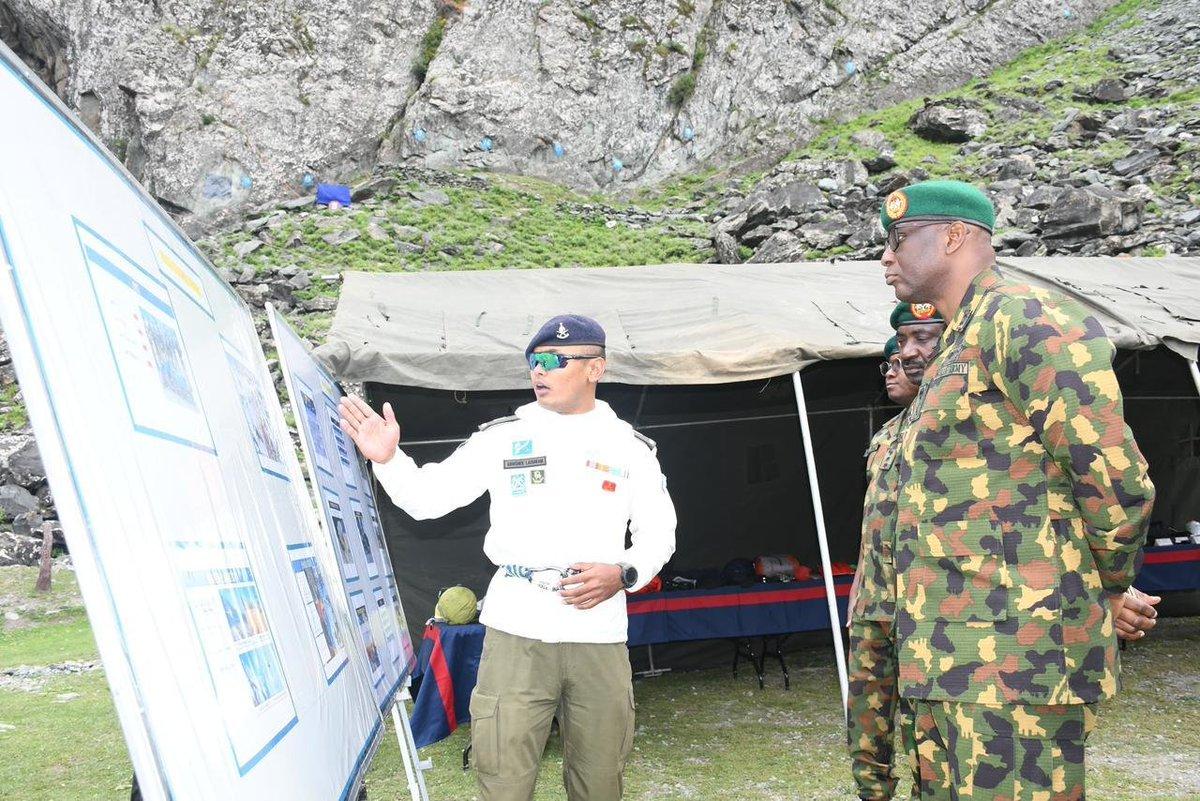
The Nigerian Army has begun deploying 600 personnel to India for specialized jungle and mountain warfare training aimed at improving combat readiness in difficult terrain. The first 300 soldiers departed Nnamdi Azikiwe International Airport in Abuja on October 22 aboard Indian Air Force C-17 and Airbus A321 aircraft, while arrangements are underway to transport the remaining 300. The Army says the training will strengthen operations against terrorists, insurgents and other armed groups using forests, mountains and inaccessible terrain as safe havens.
The Nigerian Army has begun deploying 600 personnel to India for specialized jungle and mountain warfare training as part of a broader effort to strengthen combat effectiveness against terrorists, insurgents and other armed groups operating from forests, hills and other difficult terrain across Nigeria. The first batch of 300 personnel departed Nnamdi Azikiwe International Airport in Abuja on October 22 aboard Indian Air Force transport aircraft, including a C-17 strategic airlifter and an Airbus A321, while arrangements are underway for the remaining 300 soldiers to join them. Army authorities say the program is designed to improve the troops’ ability to operate in environments where dense vegetation, steep terrain, poor visibility and limited road access can give armed groups a tactical advantage.
The deployment was initiated under Chief of Army Staff Lieutenant General Waidi Shaibu and forms part of the Army’s continuing attempt to adapt its training doctrine to the changing nature of Nigeria’s internal security threats. Acting Director of Army Public Relations Colonel Appolonia Anele said the initiative is intended to enhance operational proficiency, strengthen counter-insurgency capabilities and improve the readiness of personnel expected to serve in areas where conventional maneuver can be difficult. Major General U.G. Yusuf, Coordinator of the Nigerian Military Training Support and Advisory Team at Army Headquarters’ Department of Army Training, represented the Army leadership at the departure ceremony, which was also attended by Indian diplomatic officials.
The Army’s decision to send such a large contingent abroad reflects the growing importance of terrain-specific warfare in Nigeria’s security environment. In the northeast, Boko Haram and Islamic State West Africa Province fighters have long used forests, scrubland and difficult rural terrain to conceal camps, move fighters and launch attacks before dispersing. In the northwest and north-central regions, heavily armed criminal groups involved in kidnapping, extortion, village raids and cattle rustling have also established bases inside large forest belts, using natural cover and poor road networks to complicate ground operations. These conditions have made specialized jungle operations increasingly relevant to Nigerian military planning.
Forested terrain presents a different set of operational challenges from open-country combat. Troops often have restricted lines of sight, reduced communications range and fewer opportunities to use vehicles, while adversaries can exploit vegetation to stage ambushes, conceal movement and establish temporary bases. Units operating in such environments need strong navigation skills, close coordination, disciplined patrol formations and the ability to sustain themselves for long periods away from fixed bases. Mountain warfare presents another layer of difficulty because steep slopes, rocky routes and elevation can slow movement, reduce vehicle access and place greater physical strain on soldiers carrying weapons, ammunition and supplies.
The Nigerian Army says the training in India will expose personnel to techniques designed specifically for these environments. Although the detailed curriculum has not been publicly released, jungle and mountain warfare programs typically include navigation, small-unit tactics, reconnaissance, ambush response, survival, casualty evacuation, movement through difficult terrain and sustaining operations where conventional logistics are limited. The emphasis is expected to be on practical field training rather than classroom instruction alone, allowing Nigerian troops to adapt techniques used by the Indian Army in similarly demanding environments.
India brings considerable experience to such training because its military operates across some of the world’s most varied terrain, from dense jungle regions in the northeast to high-altitude mountain areas along the country’s northern borders. The Indian Army has spent decades developing specialist doctrine for operations in forests, mountains and areas affected by insurgency, and Nigerian military planners appear to see value in adapting some of those methods to local security conditions. The partnership also reflects a long-running defense relationship between Abuja and New Delhi rather than a newly created arrangement.
India has been involved in Nigerian military education and capacity building since the early years following Nigeria’s independence, and the two countries have maintained cooperation in areas including professional military education, counter-terrorism, counter-insurgency and maritime security. A formal defense cooperation agreement signed in 2007 expanded collaboration in training, intelligence-related capacity, anti-piracy operations and broader military exchanges. Nigerian officers have also attended military institutions in India, while Indian training teams have previously traveled to Nigeria to provide instruction.
One of the more recent examples came in 2021, when an Indian Army Mobile Training Team spent several months in Nigeria training approximately 200 Nigerian infantry and special-forces personnel in counter-insurgency, counter-terrorism and guerrilla warfare. That program focused on small-team tactics and field operations and was conducted inside Nigeria. The current deployment differs both in scale and structure because Nigerian troops are now being transported directly to India, with 600 personnel expected to participate rather than a smaller specialist group.
The use of Indian Air Force aircraft to transport the first contingent also demonstrates the level of coordination behind the program. The C-17 is a long-range strategic transport aircraft capable of moving large numbers of troops and equipment, while the accompanying Airbus A321 provided additional transport capacity. Army authorities said the first movement was completed successfully and that planning is continuing for the second group, although no public date has been announced for the remaining 300 personnel to depart.
The training also comes at a time when the Nigerian Army is reassessing how best to deny armed groups access to remote sanctuaries. Military operations can force insurgents and bandits away from towns and villages, but those groups often retreat deeper into forests and rugged terrain where they attempt to reorganize. Clearing those areas permanently requires troops who can remain in difficult environments for extended periods, move quietly, locate hidden camps and maintain pressure after adversaries abandon fixed positions.
That challenge is particularly visible in Nigeria’s northwest, where large forested areas stretch across multiple state boundaries and have been used by kidnapping and bandit networks as operating bases. Security forces have carried out repeated ground and air operations against such camps, but armed groups can disperse rapidly and reappear elsewhere if pressure is not sustained. Improved jungle warfare training could help units conduct longer patrols, track movement more effectively and operate with less dependence on roads and vehicles.
In the northeast, the lessons are similarly relevant. Sambisa Forest became internationally associated with Boko Haram during the height of the insurgency, while other wooded and rural areas around the Lake Chad basin remain contested. Nigerian forces have regained substantial territory over the years, but insurgent cells continue to use difficult terrain to conceal fighters, move supplies and launch raids against military positions and civilian communities. Specialized training can therefore strengthen units already operating in these environments rather than introducing an entirely new mission.
Mountain warfare expertise could also prove useful in areas where armed groups exploit hills, ridges and elevated terrain for observation and protection. Troops operating in such conditions must account for slower movement, physical exhaustion and limited access for vehicles or medical evacuation. Even basic activities such as moving ammunition, evacuating wounded soldiers or maintaining radio contact can become significantly more difficult when forces are dispersed across steep ground.
The Army’s emphasis on professional development suggests it wants the 600 personnel to serve as more than a temporary training contingent. If the program is structured effectively, those soldiers could return to Nigeria and transfer techniques to other formations through unit exercises, specialized schools and operational deployment. The long-term value of the training will therefore depend not only on what individual soldiers learn in India but also on how widely that knowledge is incorporated into Army doctrine and field practice after they return.
That question is important because foreign military training programs can have limited impact if newly acquired skills remain concentrated within a small number of personnel. Their broader effect increases when participants become instructors, help revise training manuals or are assigned to formations facing the same types of threats the program was designed to address. The Nigerian Army has not yet disclosed whether the returning personnel will be distributed across multiple commands, retained within specialist units or used as trainers.
The deployment also illustrates Nigeria’s effort to diversify its defense partnerships. Abuja maintains security relationships with several countries, including the United States, Britain, France, China, Turkey and Pakistan, while India has remained an important but sometimes less publicly visible partner. By drawing training support from multiple countries, the Nigerian military can expose personnel to different operational approaches rather than relying on a single external doctrine.
India’s involvement is particularly relevant because its own armed forces have extensive experience with internal-security operations and difficult geography. That does not mean Indian tactics can be transferred directly without modification, since Nigeria’s terrain, political environment and security threats differ significantly. The value of the partnership lies in adapting useful techniques to local conditions rather than copying them wholesale.
The training should also be understood as one part of a much wider security strategy. Better jungle and mountain warfare skills may improve tactical performance, but they do not by themselves solve the broader drivers of insurgency, terrorism or organized armed violence. Military effectiveness also depends on intelligence, equipment, logistics, local cooperation and coordination between the Army, Air Force, police and other security agencies. Long-term stabilization additionally requires functioning local government, economic opportunity and the restoration of civilian authority after armed groups are displaced.
Nigeria’s security environment has also become increasingly shaped by regional instability. Militant organizations remain active across the Lake Chad basin, while wider insecurity in the Sahel has created concerns about cross-border movement, arms trafficking and the ability of extremist groups to exploit weakly governed areas. Nigeria’s borders with Niger, Chad and Cameroon make regional developments directly relevant to military planning, particularly when armed groups can move through remote and poorly monitored territory.
The Army has therefore placed increasing emphasis on adaptability, rapid deployment and specialized training for personnel expected to operate in unconventional environments. Lieutenant General Shaibu has repeatedly identified training, discipline and operational readiness as priorities for the force. Sending 600 personnel to India fits that broader approach by focusing on a skill set directly related to some of the terrain Nigerian troops already encounter in active operations.
There are still several details that have not been made public. The Army has not announced the total cost of the program, how expenses are being shared between Nigeria and India, the precise location of the training or the expected duration of the course. It has also not disclosed the exact mix of ranks, units or military specialties represented among the 600 personnel.
Those details may emerge as the training progresses, but the strategic objective is already clear. The Nigerian Army wants troops better prepared to pursue armed groups into places where conventional forces can struggle to maintain pressure. Forests and mountain areas have repeatedly provided militants and criminal networks with concealment, mobility and protection, and the Army is attempting to reduce that advantage through more specialized preparation.
The most important measure of success will come after the personnel return to Nigeria. Their training will need to translate into better field discipline, stronger navigation, more effective small-unit tactics and improved performance during operations against groups using forests and rugged terrain as sanctuaries. If those skills are subsequently incorporated into Nigerian training institutions and wider formations, the impact could extend well beyond the original 600 soldiers.
For now, the confirmed development is that Nigeria has begun sending 600 Army personnel to India for specialized jungle and mountain warfare training, with the first 300 already departed from Abuja and the remaining 300 expected to follow. The initiative reflects a deliberate attempt by the Nigerian Army to match its training more closely to the environments in which many of the country’s most difficult security operations are now being fought, while deepening a defense relationship with India that has developed over decades.