
MILITARY DEMOLITION UNDERWAY AT LA BEACH AS MP CONFRONTS PERSONNEL
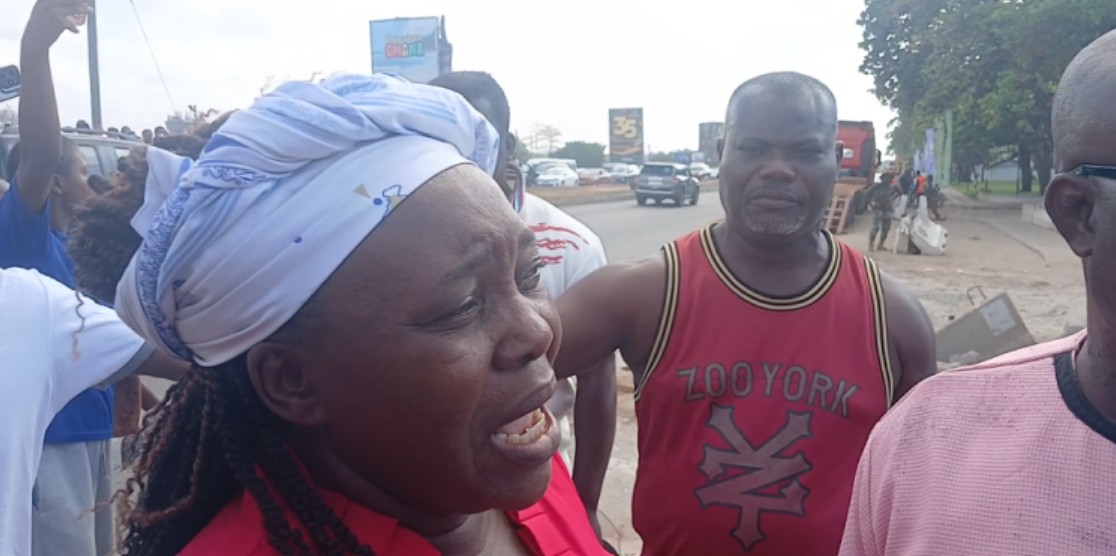
A demolition operation is underway around the La Beach area in Accra, with military personnel supervising the removal of structures and directing businesses and vendors to vacate parts of the beachfront. La Dadekotopon Member of Parliament Rita Naa Odoley Sowah confronted personnel at the site on Friday, October 2, saying she had previously received assurances that structures around the area would not be demolished. The MP also complained that she was not adequately informed before the operation began. Sowah alleged that military personnel fired shots and carried weapons around people at the site. That allegation has been reported by local media but the circumstances surrounding any gunfire have not been independently established. The demolition is unfolding against a wider dispute involving land ownership, beachfront businesses and legal proceedings over parts of the La coastal enclave.
Military personnel are supervising an ongoing demolition of structures around the La Beach area in Accra, triggering confrontation with La Dadekotopon Member of Parliament Rita Naa Odoley Sowah and reviving a long running dispute over ownership, businesses and development along the capital's coastline.
The operation began on Friday, October 2, with heavy machinery moving through sections of the beachfront while military personnel directed businesses and vendors operating around the resort area to vacate.
Sowah arrived at the scene and challenged the decision to proceed.
She said she had previously engaged relevant authorities over the planned demolition and had been assured that structures around the Labadi Beach area would not be affected.
The MP said she was therefore surprised to arrive and find the operation underway.
MP SAYS SHE WAS GIVEN ASSURANCES
According to Sowah, she had sought clarification from authorities before Friday's exercise because of concerns among businesses and residents.
She said she was told the area would be spared.
The MP complained that neither she nor her team received adequate information before the demolition began.
She questioned why the operation was proceeding despite what she described as earlier assurances.
Sowah also said officials at the scene later told her that the structures were being removed because the land belonged to Labadi Beach Hotel.
That claim sits at the center of a broader land ownership dispute that has already generated legal controversy.
GUNFIRE CLAIM HAS NOT BEEN INDEPENDENTLY ESTABLISHED
One of the most serious allegations made by the MP concerns the conduct of military personnel during the operation.
Sowah alleged that personnel were firing shots while armed officers moved around people gathered at the site.
Local media reported her allegation.
However, there has not yet been independent confirmation establishing the precise circumstances of any gunfire.
It is not clear from currently available information whether shots were fired as warning shots, whether live ammunition was involved or whether any person was specifically targeted.
No confirmed injuries resulting from gunfire had been publicly announced at the time of reporting.
For that reason, the allegation should remain attributed to the MP unless military authorities or other independent evidence provide further clarification.
MILITARY PERSONNEL DIRECT BUSINESSES TO LEAVE
Military personnel supervising the demolition have instructed businesses and vendors operating within the affected area to leave so the operation can proceed.
Heavy equipment has been deployed to pull down structures.
The extent of the demolition and the complete list of affected businesses have not yet been officially detailed.
The immediate operation appears to involve structures around the La Beach and La Pleasure Beach area.
That distinction matters because the current dispute is not identical to the recent demolition at nearby Laboma Beach.
LA BEACH AND LABOMA ARE NOT THE SAME CASE
Accra's coastline has experienced several demolition exercises in recent weeks.
In September, structures at Laboma Beach were demolished as part of a government flood mitigation exercise involving the Kpeshie Lagoon.
Authorities said some structures had been built within a lagoon buffer zone and were obstructing the natural movement of water toward the sea.
That operation was carried out by a government post flood mitigation task force, with the Ghana Armed Forces' 48 Engineer Regiment involved in execution.
The La Beach dispute now unfolding involves separate questions about beachfront ownership, businesses and legal claims.
Conflating the two could create confusion over why the current structures are being demolished.
LAND OWNERSHIP DISPUTE HAS BEEN DEVELOPING FOR WEEKS
The confrontation did not begin on Friday.
Management and operators at La Pleasure Beach Resort had already raised alarm in September over what they described as a 24 hour directive to vacate the property ahead of a possible demolition.
They said the directive followed a petition concerning ownership of the beachfront land.
Management disputed claims that the disputed area belonged to the government or another commercial entity.
They argued that the land formed part of traditional Ga lands.
The operators also said ownership questions were already before the courts.
RESORT OPERATORS SAY CASE IS BEFORE COURT
La Pleasure Beach Resort management previously argued that demolition should not take place while litigation involving the land remained unresolved.
Its representatives appealed to President John Dramani Mahama to intervene.
The operators argued that removing structures while the ownership dispute remained before a court could prejudice the legal process.
Those claims represent the position of the businesses and should not be treated as a final judicial determination of ownership.
The court process, rather than competing public statements, will ultimately determine the legal rights of the parties if the dispute proceeds to judgment.
LABADI BEACH HOTEL HAS BEEN MENTIONED IN THE DISPUTE
The MP said she was informed that the current operation was connected to a claim that the land belonged to Labadi Beach Hotel.
Earlier reporting also indicated that the dispute involved assertions connected to property around the hotel and nearby beachfront establishments.
The exact boundaries of the disputed land are important.
Coastal properties can involve overlapping claims relating to traditional ownership, state acquisition, leases and commercial interests.
Without complete land records and court findings, it would be premature to state definitively which party owns every affected parcel.
WHY LAND DISPUTES IN ACCRA CAN BECOME COMPLICATED
Land ownership in parts of Greater Accra can involve several layers of competing interests.
Traditional authorities may assert customary ownership.
Government institutions may rely on historical acquisitions or leases.
Private companies may hold registered interests.
Individuals and businesses may also occupy land based on agreements with families, chiefs or other entities.
When these claims overlap, disputes can last for years.
Demolition before final legal resolution can therefore become particularly controversial.
THE MILITARY'S ROLE WILL ATTRACT SCRUTINY
Another major issue arising from Friday's exercise is the use of military personnel.
The Ghana Armed Forces is frequently deployed to support state operations that require security or engineering capacity.
The military's engineer units also possess heavy equipment and technical capability useful for large demolition or disaster response operations.
However, the presence of armed soldiers in a dispute involving civilian businesses can create tension.
Questions are therefore likely to focus on which state institution authorized Friday's operation and what specific mandate the military was given.
WHO ORDERED THE OPERATION?
At the time of reporting, a detailed official statement explaining the full legal and administrative basis for Friday's demolition had not been publicly released.
That is one of the most important unanswered questions.
The public needs clarity on which agency authorized the operation.
Authorities also need to explain the precise land area affected, the legal instrument supporting the demolition and what notice was provided to occupants.
Those details would help distinguish lawful enforcement from competing allegations being made at the scene.
PRIOR NOTICE IS ALREADY DISPUTED
Communication is one of the central points of disagreement.
The MP says she had been assured structures would not be demolished and says she was not adequately informed before Friday's operation.
Business operators have previously complained about short notice periods.
Authorities involved in earlier coastal demolition exercises have argued that affected operators were given sufficient warning.
Whether proper notice was provided for the specific structures being removed Friday may become an important legal issue.
BUSINESSES COULD FACE SIGNIFICANT LOSSES
The La coastline contains hospitality, entertainment and tourism businesses that have invested in buildings, furniture, equipment and other infrastructure.
Demolition can therefore have significant economic consequences.
Affected operators may lose both physical property and future revenue.
Workers can also lose jobs if businesses cannot reopen.
The government may argue that structures occupying land unlawfully cannot rely on investment alone as protection against enforcement.
Businesses may respond that investments were made based on agreements or permissions they believed were valid.
These competing positions illustrate why the underlying ownership dispute is so important.
TOURISM IS ALSO PART OF THE STORY
The La coastal strip is one of Accra's most recognizable leisure areas.
It includes hotels, beaches, restaurants, entertainment venues and businesses serving both residents and visitors.
Repeated demolition disputes can affect investor confidence in beachfront development.
Investors need confidence that land titles and leases will be recognized.
Government also needs the ability to enforce planning, environmental and land laws.
Balancing those interests requires clear documentation and predictable processes.
GHANA'S COASTLINE FACES REAL DEVELOPMENT PRESSURE
The controversy also forms part of a wider challenge along Accra's coast.
Development has expanded rapidly.
Some buildings have appeared near lagoons, drainage channels and environmentally sensitive areas.
Authorities have raised concerns that uncontrolled development can worsen flooding and obstruct natural waterways.
Businesses and landowners, however, have sometimes accused government agencies of acting inconsistently or failing to enforce rules until after large investments have already been made.
That history contributes to mistrust whenever demolition teams arrive.
THE EARLIER LABOMA EXERCISE CREATED TENSION
In September, businesses at Laboma Beach criticized a separate demolition operation that removed structures around the Kpeshie Lagoon buffer zone.
Authorities said that exercise was necessary to restore water flow and reduce flood risks.
The Post Flood Mitigation Task Force said structures within the protected area had reduced the lagoon's ability to retain and discharge water.
Business operators challenged aspects of that explanation and said investments worth millions of dollars had been destroyed.
That dispute remains relevant because communities around La now view new demolition operations against the background of what happened at Laboma.
COURT ORDERS AND ADMINISTRATIVE POWER
If parts of the La Beach property are genuinely subject to ongoing litigation, the legal position will depend on what orders, if any, the court has issued.
The existence of a lawsuit alone does not automatically prevent all government action.
Courts can issue injunctions or other orders restricting what parties may do while litigation continues.
Without seeing the full court record, it is not possible to conclude whether Friday's demolition violates a specific court order.
That distinction is important.
Public claims that a matter is "in court" do not by themselves establish that demolition is legally prohibited.
AUTHORITIES NEED TO EXPLAIN THE BASIS FOR ACTION
The most effective way to reduce confusion would be for the institution directing the operation to publish a clear explanation.
That statement should identify the legal authority under which the demolition is being carried out.
It should identify the land involved.
It should explain the notice given to occupants.
It should also clarify the role of the Ghana Armed Forces.
The allegation of gunfire requires a separate response.
MILITARY SHOULD CLARIFY GUNFIRE ALLEGATION
Because Sowah's allegation involves armed military personnel, clarification from the Ghana Armed Forces would be important.
If shots were fired, authorities should explain what happened and why.
If the allegation is incorrect, the military should state that clearly.
Transparent explanation is particularly important during operations taking place in crowded civilian environments.
The presence of weapons can heighten tensions even when they are not discharged.
POLITICAL DIMENSION CANNOT REPLACE THE LEGAL QUESTIONS
Sowah is both the MP for La Dadekotopon and a political figure.
Her intervention will inevitably attract political attention.
But the central questions remain legal and administrative.
Who owns the affected land?
Who authorized the demolition?
Was proper notice given?
Is there a court order affecting the operation?
What exactly happened regarding the alleged gunfire?
Those issues should be resolved through evidence and official records rather than partisan claims.
WHAT HAPPENS TO DISPLACED OPERATORS?
Another issue is what happens to businesses ordered to leave.
Authorities have not yet publicly detailed whether alternative locations, compensation or transitional arrangements will be provided.
Whether compensation is legally required depends on the nature of the affected occupants' rights.
A lawful owner whose property is compulsorily acquired may have different rights from an unauthorized occupant.
That makes the land status of each affected business important.
WHAT HAPPENS NEXT
The immediate question is whether the demolition will continue throughout Friday and how many structures will ultimately be removed.
Attention will also turn to whether government, National Security or the Ghana Armed Forces issues a detailed statement explaining the operation.
Rita Naa Odoley Sowah is likely to continue demanding answers over the assurances she says she previously received.
Affected businesses may also seek urgent legal intervention if they believe the demolition violates their rights.
The gunfire allegation will require clarification.
Until independent evidence or an official account establishes what happened, it should remain described as an allegation by the MP.
The deeper dispute may take much longer to resolve.
Friday's demolition is visible and immediate.
The underlying conflict involves land ownership, court proceedings, traditional interests, commercial investment and state authority along one of Accra's most valuable stretches of coastline.
For residents and businesses in La, the central concern is no longer whether demolition might happen.
It is already happening.
The next question is whether authorities can demonstrate clearly why it is happening and whether the process complies with the law.