LAGOS COURT ORDERS ARREST OF PASTOR JIMMY ODUKOYA AS FOUNTAIN OF LIFE CHURCH LEADERSHIP CRISIS DEEPENS
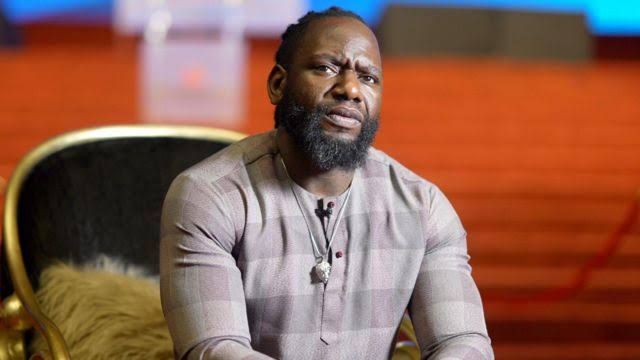
A Lagos State High Court sitting in Ikoyi has issued a bench warrant for the arrest of Pastor Jimmy Odukoya after he failed to appear in contempt proceedings arising from the ongoing leadership crisis at The Fountain of Life Church. Justice O. Adewunmi-Oshin issued the warrant on Thursday, November 26, 2026, and directed that the case be returned to the administrative judge for reassignment. The development follows a November 18 court order restraining Odukoya from acting as the church's senior pastor and spiritual head. A faction of the church's trustees previously announced his removal, citing a December 2021 recording in which his late father, Pastor Taiwo Odukoya, reportedly identified Pastor Kunle Areogun as his preferred successor. Jimmy has rejected his removal and instituted separate legal proceedings against his sister, Pastor Tolu Odukoya-Ijogun, and seven other church members, insisting that his appointment in September 2023 was legitimate.
A Lagos State High Court sitting in Ikoyi has issued a bench warrant for the arrest of Pastor Jimmy Odukoya following his failure to appear before the court in contempt proceedings arising from the escalating leadership dispute at The Fountain of Life Church. Justice O. Adewunmi-Oshin issued the warrant on Thursday, November 26, 2026, after Odukoya failed to attend proceedings instituted against him by the church's Incorporated Trustees. The judge also directed that the case file be returned to the administrative judge for reassignment, introducing another significant development into a legal battle that has divided the leadership of one of Nigeria's prominent Pentecostal churches. The latest order comes amid competing claims over the succession arrangements reportedly established by the church's late founder, Pastor Taiwo Odukoya, and the legitimacy of Jimmy's appointment as senior pastor following his father's death in 2023.
The arrest warrant follows an earlier directive issued by Justice Adewunmi-Oshin on November 18, restraining Jimmy Odukoya from acting or presenting himself as the Senior Pastor and Spiritual Head of The Fountain of Life Church. The order also restricted him from interfering with the church's administration, governance and religious activities while the substantive dispute remained before the court. The Incorporated Trustees subsequently initiated contempt enforcement proceedings, alleging that Odukoya had failed to comply with the restrictions imposed upon him. His absence from Thursday's hearing prompted the court to authorize his arrest, although there has been no independent confirmation that law enforcement officers have executed the warrant or taken him into custody.
According to TVC News, journalists were reportedly prevented from covering Thursday's proceedings before the hearing commenced at the Lagos State High Court in Osborne Estate, Ikoyi. Odukoya had previously been directed to appear before the court on November 26 in connection with allegations that he continued to exercise leadership responsibilities despite the November 18 injunction. The restrictions on media access have limited the amount of independently available information concerning the arguments presented during the hearing. Nevertheless, multiple Nigerian news organizations have confirmed the issuance of the bench warrant and the judge's decision to refer the case for reassignment.
The legal confrontation represents a substantial escalation in a leadership crisis that became public on November 17, when a faction of The Fountain of Life Church's Board of Trustees announced that Jimmy Odukoya was no longer recognized as the institution's senior pastor. The trustees attributed their decision to a review of the church's governing constitution and the emergence of a video recording that allegedly contained succession instructions left by the late Pastor Taiwo Odukoya. According to the faction, the material raised fundamental questions about the circumstances under which Jimmy assumed leadership of the church following his father's death. The announcement immediately exposed disagreements within the institution over the authority of its trustees, the interpretation of its governing documents and the validity of leadership decisions made in 2023.
The recording at the center of the dispute was reportedly made in December 2021, nearly two years before Taiwo Odukoya's death. According to the trustees, the late founder identified Pastor Kunle Areogun as his preferred successor while assigning Jimmy responsibilities involving church administration and youth ministry. The faction maintained that this recording had not been presented to the board when Jimmy was appointed senior pastor in September 2023. Its members argued that the previously undisclosed material warranted a reconsideration of the leadership arrangements adopted after the founder's death.
The trustees' interpretation of the recording has consequently become one of the most important issues confronting the church. Establishing that the late founder expressed a particular preference would not necessarily resolve every legal question surrounding succession, particularly if the church's constitution prescribed additional procedures for appointing or removing a senior pastor. The authority attached to the recording, the circumstances under which it was made and its relationship with subsequent decisions of the trustees remain relevant to the wider dispute. The courts have not yet issued a final determination establishing which interpretation of the succession arrangements is legally valid.
Following their announcement concerning Jimmy's removal, the trustees appointed Pastor Rotimi Okpaise to serve as the church's interim spiritual and administrative leader. The arrangement was presented as a temporary measure intended to provide institutional continuity while consultations and procedures for establishing a substantive leadership structure were undertaken. Okpaise's appointment introduced a third prominent figure into a dispute initially focused on Jimmy Odukoya and Kunle Areogun. However, the appointment has not eliminated the competing leadership claims, particularly because Jimmy has challenged the legitimacy of the decisions taken by the faction responsible for installing the interim leader.
Jimmy Odukoya has firmly rejected the assertion that he was lawfully removed from office, maintaining that his original appointment in September 2023 received unanimous approval from the church's recognized Board of Trustees. He has argued that the recent resolutions were not adopted through a valid exercise of the board's authority and therefore cannot legitimately terminate his leadership. His position challenges both the procedural basis of the trustees' announcement and the interpretation of the succession arrangements reportedly established by his father. The disagreement has subsequently moved beyond internal church deliberations into separate proceedings before the Lagos State High Court and the Federal High Court.
In a separate action instituted at the Federal High Court in Lagos, Odukoya and parties identified in published reports as the church's Incorporated Trustees challenged the validity of resolutions allegedly adopted by certain members of the board. The lawsuit names his sister, Pastor Tolu Odukoya-Ijogun, and seven other members of the church as defendants. The action seeks to overturn the decisions through which Jimmy was purportedly removed from office, raising questions concerning the legal composition of the board and the authority of the individuals involved. The inclusion of the church's Incorporated Trustees in competing proceedings illustrates the extent of the disagreement over who is entitled to represent the institution and exercise its corporate powers.
The involvement of Tolu Odukoya-Ijogun has also brought a personal dimension to a dispute that already encompasses complex institutional and legal questions. Both Jimmy and Tolu are children of the church's late founders and have participated in its religious activities over the years. Their involvement in opposing sides of the litigation reflects the seriousness of the disagreements surrounding the institution's leadership, although the precise nature of their personal relationship cannot be established from the court proceedings alone. The dispute should therefore be understood primarily through the competing legal claims rather than unsupported speculation about disagreements within the Odukoya family.
The November 18 restraining order was granted through an ex parte application, meaning that the court issued the initial directive without first receiving arguments from Odukoya's legal representatives. Such orders may be granted in circumstances where an applicant seeks immediate judicial intervention before the opposing party has been heard. They do not necessarily represent a final determination of the substantive claims and may subsequently be challenged through the appropriate judicial procedures. Odukoya retained the opportunity to contest the order, seek its discharge or respond to the allegations after being served with the relevant legal documents.
The question of whether the injunction was properly communicated to him has since become an important part of the controversy. Addressing worshippers during a church service on Sunday, November 22, Odukoya acknowledged that he was aware of reports concerning the restraining order but maintained that the court documents had not been formally served upon him. He also disputed suggestions that an alternative method of service had been completed. His remarks indicated that he intended to challenge the procedural circumstances surrounding the injunction while continuing to maintain that he remained the church's legitimately appointed senior pastor.
Odukoya also used the service to reassure members of the congregation, emphasizing their importance to the continued existence and spiritual mission of The Fountain of Life Church. His message suggested that he intended to remain connected to the congregation despite the escalating dispute concerning his leadership. The trustees, however, subsequently pursued contempt proceedings on the basis of their allegation that his conduct contravened the existing court order. Whether he was properly served, possessed legally sufficient notice of the order or engaged in activities prohibited by its terms remains a matter for judicial examination.
Thursday's bench warrant must be distinguished from a final finding that Odukoya committed contempt of court. A bench warrant is a judicial directive authorizing the arrest of an individual, frequently issued in circumstances involving failure to attend required court proceedings. Its issuance does not automatically establish the substantive allegations that originally brought the person before the court. In Odukoya's case, the underlying contempt proceedings and the broader dispute over his entitlement to lead The Fountain of Life Church remain unresolved.
The court's decision to return the case file to the administrative judge for reassignment introduces further procedural uncertainty. Reassignment ordinarily concerns the allocation of a matter to another judicial officer and does not independently extinguish existing court orders or determine the merits of the dispute. No confirmed announcement has established the identity of the judge who will subsequently handle the matter or the date of the next hearing. Those developments will be important in determining how the contempt proceedings advance and when the parties may receive further judicial directions.
The present controversy represents a significant departure from the circumstances surrounding Jimmy Odukoya's appointment in September 2023. Following the death of Pastor Taiwo Odukoya in August of that year, the church publicly announced that Jimmy would assume its senior leadership position. His appointment attracted widespread attention because of his established career in the Nigerian entertainment industry, his previous involvement in youth ministry and his distinctive public appearance. The announcement was initially presented as a new chapter in the church's development following the death of its founder, rather than the beginning of a prolonged dispute over succession.
The Fountain of Life Church was founded in 1992 by Pastor Taiwo Odukoya and his wife, Pastor Bimbo Odukoya, developing over subsequent decades into an influential Christian institution headquartered in Ilupeju, Lagos. The church became widely associated with teachings concerning family relationships, marriage, personal development, leadership and Christian spirituality. Bimbo Odukoya gained considerable national recognition through her ministry addressing relationships and family life, while Taiwo continued to expand the church's religious and administrative activities. Their work established a recognizable institutional identity that extended beyond the congregation directly attending services at its Lagos headquarters.
The church experienced a devastating loss in December 2005 when Bimbo Odukoya died following the crash of Sosoliso Airlines Flight 1145 in Port Harcourt. Her death generated widespread mourning within Nigeria's Christian community, particularly among individuals who had followed her teachings and television programs. Taiwo continued leading the institution following that tragedy until his own death in August 2023. The responsibility of maintaining the church's spiritual direction and organizational stability subsequently passed to a leadership structure whose legitimacy is now being contested before the courts.
Jimmy's background made his assumption of the senior pastor position particularly noteworthy. In addition to his religious activities, he had established a career as an actor and appeared in Nigerian productions as well as the internationally released film The Woman King. His involvement in entertainment brought him recognition among audiences who might not ordinarily follow the activities of Nigerian Pentecostal churches. His appointment consequently generated discussions about the relationship between contemporary popular culture, youth-oriented religious ministry and traditional expectations surrounding pastoral leadership.
Over the following years, Jimmy developed a public profile characterized by his distinctive preaching style, participation in social media and engagement with younger audiences. His appearance, including his dreadlocks and beard, previously attracted debate among some Christians concerning conventional expectations of religious leaders. Odukoya defended his personal presentation through references to his understanding of scripture, maintaining that physical appearance should not be treated as the principal measure of spiritual authority. Those earlier discussions concerned his public ministry and personal presentation rather than the legal questions currently before the courts.
The present dispute is fundamentally concerned with the institutional procedures governing leadership rather than Jimmy's acting career, appearance or preaching style. The central questions involve whether his 2023 appointment was valid, whether the trustees possessed authority to remove him and whether the late founder's recorded instructions altered the succession arrangements previously adopted by the church. Establishing the answers will require examination of the relevant governing documents, board resolutions and other evidence presented by the parties. Personal popularity and public recognition cannot independently determine the legal validity of a leadership appointment.
The controversy has also drawn attention to the position of Pastor Kunle Areogun, whose name has emerged through the trustees' account of Taiwo Odukoya's December 2021 recording. According to the faction challenging Jimmy's leadership, Areogun was the individual identified by the founder to assume primary spiritual responsibility for the church. However, the public emergence of that claim has not resulted in his confirmed installation as the institution's substantive senior pastor. The decision to appoint Rotimi Okpaise on an interim basis indicates that the trustees themselves have presented the current arrangement as temporary while the wider leadership questions remain under consideration.
For members of The Fountain of Life Church, the dispute creates uncertainty extending beyond the identity of the person authorized to preach or preside over worship services. Large religious institutions frequently maintain administrative departments, charitable programs, financial commitments, property interests and employment arrangements requiring recognized leadership. Competing claims to institutional authority can complicate decisions concerning those responsibilities, particularly where different groups maintain that they possess the legal power to act on behalf of the organization. The continuation of ordinary church activities therefore depends partly on establishing clear arrangements consistent with existing judicial orders.
The legal structure of incorporated religious organizations in Nigeria adds further significance to the dispute. Churches operating through incorporated trustees are subject to governing documents and applicable corporate legislation that establish how their administrative affairs are conducted. Although spiritual leadership may be informed by religious convictions and ecclesiastical traditions, decisions involving the legal authority of trustees, institutional property and organizational governance can raise questions falling within the jurisdiction of civil courts. A religious institution's internal character does not necessarily prevent judicial examination of disputes concerning its recognized corporate structure.
The existence of proceedings before both the Lagos State High Court and the Federal High Court reflects the different legal questions that may arise from such conflicts. The state court proceedings concern allegations involving compliance with a restraining order, while the separate federal action challenges resolutions associated with Jimmy's purported removal. The precise jurisdictional relationship between those cases will depend on the claims, reliefs sought and arguments advanced by the parties. Their existence does not mean that one lawsuit automatically invalidates orders issued in the other, making it important for the individuals involved to pursue their challenges through established legal procedures.
Succession disputes involving founder-led religious institutions have periodically attracted attention in Nigeria and elsewhere because of the complex relationship between personal religious authority and formal organizational governance. Founders may exercise considerable influence over the development of a ministry, while institutions often establish constitutions and boards intended to provide continuity beyond an individual's lifetime. Disagreements can emerge when different parties interpret a founder's expressed wishes differently or question whether procedures established during the founder's lifetime were properly followed. The Fountain of Life Church controversy illustrates the importance of determining how those arrangements interact when succession becomes contested.
The death of a prominent religious founder can create an especially sensitive transition because congregants may attach considerable emotional and spiritual significance to the individual's legacy. Members may have different expectations concerning whether leadership should pass to a family member, an experienced minister or another individual selected through institutional procedures. Those expectations can influence public reactions, but they do not substitute for the requirements contained within the organization's governing documents. Establishing legitimate succession requires clarity concerning the authority responsible for making appointments and the procedures through which those decisions acquire legal effect.
The present dispute has also generated wider discussion concerning transparency within religious organizations. The trustees' reliance on a recording reportedly made in 2021, alongside their claim that it was unavailable during the original appointment process, raises questions about how succession-related information was preserved and communicated. Jimmy's insistence that his appointment was unanimously approved introduces a competing account of the circumstances under which the transition occurred. Resolving those differences may require examination of board meeting records, formal resolutions and other contemporaneous evidence capable of establishing what information was available to the individuals responsible for the appointment.
The publication of selected material through social media and news organizations has provided the public with some insight into the competing positions, but it cannot replace a comprehensive examination of the evidence. Statements issued by opposing factions naturally reflect their respective interpretations of events, while video excerpts may not establish every relevant circumstance surrounding a decision. Judicial proceedings provide a mechanism through which the authenticity, relevance and legal significance of such material can be challenged. Until that examination is completed, claims about deliberately concealed instructions or unlawfully exercised authority should remain clearly attributed to the parties advancing them.
For the congregation, maintaining institutional stability during the dispute may prove particularly important. Worshippers who joined the church under its late founders, as well as those attracted to Jimmy's ministry following his appointment, may hold different views concerning the leadership controversy. Such differences can create tension within a religious community whose activities ordinarily emphasize shared faith and spiritual fellowship. The challenge confronting the church's leadership is preserving those relationships while allowing the legal questions surrounding its administration to be resolved through appropriate institutional channels.
The immediate focus now rests on the enforcement status of Thursday's bench warrant, the reassignment of the contempt proceedings and the continuation of Jimmy's separate legal challenge against the resolutions removing him from office. No verified announcement has established that he has been arrested following the issuance of the warrant, nor has a final judgment determined the lawful substantive leader of The Fountain of Life Church. The November 18 restrictions, the trustees' allegations of noncompliance and Odukoya's claims concerning the absence of formal service remain important elements of the continuing litigation.
More than three years after Pastor Taiwo Odukoya's death, The Fountain of Life Church is confronting a leadership dispute that has placed the interpretation of his succession instructions, the powers of its trustees and the legitimacy of its existing administrative arrangements under judicial scrutiny. The arrest warrant against Jimmy Odukoya marks a serious escalation in the proceedings, but it does not resolve the underlying conflict that brought the parties before the courts. With competing claims awaiting determination and the congregation facing uncertainty about its future leadership, the eventual resolution will depend on the evidence presented, the interpretation of the church's governing documents and the decisions of the appropriate courts. Until those questions are settled, the institution founded by Taiwo and Bimbo Odukoya remains at the center of a legal confrontation over how their religious legacy should be preserved and who possesses the lawful authority to lead it.