GOVERNMENT AND ORGANISED LABOUR AGREE ON PUBLIC-SECTOR PAY INCREASES FOR 2027 AND 2028
The government and Organised Labour have agreed to a 9% increase in total remuneration for public-sector workers from January 1, 2027. The adjustment consists of an eight-percentage-point increase in base pay and one percentage point for conditions of service. A further 10% across-the-board remuneration increase has been agreed for 2028, calculated using the applicable wage bill as of December 31, 2027. The agreement remains subject to the relevant legislative process.
The Ghanaian government and Organised Labour have reached a new public-sector remuneration agreement that will increase workers’ total remuneration by 9% from January 1, 2027, followed by a further 10% across-the-board adjustment from January 1, 2028, ending weeks of negotiations over how much public employees should receive as the government prepares its next national budget.
Under the agreement announced on Wednesday, October 28, the 2027 adjustment will be divided between an eight-percentage-point increase in base pay and an additional one percentage point allocated to conditions of service. The arrangement means the headline 9% figure should not be interpreted simply as a 9% rise in the national base pay, because one percentage point has specifically been assigned to improvements in conditions of service.
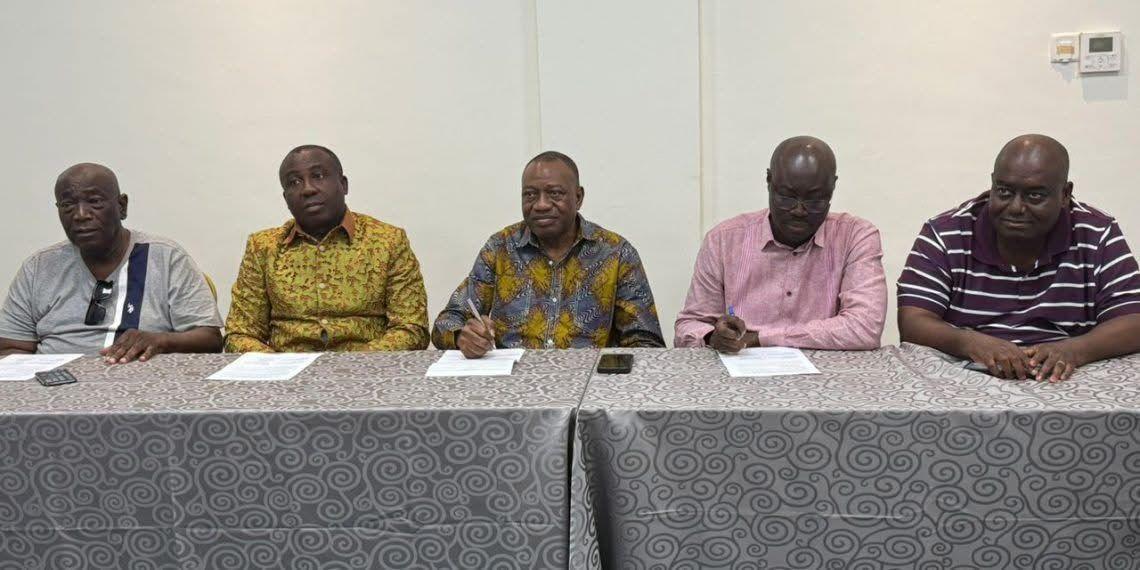
Joshua Ansah, Secretary-General of the Trades Union Congress and a leading representative of Organised Labour, announced the agreement following a meeting of the Public Services Joint Standing Negotiating Committee, the framework through which government and labour representatives negotiate public-sector pay.
The two sides also agreed ahead of time on a 10% across-the-board increase in remuneration for 2028, effective January 1 of that year. The 2028 adjustment will be calculated using the applicable public-sector wage bill as of December 31, 2027, effectively establishing a second year of agreed remuneration increases rather than returning immediately to negotiations over a completely new figure.
The agreement still requires the relevant legislative and budgetary processes before implementation. It will therefore have to be incorporated into the appropriate government expenditure framework, with the necessary allocations reflected in public finances as Ghana prepares for the 2027 fiscal year.
The settlement brings an end to a period of uncertainty surrounding the 2027 public-sector base-pay negotiations. Government representatives, the Fair Wages and Salaries Commission and Organised Labour had been engaged in discussions throughout October, with an earlier meeting on October 22 ending without an agreement.
At that stage, reports had circulated that the government was considering or proposing an increase of about 6% for 2027. The Fair Wages and Salaries Commission had not confirmed that figure as a final agreement, and Organised Labour continued negotiations while making the case that workers required an adjustment capable of protecting their incomes against persistent living costs.
The final structure therefore differs from the figures that had circulated during the negotiations. Instead of a 6% adjustment, the parties settled on total remuneration growth of 9%, although only eight percentage points will directly apply to base pay under the agreed 2027 formula.
That distinction is important because the national base pay is a fundamental component of salaries under Ghana’s Single Spine Salary Structure. Changes to the base pay affect how salaries are calculated across public-sector grades, while conditions-of-service provisions can cover benefits and employment arrangements negotiated for workers or particular categories of employees.
The agreement follows a 9% across-the-board increase in base pay for public-sector workers in 2026. That earlier deal was signed in November 2025 by representatives of the government and Organised Labour and applied from January through December 2026.
Under the 2026 agreement, the full 9% adjustment applied directly to the base pay on the Single Spine Salary Structure. Government also committed to continued discussions with unions over outstanding conditions-of-service matters.
The 2027 arrangement therefore represents a change in structure even though the headline total remuneration increase remains at 9%. Workers will receive an eight-percentage-point increase through base pay, while the remaining percentage point will be directed toward conditions of service.
The settlement comes at a time when the government is attempting to balance demands for improved worker compensation against the need to control public expenditure. Compensation of public employees represents one of the largest recurrent components of Ghana’s budget, meaning even relatively small percentage adjustments can have significant implications for government spending.
Organised Labour entered the negotiations arguing that workers continued to face pressure from the cost of living even as the rate of inflation had moderated from the much higher levels recorded during Ghana’s earlier economic crisis. Labour representatives maintained that slower inflation did not mean that prices of food, transportation, utilities, housing and other essential goods had returned to previous levels.
That distinction became a central part of labour’s position. Lower inflation means prices are generally rising more slowly, rather than that the overall price level has necessarily fallen. Workers therefore argued that years of higher inflation had already weakened purchasing power and that salary discussions needed to account for the cumulative impact on household finances.
Government negotiators, meanwhile, faced the challenge of agreeing to a level of compensation that could be sustained within the country’s fiscal framework without significantly increasing expenditure pressures or undermining efforts to stabilize public finances.
The decision to settle both the 2027 and 2028 adjustments could provide a measure of predictability for both sides. Government will have greater visibility over expected compensation costs during budget planning, while workers will have a clearer indication of the remuneration path beyond the next financial year.
For public servants, however, the practical value of the agreement will depend not only on the percentage increase but also on inflation, utility tariffs, transportation costs, food prices, taxation and other expenses that determine real household purchasing power.
Labour leaders have repeatedly warned in recent years that salary adjustments can quickly lose their value when followed by sharp increases in electricity and water tariffs, taxes or other essential costs. The TUC has previously urged government to ensure that pay agreements are not undermined by subsequent increases in household expenses.
The agreement also comes as Ghana prepares for broader reforms to the way public-sector remuneration is determined. Government has been working toward the establishment of an Independent Public Emoluments Commission, which is intended to create a more integrated approach to the management of public-sector compensation.
The proposed reform is designed to address concerns about fragmentation, unequal remuneration arrangements and differences in how salaries and allowances are determined across different sections of the public service.
Organised Labour has indicated that it supports the establishment of the new commission but wants workers and unions to remain fully involved throughout the process. Labour leaders have argued that changes to the compensation system must promote fairness and transparency rather than simply becoming a mechanism for limiting workers’ earnings.
The existing Single Spine Pay Policy was itself introduced to reduce disparities in public-sector compensation by placing employees on a common salary structure based on job evaluation and grading. Over time, however, concerns have persisted about market premiums, allowances, conditions of service and pay arrangements outside the central structure.
Government has described its proposed reforms as part of an effort to build a more transparent, equitable and financially sustainable public-sector compensation system.
The latest agreement will therefore operate during an important transitional period in Ghana’s wage administration. The Fair Wages and Salaries Commission remains central to the current negotiations, even as government works toward a new institutional framework for managing public-sector emoluments.
The 2028 component also gives the agreement a longer horizon than the annual pay settlements workers are accustomed to seeing. A 10% across-the-board increase has already been agreed for that year, although its actual monetary effect will depend on the wage levels applicable at the end of 2027.
For example, because the 2028 increase will be calculated on the applicable wage bill as of December 31, 2027, it will effectively build upon the remuneration structure created by the 2027 settlement rather than being calculated against an earlier salary level.
The agreement does not mean every public-sector employee will necessarily see precisely the same monetary increase in take-home pay. Individual earnings can differ according to grade, allowances, taxes, pension contributions, employment category and the specific conditions of service applicable to a worker’s institution or union.
The one-percentage-point allocation toward conditions of service could also require implementation arrangements across the public sector, particularly where individual unions or professional groups have different collective agreements and employment conditions.
Details of how that component will be distributed or reflected across different categories of workers are therefore likely to attract attention as implementation approaches.
The agreement will also be closely examined when the government presents its 2027 Budget Statement and Economic Policy to Parliament. The budget will provide a clearer indication of how the compensation settlement fits within projected revenue, expenditure, fiscal targets and the wider economic strategy for the coming year.
Public-sector compensation has historically been one of the most politically and economically sensitive areas of Ghanaian budget planning. Governments must maintain industrial peace and protect worker incomes while ensuring that salary commitments do not consume an unsustainable share of public revenue.
Labour negotiations can consequently become particularly difficult when economic conditions are weak or when government is under pressure to reduce expenditure.
The October negotiations demonstrated that tension. Initial meetings failed to produce an agreement, while public discussion around possible lower increases generated concern among some workers. The eventual 9% total remuneration settlement represents the compromise reached after continued engagement between government negotiators and Organised Labour.
The settlement also removes an important uncertainty ahead of the 2027 budget process. Ministries, departments and agencies will be able to prepare payroll and expenditure projections using an agreed remuneration framework, subject to the completion of the legislative and budgetary processes required for implementation.
For Organised Labour, attention is likely to shift toward ensuring that the terms are implemented exactly as negotiated and that the conditions-of-service component translates into meaningful benefits for workers.
Labour will also be watching developments in prices, utility tariffs and taxation because any significant increase in household expenses could affect the real value of the wage adjustment.
For government, the immediate task will be incorporating the agreement into the national budget while maintaining the fiscal targets it has set for the coming years. The addition of an agreed 10% adjustment for 2028 also means medium-term expenditure planning will need to account for a predetermined increase in the public-sector compensation bill.
The agreement does not resolve every issue surrounding public-sector pay. Questions about salary disparities, conditions of service, allowances and the design of Ghana’s future compensation system remain under discussion, while workers continue to press for improvements to incomes and employment conditions.
It does, however, establish the principal remuneration adjustments for the next two years and provides both government and workers with greater certainty than existed when negotiations began earlier in October.
From January 1, 2027, public-sector workers covered by the agreement are expected to see the 9% total remuneration adjustment take effect, subject to completion of the required legal and budget processes. A further 10% across-the-board adjustment is scheduled from January 1, 2028.
The focus will now move from negotiation to implementation, particularly the handling of the one-percentage-point conditions-of-service component and the incorporation of both years’ increases into government expenditure plans. The practical impact on workers will ultimately depend on how the agreement is implemented and how Ghana’s cost of living and broader economic conditions develop over the two-year period.