GHANA’S ECONOMY HITS GH¢1.4 TRILLION BUT JOB CRISIS EXPOSES THE GAP BETWEEN GROWTH AND EVERYDAY LIFE
Ghana’s economy reached approximately GH¢1.43 trillion in nominal GDP in 2025, while real GDP expanded by 6.0%, according to the Ghana Statistical Service’s new Ghana in Numbers 2025 report. However, GSS says the expansion has failed to create sufficient decent jobs: unemployment averaged 12.8%, youth unemployment remained significantly higher, close to two million young people were neither employed nor in education or training, and more than 70% of jobs remained informal. The report calls for more employment-intensive growth, easier access to private-sector credit, business formalisation and targeted policies for young people and regions.
Ghana’s economy expanded to approximately GH¢1.4 trillion in 2025 and recorded real economic growth of 6.0%, but the country’s own official statistics are exposing a much more complicated reality beneath the headline numbers as millions of young people continue struggling to find secure and productive employment. The Ghana Statistical Service, in its maiden Ghana in Numbers 2025 report, says the economy made significant progress across several macroeconomic indicators, including stronger growth, lower inflation, improved international reserves and a narrower fiscal deficit, yet those improvements have not generated enough decent jobs for a rapidly expanding labour force. The report presents perhaps one of the clearest official illustrations yet of the central economic challenge confronting Ghana: the country can grow, stabilise and expand in monetary terms while large numbers of citizens remain outside formal employment or survive through small, insecure and informal economic activities.
The GH¢1.4 trillion figure represents the total nominal value of goods and services produced in Ghana during 2025 at current market prices. It should therefore not be interpreted as money held by the government, available public revenue or the amount directly circulating in citizens’ bank accounts. Ghana Statistical Service data show that nominal gross domestic product increased from about GH¢1.13 trillion in 2024 to approximately GH¢1.43 trillion in 2025, while the inflation-adjusted economy expanded by 6.0%. The difference is important because nominal GDP rises both when the economy produces more goods and services and when general prices increase, whereas real GDP attempts to isolate actual changes in production. Ghana’s 6.0% real growth therefore confirms that economic activity itself expanded substantially in 2025 rather than the GH¢1.4 trillion figure being explained simply by higher prices.
The services sector remained the largest component of the economy, accounting for 45.9% of GDP, while industry contributed 31.3% and agriculture accounted for 22.8%. This structure reflects Ghana’s continuing transformation away from an economy dominated primarily by agriculture toward one where services such as finance, telecommunications, trade, transportation, hospitality, information technology and public services account for a much larger share of national output. Industry remains critical through mining, construction, manufacturing, oil and other productive activities, while agriculture continues supporting millions of households despite representing a smaller share of total GDP than in earlier decades.
The headline growth numbers are accompanied by several other improvements that would ordinarily suggest an economy moving in a positive direction. Inflation fell sharply during 2025, international reserves strengthened to about $13.8 billion, representing roughly 5.7 months of import cover, and the fiscal deficit narrowed considerably. Ghana also recorded a sizeable merchandise trade surplus, while the Bank of Ghana and other economic institutions have pointed to improving business confidence and stronger macroeconomic stability after the severe financial and currency pressures experienced earlier in the decade.
Yet the Ghana Statistical Service is making clear that macroeconomic improvement alone does not answer one of the questions that matters most to ordinary citizens: where are the jobs? Government Statistician Dr Alhassan Iddrisu said the data show a significant disconnect between the number of businesses operating in Ghana, the overall size of the economy and the number of high-quality jobs actually being created. Ghana had approximately 2.64 million business establishments in 2024 when enterprises operating from buildings, open spaces and mobile locations were counted, but the overwhelming majority were extremely small and operated informally.
Nine out of every ten establishments employed between one and five people, while only 4,874 establishments employed at least 100 workers. Even more strikingly, just 7.7% of businesses were formally registered, leaving more than nine in ten enterprises operating outside the fully formal business structure. This means that Ghana has a large number of economic activities and entrepreneurs but relatively few businesses with the scale, productivity and access to finance required to employ hundreds or thousands of workers.
The trend becomes even clearer when establishment growth is compared with job creation over the last decade. The number of business establishments operating from permanent buildings almost tripled between 2014 and 2024, according to GSS, while the number of workers employed by those establishments only doubled. In practical terms, Ghana has been producing new businesses more quickly than those businesses have been producing employment. This suggests that much of the country’s entrepreneurial expansion is concentrated in microenterprises that provide livelihoods primarily for their owners and a handful of workers rather than developing into larger companies capable of absorbing the growing labour force.
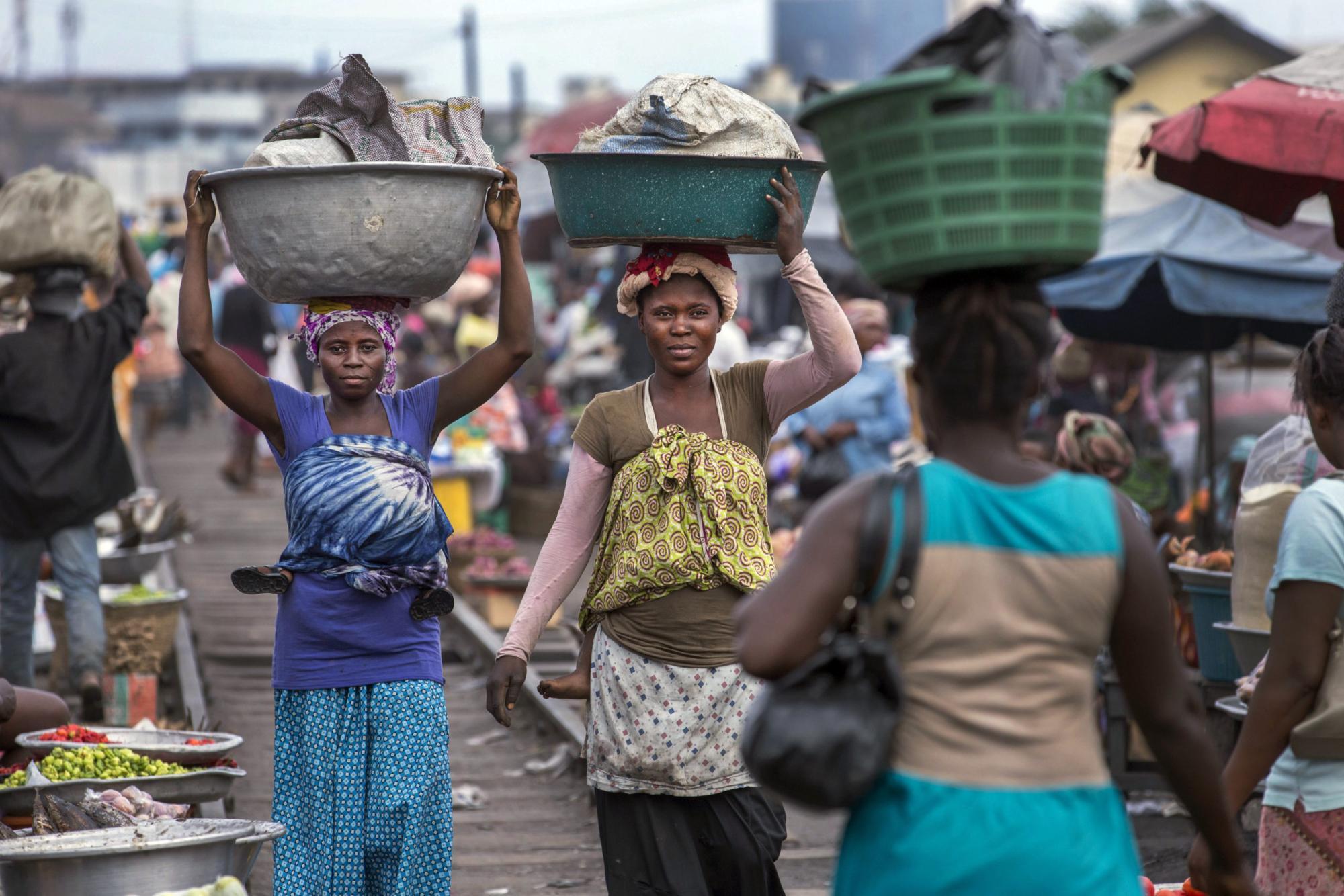
That distinction is critical because entrepreneurship is often presented as one answer to unemployment, but a country in which millions of people establish tiny informal businesses simply because formal employment is unavailable can appear highly entrepreneurial without necessarily becoming more productive. A person selling food, operating a kiosk, repairing phones or trading from the roadside is economically active, but that activity may not provide stable income, pension contributions, health insurance, paid leave, job security or opportunities for professional progression. The GSS report therefore draws attention not only to whether people are working but also to the quality and productivity of that work.
More than 70% of employment remains informal, meaning a large majority of workers are outside formal employment structures that provide stronger labour protections and social benefits. Informal work is a vital component of Ghana’s economy and supports millions of families, but it can also leave workers vulnerable to sudden income losses, illness and retirement insecurity. Many informal workers have limited access to credit, technology, professional training and larger markets, making it difficult for their businesses to grow beyond survival level.
The unemployment figures show the pressure most clearly among young people. The national unemployment rate averaged 12.8% during the first three quarters of 2025, but unemployment among people aged 15 to 24 averaged 32.4%, meaning almost one in three young people actively seeking work in that age group could not find employment. Among the broader 15-to-35 population, unemployment averaged 21.9%, substantially above the national figure and evidence that younger Ghanaians continue to carry a disproportionate share of the labour-market crisis.
The scale of the challenge becomes even more serious when people outside employment, education and training are included. Ghana had close to two million young people aged between 15 and 35 who were neither working nor attending school nor undergoing training during the third quarter of 2025. Women accounted for more than 60% of this group, highlighting a significant gender imbalance in access to economic and educational opportunities. The average NEET rate for young people aged 15 to 35 was 17.9% during the first three quarters of 2025.
This is one of the most consequential figures in the entire report because people who spend extended periods outside both work and education face a greater risk of long-term economic exclusion. A young person who finishes school but remains unemployed for several years can lose skills, professional confidence and access to networks, while employers may become increasingly reluctant to recruit someone whose résumé contains a prolonged period without formal work. When this occurs across hundreds of thousands or millions of young people, the problem becomes not simply individual unemployment but a national productivity challenge.
Ghana’s demographic structure makes the problem even more urgent. Approximately 12 million people were aged between 15 and 35 in 2025, representing roughly one-third of the population and the largest youth population in the country’s history. This group can become one of Ghana’s greatest economic advantages if young people are educated, skilled and employed productively, but it can also become a source of long-term economic and social pressure if job creation continually lags behind the number of people entering the labour market.
The Government Statistician has therefore called for economic policy to become more employment-intensive rather than focusing only on overall GDP expansion. Growth can be driven by sectors that produce considerable economic value but employ relatively few people, particularly when capital-intensive industries such as mining, telecommunications or highly automated services expand rapidly. Ghana’s challenge is to generate growth in industries capable of employing large numbers of people while maintaining productivity and wages high enough to improve living standards.
Manufacturing is likely to remain central to that debate. Countries that have successfully transformed their economies have often developed industries capable of moving large numbers of workers from low-productivity informal activities into factories, processing facilities, logistics, construction, technology and other more structured forms of employment. Ghana has pursued various industrialisation programmes over the years, but manufacturing has not yet expanded sufficiently to absorb the country’s growing workforce at the scale required.
Agriculture presents another major opportunity because it already supports large numbers of Ghanaians but continues to contain substantial productivity gaps. Improving irrigation, mechanisation, storage, processing and access to markets could create jobs not only on farms but in food processing, transportation, packaging, cold storage and exports. The challenge is ensuring agriculture becomes a modern commercial sector capable of attracting young workers rather than an activity associated primarily with subsistence and ageing rural populations.
The services sector, which now dominates Ghana’s economy, also contains major employment opportunities, but the quality of jobs varies significantly. Finance, technology and professional services can provide high-paying employment but often require specialised skills and may not employ large numbers relative to their economic output. Retail, transport, hospitality and personal services can absorb more workers but frequently operate informally and offer lower wages and limited job security.
The skills mismatch identified by GSS adds another layer to the challenge. Among employed young people, around 65% said their skills matched the work they were doing, but only 58% said their level of education was appropriately matched to the requirements of their jobs. This suggests that many young Ghanaians are either overqualified, underqualified or working in areas unrelated to their formal training.
For graduates, this can mean completing university or professional education only to accept work that does not require the qualifications they earned. For employers, it can mean difficulty finding workers with the practical or technical skills necessary for available positions. Both problems reduce productivity and can weaken public confidence in education as a pathway to economic advancement.
This helps explain why economic growth does not automatically solve unemployment. The structure of the economy determines which kinds of jobs are produced, while the education and training system determines whether workers possess the skills those jobs require. If the economy grows mainly through capital-intensive sectors while universities continue producing graduates for already saturated professions, GDP can increase while unemployment remains stubbornly high.
Access to finance is another major constraint identified by the Ghana Statistical Service. Private-sector credit stood at only 7.4% of GDP, limiting the ability of businesses to borrow affordably for expansion, equipment purchases, technology and hiring. Small businesses that cannot access formal bank credit often depend on personal savings, family contributions or expensive short-term loans, making it difficult to move from microenterprise status into larger and more productive operations.
Interest rates and collateral requirements can be particularly challenging for younger entrepreneurs and informal enterprises that have few assets and limited financial records. Formalising businesses could improve access to finance and government support, but formalisation itself can involve taxes, administrative requirements and regulatory costs that discourage small operators from registering.
This is why the GSS recommendation to formalise the approximately 92% of businesses currently operating informally cannot succeed through enforcement alone. Businesses need a reason to join the formal system. Easier registration, simplified taxation, affordable credit, government procurement opportunities, insurance and business-support programmes could make formalisation economically attractive rather than simply adding paperwork and expenses.
The report also suggests that employment strategies may need to become more region-specific. Ghana’s labour market differs substantially between Accra, Kumasi, Tamale, Takoradi, Cape Coast and smaller towns and rural communities. A national policy designed without recognising local economic conditions may produce limited results because the opportunities available in an agricultural district are very different from those in an urban technology or services hub.
Regional data could therefore help governments identify sectors with the greatest job-creation potential in each area. Agricultural processing may make sense in one region, tourism in another, logistics around ports and transport corridors, and technology or professional services in major urban centres. Such targeted planning is one of the purposes behind the new Ghana in Numbers platform, which brings together national and district-level data intended to support more evidence-based policymaking.
The government has acknowledged the scale of the employment challenge. Deputy Finance Minister Thomas Nyarko Ampem said at the report launch that the urgency of creating sufficient jobs has become greater than ever despite improvements in Ghana’s macroeconomic environment. He said the government intends to shift from economic stabilisation toward accelerated growth and employment creation, including through a proposed GH¢10 billion New Economy policy expected to form part of the 2027 Budget.
The programme is expected to target nine productive sectors considered capable of generating significant employment. The effectiveness of that approach will depend on the details eventually presented, including how financing is distributed, which industries qualify, how private companies participate and what mechanisms are used to ensure that public spending produces actual employment rather than temporary projects.
The government’s challenge is particularly difficult because job creation requires sustained private-sector investment. Government ministries can hire some workers, but public-sector employment cannot realistically absorb millions of young Ghanaians entering the workforce. The more sustainable route is creating conditions in which private businesses can expand, invest and recruit at scale.
That means macroeconomic stability matters. Lower inflation, greater exchange-rate stability and stronger reserves can make it easier for businesses to plan and invest because costs become more predictable. A company is less likely to expand or hire hundreds of workers when it cannot predict the price of imported machinery, fuel, raw materials or financing several months ahead.
Ghana’s improving macroeconomic indicators could therefore create a foundation for stronger employment growth, but the transition is not automatic. Businesses may initially use improved conditions to repair balance sheets, repay debt or invest in equipment before increasing employment. Policymakers must therefore monitor whether economic recovery eventually produces sustained job creation rather than assuming that GDP growth will inevitably reach workers.
The employment challenge is also closely linked to wages and job quality. Creating a large number of poorly paid jobs would reduce unemployment statistically without necessarily improving living standards significantly. The phrase “decent jobs” used in the GSS discussion is therefore important because it refers to work that provides reasonable income, security, dignity and some level of social protection rather than simply any activity that generates money.
A young person selling small items on the roadside may technically be employed, but if income is irregular and insufficient to meet basic needs, the economic reality remains precarious. Likewise, workers without pension contributions, health insurance or protection against sudden dismissal face long-term vulnerability even when unemployment data classify them as working.
Ghana’s labour challenge is therefore simultaneously about the number of jobs and the quality of those jobs. The economy needs enterprises capable of creating productive employment at scale, but those businesses must also generate enough value to pay workers sustainably.
The GSS report presents several encouraging indicators outside the labour market. Multidimensional poverty declined from 31.2% in 2022 to about 23% in 2025, showing improvement in a measure that considers several aspects of deprivation rather than income alone. Life expectancy reached approximately 65.1 years, active health insurance coverage stood at 66.2%, and other indicators showed progress in social development.
At the same time, major challenges remain. Around 13 million people experienced food insecurity in 2025, while more than 30% of urban residents lived in slums or informal settlements. These figures demonstrate why national economic performance can look strong on one set of indicators while millions of households continue experiencing significant hardship.
Food insecurity is particularly important because it directly affects the way citizens experience the economy. A country may record higher GDP, lower inflation and stronger foreign reserves, but households judge economic conditions primarily through whether they can afford food, housing, transport, healthcare and education. If those necessities remain difficult to obtain, macroeconomic improvements may feel distant from everyday life.
This gap between official economic success and household experience is not unique to Ghana. Countries around the world can record GDP growth without immediately producing broad improvements in living standards, particularly when growth is concentrated in sectors or regions that do not employ large numbers of people. Economists therefore increasingly examine income distribution, employment quality, poverty and household consumption alongside GDP.
The GH¢1.4 trillion figure should consequently be understood as evidence of the scale of Ghana’s economy rather than proof that every citizen has become economically better off. GDP measures production, not how evenly income is distributed or whether individuals have secure employment. A growing economy creates more resources and opportunities from which prosperity can be built, but policy determines how effectively those opportunities translate into jobs, incomes and public services.
The maiden Ghana in Numbers report appears designed partly to encourage that broader understanding. Instead of presenting individual statistics in isolation, GSS has brought together information on population, employment, businesses, poverty, health, trade, the environment, governance and the Sustainable Development Goals. This allows policymakers and the public to see how economic indicators interact rather than judging national progress through GDP alone.
Government Statistician Alhassan Iddrisu has argued that evidence should guide decisions on schools, hospitals, roads, water, job creation and other development priorities. The new online portal includes more detailed regional and district-level information and is expected to be updated as fresh statistics become available, allowing decision-makers to move beyond national averages.
This matters because averages can hide major inequality. Ghana may have a national unemployment rate of around 12.8%, but the figure facing young people is much higher. National poverty may decline while particular districts continue experiencing severe deprivation. Business formation may grow rapidly nationwide while employment opportunities remain concentrated in Accra and a small number of major urban areas.
Better data can reveal these differences, but data alone cannot solve them. The challenge is whether government policies, private investment and educational planning respond effectively to what the numbers show.
For Ghana, one of the most urgent messages is that economic stabilisation should now become a platform for productive employment. Lower inflation and stronger reserves create useful conditions, but the next phase of economic policy will increasingly be judged by how many sustainable businesses expand and how many young people move into productive work.
The nearly two million young Ghanaians outside employment, education and training represent one of the clearest measures of the stakes involved. Every year that large numbers remain disconnected from the productive economy increases the risk that skills deteriorate, household dependence grows and frustration deepens.
The gender dimension requires equally focused attention. Women account for more than six in ten young people in the NEET category, suggesting that employment and training policies must address barriers affecting women specifically. These can include childcare responsibilities, unequal access to finance, occupational segregation, safety concerns and social expectations that reduce women’s participation in education or formal employment.
Supporting female-owned enterprises may also have significant economic benefits because women already account for a large share of Ghana’s informal commercial activity. Helping those enterprises become more productive and formal could produce employment while strengthening household incomes.
The government’s proposed New Economy policy will therefore face a demanding test. Announcing billions of cedis for productive sectors can attract attention, but the more important question will be whether the investments create measurable additional employment. Policymakers will need to track how many businesses expand, how many jobs are permanent, what wages workers receive and whether targeted groups such as young people and women actually benefit.
GSS’s data provides a benchmark against which those policies can eventually be measured. If unemployment falls, youth NEET rates decline, businesses become more formal and average enterprise size increases over the coming years, that would suggest growth is becoming more employment-intensive. If GDP continues rising while those indicators remain largely unchanged, the disconnect highlighted in the current report will persist.
The private sector will be central to that transition. Ghana needs more firms capable of moving beyond the one-to-five-worker category and becoming medium and large employers. Achieving that requires electricity, affordable financing, reliable infrastructure, skilled labour, access to markets and predictable regulation.
Exports could also play an important role because Ghana’s domestic market alone may not be large enough to support rapid expansion across every productive sector. Companies able to sell processed foods, manufactured goods, digital services and other products beyond Ghana can grow more quickly and employ more people than businesses serving only local neighbourhoods.
The African Continental Free Trade Area, headquartered in Accra, creates an opportunity in that regard if Ghanaian businesses can become competitive enough to use it. Access to a continental market of more than a billion people could support larger enterprises, but only if firms can meet quality standards, finance production and overcome transportation and logistics costs.
Education policy must move in parallel. Producing more graduates without expanding suitable employment simply increases competition for a limited number of formal jobs. Technical and vocational education, apprenticeships and industry-linked training may therefore become increasingly important as Ghana attempts to develop manufacturing, construction, agriculture, energy and technology sectors.
Employers also need to participate more actively in curriculum development so that training institutions understand which skills businesses actually require. A closer relationship between education and industry could help reduce the mismatch identified in GSS data.
The Bank of Ghana has emphasised that reliable statistics are essential for monetary policy and financial regulation, but the same principle applies to employment strategy. Decisions about youth programmes, credit facilities and industrial development should be based on evidence showing where jobs are actually being created and which interventions have produced sustainable results.
The release of Ghana in Numbers 2025 therefore arrives at a significant moment. Ghana has moved beyond the worst of its recent macroeconomic crisis and is recording stronger growth, lower inflation and improved fiscal and external indicators. The challenge now is converting that recovery into an economy that creates opportunities at a scale visible to households.
Ghana’s GH¢1.4 trillion economy demonstrates that the country possesses substantial economic activity and productive potential. The uncomfortable part of the new report is that this potential is not yet producing enough formal and decent employment for its people, particularly its young population.
The figures show a nation with millions of businesses but very few large employers, a growing economy but persistent youth unemployment, improving macroeconomic stability but widespread informal work, and falling multidimensional poverty alongside significant food insecurity. These are not contradictory statistics; together they provide a more complete picture of an economy in transition.
Ghana’s next economic test will therefore be judged less by whether GDP reaches another trillion-cedi milestone and more by whether businesses begin hiring at a pace capable of absorbing the country’s growing workforce. Economic growth remains essential because jobs cannot be created sustainably in an economy that is shrinking, but growth becomes socially meaningful when it produces income, opportunity and security for ordinary people.
That is ultimately the warning contained in the Ghana Statistical Service’s latest numbers. Ghana has become a GH¢1.4 trillion economy and recorded one of its stronger recent growth performances, but millions of citizens are still waiting for that expansion to produce the stable employment opportunities they can feel in their own lives. The numbers show progress, but they also make the next national priority difficult to avoid: Ghana must now turn economic growth into jobs.