

GHANA OPENS A CEDI ROUTE TO CHINA AND THE DOLLAR IS NO LONGER THE ONLY WAY TO PAY
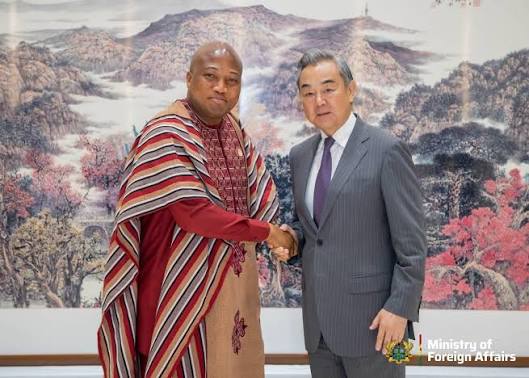
At the 132nd Monetary Policy Committee briefing, Dr Johnson Pandit Asiama said Ghanaian importers can fund eligible China payments from cedi accounts at Stanbic Bank, with settlement in yuan. Stanbic offers the service on China’s Cross Border Interbank Payment System and says customers need not hold a separate yuan account. Payments in by 2 p.m. GMT can settle the next business day. GCB Bank is working on a similar route. China accounted for about 22.3 percent of Ghana’s imports in 2024.
Ghanaian businesses buying from China can now start eligible payments from a cedi account, and the supplier is paid in yuan. The US dollar is still in the system. It is no longer the required middle step for every qualifying invoice.
Bank of Ghana Governor Dr Johnson Pandit Asiama disclosed the arrangement at the central bank’s 132nd Monetary Policy Committee press briefing. Stanbic Bank Ghana is piloting it. GCB Bank is working on a similar service. Asiama put the practical claim in plain language. Importers, he said, no longer have to carry dollars to pay for those imports. They can pay in cedis from Ghana. “As we speak, if you want to buy anything from China, just go to Stanbic Bank with your cedis. You are able to do that.”
That sentence is easy to overread. Chinese suppliers are not being paid in cedis. The customer funds the payment from a cedi account. The bank converts and routes the money. The China side of the transaction is settled in renminbi. The importer does not first have to buy dollars, lodge them, and send them through a dollar correspondent chain.
The old route is the one most traders know. A Ghanaian firm ordering machinery, phones, spare parts or consumer goods from Guangzhou or Yiwu asks its bank for dollars. The bank sells dollars against cedis, if it has them and if the paperwork clears. The payment then moves through correspondent banks, often in the United States or Europe, before it reaches the Chinese seller. Each leg can add a fee, a compliance check and a day. When dollars are tight, the importer queues with everyone else who needs them for fuel, medicine and debt service. China is large enough in Ghana’s import bill for that queue to matter.
Stanbic says China accounted for about 22.3 percent of Ghana’s imports in 2024. A separate report put bilateral trade at 11.8 billion dollars that year. Ghana Statistical Service figures have also put China’s share of imports above 20 percent in recent quarters. The goods are the usual mix for a Chinese supplier relationship. Machinery, electronics, vehicles, industrial inputs and finished consumer products. Infrastructure, mining and manufacturing ties sit beside the trade account. A payment rail built for that corridor is not a side product.
Stanbic is offering the service on its Africa China banking platform, using China’s Cross Border Interbank Payment System. CIPS is infrastructure authorized by the People’s Bank of China to clear and settle cross border transactions in yuan. It is the rail Beijing built so renminbi payments do not have to depend entirely on dollar correspondent banks. Stanbic Bank Ghana switched on client access in August 2026, after Bank of Ghana authorization, and described itself as the first commercial bank in the country to do so. The governor’s briefing is the central bank putting that pilot in the policy conversation, not the day the pipe was laid.
On Stanbic’s own page, a customer indicates Chinese yuan as the payment currency, uploads the supporting documents, and can submit by 2 p.m. GMT for processing the same day and settlement by the next business day, subject to regulation and compliance. The bank says clients keep their existing internet banking and enterprise channels. They do not have to install a new system, and they do not necessarily need a separate yuan account. The conversion sits inside the payment.
Stanbic Bank Ghana chief executive Kwamina Asomaning has said CIPS gives businesses a more direct route to Chinese counterparties and reduces the need for US correspondent or intermediary banks. That is the cost argument. Fewer banks in the chain can mean fewer fees and a clearer arrival time. It is also the political argument, and it should be kept in its box. A direct yuan rail is not a decision to abandon the dollar. Stanbic says CIPS does not replace SWIFT. Dollar, euro and sterling payments continue on the networks they already use. Only eligible yuan payments with participating CIPS institutions move on the new rail.
The access rests on a group relationship, not a new treaty. Standard Bank Group, Stanbic’s parent, sold a 20 percent stake to the Industrial and Commercial Bank of China in 2008. That holding has been the base for China Africa banking services in several markets. Stanbic says the link is what lets Ghanaian clients reach a payment network connected more directly to China.
GCB Bank is the second name in the governor’s remarks. Asiama said the bank is starting something similar, and that the central bank is taking the work seriously because trade with China is growing. GCB has not published customer rules, a cut off time or a launch date. Until it does, the corridor is a Stanbic pilot with a state bank preparing to follow. A second bank would matter. A payment option that sits in one institution is a product. A payment option in two or more is a market, and it gives importers a reason to compare price, speed and paperwork.
Asiama also said the Bank of Ghana would talk to its Chinese counterparts about the zero tariff access Beijing has extended to African countries with which it has diplomatic relations. Business Insider Africa reported that policy as covering 53 African nations. The tariff opening and the payment rail are related only in sequence. One makes Chinese goods cheaper to land. The other changes how the invoice is settled. Neither, on its own, balances Ghana’s trade account.
The cedi effect is the claim that will be tested. If a large share of China invoices no longer generates a same day bid for dollars, dollar demand in the retail and corporate market should ease at the margin. The margin is the point. Yuan still has to be sourced inside the banking system. Someone holds the renminbi, or buys it, before the Chinese supplier is paid. The importer has simply stopped being the person who must find dollars first. If adoption stays inside a few large accounts, the foreign exchange market will barely notice. If GCB launches, if other banks follow, and if the values are material against that 22.3 percent import share, the Bank of Ghana will have a new lever and a new number to publish.
There are limits the briefing did not remove. The customer must bank with a participating institution. The payment must be eligible. Documents for the underlying trade are still required. Ghana’s foreign exchange rules, anti money laundering checks and sanctions screening still apply. A dollar contract does not become a yuan contract because a rail exists. A Chinese supplier who prices in dollars will still be paid in dollars unless the contract changes. The cedi is not convertible at a shop counter in Shenzhen.
What is confirmed is narrower, and more useful, than the headline version. Stanbic is live on CIPS. Eligible payments can start from a cedi account. The importer need not buy dollars as the bridge currency. Settlement with the Chinese counterparty is in yuan. Cut off for next business day treatment is 2 p.m. GMT, with complete documents. GCB is building a parallel service. The Bank of Ghana has endorsed the direction at the 132nd MPC briefing.
What is not confirmed is a change in Ghana’s monetary regime. The dollar remains the main currency for fuel, parts of the debt service and a large share of non China trade. SWIFT remains the messaging system for most of the rest of the world’s payments. CIPS is an additional clearing option for renminbi. The next evidence will be volumes, not speeches. If importers use the rail, settlement times and fees should show it. If they do not, the pilot will stay a press line.