
CHRISTIAN COUNCIL URGES REFORMS TO PROTECT RELIGIOUS FREEDOM WHILE PRESERVING MISSION SCHOOL IDENTITY
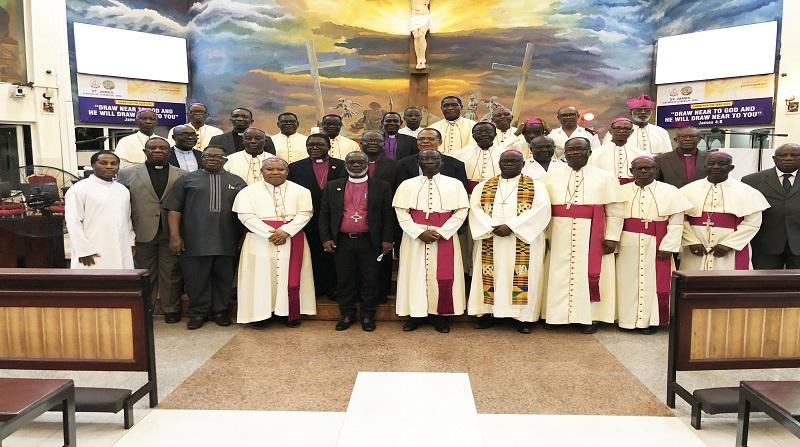
The Christian Council of Ghana has called for clearer reforms governing religious freedom in schools while preserving the Christian identity of mission-founded institutions. Speaking at an IEA forum on the Constitutional Review Committee’s recommendations, Most Rev. Dr. Paul Kwabena Boafo backed protections against religious discrimination in admissions, boarding, discipline, student leadership and school activities while arguing that mission schools should still be allowed to maintain chaplaincies, symbols and legitimate religious traditions. The CRC proposes voluntary participation in worship, non-discriminatory alternatives for students who opt out, complaints mechanisms and stronger Ghana Education Service oversight.
The Christian Council of Ghana has called for clearer constitutional, legislative and administrative safeguards governing religious freedom in schools, arguing that students must be protected from discrimination and coercion while mission-founded institutions should also be allowed to preserve the religious identity and traditions on which they were established.
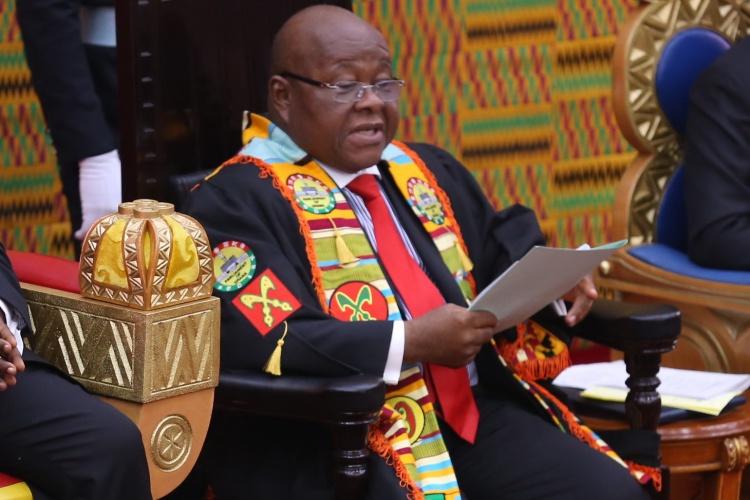
The Council’s position was presented by the Most Rev. Dr. Paul Kwabena Boafo, Immediate Past Presiding Bishop of the Methodist Church Ghana, during an Institute of Economic Affairs forum in Accra examining proposals contained in the Constitutional Review Committee’s report. The intervention comes amid a long-running national debate over how Christian mission schools that receive public funding should accommodate Muslim and other non-Christian students without being required to abandon their founding ethos.
The Christian Council said Ghana needs a framework that protects freedom of thought, conscience, belief and religion while also preserving equal access to education. It welcomed proposals aimed at preventing religious discrimination in admission, boarding arrangements, discipline, student leadership and participation in school activities, but said reform should not be interpreted as requiring mission-founded schools to become religiously neutral institutions.
The Council’s position attempts to hold together two principles that have increasingly come into tension in Ghana’s education system. The first is that students in publicly supported schools retain constitutional rights regardless of the religious history of the institution they attend. The second is that churches and religious bodies that founded and continue to support many of Ghana’s best-known schools have legitimate interests in preserving the character, values, worship traditions and educational philosophy associated with those institutions.
Boafo told the forum that Article 21 of the 1992 Constitution protects freedom of thought, conscience and belief and the freedom to practice and manifest religion, while Article 25 guarantees the right to equal educational opportunities and facilities. He said those protections mean publicly funded institutions cannot disregard students’ constitutional rights simply because they were established by a religious body.
At the same time, the Christian Council argues that constitutional protection applies to religious institutions as well as individuals. Mission schools, in its view, should therefore be permitted to retain chaplaincies, Christian symbols, institutional traditions and faith-based values so long as those practices do not violate the constitutional rights of students.
The issue has become increasingly significant because many of Ghana’s most prominent senior high schools were founded by Christian missions but now operate within the state-supported education system. Churches established schools across the country long before independence, frequently providing education in communities where government infrastructure was limited. Over time, many of those institutions entered arrangements under which the state pays teachers, regulates curriculum and provides other public support while the founding missions retain varying degrees of ownership, management involvement and religious influence.
That hybrid arrangement has produced recurring disagreements over whether public funding changes the constitutional obligations of a mission school. Christian bodies have consistently argued that government assistance does not amount to state ownership and should not erase the identity of institutions founded by churches. Students and rights advocates have countered that where schools operate as part of the publicly funded national education system, students cannot be compelled to surrender constitutional religious freedoms as a condition of receiving education.
The Constitutional Review Committee has now proposed a more explicit framework for resolving that tension. Its recommendations include allowing mission-assisted schools to maintain chaplaincies, religious symbols and institutional ethos while making student participation in worship, devotion or doctrinal instruction voluntary.
Under the committee’s proposal, students who do not participate in religious worship should not face academic, disciplinary or social penalties. Schools would instead be expected to provide supervised alternatives such as study periods, library sessions or civic and constitutional education.
The recommendations also call for stronger protections against religious discrimination in admissions, placement, access to boarding facilities, discipline, student leadership and the allocation of opportunities. Codes of conduct would be expected to rely on neutral standards such as punctuality, respect, honesty and acceptable behavior rather than denominational requirements that could disadvantage students from another faith.
The committee has further proposed structured complaints systems in schools, anti-retaliation protections for students and parents and oversight by the Ghana Education Service focused specifically on compliance with constitutional religious-freedom standards. Training on freedom of conscience, religious pluralism and constitutional neutrality would also be incorporated into teacher preparation and chaplaincy guidance.
The Christian Council’s latest statement broadly welcomes those protections while emphasizing that reform should not strip mission schools of their distinctive character. Boafo said schools should be able to maintain legitimate religious practices provided those practices do not infringe constitutional rights.
That qualification is important because the Council’s position has evolved within a broader debate involving Christian leaders, Muslim organizations, government agencies, parents and civil society.
In November 2025, the Christian Council and Ghana Catholic Bishops’ Conference issued a detailed joint statement defending the religious identity of mission-founded schools. They argued that Christian missions acquired land, built institutions, trained educators and shaped the culture of the schools long before the modern Ghanaian state assumed a major financial role in education.
The churches said state support should be understood as a partnership rather than a transfer of ownership and warned against policies that would effectively secularize schools whose Christian identity was central to their creation.
Their statement argued that parents exercise a choice when selecting mission schools and should understand the culture, rules and religious traditions of those institutions. The churches also warned that creating multiple parallel religious systems inside the same school could create administrative difficulties involving timetables, worship spaces, dress codes and discipline.
At the same time, the same statement endorsed an existing interfaith memorandum of understanding developed to guide religious tolerance in government-assisted and private mission schools.
That agreement emerged after years of controversy over fasting, religious dress and student worship.
The National Peace Council began facilitating discussions after recurring complaints from students and religious groups, including disputes dating back to 2015 over the wearing of hijab and the major controversy at Wesley Girls’ High School during Ramadan in 2021.
In that case, reports that Muslim students at Wesley Girls’ had been prevented from fasting during Ramadan triggered national debate and intervention by the Ghana Education Service, Muslim leaders, Parliament and Christian authorities. The GES subsequently directed that students should not be prevented from fasting where their parents had given consent, while school authorities raised concerns about health, discipline and the management of boarding students.
The disagreement quickly became larger than one school. It raised questions about whether students placed in Christian mission schools through Ghana’s centralized placement system could reasonably be said to have voluntarily accepted every religious practice of those schools, particularly where placement options may be limited.
It also raised a broader constitutional question: whether a publicly supported mission school can require participation in its own religious practices from students who belong to another faith.
The National Peace Council, Conference of Managers of Education Units, Ghana Education Service, Commission on Human Rights and Administrative Justice, mission representatives and other stakeholders eventually worked on a memorandum of understanding intended to provide clearer national guidance.
The document was validated in April 2024, endorsed by the Ghana Education Service in April 2025 and formally launched in September 2025 after being signed by 13 mission and religious bodies.
The agreement is designed to promote religious tolerance while preserving the missions and visions of faith-based schools. It contains guidance covering religious practice, dress, fasting, school culture and the creation of safe environments where students are not discriminated against because of religion.
On fasting, the framework allows students to observe religious fasts subject to parental or guardian consent and appropriate communication with school authorities. The goal is to balance students’ religious observance with health, safety and boarding-school responsibilities.
The agreement also acknowledges that students entering mission institutions should understand their culture and rules, but that schools themselves have obligations to respect diversity.
The Christian Council’s latest intervention suggests that church leaders now want those principles reinforced through more durable legal and constitutional arrangements rather than relying primarily on administrative agreements.
That is especially relevant because memoranda of understanding can guide institutions but do not carry the same authority as constitutional provisions, legislation or enforceable regulations.
A clearer legal framework could reduce the recurring situation in which disputes over fasting, worship, clothing or religious participation are handled differently from school to school.
The Constitutional Review Committee’s recommendations point in that direction by proposing explicit rules on voluntary worship, discrimination, complaints and GES oversight.
The recommendation that worship participation be voluntary is potentially one of the most consequential provisions.
Many mission schools hold compulsory morning devotion, chapel services, Sunday worship or other religious activities as part of school culture. For Christian students, those practices may be an expected part of life in a Christian institution. For Muslim, traditionalist or nonreligious students, compulsory participation can raise questions about freedom of conscience.
The committee’s proposed framework would allow the school to continue holding Christian worship without requiring every student to participate.
That approach seeks to distinguish between protecting a school’s institutional identity and compelling an individual to profess or participate in a faith.
The Christian Council’s latest statement appears broadly compatible with that distinction, provided the school remains free to maintain its Christian character.
The Council’s emphasis on religious identity also reflects concern among churches that years of government involvement have gradually weakened their influence over institutions they founded.
Church leaders have repeatedly called for greater participation in the appointment of heads, school governance and disciplinary policy.
Support for that position extends beyond church leadership.
NDC National Chairman Johnson Asiedu Nketiah said earlier this week that churches should have a meaningful role in managing the mission schools they founded, arguing that their educational contribution and emphasis on discipline should not be diluted simply because the state provides financial support.
His comments came at an event connected to the Seventh-day Adventist Church and reflected the broader argument that government assistance and mission ownership can coexist.
The debate, however, cannot be resolved solely through historical ownership.
Publicly assisted schools perform a public educational function and admit students from different religious backgrounds.
That places them within Ghana’s constitutional framework of equality, freedom of religion and access to education.
Article 21 protects freedom of thought, conscience and belief as well as the freedom to practice and manifest religion. Article 26 further protects the right to profess, practice, maintain and promote a religion, subject to the Constitution. Article 25 guarantees equal educational opportunities and facilities.
Those rights are not absolute in every circumstance, but any restriction must be justified within the Constitution.
The constitutional questions become particularly sensitive when children and adolescents are involved because students may have far less practical choice than adults attending a private religious institution.
A family may select a school because of academic quality, geographical location or placement results rather than because it shares the institution’s faith.
The computerized school placement system further complicates the argument that attendance always amounts to voluntary acceptance of the founding religion.
That is one reason the Constitutional Review Committee distinguishes school identity from individual religious participation.
Under its proposals, a Methodist, Catholic, Presbyterian, Anglican or other mission school could remain visibly Christian while being prevented from penalizing a Muslim student simply for declining Christian worship.
The same principle would apply in reverse to students of minority faiths attending schools founded by other religious traditions.
The committee also proposes that religious discrimination be prohibited in student leadership.
That is important because disputes can arise where otherwise qualified students are excluded from prefect positions or other leadership roles because they do not belong to the school’s founding faith.
Similar concerns apply to boarding access and extracurricular opportunities.
The proposed complaints mechanism would give students and parents a formal way to challenge discrimination without immediately escalating disputes through the media, political institutions or the courts.
Anti-retaliation protections would be intended to prevent students from being punished for raising legitimate concerns.
GES compliance audits would add an administrative enforcement mechanism, allowing the national education system to examine whether school policies comply with constitutional standards.
The effectiveness of those proposals would depend heavily on implementation.
A rule saying worship is voluntary, for example, would have limited practical value if students who decline participation are stigmatized by teachers or classmates.
Likewise, allowing mission schools to preserve their ethos would be meaningless if administrators are prevented from displaying religious symbols, maintaining chaplaincies or teaching the history and values associated with their founding bodies.
The policy challenge is therefore not simply writing a rule but defining the boundary between institutional identity and individual coercion.
That boundary is already being tested through litigation.
The long-running dispute surrounding Wesley Girls’ High School eventually reached Ghana’s Supreme Court, where questions were raised over Muslim students’ ability to fast, pray and observe religious dress within a state-supported Methodist institution.
The case asks the judiciary to consider how constitutional freedom of religion applies within a school that remains strongly identified with a particular Christian tradition.
The outcome could have implications well beyond Wesley Girls’.
A broad ruling could affect hundreds of mission institutions and reshape the relationship between government, churches and students.
The Christian Council’s call for legislative and administrative clarity may therefore also reflect a desire to resolve some of these issues through agreed national policy rather than allowing individual disputes to define the rules incrementally through litigation.
Church leaders have repeatedly said they do not oppose religious tolerance.
Their concern is that accommodation should not become a requirement to erase the institutional character that made mission schools distinct.
Muslim leaders and rights advocates, meanwhile, have argued that respect for institutional tradition cannot justify preventing students from practicing their own religion.
Those positions are not necessarily irreconcilable.
The Peace Council memorandum and Constitutional Review Committee proposals both attempt to create a middle framework in which schools retain their religious identity but students do not lose their personal religious freedom.
The Christian Council’s latest statement appears to move within that same framework.
It accepts stronger safeguards against discrimination while insisting that mission identity remains legitimate.
The unresolved questions are likely to concern the details.
Whether chapel attendance can ever be compulsory, whether students can wear religious clothing outside a prescribed uniform, how fasting is managed in boarding schools, whether separate prayer spaces must be provided and how much influence founding missions retain over school governance will all require clear rules.
The status of publicly funded mission schools will remain especially important.
A fully private religious school has a stronger argument for setting faith-specific expectations because families intentionally enroll under private conditions.
A government-assisted school occupies a more complicated space because taxpayers of different religions fund the system and students enter through national education structures.
That difference is central to the Christian Council’s own formulation.
Boafo acknowledged that publicly funded institutions are required to respect constitutional guarantees, even while defending their right to maintain religious identity.
That acknowledgment is significant because it moves the debate away from the idea that either side must completely defeat the other.
The question becomes how much accommodation can be required without fundamentally changing the character of the school.
Ghana’s long record of relatively peaceful Christian-Muslim relations gives the debate an additional national dimension.
Religious disputes in schools have periodically generated intense public arguments, but major Christian and Muslim institutions have generally preferred dialogue and negotiated arrangements.
The National Peace Council’s involvement since the Wesley Girls controversy reflects concern that unresolved school disputes could eventually damage that wider culture of coexistence.
The memorandum on religious tolerance was designed partly to prevent that outcome.
The Constitutional Review Committee’s proposals would now go further by embedding key principles in Ghana’s constitutional and administrative architecture.
Whether all of those recommendations ultimately become constitutional amendments, legislation or regulations will depend on the government, Parliament and the wider constitutional review process.
Some constitutional changes would require more demanding amendment procedures, particularly where entrenched rights provisions are involved.
Administrative changes through the Ghana Education Service could be implemented more quickly.
The Christian Council is effectively arguing that both levels may be needed: constitutional clarity on the rights involved and practical administrative rules for schools.
That combination could provide principals, mission authorities, students and parents with clearer expectations before disputes arise.
It could also reduce inconsistent enforcement.
One school should not treat a religious practice as constitutionally protected while another treats the same conduct as punishable solely because administrators interpret national policy differently.
The Council’s call therefore comes at a consequential moment in Ghana’s education and constitutional reform debate.
The country is trying to preserve institutions whose Christian heritage is deeply woven into the history of education while ensuring that those institutions serve a modern, religiously diverse population under a Constitution that protects individual freedom of conscience.
The Christian Council’s position is that those goals can coexist.
Mission schools should not be secularized simply because they receive state support, but neither should their religious identity be used to deny students constitutional protections.
That balance will now depend on how the Constitutional Review Committee’s recommendations are translated into law and policy, how the Ghana Education Service enforces the existing interfaith memorandum and how the courts eventually resolve disputes already before them.
The most important practical test will be whether the resulting system gives students meaningful freedom without creating a framework in which the historic character of mission schools exists only in name. The Christian Council has accepted that public funding brings constitutional responsibilities, while insisting that those responsibilities should stop short of dismantling the faith traditions of institutions established by churches. That tension is now at the center of the reform debate, and the next stage will be determining where Ghanaian law draws the line between religious accommodation and institutional autonomy.