
BURKINA FASO INAUGURATES FIRST GOLD REFINERY WITH CAPACITY TO PROCESS 400 KG A DAY
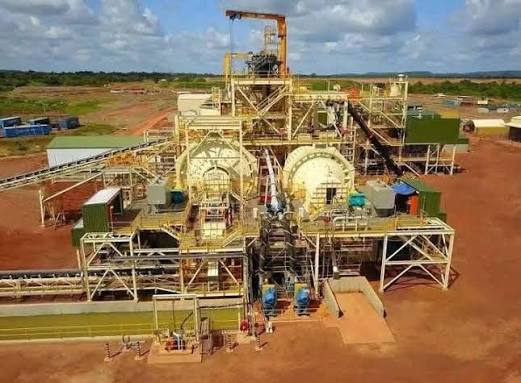
Burkina Faso has inaugurated Raffinor BF, described as the country's first gold refinery, in Ouagadougou. The facility can process up to 400 kilograms of gold per day and produce bars with purity reaching 99.99 percent. The Burkinabè government holds a controlling 51 percent stake through SONASP.
Burkina Faso has inaugurated its first gold refinery, marking a major step in the country's push to process more of its mineral resources domestically rather than relying primarily on foreign refining facilities.
Raffinor BF was officially inaugurated on Monday, September 28, 2026, at Ouaga 2000 in the capital, Ouagadougou.
The refinery, constructed on approximately five hectares of land, has the capacity to process up to 400 kilograms of gold every day.
The facility is designed to produce gold bars with purity levels reaching 99.99 percent, allowing Burkina Faso to refine gold to international standards within the country.
The project is particularly significant because Burkina Faso is one of Africa's major gold producers, yet much of its gold has historically been exported for processing elsewhere.
Raffinor BF is intended to change that model by bringing a larger part of the gold value chain under domestic control.
STATE HOLDS 51 PERCENT STAKE
The Burkinabè government holds a controlling 51 percent stake in Raffinor BF through the Société Nationale des Substances Précieuses, known as SONASP.
The ownership structure gives the state majority control of the refinery.
The remaining stake is held by private partners involved in the project.
The arrangement reflects the government's broader strategy of increasing state participation in Burkina Faso's mining industry and strengthening national control over strategic mineral resources.
For the government, refining gold domestically is expected to improve oversight of production, increase local value addition and potentially retain a greater share of mining revenues inside the country.
PROJECT BEGAN IN 2023
The refinery project dates back to November 23, 2023, when Captain Ibrahim Traoré laid the foundation stone for its construction.
At the time, the government presented the project as part of a wider effort to transform Burkina Faso's relationship with its mineral wealth.
Less than three years later, the facility has now officially opened.
Its launch gives Burkina Faso domestic industrial capacity to refine gold extracted from both industrial mining operations and other authorized sources.
The refinery is also expected to strengthen traceability within the gold industry by providing authorities with greater visibility over gold moving through the formal economy.
400 KILOGRAMS OF GOLD PER DAY
At full capacity, Raffinor BF can process as much as 400 kilograms of gold daily.
That translates into significant annual refining capacity if the plant operates consistently throughout the year.
The facility can refine gold to purity levels of up to 99.99 percent, a standard commonly associated with investment grade gold bars in international markets.
Beyond producing refined gold, the project could allow Burkina Faso to capture additional economic value that would otherwise be generated when raw or semi processed gold is sent abroad for refining.
Domestic processing can also create specialized jobs and support technical expertise in metallurgy, laboratory testing, quality control and mineral processing.
BURKINA FASO PUSHES FOR GREATER CONTROL OF GOLD
Gold is central to Burkina Faso's economy and remains one of the country's most important exports.
The government under Traoré has pursued policies aimed at increasing state participation in the mining sector and retaining more of the economic benefits generated from the country's natural resources.
The opening of Raffinor BF fits into that broader strategy.
Instead of limiting Burkina Faso's role to extracting and exporting gold, the government wants more processing and value addition to take place domestically.
Supporters of the policy argue that African mineral producing countries can capture more economic value by developing domestic processing industries rather than exporting resources in less processed forms.
The long term economic impact of Raffinor BF will depend on factors including production volumes, operating efficiency, access to gold supplies, international prices and how effectively the refinery is integrated into Burkina Faso's wider mining sector.
For the government, however, the inauguration represents a symbolic and practical milestone.
Nearly three years after the foundation stone was laid, Burkina Faso now has a majority state owned refinery capable of processing hundreds of kilograms of gold every day and producing bars with purity reaching 99.99 percent.