
AMERICA'S SPY CHIEF SAYS PUTIN CAN BE TRUMP'S FRIEND BUT NOT AMERICA'S. THE WORLD NOW HAS TO GUESS WHICH FRIENDSHIP SETS U.S. POLICY
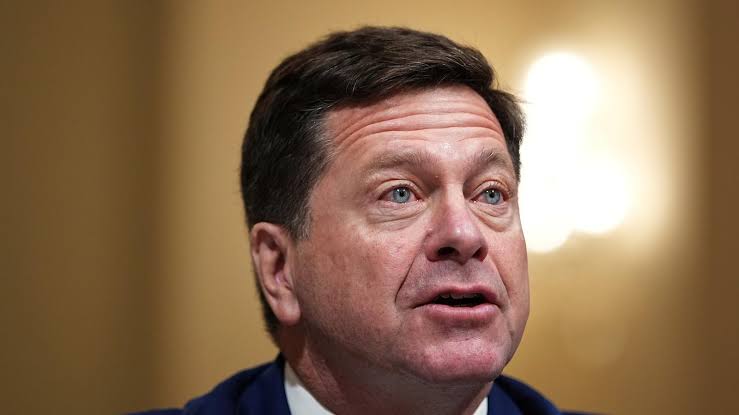
US Director of National Intelligence Jay Clayton has defended President Donald Trump's repeated description of Russian President Vladimir Putin as a "friend." He called the language "entirely appropriate" in the setting of last week's rare three-way summit in China between Trump, Putin and Chinese President Xi Jinping. Speaking on ABC's This Week on Sunday, Clayton also drew a sharp line. "He is not America's friend in Ukraine. Not at all. Not at all," he said of Putin. On CNN's State of the Union, he called the summit "historic" and "remarkable" and said that, in that setting, "whatever language the president wants to use, I trust him completely." The defense followed days of criticism. Trump greeted Putin warmly at the summit. On Saturday, he posted a photo of the two men shaking hands on Truth Social with the caption "My Friend." Asked on Friday whether Putin is a friend to the United States, Trump said, "I can't speak to America," and turned to his "very good" personal relationship with the Russian leader. Democrats called the remarks a betrayal of American values. Senate Democratic leader Chuck Schumer called the summit a "historic embarrassment." Clayton's split framing, with Putin as the president's friend but not the nation's, says a lot about Washington's Russia policy. It points to a personal, transactional style of diplomacy that worries Ukraine and NATO allies. It also unsettles countries far from Europe. For Nigeria, Ghana and the rest of Africa, a warmer US-Russia relationship and a new great-power table that includes China could reshape security partnerships, trade, food and fuel prices, and the room African states have to choose their own partners.
There are words a president can use casually, and there are words the world takes literally. "Friend" turns out to be one of the second kind.
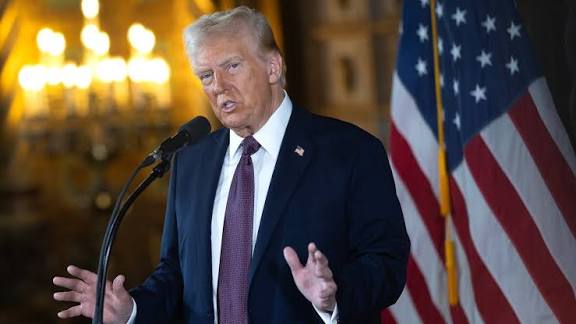
For most of the past week, Washington has argued about a single word. Donald Trump used it at a summit in China, where he sat down with Vladimir Putin and Xi Jinping for rare three-way talks. He used it again in public remarks afterward. On Saturday, he made it a caption. Trump posted an image on Truth Social showing him shaking hands with a smiling Putin, with two words underneath: "My Friend."
On Sunday, the job of explaining that word fell to the man who leads America's intelligence community. Director of National Intelligence Jay Clayton went on two of the country's main political talk shows. His defense was firm, but it came with a careful limit.
"In that circle — in that circle of that conversation, using the term 'friend' is entirely appropriate," Clayton said on ABC's This Week.
When ABC pressed him on whether Putin is America's friend, noting that Trump himself had declined to answer that question, Clayton did not hedge. "He is not America's friend in Ukraine. Not at all. Not at all," he said.
On CNN's State of the Union, he called it "historic" and "remarkable" that Trump had met with the leaders of the other two leading nuclear powers. "In that context, whatever language the president wants to use, I trust him completely," he said.
Taken together, those lines form one of the more revealing statements of American foreign policy in recent memory. They do not settle the debate. They describe it. Putin can be the president's friend. He is not, at least in Ukraine, the country's friend. And the official whose job is to give the president an unvarnished picture of foreign threats says he trusts the president's choice of words "completely."
The split matters because it captures a problem that has followed Trump through both of his terms. America's allies, rivals and partners have never been fully sure whether US policy toward Russia comes from the institutions of the American state or from the personal instincts of the man in the Oval Office. Clayton's answer, in effect, was "both." That is either a clever piece of diplomatic positioning or a sign of a government speaking with two voices. It may be both.
Start with the summit that produced the controversy.
The meeting in China brought together the leaders of the three countries with the largest nuclear arsenals in the world. Trump and his top aides have described it as a historic gathering. In one sense, they are right. Three-way talks at this level between Washington, Moscow and Beijing are unusual. For most of the period since the Cold War, US relations with Russia and China were handled separately. Each capital worried about the other two lining up against it. A single table holding all three leaders is a striking image, especially at a time when nuclear arms control is in poor shape.
That last point deserves attention. New START, the final treaty limiting the deployed strategic nuclear weapons of the United States and Russia, expired in February 2026. No binding replacement has been agreed, as far as public records show. China, meanwhile, has been building up its nuclear forces quickly. US Defense Department estimates in recent years have put Beijing's arsenal above 600 warheads and projected that it could pass 1,000 by 2030. China has long refused to join arms control talks on the grounds that its arsenal is still far smaller than those of Washington and Moscow. Any setting that puts all three leaders in one room has at least some potential to matter for the most dangerous weapons on earth.
But potential is not progress. Early reporting suggested the summit was more symbolism than substance. No major agreement on arms control, Ukraine, trade or any other central issue has been publicly announced. Officials may yet reveal private understandings. For now, though, the most memorable outcome of the meeting is not a treaty or a framework. It is a word, a handshake and a social media post.
That is why the "friend" language has drawn such a strong reaction. In diplomacy, when a meeting produces little concrete, the images and words become the result. A warm greeting for Putin, repeated references to him as a friend and a "My Friend" post become the message the world receives. Whatever was discussed in private, the public signal was personal warmth toward the leader of a country that is still waging a full-scale war against a US-backed European democracy.
Trump did little to soften that signal when he returned to Washington. In the White House briefing room on Friday, he made no attempt to walk back the comments. When asked directly whether he views Putin as a friend to the United States, he sidestepped.
"I can't speak to America," Trump said. He then shifted at once to his own relationship. "I consider him to be somebody that I have a very good relationship (with)," he said. "It's actually very good."
"I can't speak to America" is an unusual phrase for a president. The president is, by law and custom, the chief voice of American foreign policy. He can speak to America in a way no other official can. Yet in this case, Trump chose to separate his personal view from the national one. He was willing to say Putin is his friend. He was not willing to say Putin is America's.
Clayton's Sunday interviews filled in the second half of that sentence. Trump would not say whether Putin is America's friend. His intelligence chief said Putin is not America's friend in Ukraine. One might call it a coordinated message: personal warmth from the president and institutional realism from the intelligence chief. One might also call it an improvised cleanup of an awkward answer. The public record does not say which. Either way, the result is a two-track position that every foreign government must now interpret.
Clayton is an interesting figure to deliver that message. He is not a career intelligence officer. A lawyer by training, he chaired the Securities and Exchange Commission during Trump's first term and later served as the top federal prosecutor in Manhattan. He is known in Washington as a careful, measured operator rather than a political brawler. His choice of words on Sunday reflected that background. He defended the president without accepting the most damaging reading of the president's language. He also offered a clear statement about Russia's war that few critics could dispute.
The phrase "in that circle of that conversation" was the key move. Clayton framed "friend" as situational language, a term that made sense inside the room where three nuclear powers were talking. In that reading, calling Putin a friend was a tool of personal diplomacy, a way to build rapport and keep a channel open, not a statement of national alignment. Leaders often use warm words for counterparts they distrust. Diplomacy runs on courtesy as much as candor.
That defense has merit. History offers many examples of American presidents using friendly language with adversaries. Franklin Roosevelt called Joseph Stalin "Uncle Joe." Ronald Reagan, who once called the Soviet Union an "evil empire," developed a warm personal bond with Mikhail Gorbachev that helped produce major arms control deals. George W. Bush famously said he had looked Putin in the eye and gotten "a sense of his soul." Barack Obama's administration tried a "reset" with Moscow. Each of these leaders believed that personal relationships could open doors that formal channels could not.
The results were mixed. Reagan's bet on Gorbachev helped end the Cold War. Bush's read on Putin is now widely cited as a cautionary tale. Obama's reset faded after Russia's 2014 annexation of Crimea. The lesson is not that warm words are always wrong. It is that warm words are only as good as the strategy behind them and the clarity with which they are separated from national interest.
That is where critics focus their concern. Democrats have described Trump's comments as a betrayal of American values. Schumer went further on the Senate floor. He called the summit a "historic embarrassment" for the United States and said, "America would have been far better off if Trump just stayed home." To his critics, Trump's language is not a tactic but a pattern. They argue that his admiration for Putin goes beyond diplomacy and reflects a genuine affinity for strongmen and a lack of interest in the democratic values that have shaped US foreign policy since 1945.
The pattern is not new. Trump's fondness for Putin has been a defining feature of both his terms. In his first term, the US intelligence community concluded in a January 2017 assessment that Russia had interfered in the 2016 presidential election. At a summit in Helsinki in July 2018, Trump stood beside Putin and appeared to side with the Russian leader's denial over the findings of his own intelligence agencies. It was one of the most criticized moments of his first presidency. Dan Coats, then the director of national intelligence, issued a statement soon after reaffirming the intelligence community's assessment. The episode became a symbol of tension between a president and the agencies that served him.
That history makes Clayton's role on Sunday more striking. The office of the director of national intelligence was created in 2004, after the September 11 attacks, to oversee and coordinate the nation's intelligence agencies. Part of its purpose is to "speak truth to power," to give policymakers a sober picture of threats even when that picture is politically inconvenient. Every year, the office publishes a threat assessment that ranks the dangers facing the United States. In recent years, those reports have consistently described Russia as a major threat, citing its war in Ukraine, its nuclear arsenal, its cyber operations, its influence campaigns and its willingness to use force.
Clayton's statement that Putin is "not America's friend in Ukraine" is consistent with that institutional view. His statement that he trusts the president's language "completely" is a statement of political loyalty. The two can coexist. But the second could weaken the first. When the nation's top intelligence official says he trusts "whatever language the president wants to use," some will hear a chief analyst deferring to the man he is supposed to brief honestly. Supporters will say he was simply showing confidence in the commander-in-chief. Skeptics will ask whether an intelligence chief should be grading the president's words at all.
There is also a subtle limit in Clayton's sentence that deserves close reading. He said Putin is not America's friend "in Ukraine." He did not say Putin is not America's friend, full stop. That qualifier may have been unintentional, a way of tying the answer to the most obvious example. It may also reflect a view inside the administration that Russia can be an adversary on one issue while being a partner on others, such as arms control, counterterrorism, energy or a broader effort to manage China. If that is the thinking, it represents a significant shift from the policy of recent years, which treated Russia as a general adversary because of the war.
That shift, if real, is at the heart of Trump's transactional approach to foreign policy. In Trump's worldview, international relations are less about permanent alliances and shared values and more about deals. Countries are judged by what they offer and what they cost. Friends and rivals can change depending on the issue. Personal relationships between leaders are tools for striking bargains. In that framework, calling Putin a friend while acknowledging that Russia opposes US interests in Ukraine is not a contradiction. It is how deals get made.
Supporters of that approach argue that it is realistic. They point out that the United States cannot fight every rival at once. Washington faces a rising China, a hostile Russia, conflict in the Middle East and pressure at home to spend less abroad. Better relations with Moscow, they argue, could reduce nuclear risks, help end the war in Ukraine and perhaps weaken the partnership between Russia and China. Some in Trump's circle have long hoped to pull Russia away from Beijing, a sort of reverse version of Richard Nixon's 1972 opening to China, which split the communist powers during the Cold War.
Critics see the logic as flawed. Russia and China have built a close partnership since Moscow's full-scale invasion of Ukraine in 2022. China has become a vital buyer of Russian energy and a major supplier of goods, including dual-use components that Western governments say have helped Russia's war effort. Beijing denies supplying lethal weapons. The two countries declared a "no limits" partnership weeks before the invasion. Many analysts doubt that flattery from Washington can break that bond, especially when the summit in China itself appeared to showcase how the three powers can meet with Xi as host. If anything, critics argue, a three-way summit hosted in China may have elevated Beijing's status as an indispensable power broker, rather than separating it from Moscow.
The transactional approach also carries a risk that partners will feel they are part of the deal rather than parties to it. That fear is felt most deeply in Ukraine.
For Ukrainians, the debate over a word is not abstract. The war that began with Russia's full-scale invasion in February 2022 has killed hundreds of thousands of people and displaced millions. It continues. On Monday, Ukrainian officials said Russian strikes had killed at least 12 people in the Kyiv region, including in a block of flats and at a supermarket. Later reports put the death toll higher. Rescuers searched rubble for survivors. For a country under that kind of bombardment, the sight of the American president describing the Russian leader as his "friend" days earlier lands hard.
Clayton's line, "not America's friend in Ukraine," was in part a reassurance aimed at Kyiv and its supporters. It signaled that the intelligence community, at least, sees Russia's war for what it is. But Ukrainians will pay closer attention to what Washington does than to what its officials say. They will watch for whether US intelligence sharing, weapons deliveries and sanctions on Russia continue at full strength. They will watch for whether any peace effort involving Washington and Moscow is negotiated with them or around them.
That worry has a history. Throughout Trump's second term, Kyiv and European capitals have feared a deal struck over Ukraine's head. When Trump met Putin in Anchorage, Alaska, in August 2025, the summit raised similar concerns, and its results disappointed those hoping for a breakthrough toward a ceasefire. Peace frameworks circulated in Washington later that year drew sharp criticism in Kyiv and Europe for appearing to lean toward Russian demands, including on territory. The administration has also, at times, put real pressure on Moscow. In October 2025, it imposed sanctions on Russia's two largest oil companies, Rosneft and Lukoil. The record is mixed, and that mix is exactly what makes Ukraine anxious. A policy that swings between pressure and warmth is hard to plan around.
Ukraine's position on the ground and at sea also shapes the stakes. Kyiv has expanded its attacks on Russia far beyond the front lines. On Saturday, a drone hit a Russian cargo ship in the eastern Baltic Sea near Finnish waters. Finland's border guard said the strike was Ukrainian. On Sunday, sea drones hit two ships off Benghazi, Libya, including a Russian vessel. No one has claimed responsibility for the Libya attacks, though they are being viewed as a possible spillover from the Ukraine war. These operations show a Ukraine that is trying to raise the costs of the war for Russia wherever it can. They also show a conflict spreading geographically at the same moment the American president is publicly warm toward its main instigator. Washington's mixed messages may embolden Moscow, constrain Kyiv or both.
The anxiety extends across NATO. European allies have spent years trying to read Trump's commitment to the alliance. In his first term, he questioned whether the United States would defend members that did not spend enough on defense. In his second term, he pushed allies to raise their spending sharply, and at the 2025 NATO summit in The Hague, members agreed to a target of 5 percent of GDP on defense and security-related spending by 2035. Many Europeans welcomed the pressure as overdue. But they also noticed the transactional framing. Protection, in Trump's telling, is something allies earn by paying.
Against that backdrop, a "My Friend" post about Putin unsettles countries on NATO's eastern flank. Poland, the Baltic states and Finland see Russia as a direct threat. They have reasons. On the same weekend Trump's language was being debated, Polish authorities said Russia had allegedly twice tried to kill a Ukrainian American rapper, according to reporting from Warsaw. European governments have accused Russia of sabotage, cyberattacks, arson and drone incursions on their territory in recent years. Moscow denies many of those accusations. For these countries, the question is not whether Putin is a friend. It is whether Washington still sees him as the threat they see.
Clayton's statement helps a little. A senior US official saying Putin is "not at all" America's friend in Ukraine offers some comfort. But European leaders know that in the Trump administration, the president's words often carry more weight than any official's clarification. They also know that Trump himself declined to say Putin is not America's friend. That gap, between what the president will say and what his officials will say, is the space where allied anxiety lives.
The same gap matters to China. Beijing will read the summit and the "friend" debate through its own lens. If Washington is willing to build personal warmth with Moscow, China may see an opportunity to position itself as the steady, rational power broker among the three. It may also worry about any American effort to pull Russia away. Xi, as host, gained the prestige of convening the world's three nuclear superpowers. That image will be useful in Beijing's diplomacy across the Global South, where China presents itself as a partner of developing countries and a counterweight to Western dominance.
That brings the story to Africa, where the implications are less visible but no less real.
For Nigeria, Ghana and the rest of the continent, a world in which the United States, Russia and China negotiate at a single table carries both risk and opportunity. Africans have seen this kind of great-power arrangement before. During the Cold War, decisions made in Washington and Moscow shaped wars, coups and economic policies across the continent. Proxy conflicts in Angola, Mozambique, the Horn of Africa and the Congo cost countless lives. Many African leaders responded through the Non-Aligned Movement, insisting on the right to stay out of superpower rivalries. Ghana's first president, Kwame Nkrumah, was among its leading voices.
A modern version of great-power management could again leave Africa as a subject of others' bargains rather than a participant. If Washington, Moscow and Beijing reach understandings on spheres of influence, trade or security, African interests may be traded away without African voices at the table. The summit in China did not include any African leader. As far as public reporting shows, African issues were not a major focus. But the logic of a three-power order implies that the most important decisions affecting the world will be made among three capitals, none of them African.
Russia's role in Africa makes this especially pressing. Over the past several years, Moscow has expanded its presence across the continent. Russian military contractors, first under the Wagner Group banner and later under what became known as the Africa Corps, have deployed to Mali, Burkina Faso, Niger, the Central African Republic, Libya and elsewhere. The military governments in Mali, Burkina Faso and Niger expelled French forces and turned to Russia for security support. They also left ECOWAS, the West African regional bloc, in early 2025. That has weakened regional unity just as jihadist violence spreads south toward coastal states including Ghana, Togo, Benin and Nigeria.
If Washington takes a softer line on Moscow, the effect on Russia's African operations could cut in different directions. On one hand, reduced US pressure could give Russia more freedom to expand its security footprint in the Sahel and beyond. On the other, a broader US-Russia understanding might include arrangements that limit competition in certain regions. Neither outcome is confirmed, and there is no public evidence that Africa was discussed in detail at the summit. But West African governments have every reason to watch closely. A decade ago, the Sahel was a zone of Western-led counterterrorism operations. Today it is a zone of Russian influence and rising jihadist violence. Shifts in US-Russia relations will shape what comes next.
For Nigeria, the stakes are both strategic and economic. Nigeria is Africa's most populous country and one of its largest economies. It has pursued a broadly balanced foreign policy, keeping ties with Western partners while engaging with Russia and China. In March 2022, Nigeria and Ghana both voted for the UN General Assembly resolution condemning Russia's invasion of Ukraine, while many African states abstained. Nigeria has also deepened its ties with China, including through infrastructure financing and currency arrangements. In January 2025, it became a partner country of the BRICS group, which includes Russia and China.
At the same time, Nigeria's relationship with the Trump administration has faced strains. In late 2025, Washington designated Nigeria a "Country of Particular Concern" over religious freedom, and Trump publicly threatened action over killings of Christians, claims that Nigerian officials disputed as a distortion of a complex security crisis. Tariff measures and immigration restrictions have also touched Nigerian interests. For Abuja, a United States that treats foreign relations as personal transactions is a partner that can be persuaded, but also one that can turn suddenly. Nigerian diplomats will note that warm words for Putin have not been matched by warm words for many African leaders.
Ghana sees similar dynamics. Accra has positioned itself as a stable democracy and a reliable partner to the West, while keeping open lines with its neighbors in the Sahel. It has deepened security cooperation with Britain and other partners. It has also accepted controversial arrangements with the United States, including agreeing in 2025 to receive West African nationals deported from the US. Ghana's leaders want to be seen as sovereign partners, not clients. A world where great powers bargain among themselves makes that harder. Smaller states have less leverage when the biggest decisions happen in rooms they cannot enter.
The economic channel may matter most for ordinary people. The war in Ukraine has already shown how far a European conflict can reach. When Russia invaded in 2022, global wheat, fertilizer and fuel prices surged. Many African countries depend on imported wheat, and both Russia and Ukraine were major exporters. The Black Sea Grain Initiative, brokered by the UN and Turkey in 2022, eased some pressure, but Russia withdrew from it in July 2023. Fertilizer costs hit farmers across the continent. Fuel prices rose sharply, adding to inflation in Nigeria, Ghana and elsewhere.
Any shift in US-Russia relations can move these markets again. A real peace process in Ukraine, if one emerges, could lower risks to Black Sea trade and ease commodity prices. A collapse of talks, or an escalation spreading into new seas, could do the opposite. The weekend's attacks on Russian ships in the Baltic and off Libya show that maritime risk is rising, not falling. West African economies depend on shipping for fuel, food and manufactured goods. Higher insurance and freight costs eventually reach consumers in Lagos and Accra.
Russian energy trade adds another link. Since Western sanctions in 2022, Russia has redirected fuel exports to new markets, including West Africa. Shipments of Russian refined products to West African ports have been widely reported by industry trackers, though volumes have changed over time. Any easing or tightening of US sanctions on Russia would ripple through that trade. Nigerian and Ghanaian importers, regulators and consumers would feel the effects, whether in prices, supply or legal risk for companies dealing with sanctioned entities.
There is also a diplomatic lesson for African governments in Clayton's careful phrasing. Throughout the Ukraine war, many African states have resisted Western pressure to take sides, arguing that they have the right to engage with all powers. Western officials have sometimes criticized that stance as moral fence-sitting. Now the American president himself has called Putin a friend, while his intelligence chief says Putin is not America's friend in one specific arena. That is, in effect, a version of the issue-by-issue approach many African governments have long defended. It weakens any future Western argument that Africa must isolate Moscow on principle.
African diplomats are unlikely to miss that point. The next time a Western official urges an African government to distance itself from Russia, the reply may be simple: your own president calls him a friend. That does not make African neutrality right or wrong. It does mean the moral argument for isolating Russia has lost some force in the Global South, and Moscow will use that to its advantage.
China's position in Africa makes the summit doubly important. China is Africa's largest trading partner and a major lender and builder of infrastructure. Through the Forum on China-Africa Cooperation, Beijing has offered loans, investment and diplomatic attention that many African leaders value. Its hosting of the three-way summit will strengthen its image as a power that the United States and Russia must come to. For African governments weighing partnerships, that image matters. If Washington appears inconsistent, swinging between pressure and warmth with rivals and allies alike, Beijing's steady, long-term approach becomes more attractive.
The United States still holds significant advantages in Africa. Its universities, technology firms, capital markets, security cooperation and cultural influence remain powerful. Millions of Africans have family ties to the US diaspora. But American influence depends on trust and predictability. When policy appears to rest on personal relationships between leaders, African partners will ask whether their own relationship with Washington depends on how well their president gets along with Trump. That is a weak foundation for long-term cooperation.
Some will argue the whole controversy is overblown. Words are cheap, they say, and what matters is policy. On that view, the US continues to support Ukraine in practice, maintains sanctions on Russian energy giants and keeps NATO intact. Trump's warmth toward Putin is a style, not a strategy. Clayton's clarification makes clear that the institutions see Russia accurately. Allies and adversaries should judge Washington by its actions.
There is truth in that. But in international politics, words are a form of action. They signal intentions, set expectations and shape behavior. Putin will read Trump's warmth as an opening. Ukraine will read it as a warning. European allies will read it as uncertainty. China will read it as a chance to play broker. African governments will read it as permission to keep their own options open. None of these readings requires a change in formal policy. All of them change how the world behaves.
The most important question raised by Clayton's interviews is not whether "friend" was the right word. It is who sets the direction of US policy toward Russia. If the president's personal relationship with Putin drives decisions, then America's posture could shift quickly, depending on a phone call, a summit or a mood. If the institutions, including the intelligence community, the State Department, the Pentagon and Congress, keep the steering wheel, then the "friend" language is mostly noise. Clayton's answer seemed to suggest the institutions see the threat clearly, and that the president's words should be read as tactics. Trump's own answer, "I can't speak to America," suggested the opposite: that the relationship he values is personal, and that national interest is a separate matter he will not address.
That tension may not be resolved soon. The US political calendar is moving on, with midterm results reshaping the balance in Washington and fresh debates ahead over budgets, sanctions and support for Ukraine. Congress has tools to influence Russia policy, including sanctions legislation and funding decisions. Democrats, energized by their criticism of the summit, will likely press the administration in hearings and floor debates. Some Republicans, especially those with strong views on Russia, may quietly share their concerns. How much those pressures change the administration's course is uncertain.
What is clearer is that the world now faces a United States that speaks about Russia in two registers. One is personal and warm. The other is institutional and wary. Clayton tried on Sunday to show that both can exist at once. "In that circle of that conversation," friendship is fine. In Ukraine, friendship does not exist "at all."
For Kyiv, the second register is the one that counts. For Moscow, the first is the one to exploit. For Europe, the gap between them is the danger. For China, it is an opening. And for Africa, including Nigeria and Ghana, it is a reminder of an old lesson: when great powers talk about friendship, smaller nations should read the fine print. Friendships among the powerful can shift borders, move markets, change wars and redraw the map of influence. They are rarely made with the interests of others in mind.
The handshake in China will fade from the news. The "My Friend" post will be buried under newer posts. But the question it raised will remain. When the American president calls the Russian president his friend, and America's intelligence chief says the Russian president is not America's friend, which statement should the world believe? For now, the honest answer is that it depends on the issue, the day and the room. For countries that need a reliable partner, that is not a comforting answer.