ADEYEYE DEFENDS TINUBU SUPPORT, BACKS RAINBOW COALITION AND REVEALS THREE MEETINGS WITH AREGBESOLA
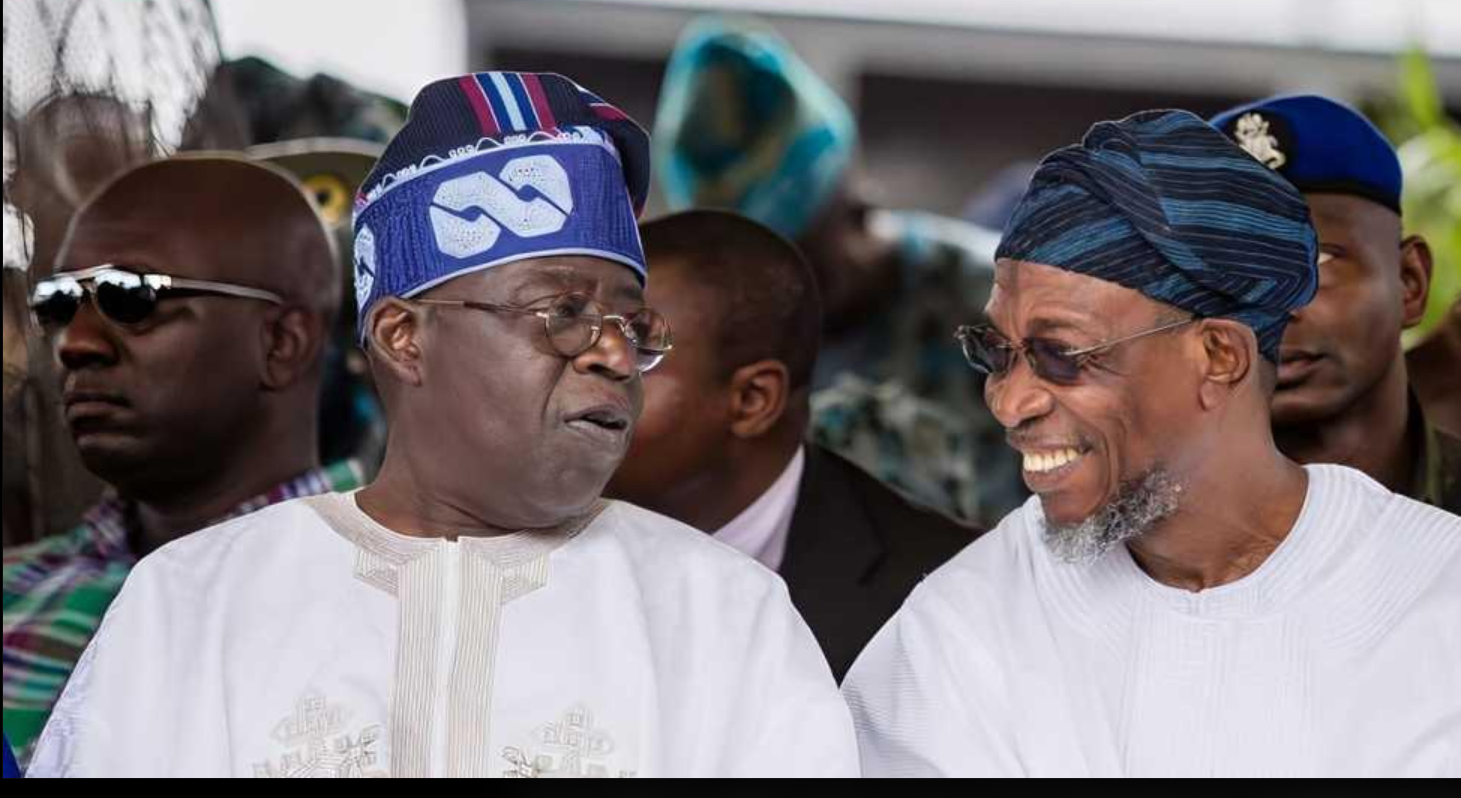
Professor Sola Adeyeye says his decision to support President Bola Tinubu’s 2027 re-election does not contradict his backing of Yemi Osinbajo during the APC’s 2022 presidential primary. Adeyeye told Sunday PUNCH that he opposed Tinubu only as an internal-party aspirant and accepted him once he became the APC candidate, describing party primaries as an in-house contest in which members should be free to support different aspirants. He now serves as Director of Electioneering Planning for Tinubu’s South-West campaign. Punch Newspapers
OSOGBO, NIGERIA — Professor Sola Adeyeye, a senior figure in President Bola Tinubu’s 2027 re-election campaign in the South-West, has rejected suggestions that his current support for the President represents an ideological reversal, insisting that his backing of former Vice-President Yemi Osinbajo during the 2022 All Progressives Congress presidential primary was an internal party choice rather than opposition to Tinubu as the APC’s eventual candidate. In an extensive interview that also addressed federalism, state police, Nigeria’s economic difficulties and the increasingly cross-party coalition being assembled behind Tinubu, Adeyeye said his political assessment of the President has been shaped by what he regards as important moves toward restructuring Nigeria’s federal system. He also disclosed that Tinubu and his estranged former ally, ex-Osun State governor Rauf Aregbesola, have met approximately three times since their relationship deteriorated and said he has personally been involved in attempts to reconcile the two men.
Adeyeye, a former senator who represented Osun Central and now serves as Director of Electioneering Planning for the APC’s 2027 presidential campaign in the South-West, told Sunday PUNCH that many observers had misunderstood his position during the intense APC presidential contest four years ago. He said he supported Osinbajo because party members were entitled to choose among competing aspirants and believed at the time that the then vice-president was the strongest option available to the APC. Once Tinubu won the primary and became the party’s candidate, however, Adeyeye said he did not campaign against him and viewed the internal contest as what he described as a form of “sibling rivalry” within the same political family.
The clarification revisits one of the most divisive episodes in the APC’s run-up to the 2023 election. Osinbajo’s decision to challenge Tinubu for the presidential ticket created a bitter debate among supporters of both men because the former vice-president had served as Lagos State attorney-general under Tinubu and was widely seen as part of the political movement that grew around the former Lagos governor. Some Tinubu supporters portrayed Osinbajo’s candidacy as an act of political betrayal, while his supporters argued that no individual had an automatic claim to the presidency and that internal democracy required legitimate competition.
Adeyeye said he was particularly angered at the time by attempts to compare Osinbajo with Samuel Ladoke Akintola, the former premier of the Western Region whose historic political conflict with Chief Obafemi Awolowo became one of the defining splits in First Republic politics. He said the analogy was unfair and historically inaccurate, arguing that Osinbajo had merely exercised his right to contest a party primary. Adeyeye acknowledged that he responded forcefully during the dispute and conceded that some statements he made at the time may have gone further than necessary.
His present position, he said, should therefore not be understood as a conversion from anti-Tinubu politics to loyalty to the President. Adeyeye’s explanation is that he distinguished between Tinubu the aspirant, whom he did not support in the APC primary, and Tinubu the duly nominated candidate of his party. After Tinubu emerged from the primary and later won the presidency, Adeyeye said he evaluated the administration according to policies rather than the earlier contest.
One of the policies he now cites most strongly is the Tinubu administration’s push toward a more decentralized policing structure. Adeyeye, a longtime advocate of state police, described Nigeria’s current security arrangement as excessively centralized for a federation of its size, ethnic diversity and regional complexity. He argued that states should possess greater authority over policing and security because local law-enforcement structures are better positioned to understand languages, communities and social conditions than officers deployed without strong local familiarity.
Adeyeye portrayed the administration’s work on state police as one of the most consequential federal reforms undertaken since the beginning of the Fourth Republic in 1999. That assessment is his political judgment rather than an established conclusion, and state police have not yet become fully operational across Nigeria. However, there has been significant movement in that direction under the Tinubu administration. In October, a presidential working group submitted a draft National Policing Bill 2026 and 29 consequential amendment bills for legal review, proposing a dual system consisting of a Federal Police Service and State Police Services.
The proposed system still requires the completion of constitutional and legislative processes before states can establish independent police services. The Presidency has acknowledged that implementation requires constitutional amendments and safeguards designed to address concerns that governors could abuse state-controlled police forces against political opponents. Those concerns have been part of the national debate for decades and remain central to negotiations over the final structure.
Adeyeye nevertheless argued that the current centralized model is itself deeply flawed. Recalling his period as chairman of Ifedayo Local Government in Osun State, he said a divisional police officer assigned to his area came from Benue State and could not speak Igbomina, the local language. He used that experience to illustrate his argument that security personnel need deeper connections to the communities they police, although language ability is only one element affecting police effectiveness and does not by itself determine an officer’s competence.
The former senator also praised changes in federal-state financial relations, arguing that states have gained greater fiscal room under the Tinubu administration. Federal allocations to states and local governments have increased significantly in nominal naira terms since the removal of the petrol subsidy and changes in government revenues, although those increases have occurred alongside substantial inflation and a weaker currency. Adeyeye’s claim that greater financial resources have made states more economically viable therefore sits within a broader debate over whether larger nominal allocations have translated into correspondingly stronger purchasing power or improved public services.
He linked those changes to what he described as “authentic federalism,” arguing that political decentralization cannot work unless subnational governments also possess sufficient financial capacity. In his view, states cannot meaningfully exercise greater authority if most revenue remains concentrated at the federal level.
Adeyeye also cited Tinubu’s restoration of Nigeria’s old national anthem as evidence that the President had retained ideas associated with sections of the pro-democracy movement that opposed military rule. The National Assembly approved the return of “Nigeria, We Hail Thee” in 2024 and Tinubu signed the measure into law. The decision was controversial, with supporters presenting it as a restoration of national heritage and critics questioning why changing an anthem was prioritized amid economic hardship.
Adeyeye said the symbolism matters because he sees Nigeria’s post-military constitutional order as still carrying excessive centralization inherited from decades of military government. For him, restoration of the old anthem and movement toward state police belong to a broader historical effort to reverse institutions imposed during military rule. That interpretation remains a political perspective rather than a universally accepted account of the reforms.
His interview also addressed the economic hardship that has defined much of Tinubu’s presidency. Nigerians have faced high food prices, reduced purchasing power, elevated transport costs and difficult business conditions since the administration removed the longstanding petrol subsidy and liberalized the foreign-exchange market. Adeyeye did not deny widespread poverty, describing Nigerians as deeply poor, but argued that the country had faced structural economic weakness for decades and that current hardship should not be interpreted as a problem created entirely by the present government.
He called for stronger energy infrastructure, additional refining capacity and more reliable electricity, arguing that businesses cannot compete while relying heavily on diesel-powered generation. Adeyeye said Nigeria needs more refineries rather than dependence on a single dominant private supplier and expressed hope that another Tinubu administration would prioritize both electricity and energy supply.
Some aspects of that argument require qualification. Nigeria has multiple refineries in existence, including state-owned facilities, although their actual operational output and sustained utilization have repeatedly fallen far below installed capacity. The Dangote Refinery has consequently become the dominant source of large-scale domestic refining. Adeyeye’s underlying point was that greater competition and dependable domestic production are needed to reduce structural vulnerabilities in the fuel market.
The interview becomes particularly politically significant when Adeyeye turns from policy to the strategy being used to secure Tinubu’s re-election. Rather than insisting that the APC rely exclusively on its formal party structure, the President’s allies are building what they describe as a “rainbow coalition” that brings together politicians from different parties and ideological traditions behind a shared presidential candidate.
Adeyeye defended that approach, arguing that ideological purity means little if a political movement cannot win power and implement its program. He drew parallels with coalition arrangements involving Awolowo-era parties and later opposition alliances, arguing that Nigerian politicians with different ideological backgrounds have historically worked together where they believed a larger political objective required cooperation.
His defense comes as Osun State has emerged as one of the clearest examples of the strategy. Governor Ademola Adeleke, who is not an APC governor, is coordinating a cross-party presidential campaign structure supporting Tinubu’s re-election. The Osun campaign includes figures associated with the APC, Accord and PDP traditions, while participants remain free to support different legislative candidates in other races.
Adeleke formally described the arrangement as a “rainbow coalition” during the inauguration of the Osun presidential campaign council in October, saying the alliance was specifically designed to deliver the state for Tinubu in the January 16, 2027 presidential election. He made clear that the cooperation does not extend automatically to Senate, House of Representatives or state assembly elections, where the participating parties remain competitors.
The unusual structure has generated tensions within the APC. Some party members have questioned why politicians outside the ruling party should hold prominent positions in a campaign for the APC presidential candidate, while others argue that presidential elections require broader coalitions than conventional partisan structures can provide. In Osun, some APC officials complained that they were not adequately consulted before the campaign council was assembled.
Adeyeye’s position is that those objections misunderstand how power is won. He argued that coalitions can be electorally rational even where their members do not share identical ideological positions. He cited earlier Nigerian political alliances in which groups with substantially different philosophies worked together against a common opponent.
The strategy is not limited to Osun. FCT Minister Nyesom Wike, a prominent supporter of Tinubu despite his longstanding political roots outside the APC, has spoken publicly about developing a broader national rainbow coalition behind the President. Similar cross-party arrangements have appeared in other states, reflecting an increasingly fluid political landscape in which formal party membership does not always determine presidential allegiance.
Critics of the approach argue that such coalitions weaken ideological distinctions between political parties and can reduce elections to competition between elite networks rather than alternative policy programs. Supporters counter that Nigerian parties have rarely operated according to sharply defined ideological platforms and that broad alliances are a practical necessity in a country with extensive regional, ethnic and political diversity.
Adeyeye placed himself firmly in the latter camp. He argued that governing philosophy can only matter after electoral victory and that a coalition capable of winning an election may contain figures from different political traditions without necessarily preventing the eventual administration from pursuing a coherent program.
Yet the most delicate section of his interview concerns a politician who is currently outside Tinubu’s coalition: Rauf Aregbesola. The former Osun governor, once one of Tinubu’s closest political associates, is now a major figure in the opposition African Democratic Congress and has become increasingly critical of the President’s political style.
Adeyeye said he remains close to both men and has actively tried to help repair their relationship. He declined to give detailed information about his reconciliation efforts, saying only that he had done what he believed was expected of him and continues to hope they will eventually reunite politically or personally.
Most strikingly, Adeyeye disclosed that Tinubu and Aregbesola have met approximately three times since their rift began. He did not provide dates, locations or details of those conversations, and neither Tinubu nor Aregbesola has publicly released an account confirming what was discussed. His statement therefore provides evidence of contact but not of substantive reconciliation.
The relationship between Tinubu and Aregbesola stretches back decades. Aregbesola served as Lagos State Commissioner for Works and Infrastructure during Tinubu’s governorship before later becoming governor of Osun State from 2010 to 2018. For years he was regarded as one of the most loyal figures within the political network built around Tinubu in the South-West.
Their relationship deteriorated through a combination of disputes over succession politics in Osun, disagreements involving former governor Gboyega Oyetola and broader differences over control of political structures. By the 2022 election cycle, the rupture had become public and increasingly personal.
Aregbesola subsequently moved away from the APC and in 2025 accepted the position of national secretary of the African Democratic Congress, which became the vehicle for a wider opposition coalition. He has since used increasingly sharp language against political arrangements associated with Tinubu and is now formally aligned with a party seeking to defeat the President in 2027.
That makes Adeyeye’s reconciliation effort strategically significant. Bringing Aregbesola back into Tinubu’s orbit, or even reducing the hostility between the two camps, could reshape political calculations in Osun and other parts of the South-West. Aregbesola retains loyalists and organizational networks developed through his years in Lagos and Osun politics, although the size and electoral strength of that network remain contested.
Adeyeye did not claim that reconciliation is imminent. He acknowledged that the outcome ultimately depends on Tinubu and Aregbesola themselves and suggested that the depth of their earlier friendship may be one reason the political fallout became particularly painful.
His description of the relationship is therefore personal as much as electoral. Adeyeye said people who once shared deep affection can feel betrayal more intensely when disagreements emerge, expressing confidence that time may eventually help repair the relationship.
The prospect of reconciliation must also be considered against current political realities. Aregbesola is presently fighting to preserve his role within the ADC after a Federal High Court judgment earlier this month nullified the emergence of the David Mark-led national executive. Aregbesola has appealed that ruling, asking the Court of Appeal to overturn the decision and maintain the leadership structure under which he serves as national secretary.
His current institutional role places him directly in an opposition party preparing to challenge Tinubu, meaning any political rapprochement would involve far more than a private reconciliation between former allies. It could carry consequences for the ADC, its South-West structures and ongoing opposition coalition calculations.
There is no verified indication that Aregbesola is preparing to abandon the ADC or return to the APC. Indeed, his recent public statements have often been critical of Tinubu’s political model. Adeyeye’s comments should therefore be understood as evidence of continuing mediation efforts, not evidence that a political reunion has already been agreed.
The former senator also discussed other important South-West figures whose level of involvement in Tinubu’s campaign has been closely watched. He said he had recently met former Ogun State governor Ibikunle Amosun and former Ekiti State governor Kayode Fayemi, both important APC figures who played substantial roles in earlier political formations.
Adeyeye said he met Amosun on November 4 and Fayemi on November 5, adding that he had a lengthy conversation with Fayemi after the two traveled on the same flight. He suggested that personal grievances inside political parties should not prevent members from ultimately supporting their party’s electoral objectives.
Those comments reflect the broader challenge facing Tinubu’s campaign in a region traditionally regarded as his strongest political base. The President built much of his national political influence from Lagos and the wider South-West, but several longtime allies have either moved into opposition, become less publicly active or developed independent political interests.
The rainbow coalition appears partly designed to compensate for those fractures by bringing additional political networks into the presidential campaign even where the APC itself is internally divided. In Osun, that strategy has produced the unusual situation of political rivals campaigning together for Tinubu while preparing to oppose one another in legislative elections.
Whether such an arrangement transfers efficiently to voters remains uncertain. Political elites can announce alliances, but voters do not always follow endorsements automatically, particularly where local party loyalties, economic dissatisfaction and candidate preferences differ from decisions made by leaders.
Adeyeye’s confidence in the approach therefore represents a campaign assessment rather than proof of its eventual electoral effect. The presidential election will ultimately test whether cross-party elite cooperation can deliver the turnout and votes its architects expect.
The federalism argument may form an important part of the APC’s campaign message in the South-West, where demands for restructuring and state police have historically enjoyed strong support. Tinubu spent much of his earlier political career associated with arguments for greater state autonomy, particularly during disputes between Lagos State and the federal government.
Critics have nevertheless argued that the pace of structural reform remains insufficient and that state police legislation alone will not amount to a comprehensive restructuring of Nigeria’s federation. Questions remain over fiscal federalism, resource control, devolution of constitutional responsibilities and the enormous power retained by federal institutions.
Adeyeye’s assessment is considerably more favorable. He believes the current movement toward state policing and greater financial space for states represents the foundation of more authentic federalism, and he has made that argument central to explaining why he now feels enthusiastic about Tinubu’s presidency.
That support does not erase his earlier backing of Osinbajo. Instead, Adeyeye’s account presents political primaries as temporary contests in which party members should be free to disagree without being permanently branded as enemies. His comments implicitly criticize a political culture in which supporting a rival aspirant can be interpreted as betrayal rather than internal democratic competition.
That theme also connects with his approach to Tinubu and Aregbesola. Adeyeye appears to believe that political disagreements do not have to destroy longstanding personal relationships permanently and that former allies can reconcile even after joining opposing camps.
Whether that philosophy can survive the pressures of the 2027 campaign is less certain. Aregbesola now occupies a senior opposition position, Tinubu is seeking another presidential term, and both camps have political interests that extend far beyond their previous friendship.
The wider significance of Adeyeye’s interview is therefore not simply his explanation of why he supports Tinubu. It provides a window into the strategy being used by the President’s South-West campaign: emphasize federalism and state police as major structural achievements, defend painful economic reforms as part of a longer-term correction, assemble allies across formal party boundaries and keep channels open to estranged figures who could weaken the President’s regional coalition.
It also exposes the political contradictions involved. Tinubu’s supporters are campaigning as APC members while cooperating with politicians from rival parties. They are defending an administration facing serious public dissatisfaction over living costs while asking voters to judge reforms over a longer period. And they are trying to repair relationships with former allies who are now organizing against the President.
Adeyeye does not deny those tensions. His argument is essentially that politics is a practical contest in which alliances change, policy results matter more than earlier primary battles and ideological goals require electoral power before they can be implemented.
His account of the 2022 primary is consistent with that approach. He says he preferred Osinbajo when the APC had multiple aspirants, accepted the party’s decision when Tinubu won and subsequently found policies within Tinubu’s presidency that aligned with causes he had advocated for years.
The most measurable test of that argument may ultimately be state police. Unlike broad claims about political philosophy, the project now has a concrete legislative process underway. The proposed National Policing Bill and accompanying constitutional changes will determine whether Nigeria actually moves from a single federally controlled police system toward the dual structure Adeyeye has championed.
Until those laws are completed and implemented, however, it would be premature to describe state policing as an accomplished Tinubu reform. The administration has advanced the process substantially, but critical legislative, constitutional, operational and accountability questions remain.
Similarly, Adeyeye’s assertion that Tinubu and Aregbesola have met three times provides a notable update on their relationship but does not establish that their political differences are narrowing. Aregbesola remains in the opposition, and the substance of those meetings has not been made public.
What the disclosure does establish is that communication has not completely broken down. Despite years of public hostility and increasingly divergent political paths, the two men have apparently still found occasions to meet, giving intermediaries such as Adeyeye reason to believe reconciliation remains possible.
For Tinubu’s re-election campaign, that possibility could matter. The President’s political career has long depended on constructing alliances that bring together people with competing interests, and the current rainbow coalition represents an expanded version of that approach. Restoring even part of the relationship with Aregbesola would fit the same strategy of consolidating political networks before a difficult national election.
For Aregbesola, however, reconciliation would have to be weighed against his present role in the ADC and his increasingly explicit opposition to Tinubu’s political project. Nothing in Adeyeye’s interview demonstrates that he is ready to make that move.
The immediate story, therefore, is less about a completed reconciliation than about the persistence of political channels beneath a highly public feud. Adeyeye says he is working to bring Tinubu and Aregbesola together, confirms that they have met since their fallout and believes their earlier relationship can still be repaired.
At the same time, he is asking voters to interpret his own political journey in similar terms: disagreement does not necessarily mean permanent hostility. He opposed Tinubu during an internal primary because he preferred Osinbajo, but he says that contest ended when the APC chose its candidate. Four years later, he is helping organize Tinubu’s South-West re-election campaign because he believes the President’s federalism agenda, economic approach and cross-party political strategy justify his support.
As Nigeria moves deeper into the 2027 campaign, Adeyeye’s interview captures the increasingly fluid nature of the country’s political alliances. Former rivals are becoming campaign partners, politicians in opposing parties are backing the same presidential candidate, longstanding allies are now organizing against each other and intermediaries are quietly trying to rebuild old relationships. Whether that network of alliances is strong enough to deliver another term for Tinubu will be decided by voters, but the President’s South-West campaign is already demonstrating that it intends to compete far beyond the traditional boundaries of the APC.