
2027 POLITICS HEATS UP AS ONANUGA FAULTS TINUBU CRITICS AND WIKE RALLIES RIVERS SUPPORT
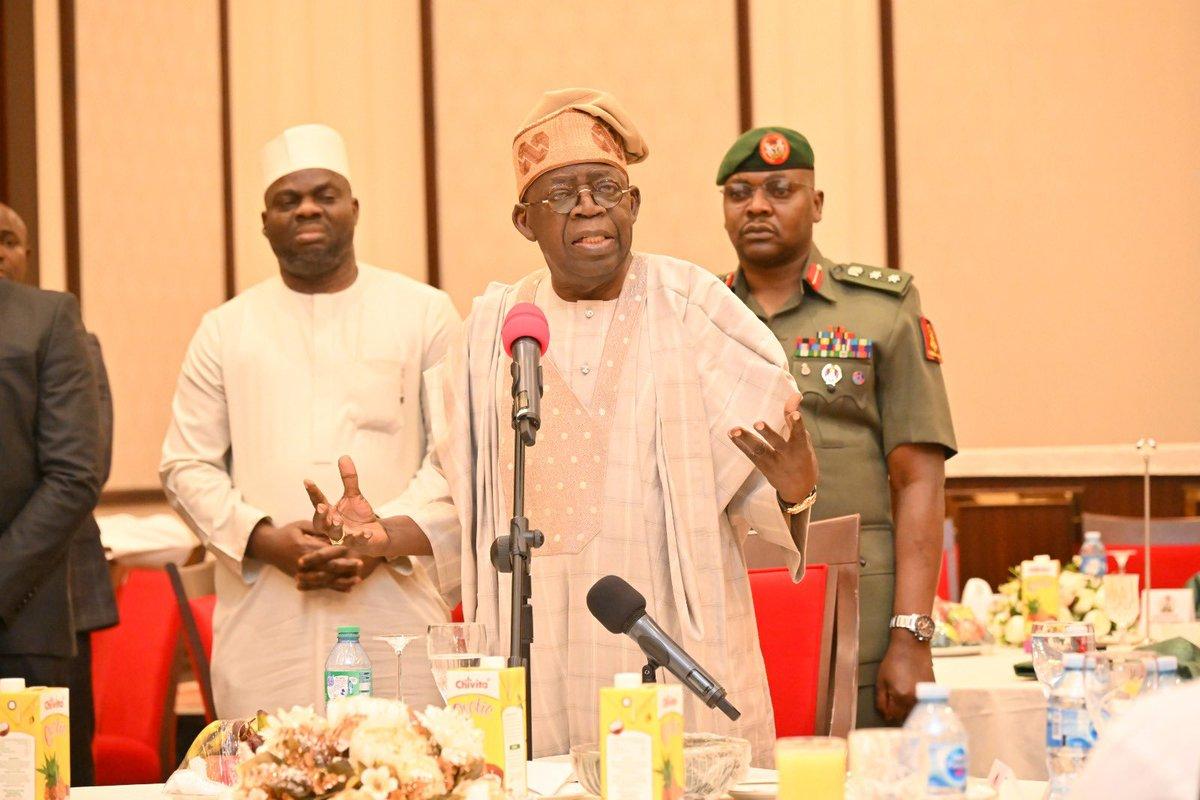
Political positioning ahead of Nigeria’s 2027 elections is intensifying as senior figures around President Bola Tinubu respond to opposition criticism and expand grassroots mobilization. Presidential adviser Bayo Onanuga has accused politicians who criticized Tinubu’s October 1 Independence Day address of appearing to prepare their responses before the speech was delivered. Onanuga defended the President’s economic reform argument and said critics had ignored Tinubu’s claim that the administration’s policies were designed to confront longstanding weaknesses in Nigeria’s economy. Separately, Federal Capital Territory Minister Nyesom Wike has reaffirmed his political support for Tinubu during a consultative meeting with stakeholders in Akpor Kingdom, Rivers State. Wike said his political alignment with the President remained firm and urged supporters to build a broader political coalition ahead of the 2027 presidential election.
Political activity around Nigeria’s 2027 elections is gathering pace as the Presidency pushes back against criticism of President Bola Tinubu’s economic record while Federal Capital Territory Minister Nyesom Wike intensifies grassroots mobilization in Rivers State.
The developments emerged separately but underline the growing political focus on the next presidential election.
Presidential Special Adviser on Information and Strategy Bayo Onanuga has criticized opposition politicians who reacted negatively to Tinubu’s October 1 Independence Day address.
At the same time, Wike has returned to Rivers State to reinforce his support for the President and expand the political network backing Tinubu’s reelection effort.
ONANUGA SAYS CRITICS IGNORED TINUBU’S ECONOMIC ARGUMENT
Onanuga accused some politicians of appearing to have prepared their criticisms before the President delivered his Independence Day broadcast.
He argued that critics failed to engage with what he described as one of the central arguments in Tinubu’s address.
The President used the speech to defend his administration’s economic reforms and argue that the policies did not create Nigeria’s underlying economic weaknesses.
Tinubu instead presented the reforms as measures intended to address problems that existed before his administration.
That remains the government’s position and continues to be challenged by opposition politicians and other critics.
PRESIDENCY DEFENDS ECONOMIC REFORMS
Tinubu said in his address that Nigeria’s economic outlook had improved after more than three years of reforms.
He cited growth above four percent in 2026 and said both oil and non oil sectors were contributing to the expansion.
The President also defended the removal of fuel subsidies and other major policy changes.
His administration argues that the reforms were necessary to stabilize government finances and correct structural problems in the economy.
Opposition parties and labor groups have continued to question whether improvements in economic indicators have translated into better living conditions for ordinary Nigerians.
ONANUGA TARGETS POLITICAL RESPONSE TO SPEECH
Onanuga’s intervention focused less on individual opposition figures and more broadly on the political reaction to the Independence Day address.
He suggested that some critics had already reached conclusions before hearing the President’s full argument.
That is Onanuga’s assessment of the opposition response.
It does not establish that critics actually prepared their statements in advance.
Opposition parties remain entitled to challenge the government’s economic record and policy choices.
WIDER DEBATE CENTERS ON COST OF LIVING
The political dispute comes as the cost of living remains one of the most important issues facing Nigerians.
Fuel prices, food costs, transportation and wages continue to dominate public debate.
Public sector workers are also participating in a three day nationwide warning strike over economic demands including fuel prices and wages.
That economic pressure is likely to remain an important issue as political parties prepare for 2027.
WIKE RETURNS TO RIVERS FOR GRASSROOTS MOBILIZATION
Separately, Wike has intensified political activity in Rivers State.
The FCT Minister met political stakeholders in Akpor Kingdom in Obio Akpor Local Government Area on Friday.
During the meeting, he reaffirmed his support for Tinubu’s reelection.
Wike said his political alignment with the President remained firm.
WIKE SAYS POLITICS SHOULD FOCUS ON COLLECTIVE INTEREST
Wike told supporters that political relationships should be shaped by what he described as the collective interest of the people.
He argued that political actors should be prepared to work with former rivals where broader interests align.
The former Rivers governor also encouraged his supporters to expand their political network.
His message reflects a continuing effort to bring politicians from different party backgrounds into the coalition supporting Tinubu.
WIKE REMAINS A PDP FIGURE SERVING APC LED GOVERNMENT
Wike’s political position remains unusual within Nigeria’s party system.
He rose to national prominence through the Peoples Democratic Party and served as governor of Rivers State under the party.
He later joined Tinubu’s cabinet as FCT Minister after the 2023 election.
Wike has repeatedly said his support for Tinubu does not necessarily mean that every political ally around him must abandon their existing party affiliations.
That cross party arrangement has become an important feature of the political landscape ahead of 2027.
RIVERS STATE REMAINS POLITICALLY IMPORTANT
Rivers is one of Nigeria’s most politically significant states.
Its population, economic importance and voting strength make it an important battleground during presidential elections.
The state also remains central to Wike’s political influence.
His current mobilization effort is aimed at consolidating support for Tinubu among political leaders and grassroots organizations.
WIKE SAYS HIS SUPPORT FOR TINUBU IS FIRM
Wike has repeatedly said that Tinubu’s reelection is one of his major political priorities.
At the Akpor meeting, he again emphasized the importance of building a larger support base.
He also urged political supporters not to allow past disagreements to prevent cooperation.
The remarks fit into what Wike has previously described as a broad political coalition.
CROSS PARTY ALLIANCES ARE EXPANDING
Nigeria’s approach to the 2027 election is increasingly being shaped by political relationships that cross traditional party lines.
Politicians who formally belong to opposition parties have worked with the Tinubu administration.
At the same time, opposition groups have attempted to build broader alliances of their own.
These movements do not necessarily amount to permanent party defections.
They instead reflect a fluid political environment in which alliances can differ between presidential, governorship and legislative contests.
WIKE’S POSITION HAS CREATED TENSIONS WITHIN PDP
Wike’s open support for Tinubu has continued to generate debate within the PDP.
Some PDP figures argue that party members should support the eventual presidential candidate chosen by the party.
Others around Wike maintain that political cooperation with Tinubu is based on performance, relationships and regional interests.
The disagreement has contributed to wider internal debates over the future direction of the PDP.
OPPOSITION ALSO FACES INTERNAL QUESTIONS
The wider opposition landscape has also experienced internal disagreements.
Various politicians and political groups have explored coalitions ahead of 2027.
Some of those alliances have faced disputes over leadership, presidential ambitions and party structures.
That has made the political environment increasingly fluid.
No single opposition arrangement should be treated as permanent until parties complete their nomination processes and formal alliances.
TINUBU’S SUPPORTERS ARE EXPANDING MOBILIZATION
The President’s political allies are also increasing their activity.
In the North Central region, senior APC figures have announced grassroots mobilization programs designed to build support for Tinubu.
Plans include rallies, advocacy tours and town hall meetings.
The Rivers effort led by Wike is occurring alongside those activities.
ONANUGA’S INTERVENTION IS PART OF POLITICAL MESSAGING
Onanuga’s criticism of opposition reactions also reflects the growing importance of political messaging.
The Presidency is seeking to defend the administration’s economic record as political debate intensifies.
Opposition figures, meanwhile, are emphasizing living costs, insecurity and other areas where they argue government performance remains inadequate.
Both sides are likely to increase those arguments as the election approaches.
ECONOMY LIKELY TO REMAIN CENTRAL ISSUE
Economic conditions are expected to remain one of the major subjects of political debate.
Tinubu’s government points to growth, fiscal changes and increased economic stability as evidence that reforms are producing results.
Critics focus on food prices, fuel costs, wages and household pressure.
Both sets of arguments will continue to compete for public attention.
2027 ALIGNMENTS REMAIN FLUID
Political alliances can still change significantly before the election.
Party primaries, governorship contests and internal leadership disputes may alter existing relationships.
Some politicians currently working together may eventually support different candidates.
Others who are currently divided may form alliances.
For that reason, current activity is better described as political positioning and coalition building rather than a completed national realignment.
WIKE’S RIVERS NETWORK COULD PLAY MAJOR ROLE
Wike maintains a substantial political organization in Rivers State.
His influence extends through local political leaders, former officeholders and grassroots supporters.
The extent to which that network can deliver votes for Tinubu will ultimately be tested at the ballot box.
Political mobilization does not itself establish how voters will behave.
NO ELECTION OUTCOME CAN BE INFERRED FROM CURRENT ALIGNMENTS
Current endorsements, alliances and political meetings do not determine the result of the 2027 election.
Nigeria’s eventual presidential contest will depend on the candidates nominated by political parties, campaign issues and voter decisions.
The Independent National Electoral Commission will ultimately conduct the election.
Current activities show how political actors are positioning themselves, rather than establishing any final electoral outcome.
WHAT HAPPENS NEXT
Political activity is expected to intensify as parties move closer to formal campaign preparations.
The Presidency is likely to continue defending Tinubu’s economic record.
Opposition politicians are expected to continue challenging that record and promoting alternatives.
Wike and other Tinubu allies are also expected to expand grassroots mobilization across key states and regions.
For now, the developments involving Onanuga and Wike illustrate two sides of the same emerging political season.
The Presidency is defending its record publicly.
Its political allies are simultaneously building support structures ahead of 2027.